
Cable Tray
How to Choose an Aluminum Alloy Cable Tray?
Choose the right aluminum alloy cable tray by matching alloy grade to your environment, verifying load ratings and certifications, and

Choose the right aluminum alloy cable tray by matching alloy grade to your environment, verifying load ratings and certifications, and

Discover how aluminum alloy perforated cable tray boosts airflow and cuts overheating risk, plus key specs to check before you

Discover how self-locking aluminum alloy cable trays cut installation time with boltless, snap-fit joints while keeping corrosion resistance and durability.

Discover if an aluminium alloy cable ladder fits your project: check span, load, and corrosion needs before you order to

Aluminium alloy cable trunking protects and organizes cables with lightweight, corrosion-resistant, fire-safe construction—see how it beats steel and PVC…

Cable baskets and cable trays differ in structure, load capacity, and airflow—learn which one fits your project’s power or data

Convert cable tray thickness fast: mm = inches × 25.4, then match gauge charts by system to avoid supplier mismatches
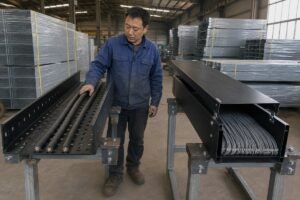
Cable tray suits heavy, heat-generating power runs, while cable trunking protects small signal cables from dust and interference—choose based on

Cable ladder vs cable tray: compare structure, load capacity, and airflow to pick the right cable management system and avoid

Choosing between 100 micron and 65 micron HDG cable ladder? Match coating to corrosivity category for 50-year, maintenance-free protection in