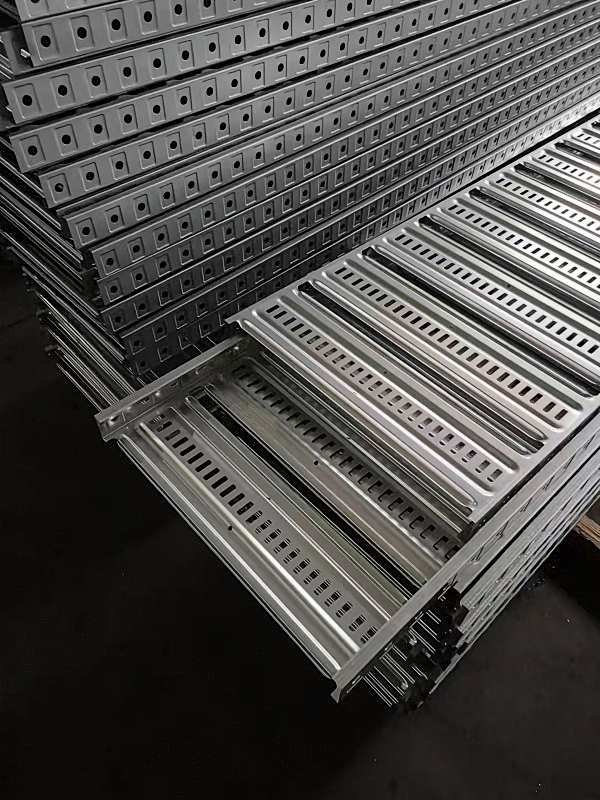
Choosing between GI and hot-dip galvanized perforated cable trays for outdoor use trips up many buyers BS EN ISO 1461 1. I have watched our factory replace corroded trays that failed far too early.
Hot-dip galvanized perforated cable trays are better for outdoor use. Their zinc coating is 45–85 microns thick, versus only 8–20 microns on GI trays, giving superior corrosion resistance, sealed cut edges, and a 20–50 year service life in exposed weather conditions.
That is the short answer. But the full picture depends on your environment, your budget, and your project’s design life. Let me walk you through each factor step by step.
How do I choose between GI and hot-dip galvanized perforated cable trays for outdoor projects?
A Singapore project director once sent me photos of rusted GI trays on a rooftop, barely three years old. That conversation changed how we advise every outdoor buyer at our Tai’an facility.
Choose based on exposure severity: GI perforated trays suit sheltered, low-corrosion outdoor spots with tight budgets, while hot-dip galvanized trays are the default for open-air, coastal, industrial, or high-humidity sites requiring 20+ years of reliable service life.
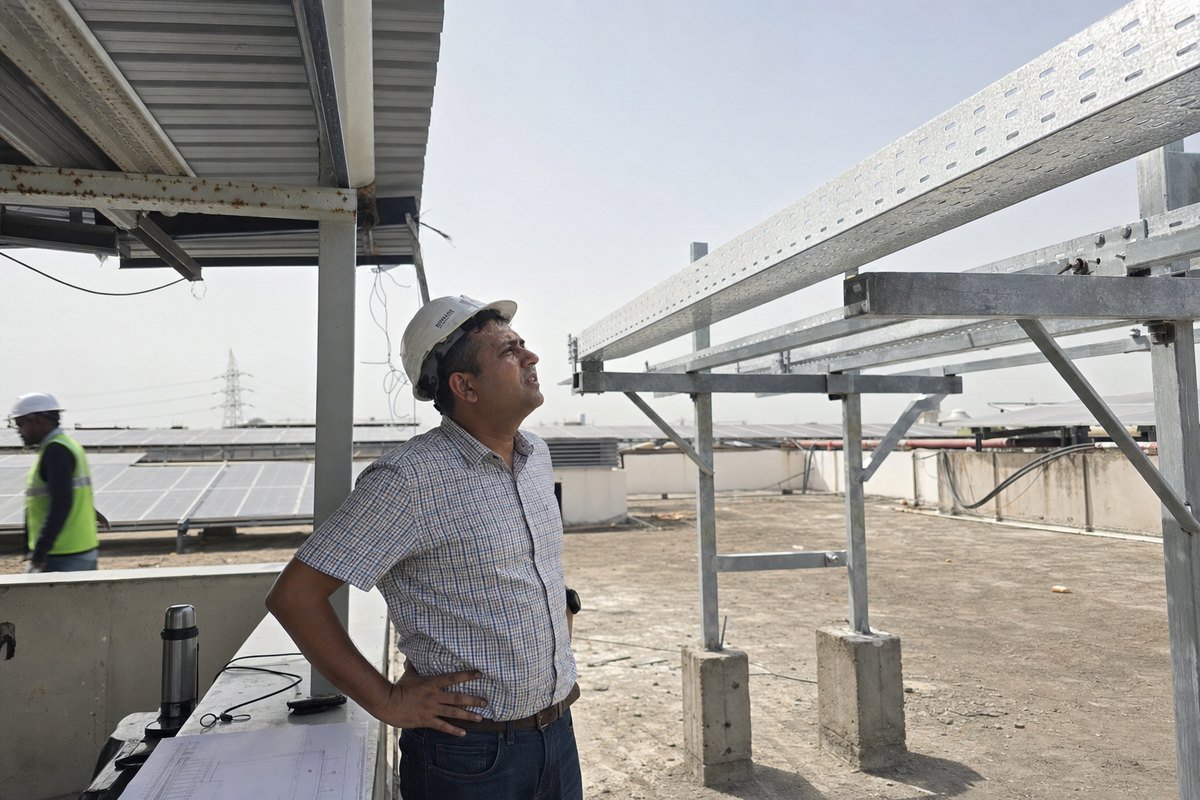
The decision starts with one honest question: how much weather will the tray actually see? Outdoor conditions are never uniform. A tray under a covered walkway faces mild exposure. A tray on an open pipe rack at a solar farm faces sun, rain, condensation, and temperature swings every single day.
Here is the quick comparison I share with EPC procurement managers before anything else:
| Factor | GI (Pre-Galvanized) | Hot-Dip Galvanized (HDG) |
|---|---|---|
| Zinc coating thickness | 8–20 microns | 45–85 microns |
| Coating applied | Before fabrication | After fabrication |
| Cut edges & perforations | Exposed steel core | Fully zinc-coated |
| Typical outdoor life | 2–5 years before red rust | 20–50 years |
| Upfront cost | Lower | Higher (typically 20–40% more) |
| Best environment | C1–C2 (indoor, dry) | C3–C5 (outdoor, coastal, industrial) |
Three questions that settle the choice
First, is the tray fully exposed to rain and UV? If yes, lean HDG. Second, does the project specification require a recognized standard like ASTM A123 2 or BS EN ISO 1461? Pre-galvanized coatings usually cannot meet those thickness requirements. Third, how hard will replacement be later? Trays on high racks or over live equipment are expensive to swap. In those cases, the thicker coating pays for itself.
When we produce custom trays against IFC drawings for infrastructure projects, we always ask for the site’s corrosivity category first. Matching the galvanizing type to real exposure, rather than picking the cheapest “galvanized” label, prevents most outdoor failures.
What are the real differences in corrosion resistance between these two coatings?
During a QC inspection last year, our team ran a simple file test on a GI sample and an HDG sample. The GI coating scraped off easily. The HDG layer resisted the file. That difference is not cosmetic.
HDG coatings resist corrosion far longer because they are 3–5 times thicker, metallurgically bonded through zinc-iron alloy layers, and able to sacrificially protect scratches up to 5mm wide. GI coatings are thin, mechanically weaker, and leave bare steel exposed at every punched perforation.
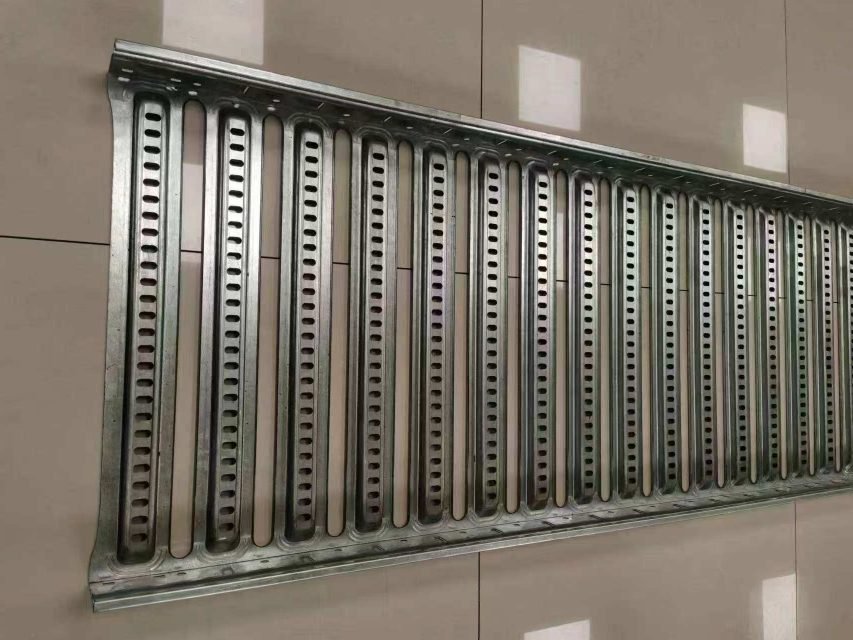
Corrosion resistance comes down to three mechanisms, and HDG wins on all three.
Coating thickness and zinc mass
Zinc protects steel by corroding first. More zinc means more years of protection. An HDG tray carries 45–85 microns of zinc per surface. A GI tray carries just 8–20 microns. In salt spray test 3 conditions, the thinner GI layer is consumed several times faster, which is why coastal areas and industrial environments demand HDG.
Edge protection at perforations
This point matters most for perforated tray designs. GI steel is coated as flat coil, then punched and formed. Every oval slot and cut end exposes raw steel. Corrosion starts there and creeps under the coating, a failure mode engineers call edge creep. HDG trays are dipped after punching, so molten zinc flows over every hole perimeter, sealing microscopic burrs that would otherwise trap moisture and cause internal hole pitting.
The metallurgical bond and patina
Hot-dipping creates zinc-iron alloy layers 4 fused into the steel itself. This bond resists abrasion during rough site handling, which we see often when trays are hoisted onto racks. Over time, HDG also develops a stable matte-gray zinc carbonate patina, a secondary chemical barrier. GI coatings stay thin and never build that long-term atmospheric defense. The superior zinc mass also enables cathodic bridging, sacrificially protecting gouges that occur during installation.
Which option offers better long-term value for my EPC project budget?
Price negotiations with EPC buyers usually start the same way: the GI quote looks tempting. Then we run the lifecycle numbers together, and the conversation shifts quickly.
HDG perforated cable trays deliver better long-term value for most outdoor EPC projects. Although GI costs 20–40% less upfront, HDG avoids repainting, touch-ups, and premature replacement, making its total lifecycle cost significantly lower wherever the design life exceeds ten years.
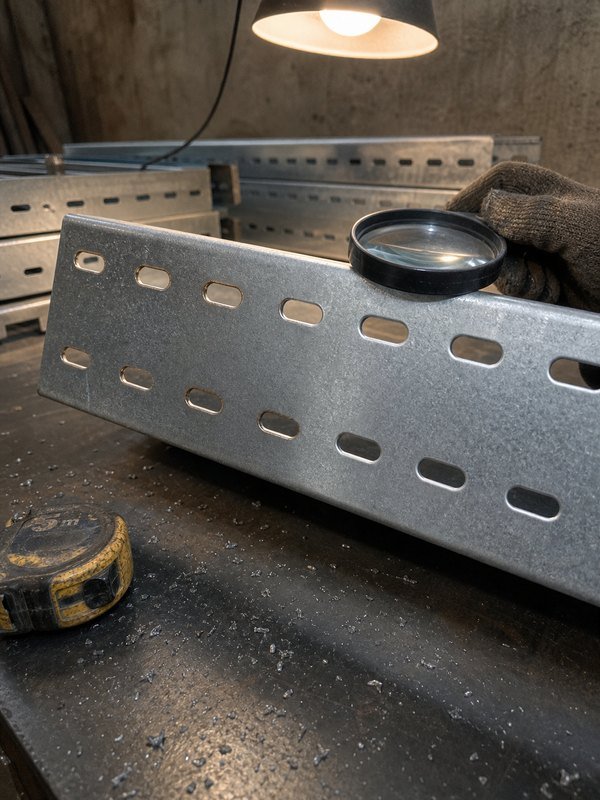
Capex versus lifecycle cost is the real trade-off, and it deserves honest math. A GI tray that fails in five years outdoors does not just cost a replacement tray. It costs scaffolding, labor, cable handling, downtime, and sometimes penalties for interrupting a live facility. I call this the hidden maintenance debt of underspecified cable management systems.
An illustrative 25-year cost picture
| Cost Item | GI Tray (Outdoor) | HDG Tray (Outdoor) |
|---|---|---|
| Initial purchase | Lower baseline | +20–40% |
| Zinc-rich paint touch-ups | Required every few years | Rarely needed |
| Replacement cycles in 25 years | Possibly 3–5 full replacements | Usually zero |
| Labor and access costs | Recurring | One-time installation |
| Risk of cable damage during rework | High | Minimal |
| Total 25-year cost | Often 2–4x higher | Predictable and lower |
These figures are illustrative, since environments vary widely. But the pattern holds across the solar plants, refineries, and water treatment projects we supply.
Where GI still makes budget sense
I want to be fair to GI. For covered outdoor walkways, dry sheltered structures, or short-life temporary installations, GI perforated trays are a legitimate cost saver. The mistake is stretching that logic to open-air runs. When a specification calls for ASTM A123 compliance, we provide MTC documentation, hot-dip galvanizing test reports, and third-party inspection so buyers can verify the zinc coating thickness before shipment. That documentation trail is what protects an EPC budget from surprises later, not the lowest line-item price.
Can hot-dip galvanized perforated trays handle harsh coastal or humid environments better than GI?
Shipping containers of trays to Southeast Asian ports taught me something early on: even the sea voyage itself is a corrosion test. Humid, salt-laden air attacks thin coatings before installation even begins.
Yes, decisively. HDG perforated trays are the industry standard for C3–C5 corrosivity zones, including coastal areas, chemical plants, and tropical humidity. GI trays, rated only for C1–C2 indoor conditions, typically show structural red rust within 2–5 years in such harsh weather conditions.
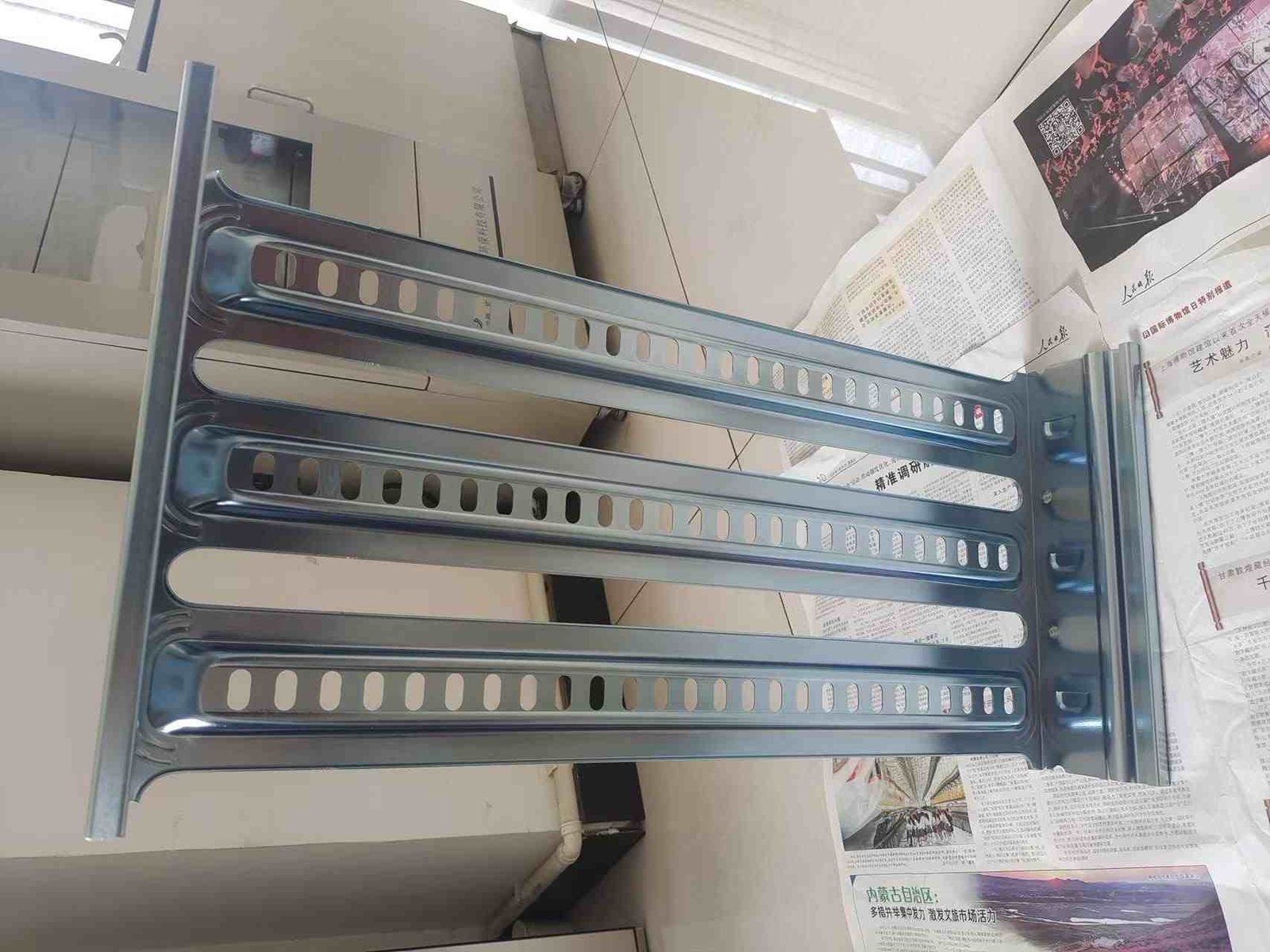
Salt spray, chloride-heavy air, and constant condensation are the most aggressive enemies of zinc coatings. Chlorides break down zinc’s protective patina faster than any other common atmospheric contaminant. That is why coastal and marine-influenced sites sit in corrosivity categories 5 C4 and C5, where coating mass becomes the deciding factor in material durability.
Environment-by-environment guidance
| Environment | Corrosivity Class | Recommended Tray |
|---|---|---|
| Air-conditioned interiors, dry rooms | C1–C2 | GI acceptable |
| Sheltered outdoor, mild climate | C2–C3 | GI marginal; HDG safer |
| Open rooftops, solar farms, pipe racks | C3 | HDG |
| Industrial plants, power stations, refineries | C4 | HDG |
| Coastal areas, ports, offshore-adjacent sites | C4–C5 | HDG, thicker coating grades |
| Wastewater plants, washdown zones, tunnels | C4–C5 | HDG |
Why perforated designs raise the stakes
Perforated trays are popular outdoors because the slots improve ventilation and let rainwater drain instead of pooling around cables. But those same perforations multiply the number of exposed edges. In humid tropical climates like Singapore or the Philippines, condensation forms inside those slots nightly. On a GI tray, each of those hundreds of unsealed hole edges becomes a corrosion initiation point. On an HDG tray, every edge is coated, so the ventilation benefit comes without the corrosion penalty.
For projects in these regions, we routinely recommend HDG conforming to IEC 61537 6 and NEMA VE-1 load standards, with galvanizing verified against ASTM A123. When a 20-year design life meets salt air, the thicker coating is not a luxury. It is the specification doing its job.
Conclusion
Underspecified trays fail quietly, then cost loudly. For outdoor projects, hot-dip galvanized perforated cable trays are the reliable choice; reserve GI for dry, sheltered, budget-driven installations only.
Footnotes
- ISO is authoritative source for galvanizing standards referenced by name in the article. ↩︎
- Explains hot-dip galvanizing process referenced as the industry standard mentioned in article. ↩︎
- Background concept on corrosion testing method mentioned to compare coating durability. ↩︎
- EPA resource on corrosion protection relevant to zinc coating metallurgy discussed. ↩︎
- Detailed explanation of the ISO 12944 international standard for atmospheric corrosivity categories. ↩︎
- Points to relevant international standard governing cable tray systems mentioned in text. ↩︎