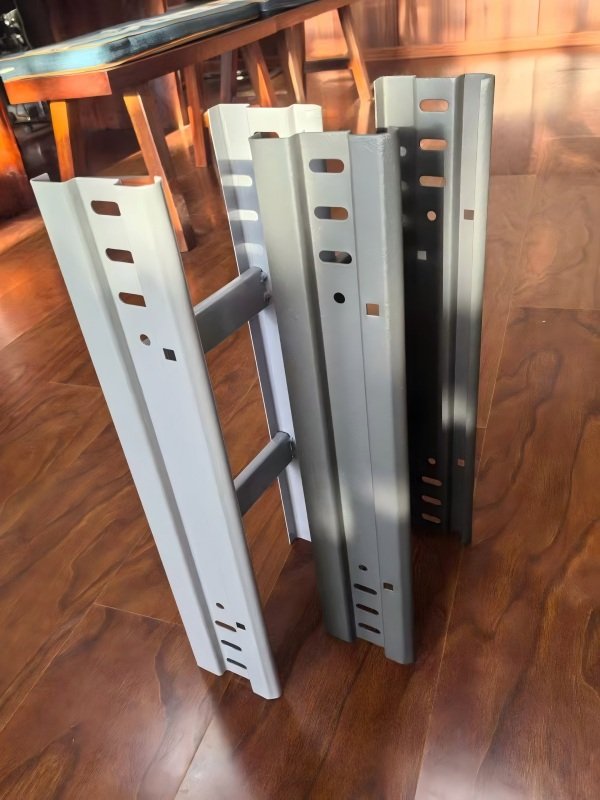
Rusted cable supports fail fast in harsh sites. I have seen replacements eat entire project budgets. That is why our factory builds [hot dipped galvanized cable ladder](https://lanyecabletray.com/?p=4365) systems for EPC contractors worldwide.
A hot dipped galvanized cable ladder is a steel cable support system with two side rails and transverse rungs, dipped into molten zinc at about 450°C after fabrication. The zinc coating protects every weld, edge, and hole, giving long-term corrosion resistance in harsh environments.
That is the short answer. But the details matter when you are specifying, comparing, or ordering. Let me walk you through how it works, why it wins, and how to buy it right.
How does hot dip galvanization actually protect my cable ladders from corrosion?
The first time I watched a fabricated ladder come out of our molten zinc bath, I understood why this finish outlasts paint. The steel and zinc actually fuse together.
Hot dip galvanization protects cable ladders in two ways: the zinc-iron alloy layer forms a physical barrier against moisture, and the zinc acts as a sacrificial anode. Even if the surface gets scratched, the zinc corrodes first and keeps the underlying steel from rusting.
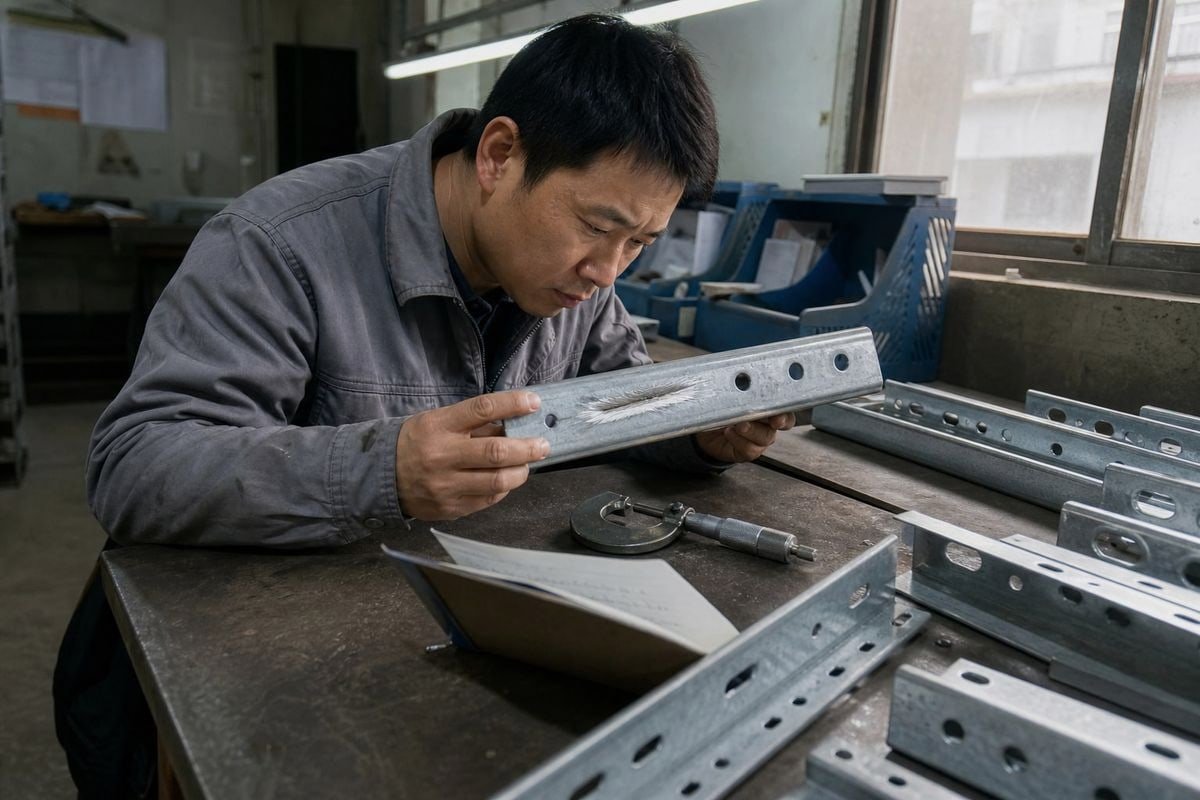
Let me break this down, because the protection mechanism is what separates hot dip galvanizing 1 from every cheaper coating on the market.
The Post-Fabrication Advantage
We weld and punch the ladder first. Then we dip the entire finished product into molten zinc at roughly 450°C. This is called post-fabrication galvanizing. Every weld joint, cut edge, and bolt hole gets a uniform coating. Compare that to pre-galvanized steel, where the sheet is coated before cutting. With pre-galvanized steel, every cut edge is bare metal. Rust starts there first.
Barrier Plus Cathodic Protection
The zinc bath does not just paint the steel. It creates a metallurgically bonded series of zinc-iron alloy layers. This bond gives you two defenses:
- Barrier protection. Zinc seals the steel from moisture, salt spray, and industrial air.
- Cathodic protection. Zinc is more reactive than steel. If the coating gets damaged, the zinc sacrifices itself and stops rust from spreading under the scratch.
There is even a metallurgical bonus. The Sandelin Effect means certain silicon and phosphorus levels in the base steel trigger a thicker, more impact-resistant coating. Our team checks steel chemistry before dipping for exactly this reason.
One more benefit our engineers highlight to project managers: the metallurgical bond gives superior electrical continuity across the whole system. That lets the ladder function reliably as an Equipment Grounding Conductor (EGC), which many electrical codes require.
Why should I choose hot dipped galvanized cable ladders over other coating options?
A project director in Singapore once asked me why our HDG quote was higher than a competitor’s electro-galvanized offer. My answer was simple: look past the invoice and look at the lifecycle.
Hot dipped galvanized cable ladders offer the lowest life-cycle cost among steel finishes. The thick zinc coating extends life to first maintenance to 25–50 years, protects cut edges and welds, and outperforms electro-galvanized and pre-galvanized alternatives in outdoor, coastal, and industrial environments.
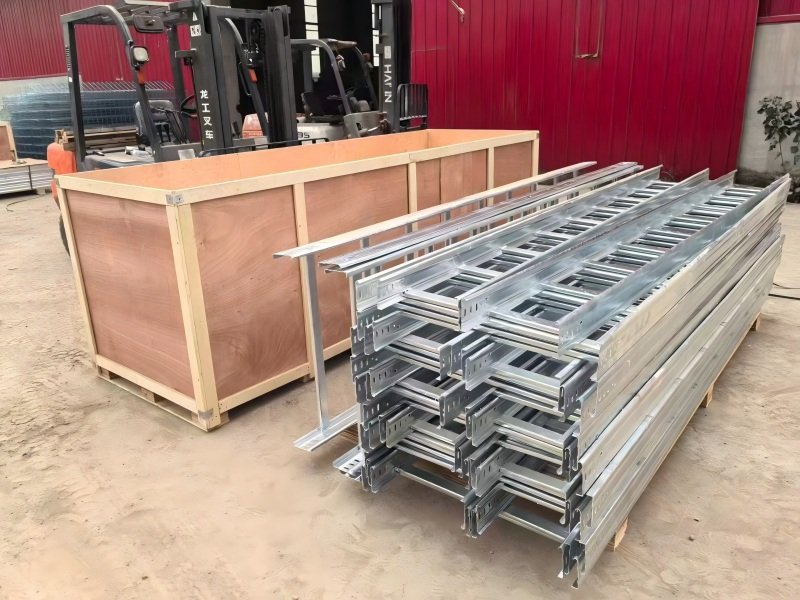
Here is a straightforward pre-galvanized steel comparison against other common finishes:
| Finish | Typical Zinc Coating Thickness | Best Environment | Life to First Maintenance |
|---|---|---|---|
| Hot Dip Galvanized (HDG) | 65–85+ μm | Outdoor, coastal, industrial (C4/C5) | 25–50 years |
| Electro-Galvanized | ~12 μm | Dry indoor only | A few years outdoors |
| Pre-Galvanized | ~20 μm, bare cut edges | Indoor, low humidity | Limited outdoors |
| Powder Coated | Varies | Decorative, mild indoor | Depends on prep |
Total Cost of Ownership, Not First Price
The initial capital expenditure for HDG is higher. I will not pretend otherwise. But you get what you pay for. When you stretch the calculation across the full project lifecycle, HDG saves you maintenance costs, replacement costs, and downtime losses. For projects that value total cost of ownership over first purchase price, the math strongly favors HDG. Our EPC clients in solar and water treatment learned this the hard way after seeing cheaper finishes fail within a few years outdoors.
Where HDG Is Not the Answer
Now, an honest caveat from our own quoting experience. HDG is strong on corrosion resistance, but it is not universal. In strongly acidic or alkaline environments, zinc dissolves quickly and its advantage becomes a weakness. For chemical plants with aggressive exposure, we usually recommend FRP (fiberglass) or stainless steel cable ladders instead. Harsh environment protection means matching the material to the actual environment, not defaulting to one finish.
There is also an ESG angle worth mentioning to your stakeholders. Zinc is 100% recyclable, and the extreme longevity of HDG systems reduces the embodied carbon of a facility over its life.
What quality standards should I check before ordering hot dipped galvanized cable ladders?
During a factory inspection last year, a buyer pulled out a coating thickness gauge before he even said hello. Smart move. I encourage every client to do the same.
Check compliance with BS EN ISO 1461 or ASTM A123, which set minimum zinc coating thicknesses of roughly 55–85+ microns based on steel section thickness. Also verify the environmental corrosivity class under ISO 12944 and confirm load ratings match your span requirements.
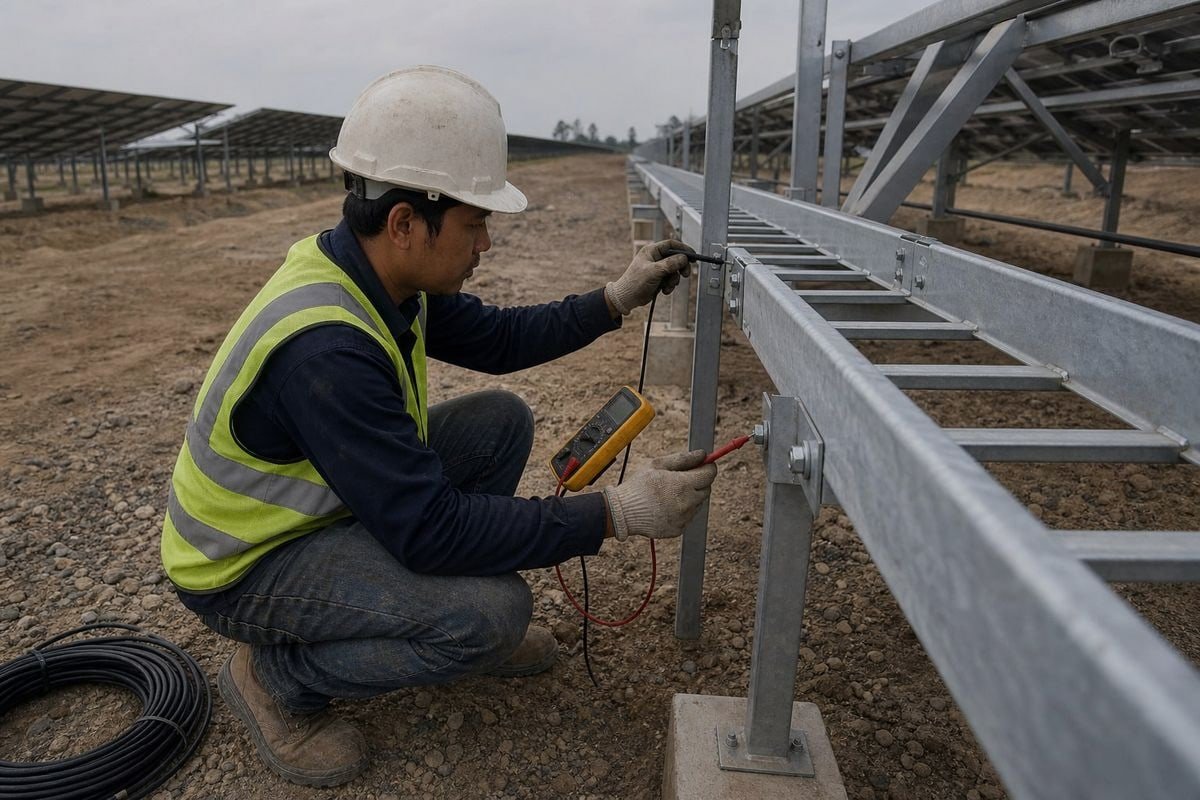
Standards are your best defense against quality control problems and costly product returns. Here is what I tell procurement managers to verify, in order of importance.
Coating Thickness Is the Hard Number
Zinc coating thickness is the single clearest quality indicator. It is the hard metric that separates genuine hot dip galvanizing from electro-galvanizing. As a benchmark, national standards generally require an average coating thickness of no less than 65 μm for hot dipped products. Electro-galvanized parts typically carry only around 12 μm. That is a five-fold difference. If a supplier’s “galvanized” ladder measures 12–20 μm, you are not getting HDG, no matter what the invoice says.
The Standards Checklist
| Standard | What It Governs | What to Ask For |
|---|---|---|
| BS EN ISO 1461 | HDG coating on fabricated steel | Coating thickness report per batch |
| ASTM A123 standards | HDG coating for US-spec projects | Mill and galvanizing certificates |
| ISO 12944 2 | Environmental corrosivity classes | Confirmation of C4/C5 suitability |
| NEMA load ratings / IEC 61537 | Load bearing capacity 3 and span | Load test data at your span |
Documentation Discipline
At our facility in Tai’an, we photograph coating thickness readings at multiple points on each production batch and share them with clients over WhatsApp before shipment. Ask your supplier for the same. A factory that resists documenting zinc coating thickness, weld quality, and load bearing capacity is telling you something. HDG cable ladders engineered for C4 or C5 corrosivity categories under ISO 12944 should come with paperwork proving it. Insist on third-party inspection rights if the order is large.
How do I select the right cable ladder specifications for my project requirements?
Sizing questions fill my inbox every week, usually from technical engineers comparing our drawings against their cable schedules. The good news is that selection follows a logical sequence.
Select cable ladder specifications by defining your cable load and fill first, then choose width, side rail height, and rung spacing. Match span length to load ratings, confirm the environment suits HDG, and specify compatible bends, tees, and covers from the same system.
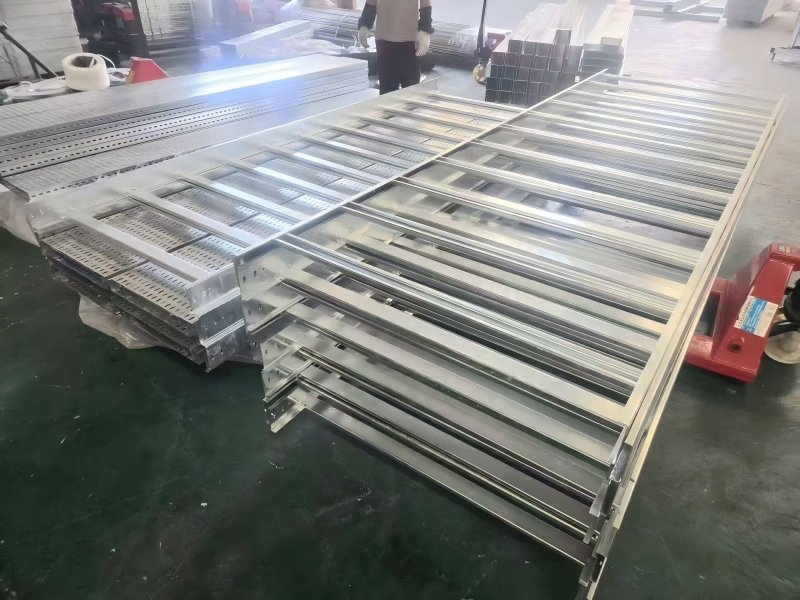
Cable ladders and cable tray 4s get confused constantly, so let me clarify the design first. A cable ladder has two longitudinal side rails joined by structural steel rungs, creating an open frame. A cable tray is flatter and more pan-like. The open ladder design maximizes airflow and heat dissipation, which is critical for maintaining the ampacity and service life of high-voltage power cables. Ladders also handle heavier loads and longer spans, making them the workhorse of industrial cable support.
A Practical Selection Sequence
- Calculate cable weight and fill. Total up your cable schedule with a growth margin of 20–30%.
- Set the width and depth. Common widths run from 150 mm to 900 mm; side rail heights of 50–150 mm are typical.
- Match span to load. Longer support spans demand stronger side rails. Verify load bearing capacity against NEMA load ratings or IEC 61537 test data at your actual span, not a shorter test span.
- Confirm the environment. Outdoor, coastal, or industrial sites in C4/C5 categories suit HDG. Strong acid or alkali exposure points to FRP or stainless instead.
- Specify accessories together. Bends, tees, risers, covers, and splice plates should come from one system to keep electrical continuity and fit.
Common Project Profiles
| Project Type | Typical Width | Rung Spacing | Key Concern |
|---|---|---|---|
| Solar farm DC runs | 300–600 mm | 250–300 mm | UV and outdoor corrosion resistance |
| Water treatment plant | 300–450 mm | 300 mm | Humidity, chemical splash zones |
| Commercial building riser | 150–450 mm | 250 mm | Fill capacity, future expansion |
| Heavy industrial plant | 600–900 mm | 300 mm | Load bearing capacity, long spans |
Because our production line is built around customization for EPC projects, we frequently adjust rail heights, rung spacing, and hole patterns to client drawings. Good cable management systems are specified as complete systems, not assembled from mismatched parts. Send your cable schedule and site conditions to your supplier early. It prevents delivery delays and redesigns later.
Conclusion
Corrosion quietly destroys unprotected cable supports and budgets. Hot dipped galvanized cable ladder solves this with a bonded zinc coating, proven standards, and decades of service. Specify the thickness, verify the standards, and match the environment.
Footnotes
- Background on the hot-dip galvanizing process referenced throughout the article’s corrosion protection discussion. ↩︎
- Official ISO body governing the environmental corrosivity classification standard cited for coating selection. ↩︎
- IEC develops international electrical equipment standards referenced for load rating verification. ↩︎
- Background reference explaining the cable tray concept contrasted with cable ladders in the article. ↩︎