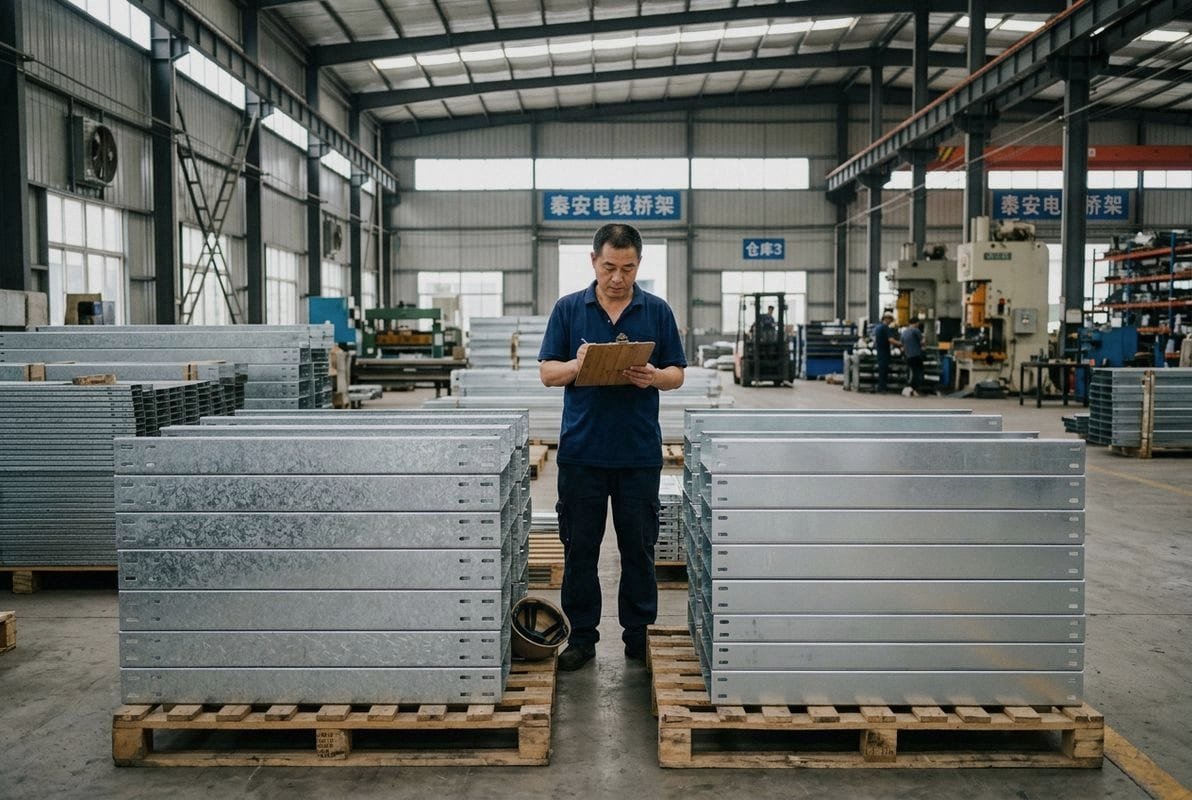
Every week on our production floor in Tai’an, I watch trough cable trays 1 go through two very different galvanizing lines—and the performance gap between them still surprises project directors who assume zinc is just zinc.
To compare hot-dip vs electro-galvanized trough cable trays, evaluate zinc coating thickness, salt-spray hours, service life, total cost of ownership, and environmental factors at your project site; hot-dip galvanizing delivers 70–120 μm coatings lasting 30–50 years in harsh conditions, while electro-galvanizing offers 5–30 μm coatings suited only for dry indoor use at lower upfront cost.
Below I break down durability, cost, quality control, and lead-time differences so you can make a confident material specification decision for your next EPC project.
How do I determine if hot-dip or electro-galvanized trough trays are more durable for my specific project site?
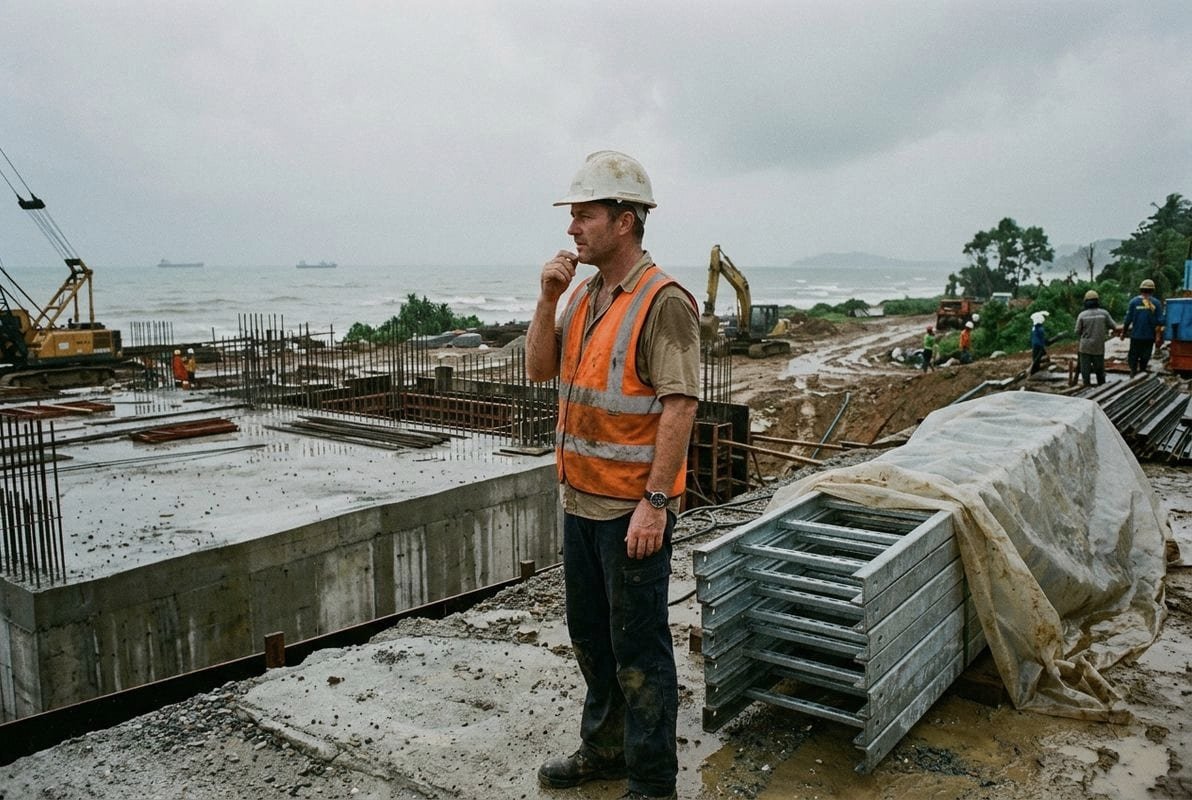
A lesson I learned early when shipping cable trays to a coastal water-treatment plant in the Philippines: the client initially requested electro-galvanized trays to save budget, but site humidity exceeded 85% year-round, and we guided them toward hot-dip before any order was placed corrosion resistance data 2.
Determine durability by mapping your site’s exposure—humidity, salt air, chemical vapors, and UV—against each finish’s corrosion resistance data; hot-dip galvanized trays with ≥70 μm zinc coating thickness and >1,000 salt-spray hours suit outdoor or corrosive sites, while electro-galvanized trays work only in clean, dry indoor spaces.
Why Coating Thickness Drives Cable Tray Durability
The single biggest predictor of how long a trough tray resists rust is the zinc layer thickness. Hot-dip galvanizing 3 immerses the fully fabricated tray in molten zinc at roughly 450 °C. The result is a metallurgically bonded Fe-Zn alloy that acts as a sacrificial coating 4—zinc corrodes before steel does. Because the tray is dipped after all cutting, welding, and punching, every edge gets sealed.
Electro-galvanizing 5 plates zinc onto sheet steel at room temperature using an electric current. The bond is electrostatic, not metallurgical. Fabrication typically happens after plating, which leaves cut edges and weld seams exposed.
Site Assessment Checklist
Before you finalize a material specification, answer these questions:
- Is the tray installed outdoors or in a semi-enclosed area with moisture ingress?
- Does the site sit within 5 km of a coastline or salt-water body?
- Are corrosive gases present (ammonia, chlorine, H₂S)?
- Will the tray be subject to mechanical abrasion during or after installation?
- What is the design service life the EPC contract demands?
If you answer “yes” to any of the first four questions, or the contract demands more than 15 years, hot-dip galvanized is the safer choice.
Head-to-Head Durability Comparison
| Parameter | Hot-Dip Galvanized | Electro-Galvanized |
|---|---|---|
| Zinc coating thickness | 70–120 μm | 5–30 μm |
| Bonding method | Metallurgical (Fe-Zn alloy) | Electrostatic adhesion |
| Salt-spray resistance | >1,000 hours | 72–200 hours |
| Expected outdoor service life | 30–50 years | Not recommended outdoors |
| Expected indoor service life | 50+ years | 5–10 years |
| Edge & weld protection | Full coverage (post-fab dip) | Partial (pre-fab plating) |
| Adhesion properties (cross-cut test) | Excellent | Prone to flaking |
Real-World Durability Insight
On our shipments to Southeast Asia, environmental factors like tropical rain, high humidity, and salt-laden wind are the norm. I have seen electro-galvanized trays develop white rust within six months on a rooftop in Singapore. By contrast, hot-dip galvanized trays on the same building—installed eight years ago—still show no base-metal corrosion. The difference comes down to the sacrificial coating being thick enough to outlast decades of atmospheric attack.
For solar-farm projects in South America, where trays run hundreds of meters outdoors, cable tray durability is non-negotiable. We always recommend hot-dip for these installations because the installation requirements already include 25-year warranties, and only a ≥70 μm zinc layer can deliver that.
How can I balance the higher initial cost of hot-dip galvanizing against my long-term maintenance budget?
A trade-off I weigh with almost every procurement manager who contacts us on WhatsApp: they see the line-item price difference between HDG and EG trays and immediately lean toward electro-galvanized—until we walk through the total cost of ownership together.
Balance cost by calculating total cost of ownership over the project’s design life: hot-dip galvanized trays cost 15–30% more upfront but eliminate repainting, patch repairs, and early replacement cycles, making them cheaper per year of service than electro-galvanized trays in any environment with moisture or chemical exposure.

CAPEX vs. OPEX Breakdown
The upfront price gap between hot-dip and electro-galvanized trough trays usually falls between 15% and 30%, depending on tray width, steel gauge, and order volume. But that number tells only half the story.
Maintenance costs for electro-galvanized trays in semi-exposed or humid environments include:
- Inspection every 2–3 years
- Spot repainting with zinc-rich primer where coating has flaked
- Full replacement of corroded sections every 8–12 years
Hot-dip galvanized trays in the same environment typically require zero scheduled maintenance for 25+ years.
20-Year Lifecycle Cost Model
| Cost Item | Hot-Dip Galvanized (per 100 m) | Electro-Galvanized (per 100 m) |
|---|---|---|
| Initial purchase (CAPEX) | $3,200 | $2,500 |
| Shipping & handling (heavier HDG) | $350 | $300 |
| Installation labor | $800 | $800 |
| Maintenance (Years 1–20) | $0 | $1,800 (repainting + inspections) |
| Replacement at Year 10 | $0 | $2,500 |
| Total 20-year cost | $4,350 | $7,900 |
| Cost per year | $217.50 | $395.00 |
These figures reflect mid-range pricing in our export markets. The exact numbers shift with steel commodity prices, but the ratio stays consistent: HDG wins on lifecycle economics whenever the environment is anything but bone-dry.
When Electro-Galvanized Still Makes Financial Sense
I am not here to push every buyer toward the most expensive option. If the project is a commercial office building with climate-controlled ceilings, constant 40–50% relative humidity, and zero chemical exposure, electro-galvanized trays meet NEMA standards 6 for that application. The maintenance costs drop to near zero because the environment itself protects the thin coating. In these cases, the lower CAPEX translates directly to savings.
Decision Shortcut
Ask yourself one question: “Will this tray ever see condensation, rain, or chemical fumes?” If the answer is yes—even occasionally—then the long-term math favors hot-dip galvanizing. If the answer is confidently no for the tray’s entire design life, electro-galvanized is a rational, budget-friendly choice.
What quality control standards should I require from my supplier to ensure my cable trays don’t corrode prematurely?
A buyer interaction that sticks with me: a project contractor in Thailand received electro-galvanized trays from another supplier that showed rust blisters within three months of installation. When he reached out to us for a replacement order, his first question was “What QC paperwork should I have asked for?”
Require your supplier to provide mill test certificates for base steel, zinc coating thickness reports per ISO 1461 or ASTM A123 for hot-dip or ASTM B633 for electro-galvanized, salt-spray test results per ASTM B117, and cross-cut adhesion test records—these documents prove corrosion resistance before the tray leaves the factory.
Key Standards and What They Mean
Understanding the relevant NEMA standards and international specifications helps you write airtight purchase orders. Here is a quick reference:
| Standard | Applies To | What It Verifies |
|---|---|---|
| ISO 1461 7 | Hot-dip galvanized coatings | Minimum coating thickness, appearance, adhesion |
| ASTM A123 8 | HDG on iron/steel products | Coating weight & thickness per steel gauge |
| ASTM B633 9 | Electro-galvanized coatings | Classification by service condition (SC1–SC4) |
| ASTM B117 | Both finishes | Salt-spray (fog) test hours to first red rust |
| ISO 2409 / ASTM D3359 | Both finishes | Cross-cut adhesion test rating |
| NEMA VE 1 | Cable tray systems | Dimensional tolerances, load ratings, finish requirements |
QC Steps We Follow on Our Line
On every batch that leaves our Tai’an facility, we perform:
- Incoming steel inspection — verify mill certificates match ordered grade and thickness.
- Pre-galvanizing dimensional check — confirm fabrication methods produce trays within NEMA VE 1 tolerances before they enter the zinc bath or plating line.
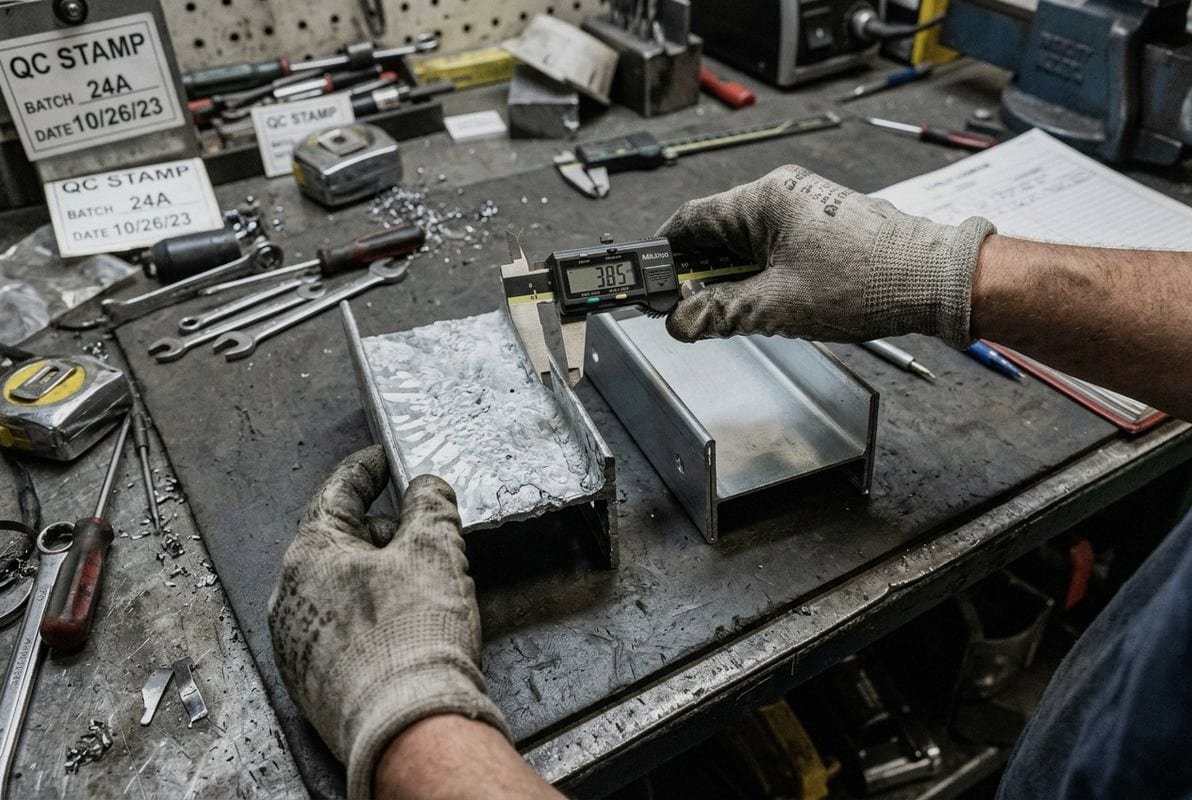
- Coating thickness measurement — use a calibrated magnetic gauge at five points per tray (both flanges, bottom, and two random interior spots). For HDG, we reject any reading below 70 μm.
- Adhesion test — cross-cut test on sample trays per ISO 2409; rating must be 0 or 1.
- Visual inspection — no bare spots, lumps, or dross inclusions that would compromise coating integrity.
- Salt-spray sampling — one tray per production lot enters a B117 chamber; we document hours to first white rust and first red rust.
What to Put in Your Purchase Order
If you want to protect yourself contractually, include these clauses:
- “All HDG trays shall comply with ISO 1461 with minimum local coating thickness of 70 μm.”
- “Supplier shall provide zinc coating thickness test reports for each production lot.”
- “Salt-spray test per ASTM B117 shall demonstrate no red rust at 1,000 hours for HDG or at stated hours for EG.”
- “Cross-cut adhesion test per ISO 2409 shall achieve rating ≤ 1.”
These four lines eliminate ambiguity and give you grounds for rejection if trays arrive substandard.
A Note on Fabrication Methods and Edge Protection
Because hot-dip galvanizing happens after fabrication, the QC concern is mainly about zinc drainage (no pooling in trough corners) and uniform thickness. For electro-galvanized trays, the bigger risk is exposed edges after shearing and punching. Ask your supplier how they protect post-fabrication cut edges—some apply zinc-rich paint, others leave them bare. If they leave them bare, corrosion starts at those edges first.
How will choosing between these two finishes affect my project’s lead times and overall delivery schedule?
A concrete scheduling scenario from a recent order: a Singapore-based project director needed 2,400 meters of trough tray delivered in six weeks. We could ship electro-galvanized in four weeks but quoted five and a half weeks for hot-dip because our galvanizing partner runs batch schedules.
Hot-dip galvanized trays typically add 5–10 business days to lead time compared to electro-galvanized because the post-fabrication dipping process requires batch scheduling, cooling, and inspection; plan procurement 2–3 weeks earlier to avoid delivery delays on HDG orders.

Why HDG Takes Longer
The hot-dip process itself is not slow—a tray spends only minutes in the zinc bath. The extra time comes from logistics around the bath:
- Batch accumulation — galvanizing plants run cost-efficiently in large batches. Your trays may wait 2–4 days for enough volume.
- Pre-treatment — degreasing, pickling, and fluxing add a full day.
- Cooling and inspection — trays must cool slowly to avoid warping, then pass QC. This takes another 1–2 days.
- Return transport — if the galvanizer is off-site (common for mid-size fabricators), round-trip trucking adds 1–3 days.
Electro-galvanizing, by contrast, happens in-line on coil or sheet stock before fabrication. Once we cut, punch, and bend the tray, it is essentially finished. No secondary coating step means no waiting.
Lead-Time Comparison by Order Size
| Order Volume | Electro-Galvanized Lead Time | Hot-Dip Galvanized Lead Time | Difference |
|---|---|---|---|
| < 500 m | 2–3 weeks | 3–4 weeks | +1 week |
| 500–2,000 m | 3–4 weeks | 4–5.5 weeks | +1–1.5 weeks |
| > 2,000 m | 4–5 weeks | 5.5–7 weeks | +1.5–2 weeks |
These are typical timelines from our facility including packaging and inland logistics to port. Ocean freight adds 1–3 weeks depending on destination.
Strategies to Avoid Delivery Delays
Based on years of coordinating with EPC timelines, here is what works:
- Order HDG trays at the design-freeze stage rather than waiting for construction mobilization. The extra lead time is predictable, so plan around it.
- Confirm galvanizing batch days with your supplier. If their partner runs Monday/Wednesday/Friday dips, align your fabrication completion accordingly.
- Split shipments — for phased construction, let the first batch go into galvanizing immediately while later sections are still being fabricated. This overlaps production and coating schedules.
- Stock standard sizes — we keep popular 200 mm, 300 mm, and 400 mm HDG trough trays in inventory for fast dispatch. Ask your supplier about ready-stock options.
Does Lead Time Affect Installation Requirements?
Indirectly, yes. If HDG trays arrive late, crews may idle or switch to other tasks. But the heavier zinc layer also means HDG trays weigh slightly more—roughly 5–8% heavier per meter than the same EG tray. This rarely affects structural load calculations but can slow manual handling on site if lifts are not available. Factor both the delivery schedule and the on-site handling logistics into your project plan.
Conclusion
Choosing between hot-dip and electro-galvanized trough cable trays comes down to environment, lifecycle cost, quality documentation, and schedule planning—get these four factors right, and your cable management system will perform reliably for decades. If you are sourcing for a Singapore EPC project, you may also want to understand how hot-dip galvanized, pre-galvanized, and zinc magnesium aluminum compare when sourcing to ensure you evaluate all available coating options. For projects involving wastewater facilities, reviewing the corrosion requirements that apply to hot-dip galvanized trough cable trays in Singapore wastewater environments can further inform your specification.
Footnotes
- Provides a definition and benefits of trough cable tray systems. ↩︎
- Discusses factors influencing the corrosion resistance of galvanized steel. ↩︎
- Explains the process and purpose of hot-dip galvanizing for steel protection. ↩︎
- Explains how zinc acts as a sacrificial coating to protect steel from corrosion. ↩︎
- Describes the electro-galvanizing process and its application for corrosion protection. ↩︎
- Wikipedia provides an overview of NEMA standards relevant to cable trays, including NEMA VE 1. ↩︎
- Official standard specifying requirements and test methods for hot-dip galvanized coatings. ↩︎
- Standard specification for hot-dip galvanized coatings on iron and steel products. ↩︎
- Standard specification for electrodeposited zinc coatings on iron and steel articles. ↩︎