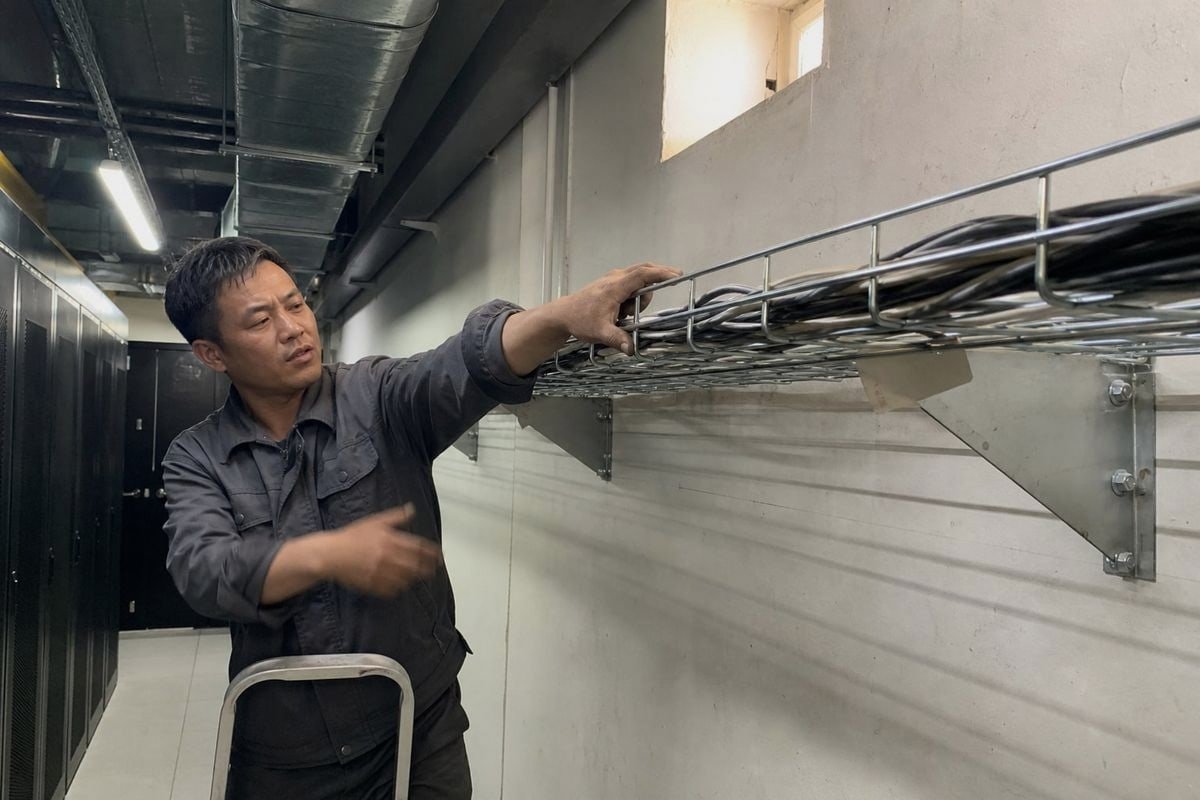
Rusting trays ruin projects. I have seen galvanized baskets corrode inside cleanrooms within two years. On our production line, stainless steel 304 wire mesh cable tray solves that exact failure.
Stainless steel 304 wire mesh cable tray is an open-grid, basket-style cable support system welded from 304 “18-8” stainless wire. It routes power, data, and fiber cables while providing corrosion resistance, airflow for heat dissipation, hygiene, and fast on-site modification in cleanrooms, data centers, and food plants.
That is the short answer. Now let me break down how it compares, where it fits, why it lasts, and how to specify it correctly.
How does 304 stainless steel wire mesh cable tray differ from other cable tray materials?
A buyer in Singapore once asked me to quote three materials for the same data hall. Our side-by-side samples told the story faster than any datasheet could.
304 stainless wire mesh trays use an 18% chromium, 8% nickel alloy that self-heals against rust, unlike galvanized steel that corrodes once its zinc layer wears. Compared with 316, 304 costs less but resists chloride pitting less; compared with ladder tray, mesh is lighter and field-adaptable.
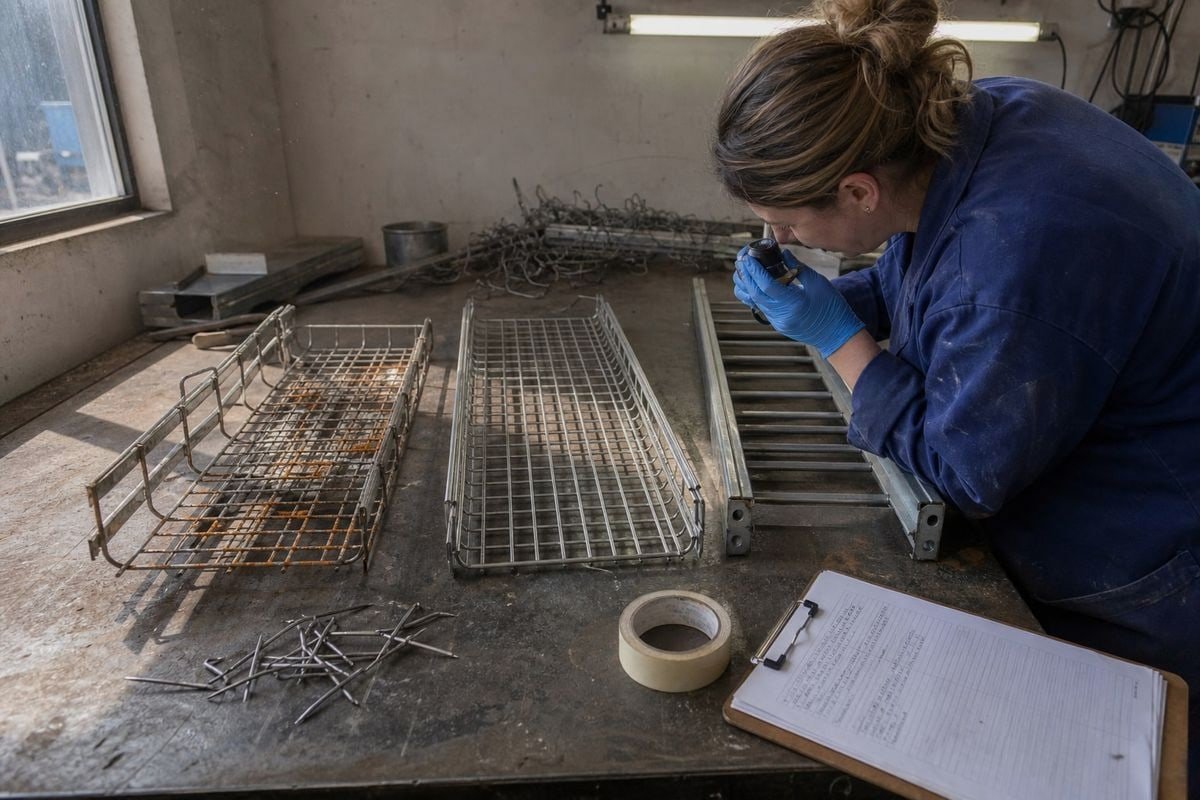
Here is a scannable comparison before we go deeper:
| Material / Type | Corrosion Resistance | Relative Cost | Best Environment |
|---|---|---|---|
| Pre-galvanized steel mesh | Low (indoor, dry) | Lowest | Offices, dry indoor runs |
| Hot-dip galvanized ladder | Medium | Low–Mid | Outdoor heavy power runs |
| 304 stainless wire mesh | High | Mid | Cleanrooms, food, data centers |
| 316L stainless wire mesh | Very high (chlorides) | Highest | Marine, coastal, chemical wash zones |
The chemistry that sets 304 apart
304 is an austenitic “18-8” alloy: roughly 18% chromium and 8% nickel. The chromium forms a passive chromium-oxide film 1 on the surface. If you scratch it, the film re-forms on its own. Galvanized steel cannot do this. Once the zinc coating is cut or worn, the base steel underneath rusts. That is why our clients in humid Southeast Asia move to stainless for any wash-down or high-moisture zone.
The 316 stainless steel comparison
Buyers often ask me whether 304 is “enough.” My honest answer depends on chlorides. In a standard food processing industry 2 plant or a data center, 304 performs very well at a lower price. But if your environment is strongly corrosive and contains chloride ions—seawater spray, coastal air, certain chemical wash-downs—you should upgrade to 316L. Its molybdenum content gives it far stronger resistance to pitting. We stock both grades at our Tai’an facility precisely because this decision splits our order book almost evenly for coastal projects.
Structure differences versus ladder and trunking
A wire mesh basket cable tray is welded from round wires into a grid. A ladder tray uses heavy side rails with rungs. Trunking is a closed box. The mesh design uses much less raw material, so it weighs less, costs less to ship, and cuts on site with simple hand tools. Ladder trays carry heavier loads over longer spans. Trunking seals cables from dust and water. Each has a place; the next section maps them to real projects.
What applications and industries benefit most from using 304 stainless steel wire mesh cable tray?
The lesson I learned early in exporting to Singapore and the Philippines is that this product wins on precision of fit, not on being a universal solution.
Hygienic industries—food, beverage, pharmaceutical, and cosmetics cleanrooms—benefit most, followed by data centers, telecom rooms, and semiconductor plants needing dust-free, interference-shielded routing. Corrosive indoor spaces like chemical plant control rooms and laboratories are the third major application.
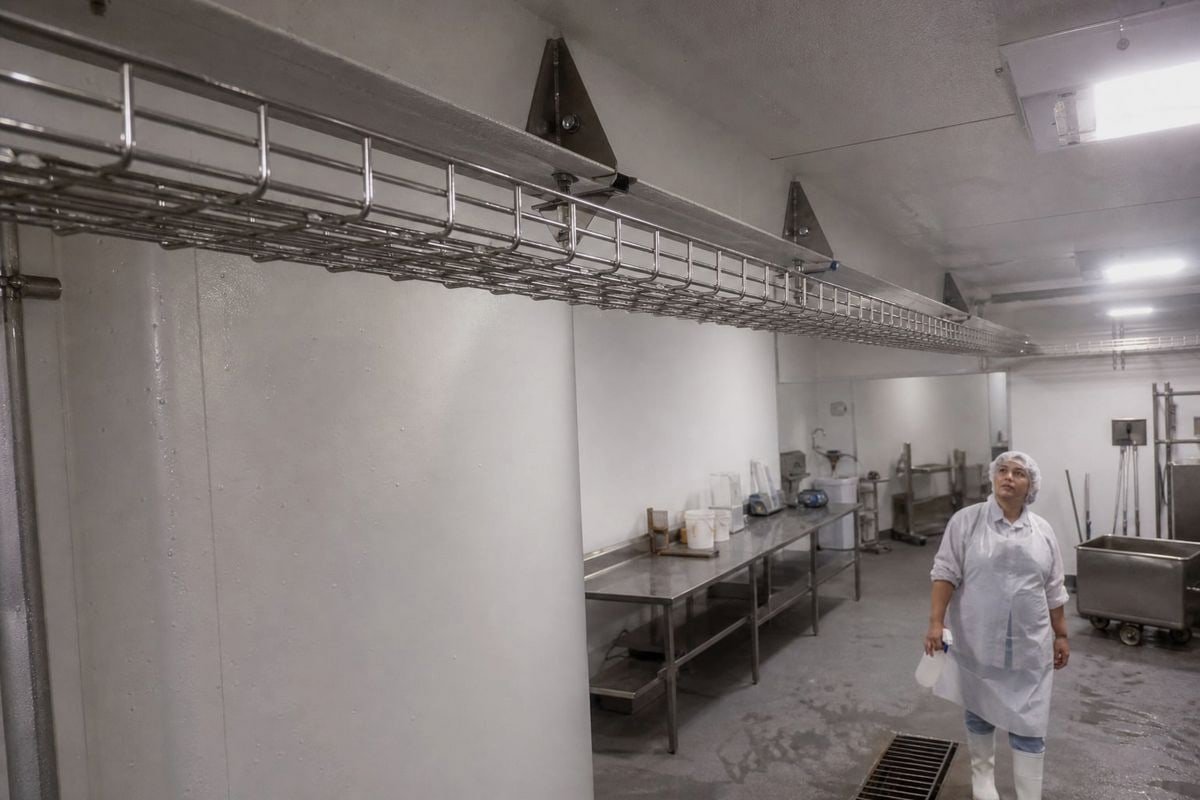
Its application scenarios are very precise, and I advise every EPC project manager to match the tray type to the job:
- Hygienic industry: food, beverage, pharmaceutical, and cosmetics cleanrooms.
- Precision electronics: data centers, telecom rooms, semiconductor fabs, where trays must not shed dust and must resist interference.
- Corrosive indoor environments: chemical plant control rooms and laboratory internal wiring.
Why food and pharma facilities standardized on it
Wire mesh is the industry standard in the food processing industry for a physical reason. The rounded wire profile eliminates flat horizontal surfaces and 90-degree internal corners. Traditional solid trays create “harborage points” where dust settles and bacterial bio-films grow. Open mesh gives dirt nowhere to sit, and it survives high-pressure wash-down procedures without trapping water. When we developed our hygienic-series baskets, we smoothed every weld point for exactly this reason.
Why data centers love the open grid
Two properties matter here. First, airflow: the open structure lets heat escape from densely packed cables, protecting transmission efficiency. Second, the grid geometry acts as a natural Faraday cage, giving passive electromagnetic compatibility 3 that helps shield sensitive data cables from external interference. Combined with proper grounding and bonding requirements, this makes mesh a strong choice for structured cabling.
Where it is the wrong choice
I turn business away when the application does not fit. Heavy loads, large power cables, or outdoor runs call for a cable ladder. Signal cables that need dust, water, and interference protection indoors call for trunking. Light loads, dense cabling, and maximum cleanliness and cooling call for wire mesh tray. Choosing wrong is the most common cause of the returns and rework my clients fear.
Why should I choose 304 stainless steel wire mesh cable tray for corrosion resistance and durability?
During a factory audit last year, a Thai water-treatment contractor bent one of our welded samples by hand to test the welds. It sprang back. That moment closed the deal faster than any certificate.
Choose 304 because its self-repairing chromium-oxide layer resists rust in humid and chemically active spaces for decades, while the welded 18-8 alloy grid delivers a high strength-to-weight ratio. It outlasts galvanized systems in wash-down zones and costs less than 316 where chlorides are absent.
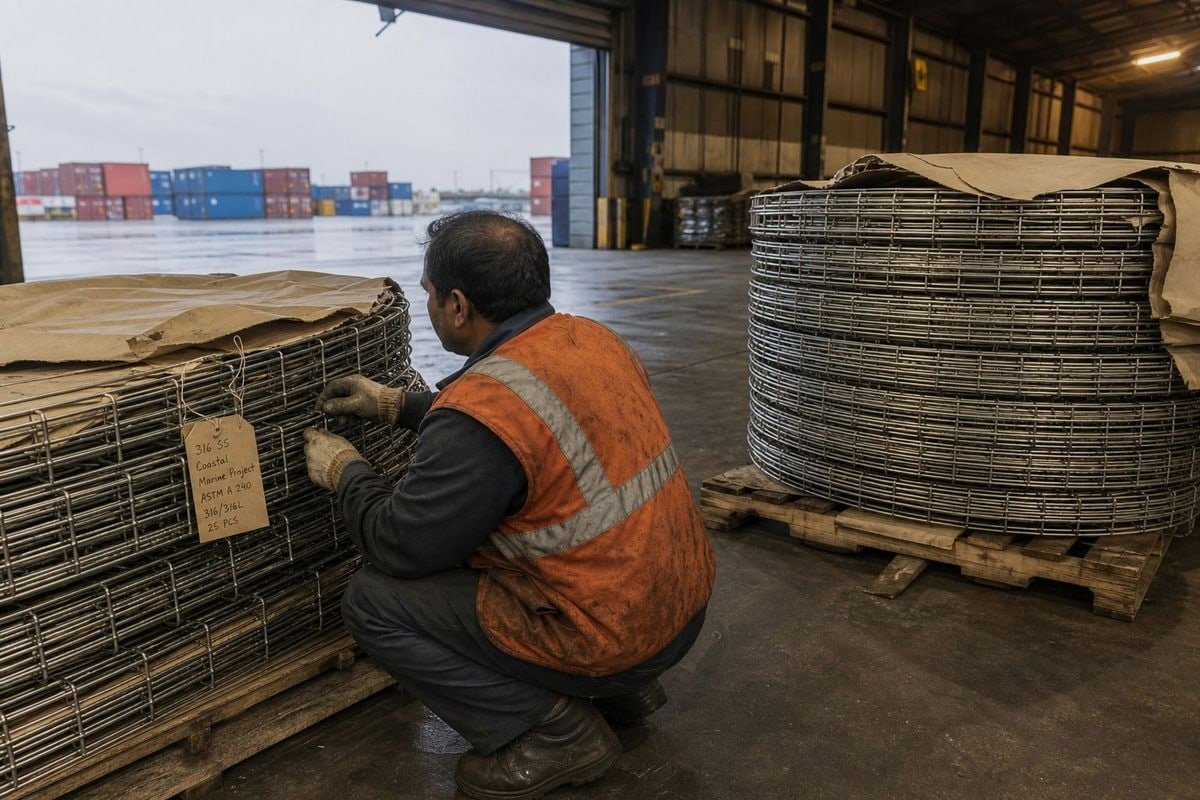
Durability is not one property. It is a stack of properties working together, and I want to unpack each layer.
Strength without weight
The 18-8 austenitic alloy gives a high strength-to-weight ratio. A welded grid distributes load across dozens of wire intersections, so a tray that looks delicate carries a serious load bearing capacity when supports are spaced correctly. Because the mesh uses far less raw material than a solid-bottom tray, freight costs drop too—something my wholesale clients in South America notice on every container.
Lifecycle cost, not purchase price
Here is the objection I hear most: “Stainless costs more than galvanized.” True on day one. But consider a wash-down zone in a beverage plant. Galvanized tray may need replacement within a few years once the zinc erodes. Replacement means shutdown, labor, and re-pulling cables. The 304 tray simply keeps working. Over a 15–20 year plant life, the stainless option is usually the cheaper one.
Emerging durability upgrades
Two trends are worth knowing. First, “double-barrier” specifications: powder-coating 304 stainless steel adds extreme chemical resistance plus color-coded circuit identification in corrosive zones. Second, seismic-rated mounting hardware is increasingly engineered into modern systems, keeping structural integrity and cable continuity during high-vibration industrial events. We offer both as OEM options for project owners who specify them.
| Durability Factor | How 304 Wire Mesh Delivers |
|---|---|
| Rust protection | Self-healing passive chromium-oxide layer |
| Mechanical strength | Welded 18-8 grid, high strength-to-weight ratio |
| Chemical zones | Optional powder-coat “double-barrier” finish |
| Vibration / seismic | Seismic-rated mounting brackets and accessories |
| Hygiene longevity | Round wires resist bio-film harborage points |
What customization options and specifications should I consider when sourcing 304 stainless steel wire mesh cable tray?
When a Project Director messages me on WhatsApp asking for “standard mesh tray,” my first reply is always a specification checklist—because “standard” varies by country and by plant.
Specify wire diameter (3.5–6.0 mm, with 5.0 mm most popular), width (50–1000 mm), length (2 m, 2.5 m, or 3 m), side rail height, surface finish, and load class per IEC 61537. Also confirm mounting hardware, grounding kits, and grade certification before ordering.

Let me walk through each decision point the way I do with clients, because a wrong number here becomes a costly return later.
Core dimensional specifications
| Parameter | Common Range | Typical Choice |
|---|---|---|
| Wire diameter | 3.5–6.0 mm | 5.0 mm |
| Tray width | 50–1000 mm | Sized to cable fill + 30% spare |
| Straight length | 2 m / 2.5 m / 3 m | 3 m for fewer joints |
| Side rail height | Varies by supplier | Match cable bundle depth |
| Finish | Acid washed, polished, untreated | Acid washed for hygiene zones |
Wire diameter specifications drive everything. Thicker wires increase load bearing capacity but add cost and weight. For data cabling, 4.0 mm often suffices; for mixed loads, we push clients toward 5.0 mm.
Standards and quality control
Ask your supplier to test against the IEC 61537 standard 4, which governs cable tray performance including load and safe working limits. In our QC process, we verify weld strength on every batch and check material certificates so the “304” stamped on the invoice is truly 18-8 alloy. Counterfeit grades are the quiet quality risk in this trade, and they explain many of the QC horror stories buyers bring to me.
Accessories and system completeness
A tray is only half a cable management system. Confirm the mounting brackets and accessories: wall brackets, ceiling threaded-rod hangers, splice connectors, and hold-down clamps. Confirm grounding and bonding requirements for your local electrical code—continuity across splices matters for the Faraday-cage benefit to work. Finally, lock lead times in writing. Our team quotes production schedules per order because delivery delay is the number-one pain point EPC contractors report to us.
Conclusion
Wrong tray choices cost projects money and downtime. 304 wire mesh tray solves hygiene, corrosion, and airflow problems precisely. Specify it carefully, and it will outlast the building around it.
Footnotes
- Authoritative resource for stainless steel properties, including the formation of protective passive layers. ↩︎
- Primary regulatory body providing guidance on hygienic standards and equipment safety in food production. ↩︎
- Leading professional association for electronic standards and electromagnetic interference shielding principles. ↩︎
- Official site for the international standard governing cable management system performance and testing requirements. ↩︎