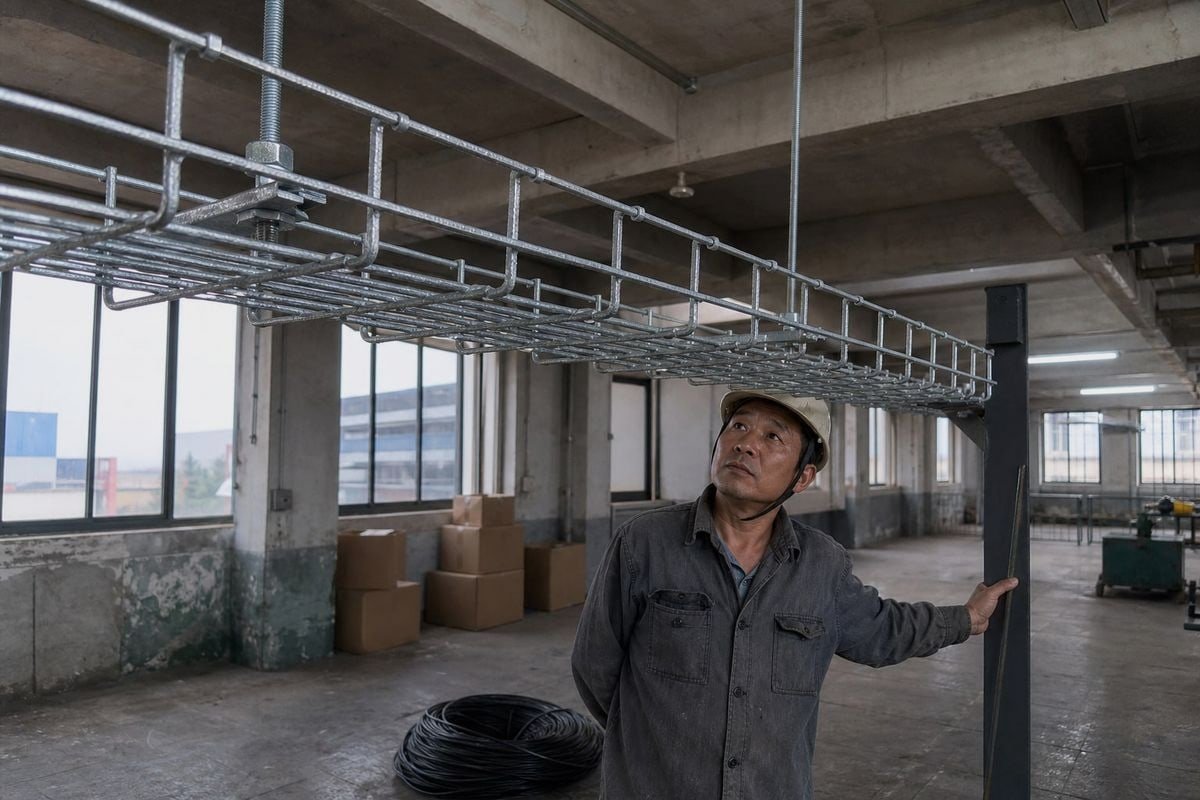
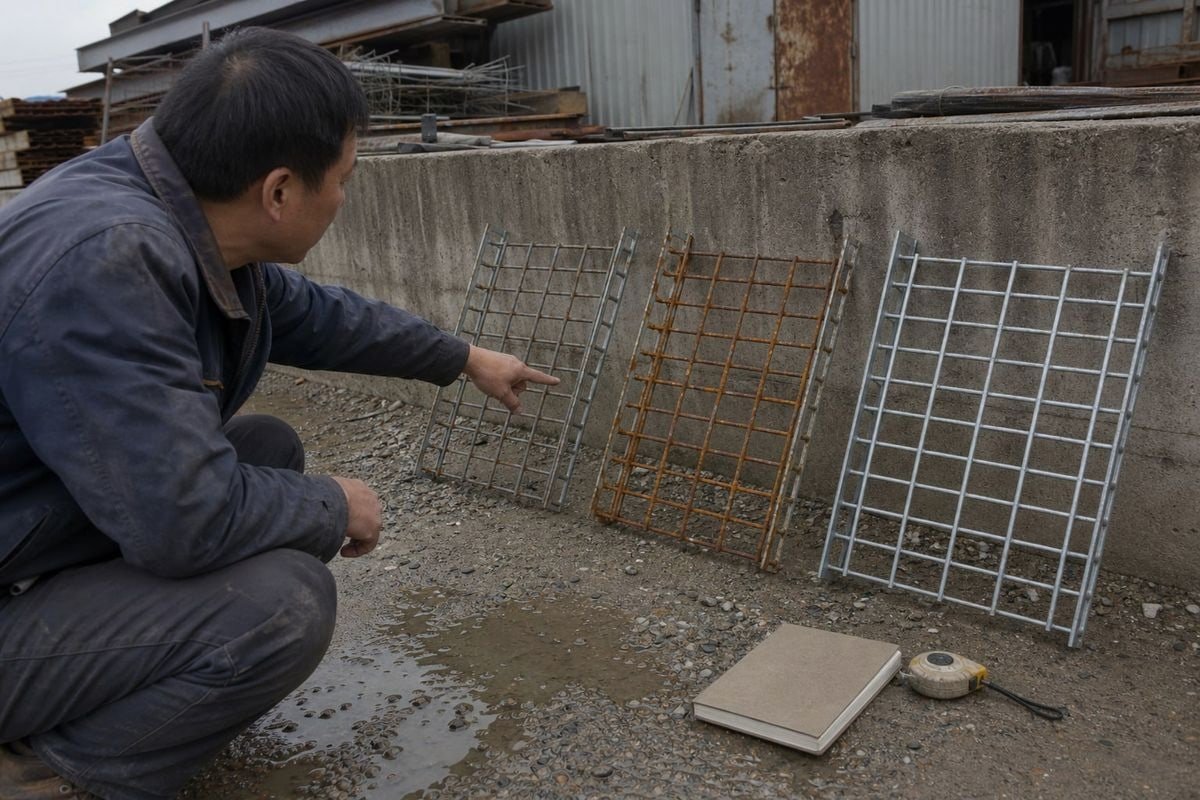
A rusted cable tray can shut down an entire plant. I have seen it happen on projects our factory supplied years ago, before we pushed clients toward hot dipped galvanized wire mesh cable tray. Ordinary finishes fail fast in humid or coastal environments, and replacing corroded trays mid-project costs far more than specifying the right coating from day one.
Hot dipped galvanized wire mesh cable tray is a welded steel wire basket for routing cables, immersed in molten zinc after fabrication. The process seals every weld and cut edge with a thick zinc coating, typically 60–80 microns, giving strong corrosion resistance for outdoor, industrial, and coastal environments.
Let me break this down piece by piece. We will look at the coating process, the standards, the sizing decisions, and how this tray compares with other options.
How Does Hot Dipped Galvanizing Improve My Cable Tray’s Corrosion Resistance?
At our workshop in Tai’an, we weld the entire wire basket first. Only then does the finished tray go into the zinc bath. That sequence matters more than most buyers realize.
Hot dipped galvanizing immerses the fully welded tray into a molten zinc bath at roughly 400–500°C. The zinc bonds metallurgically with the steel, forming alloy layers over 65μm thick that cover every weld point, wire intersection, and cut edge, delivering far stronger corrosion resistance than electro-galvanized finishes.
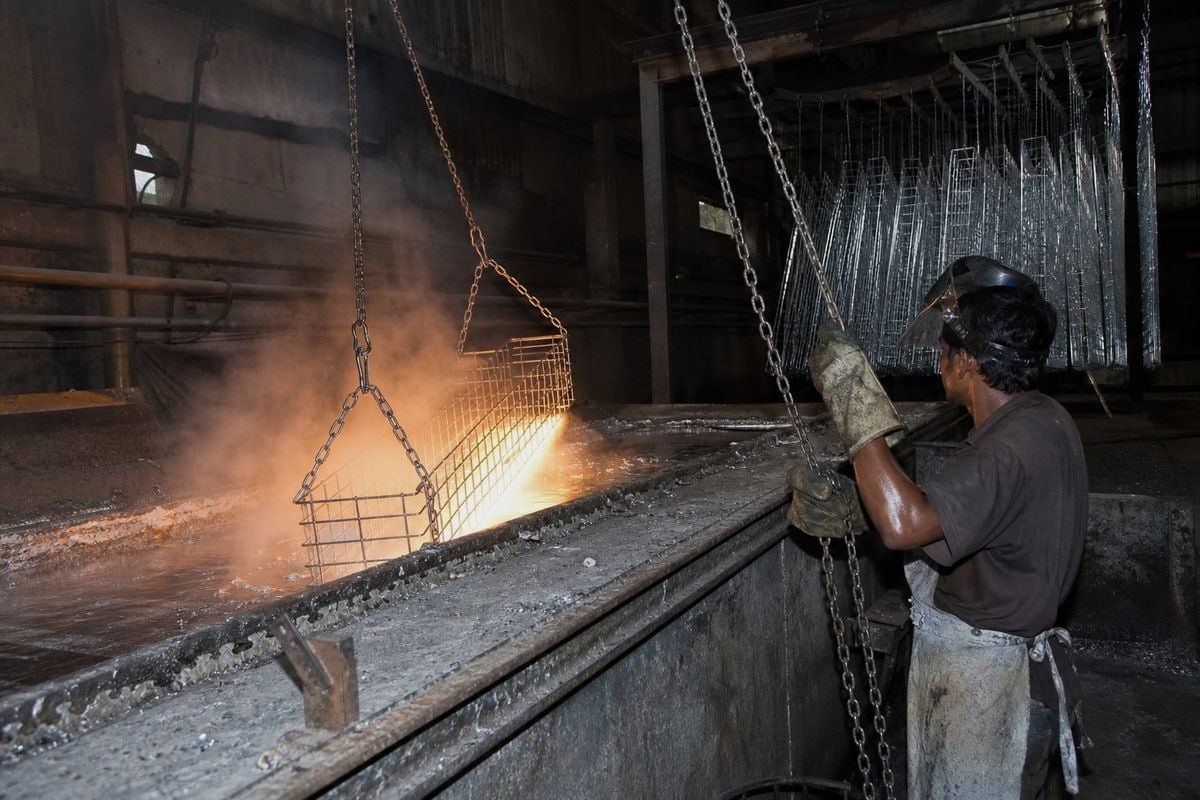
The key idea is simple. Fabrication comes first. Galvanizing comes second. When the tray enters the molten zinc bath 1, the liquid zinc flows into every corner. It coats the weld joints. It seals the cut wire ends. Nothing is left exposed.
Compare this with pre-galvanized steel. There, the coating is applied to the wire before welding. Every weld then burns away the zinc at that exact spot. Every cut leaves bare steel. Those small bare points become the starting line for rust.
Why the Metallurgical Bond Matters
Hot dip galvanizing does not just paint zinc onto the surface. The molten zinc reacts with the steel and forms zinc-iron alloy layers. Some of these layers are actually harder than the base steel itself. This gives the coating strong resistance to delamination during vibration or even seismic events. In our experience shipping to industrial plants in Southeast Asia, this durability is what keeps trays intact through years of heavy equipment vibration.
Coating Thickness in Real Terms
| Finish Type | Typical Zinc Coating Thickness | Weld Protection |
|---|---|---|
| Hot dipped galvanized | 60–80 microns (our trays exceed 65μm) | Full — coated after welding |
| Pre-galvanized steel | 12–20 microns | None at welds and cuts |
| Electro-galvanized | 5–12 microns | None at welds and cuts |
Thicker zinc means longer life. Zinc corrodes sacrificially, protecting the steel underneath. A coating three to five times thicker simply buys decades more service, especially in coastal environments where salt-heavy air attacks thin finishes within a few years.
What Are the Key Manufacturing Standards I Should Verify Before Ordering?
A project director in Singapore once asked me for our coating test reports before he would even discuss pricing. He was right to ask. Standards are where good suppliers separate from cheap ones.
Verify that the zinc coating complies with ASTM A123 or ISO 1461, which set minimum zinc coating thickness based on steel gauge. Also confirm the tray system itself meets IEC 61537 for mechanical performance, safe working load testing, and electrical continuity for grounding and bonding.
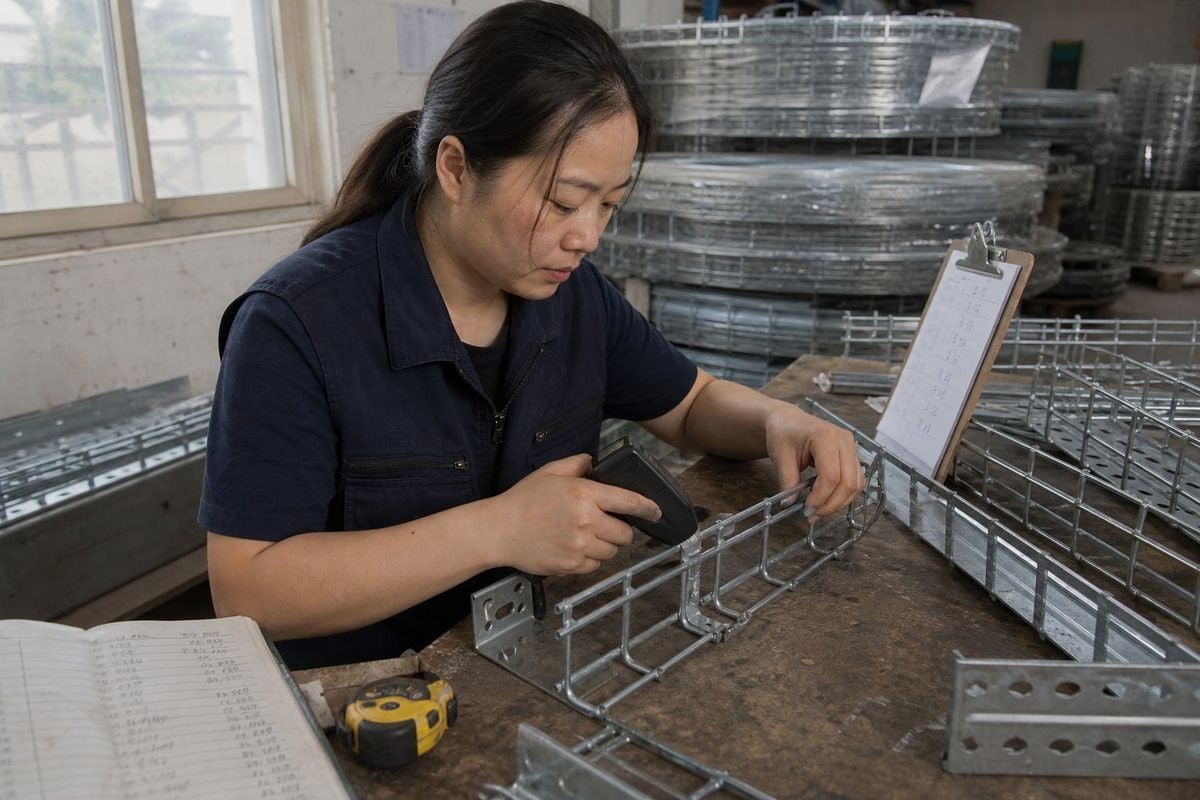
Standards protect you in two ways. They define the coating quality. They also define the mechanical performance of the tray as a system. You need both.
The Coating Standards
ASTM A123 and ISO 1461 (often referenced in Europe as BS EN 1461) govern hot dip galvanizing. Both standards tie the minimum zinc coating thickness to the thickness of the steel being coated. Thicker wire demands a thicker coating. For typical wire mesh tray gauges, market literature cites values from 45 microns minimum up to 70–120 microns depending on the wire diameter and the manufacturer. When we run quality checks before shipment, we measure coating thickness with a magnetic gauge at multiple points, because a single average number can hide thin spots at bends.
The System Standard
IEC 61537 is the international standard for cable tray and cable ladder systems. It covers:
- Safe working load 2 testing at defined support spans.
- Deflection limits under rated load.
- Electrical continuity for grounding and bonding across joints.
- Impact resistance and temperature classification.
- Corrosion classification of the finish.
Ask your supplier for test reports referencing these clauses. Vague claims like “heavy duty” mean nothing without a tested span and load figure.
What to Request Before Ordering
| Document | What It Proves |
|---|---|
| Galvanizing certificate (ASTM A123 / ISO 1461) | Zinc coating thickness meets standard |
| IEC 61537 load test report | Safe working load at your support spacing |
| Material certificate | Base steel grade (commonly Q235 carbon steel) |
| Continuity test data | Suitability for grounding and bonding |
One more caution from our export experience. Manufacturer claims on coating thickness and salt-spray life vary widely. Do not accept a single universal number as definitive. Ask how the figure was measured and on which wire gauge.
How Do I Choose the Right Wire Mesh Size and Load Capacity for My Project?
There is a trade-off I walk buyers through on almost every quotation: a wider, deeper tray costs more per meter, but under-sizing forces expensive rework once the cable schedule grows. Getting the size right up front is cheaper.
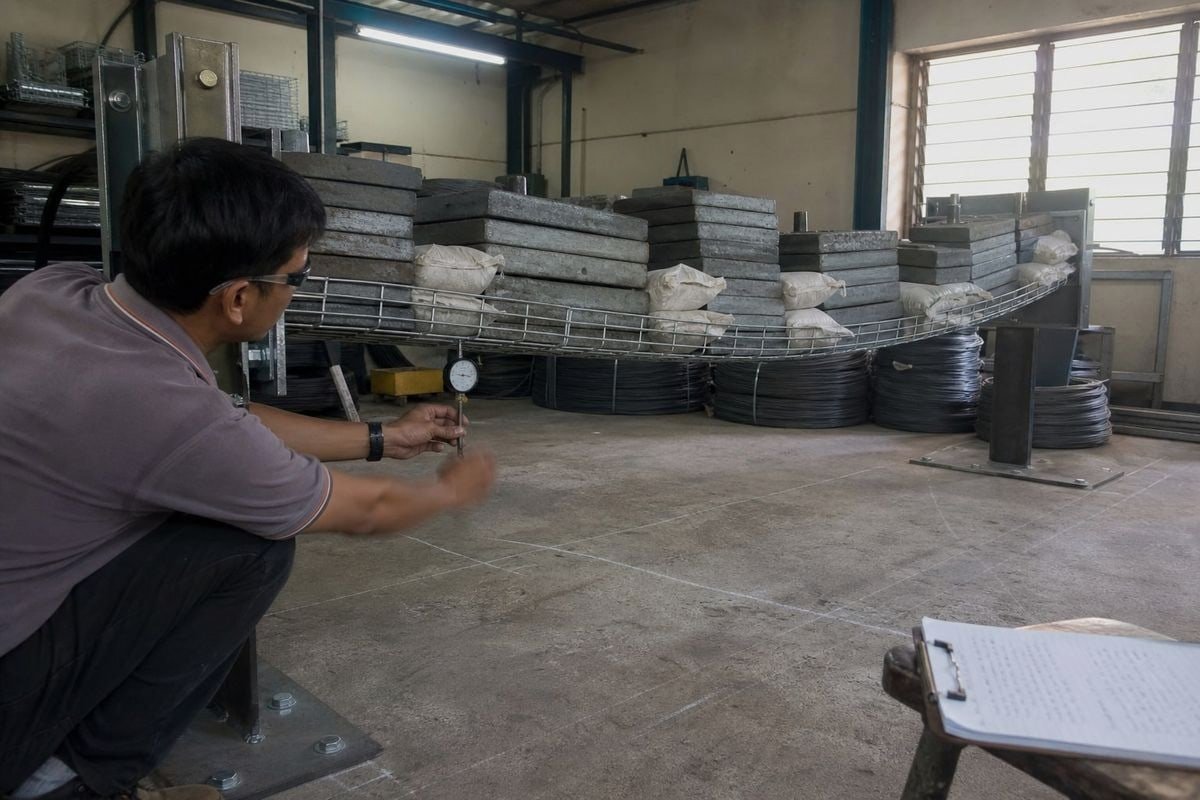
Choose tray width and depth based on your total cable cross-section plus 30–50% spare capacity, then verify the safe working load at your planned support spacing against the combined cable weight. Wire mesh trays suit light-to-medium loads such as data, control, and fiber cables.
Sizing a wire mesh cable tray comes down to three questions. How many cables will it carry? How heavy are they? How far apart are your supports?
Step One: Calculate Fill
Add up the cross-sectional area 3 of every cable. Then apply a fill ratio, usually no more than 50% of the tray’s internal area. This leaves room for heat dissipation and future additions. Data centers in particular add cables constantly, so we recommend our EPC clients plan for at least 30% spare capacity from day one.
Step Two: Check the Load
Weigh your cables per meter. Compare the total against the tray’s safe working load at your support spacing. Closer supports raise the allowable load. Wider spans reduce it. Here is a simplified guide based on typical wire mesh tray configurations:
| Tray Width | Typical Application | Suggested Support Spacing |
|---|---|---|
| 50–100 mm | Fiber, light control cables | 1.5–2.0 m |
| 150–300 mm | Mixed data and power branch circuits | 1.2–1.5 m |
| 400–600 mm | High-density data center runs | 1.0–1.2 m |
Step Three: Respect the Limits
Be honest about the weaknesses. Wire mesh tray has lower load capacity than ladder tray. It is not the right choice for very heavy or extra-large-diameter power cables. For those, we quote cable ladder instead. Also account for the added weight of the zinc-iron alloy layer itself; modern BIM workflows now include HDG-specific data sets so structural load simulations stay accurate.
Why Should I Select Hot Dipped Galvanized Wire Mesh Tray Over Other Cable Tray Types?
We produce all four major tray types — ladder, perforated tray, trunking, and wire mesh — so I have no reason to oversell any one of them. Each has a home. The question is whether mesh fits yours.
Choose hot dipped galvanized wire mesh tray when you need extreme light weight, maximum heat dissipation, flexible cable fixing, and a dust-free structure with strong corrosion resistance. It outperforms ladder, perforated tray, and trunking on airflow and installation speed, though it offers less physical protection.
Here is how the four common systems compare at a glance:
- Wire mesh tray: lightest, best airflow, fastest to modify on site.
- Perforated tray: moderate protection, moderate airflow, heavier.
- Cable ladder: highest load capacity for heavy power cables.
- Trunking: full enclosure, best protection, worst heat dissipation.
The Four Core Advantages of Mesh
The mesh structure delivers what I call “light, breathable, economical, and clean.”
First, extreme light weight. Mesh tray weighs far less than perforated tray or ladder. That reduces the demands on hangers and supporting structures, cuts installation labor, and suits spaces with limited load-bearing capacity.
Second, superior heat dissipation. With over 80% open space, air flows freely around every cable. Of the four tray types, mesh has the best cooling performance. Almost no heat accumulates, so the impact on power cable current-carrying capacity is minimal.
Third, flexible fixing. The grid works like a net. You can strap cables with ties at any position and any angle. This is especially handy for bundles of small control and fiber cables.
Fourth, no dust and no standing water. The open grid simply cannot accumulate dirt or pooled water. In pharmaceutical or food processing clean rooms, this matches hygiene requirements, while the hot dipped zinc layer resists the moisture from frequent washdowns.
The Honest Limitations
Mesh offers the weakest protection of the four types. It does not block dust, water, or rodents. Its load capacity is lower, so heavy feeder cables belong on ladder instead. And in extremely aggressive chemical settings, stainless steel may outperform HDG despite its higher cost.
Where It Shines
Typical applications include equipment-dense server rooms and telecom bases, clean production workshops, and temporary or light-duty routing for control and fiber cables. For data centers there is one more critical point: hot dip galvanizing eliminates the risk of zinc whiskers 4 — microscopic conductive filaments that grow on electroplated surfaces and can cause short circuits in sensitive equipment. It also scores well in LEED and BREEAM assessments, since both the steel and the zinc coating are 100% recyclable.
Conclusion
Choosing the wrong finish means rust, rework, and delays. Hot dipped galvanized wire mesh cable tray solves this with a thick zinc coating, light weight, and superior airflow — verify ASTM A123 and IEC 61537 compliance before you order.
Footnotes
- Authoritative resource for hot-dip galvanizing processes, standards, and corrosion protection performance. ↩︎
- International standards body that defines testing requirements for cable tray safe working loads. ↩︎
- Professional association for electrical engineering, providing standards for cable sizing and installation. ↩︎
- NASA research on the growth of conductive zinc whiskers and their impact on electronic systems. ↩︎