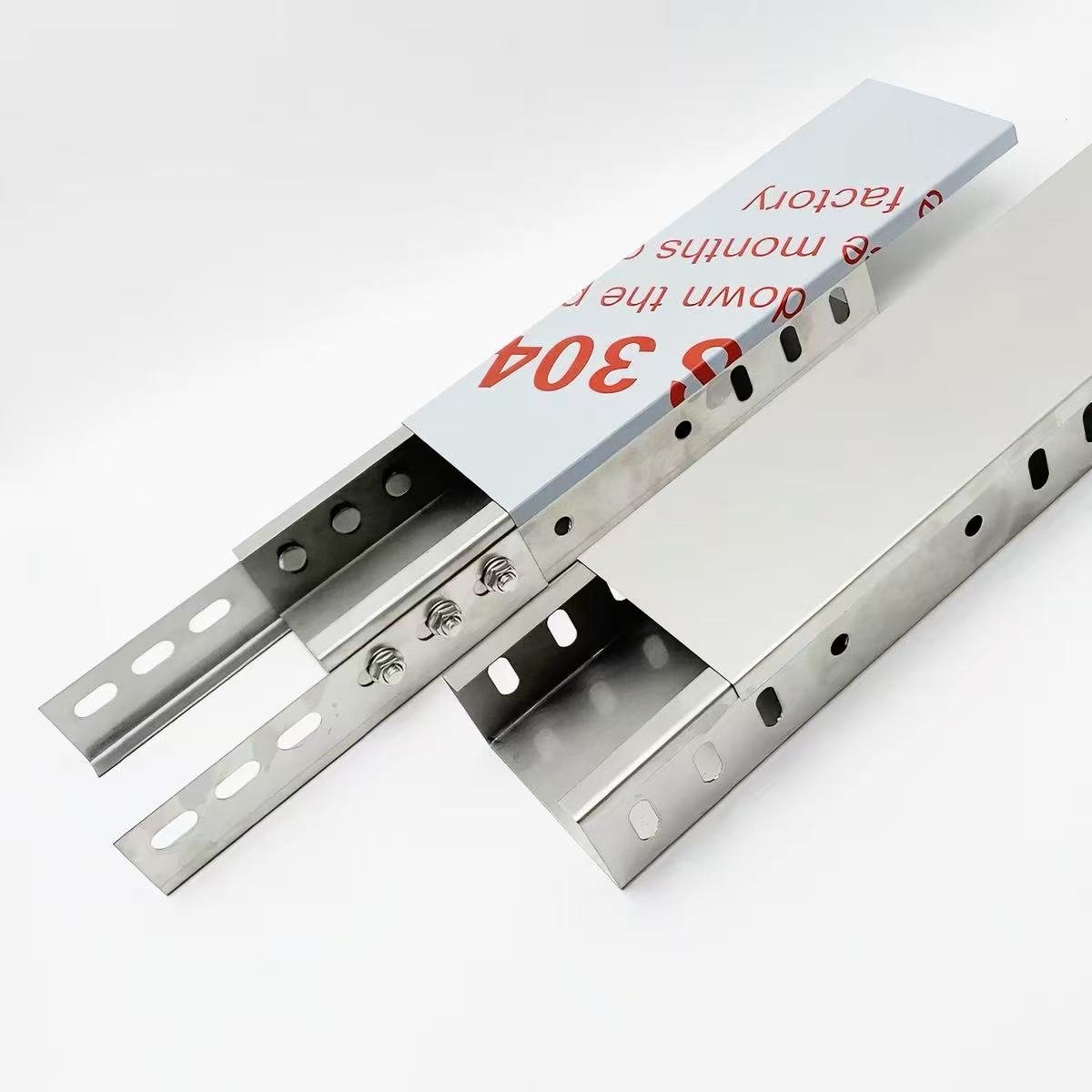
Stainless steel 304 cable trunking is one product our Tai’an factory ships most often to food plants. Buyers keep asking me why galvanized trunking fails so fast in washdown areas.
Stainless steel 304 cable trunking is a fully enclosed cable management system made from austenitic stainless steel (18% chromium, 8% nickel). Its base, side walls, and cover form a closed channel that protects cables from moisture, dust, chemicals, and impact in corrosive or hygienic environments.
That is the short answer. But choosing the right trunking involves trade-offs. Let me walk you through the comparisons, applications, customization options, and sourcing tips I share with my EPC clients.
How Does Stainless Steel 304 Compare to Other Materials for My Cable Trunking Needs?
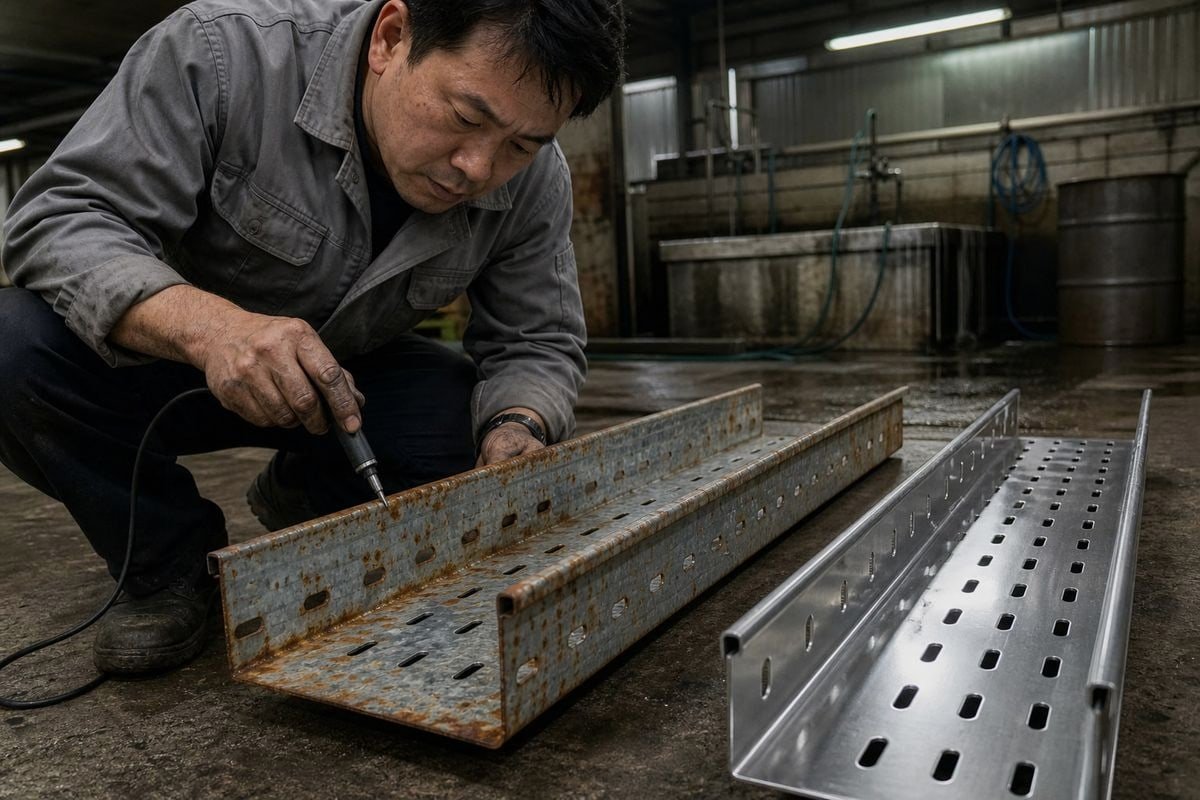
A project director in Singapore once sent me photos of rusted galvanized trunking after only two years near a chemical wash bay. That conversation shaped how I explain material choices today.
Grade 304 stainless steel outperforms galvanized steel and plastic in corrosion resistance, hygiene, and lifespan, thanks to a self-healing chromium oxide layer. However, Grade 316 remains the better choice for chloride-rich marine environments, while galvanized trunking stays cheaper for dry indoor use.
Here is the quick comparison I send to procurement managers before we talk specs:
| Material | Corrosion Resistance | Relative Cost | Best Environment |
|---|---|---|---|
| 304 Stainless Steel | Excellent (self-healing passive film) | 3–4x hot-dip galvanized | Washdown, chemical, hygienic indoor |
| 316 Stainless Steel | Superior (chloride resistance) | Highest | Marine, coastal, salt spray |
| Hot-Dip Galvanized | Moderate (zinc coating wears) | Baseline | Dry indoor, standard commercial |
| Plastic (PVC) | Good vs. moisture, weak vs. heat | Lowest | Light-duty office wiring |
Why the Passive Film Matters
Galvanized trunking relies on a zinc coating. Once that coating scratches or wears, rust starts and spreads. Stainless steel 304 works differently. Its chromium content forms a dense passive oxide film 1 across the entire surface. If you scratch it, the film re-forms on its own. In our experience exporting to Southeast Asian water treatment plants, this self-repair ability is what separates a 20-year installation from a 5-year one.
Where 304 Falls Short
I always tell buyers two honest things. First, 304 is not the top marine grade alternative. In chloride-heavy conditions—seawater spray, coastal salt air—it can suffer pitting corrosion 2, and pitting can begin at surprisingly low salt concentrations. Grade 316 adds molybdenum for exactly this reason. Second, stainless steel conducts heat worse than carbon steel. Combined with a fully enclosed body, heat dissipation is the biggest weakness of this product. So the material choice must match the environment and the cable type, not just the budget.
What Applications Are Best Suited for SS304 Cable Trunking in My Project?
Before quoting any enclosed trunking order, our team asks one question first: what cables will run inside it? The answer decides whether SS304 trunking is the hero or the wrong tool entirely.
SS304 cable trunking excels in food processing, pharmaceutical, chemical, semiconductor, and high-humidity coastal indoor environments. It best protects control cables, communication cables, and fiber optics. It is not suitable for large power cables, because the enclosed design limits heat dissipation and reduces current-carrying capacity.
The Four Strongest Use Cases
Based on the projects we have supplied across Singapore, the Philippines, and Thailand, these scenarios justify the premium every time:
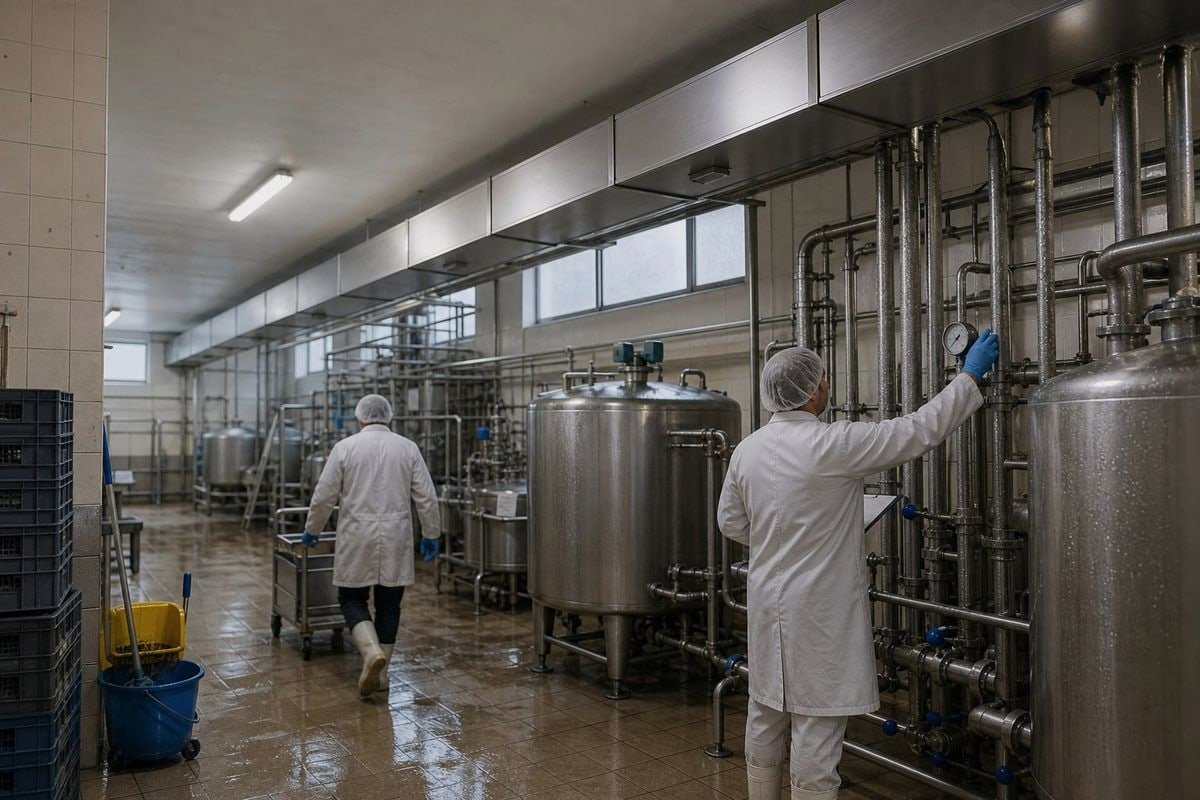
- Hygienic industrial environments. Food, beverage, dairy, and pharmaceutical workshops need surfaces that survive frequent washdowns and harsh sanitizing chemicals. The non-porous, smooth surface of 304 resists bacterial accumulation and makes hygienic cable routing straightforward.
- Chemical exposure zones. Control and instrumentation lines in chemical plants face corrosive gases and liquid splashes. Enclosed 304 trunking shields them reliably.
- High-cleanliness facilities. Semiconductor and electronics plants demand containment that produces no dust and cleans easily. The brushed surface finish does not shed particles and does not trap grime.
- Coastal or high-humidity indoor sites. Low-voltage and ELV systems in humid indoor spaces benefit from the protection, as long as direct salt spray is absent.
One More Hidden Benefit: EMI Shielding
The continuous, closed metal shell acts like a Faraday cage. It shields internal cables from electromagnetic interference 3. That makes SS304 trunking a smart choice for sensitive data lines, instrumentation signals, and control wiring in data centers and automated plants. Open trays cannot offer this.
The Heat Limitation, Stated Plainly
Enclosed containment traps heat. Stainless steel worsens this because it conducts heat poorly. Running large-diameter power cables inside can cause heat buildup that derates the cables and shortens their service life. For heavy power circuits, I steer clients toward our ladder trays instead. Match the product to the load, and both perform well.
How Can I Customize SS304 Cable Trunking for My Specific Requirements?
Last year, an EPC contractor asked us to develop a divided trunking run for a pharmaceutical plant, mixing power and fiber in one footprint. That OEM project taught us how far customization can stretch this product.
SS304 cable trunking can be customized in width, height, sheet thickness, length, surface finish, lid style, and internal dividers. Manufacturers also supply matched installation accessories—couplers, flat bends, tees, and risers—and can add gaskets or perforations to adjust protection levels for specific projects.
Core Dimensions and Options
At our factory, most custom orders adjust these variables:
| Parameter | Common Options | What It Affects |
|---|---|---|
| Width x Height | 50×50 mm up to 800×200 mm | Cable fill capacity |
| Sheet Thickness | 0.8–2.0 mm | Load strength and rigidity |
| Length | 2 m, 2.5 m, 3 m standard | Installation speed, joint count |
| Lid Style | Overlapping, flush, hinged, gasketed | Access and ingress protection |
| Finish | Brushed (satin), 2B mill, polished | Cleanability and aesthetics |
| Dividers | 1–3 internal compartments | Circuit segregation |
Multi-Compartment Designs Are Trending
More projects now request multi-compartment trunking. Internal dividers let you run power, control, and fiber optic cables in one enclosure while keeping circuits segregated. This saves ceiling space and mounting labor. It also supports newer facilities that integrate low-voltage IoT sensor wiring alongside conventional circuits.
Protection Level and Ventilation Choices
You can also tune the enclosure itself. A tight-fitting lid gives a solid IP4X protection rating against tools and small objects. Adding gaskets improves dust and splash resistance further. Going the other way, we can punch slotted perforations in the side walls to improve airflow when mild heat dissipation matters. As a rule I share with buyers: non-perforated bodies suit outdoor or washdown areas better, while perforated versions suit dry indoor runs.
The Accessory Ecosystem
Straight lengths alone do not build a route. A complete cable management system needs installation accessories: internal couplers, flat bends, tees, crosses, reducers, and end caps. When we quote a project, we always generate the accessory list from the routing drawings. Missing fittings cause the delivery delays that frustrate project directors most, so we lock the full bill of materials before production starts.
What Should I Look for When Sourcing a Reliable SS304 Cable Trunking Supplier?
The costliest mistake I have seen a wholesaler make was accepting “stainless steel” trunking without verifying the grade. The material turned out to be 201 stainless, and it rusted within months on site.
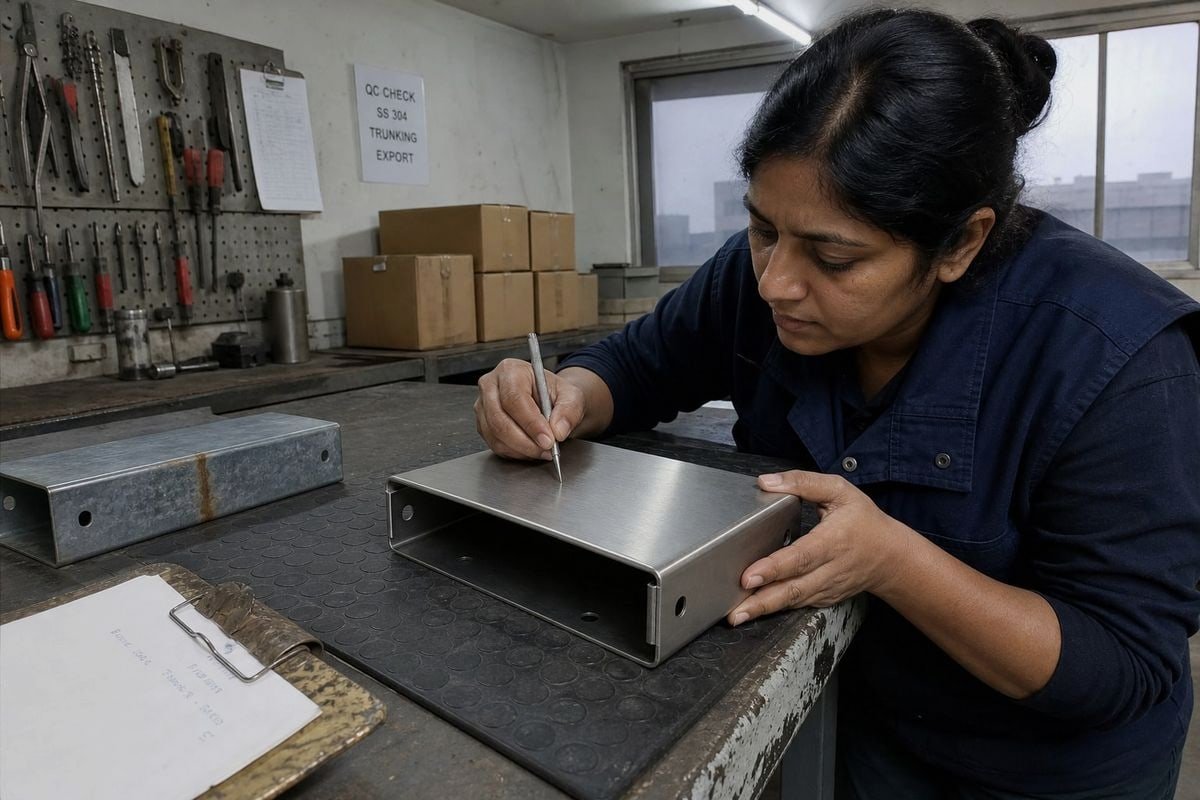
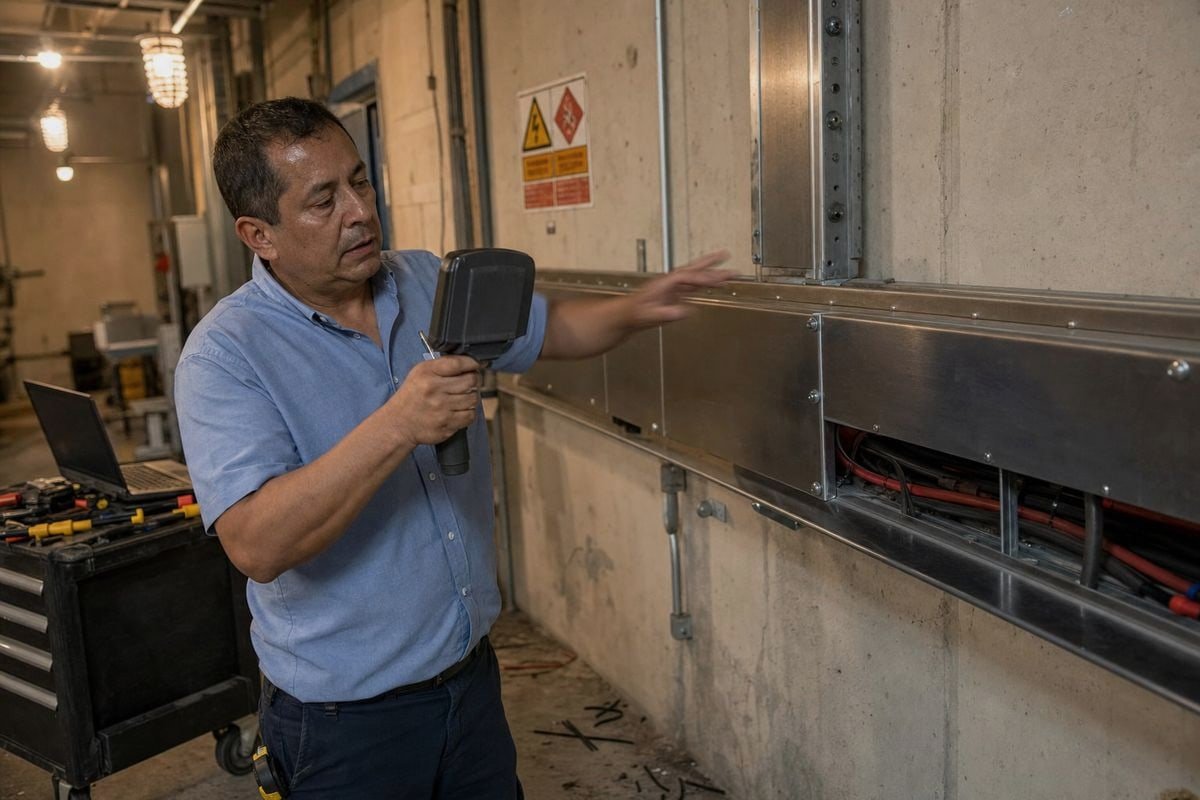
Look for verified 304 material certificates, consistent sheet thickness, clean fabrication quality, a full accessory range, realistic lead times, and export experience. Reliable suppliers provide mill test reports, pre-shipment QC photos, proper sea-freight packaging, and responsive communication throughout production and logistics.
A Practical Sourcing Checklist
Here is the checklist I encourage every buyer to use, whether they buy from us or not:
| Check Point | What to Ask For | Red Flag |
|---|---|---|
| Material Grade | Mill test report for AISI 304 / 1.4301 | “Stainless” with no certificate |
| Thickness | Micrometer readings at multiple points | Thickness only measured with coating |
| Fabrication | Sharp, consistent right-angle bends; deburred edges | Wavy edges, burrs, uneven lids |
| Accessories | Matching bends, tees, couplers in same grade | Fittings in a different material |
| QC Process | Pre-shipment inspection photos or video | Refusal to share production images |
| Packaging | Protective film, corner guards, seaworthy crates | Bare bundles that scratch in transit |
Why Grade Verification Comes First
Grade 304 is the world’s most common austenitic stainless steel 4, and that popularity attracts substitutes. Cheaper grades like 201 look identical when new. Ask for the mill test report tied to your batch. Some buyers also request spot testing with a spectrometer or nitric acid test kit. We welcome these checks because they protect both sides.
Logistics and Lead Time Discipline
For industrial electrical containment, late delivery can stall an entire site. When we work with project contractors in Singapore or the Philippines, we agree on a production schedule with milestone photos: raw material arrival, forming, finishing, and packing. Trunking lids and bodies ship nested to save container space, with protective plastic film on the brushed surface finish to prevent scratches during handling.
Cost Honesty
Expect SS304 trunking to cost three to four times more than ordinary hot-dip galvanized trunking, sometimes more, because the material is expensive and the enclosed box uses more steel than a ladder design. A supplier quoting dramatically below market is usually cutting the grade or the thickness. Mid-range pricing with verified material is the safer buy over a project’s lifetime.
Conclusion
Stainless steel 304 cable trunking delivers top-tier protection and corrosion resistance for control, data, and fiber cables in hygienic and chemical environments. Choose the grade, size, and supplier carefully, and it outlasts every cheaper alternative.
Footnotes
- Scientific overview of the passivation process that protects stainless steel from rust. ↩︎
- Technical explanation of localized corrosion affecting stainless steel in chloride environments. ↩︎
- Official regulatory context for electromagnetic compatibility and interference shielding requirements. ↩︎
- Authoritative scientific definition of austenitic stainless steel properties and composition. ↩︎