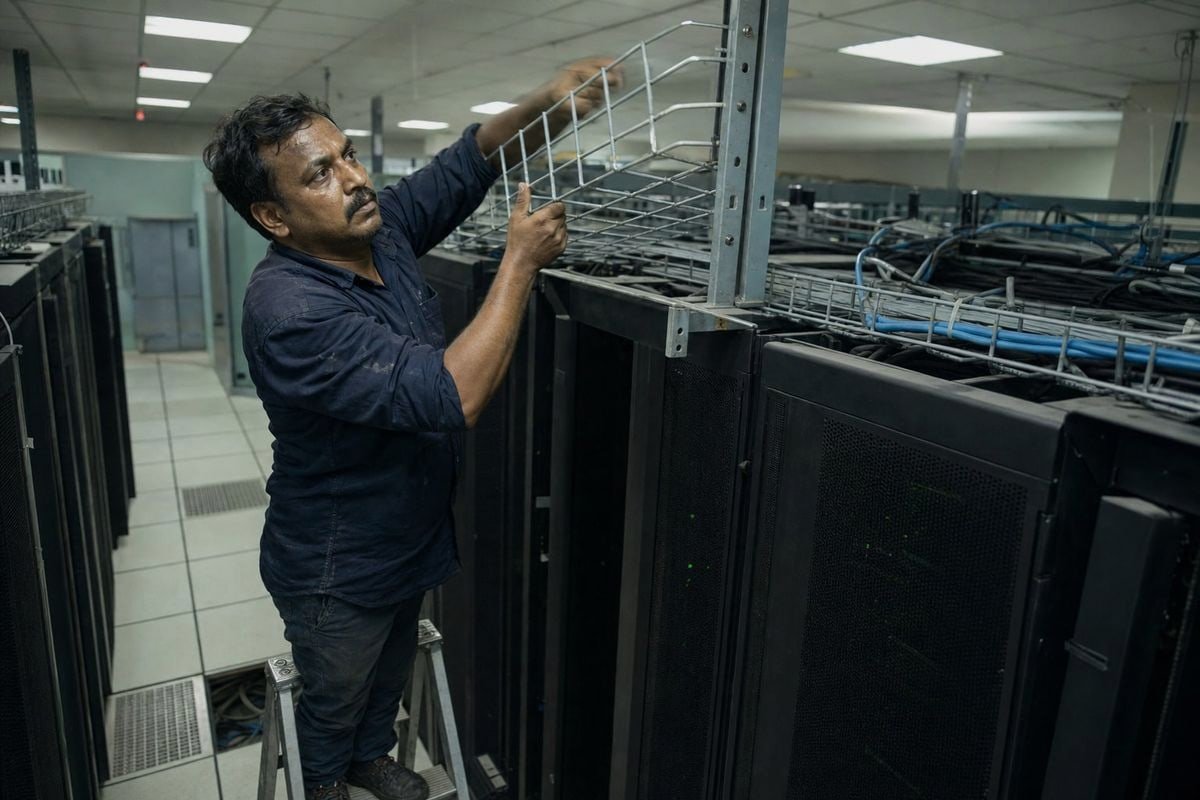
Data centers choke on heat and cable clutter fast PUE in high-density data centers 1. On our production line in Tai’an, wire mesh cable trays are the product data center buyers ask about most—and for good reason.
Wire mesh cable trays are ideal for data center cable management because their open-grid design improves airflow and cooling, supports high-density cabling with strong load capacity, allows fast cable additions at any point, and lowers total cost of ownership across the facility’s 10–15 year lifecycle.
Let me break this down properly. I will cover airflow, load capacity, future maintenance, and the certifications you should demand before you sign any purchase order.
How Can Wire Mesh Cable Trays Improve Airflow and Cooling Efficiency in My Data Center?
A Singapore project director once asked me why his server room ran hot despite good CRAC units. We traced it to solid trunking blocking the underfloor cold-air path.
Wire mesh cable trays improve cooling efficiency because their 50–80% open area lets hot and cold air flow freely around cables. This prevents heat traps inside cable bundles, reduces the load on cooling systems, and supports better PUE in high-density data centers.

Here is the point I always stress to buyers: in a data center, airflow is not a nice-to-have. It is the lifeline. Cooling systems typically consume 30–40% of a data center’s total energy. Any component that blocks air movement makes that bill worse. A wire mesh cable tray, by contrast, acts almost like a passive cooling component. The open grid lets air pass through the tray itself, so heat does not build up around dense cable bundles.
Where the Airflow Advantage Matters Most
In raised-floor environments, solid-bottom trays can block cold-air delivery to server intakes. Mesh trays avoid that obstruction. In overhead routing, the open structure lets hot exhaust air rise past the tray instead of pooling beneath it. Cables also dissipate their own heat—copper power runs warm up under load, and trapped heat degrades insulation over time.
| Tray Type | Typical Open Area | Airflow Impact | Heat Around Bundles |
|---|---|---|---|
| Wire mesh tray | 50–80% | Minimal obstruction | Low |
| Ladder tray | 60–70% (rungs) | Low obstruction | Low–moderate |
| Perforated tray | 15–30% | Moderate obstruction | Moderate |
| Solid-bottom trunking | 0% | Blocks vertical airflow | High |
One more benefit buyers often miss: the mesh design collects less dust than enclosed conduits. Less debris means fewer maintenance visits and a lower fire risk. When we quote data center projects, I frame airflow as an operating-cost issue, not a product feature. That reframing usually changes the conversation.
What Load Capacity Do I Need From Wire Mesh Cable Trays to Support High-Density Cabling?
The trade-off I weigh most often in our workshop is wire diameter versus tray weight. Thicker wire carries more load, but it adds cost and structural burden overhead.
For high-density data center cabling, most projects need wire mesh trays rated for 30–75 kg per meter at support spans of 1.5–2 meters. Calculate your actual cable weight per meter, add 30–50% growth margin, then match the tray’s tested safe working load.
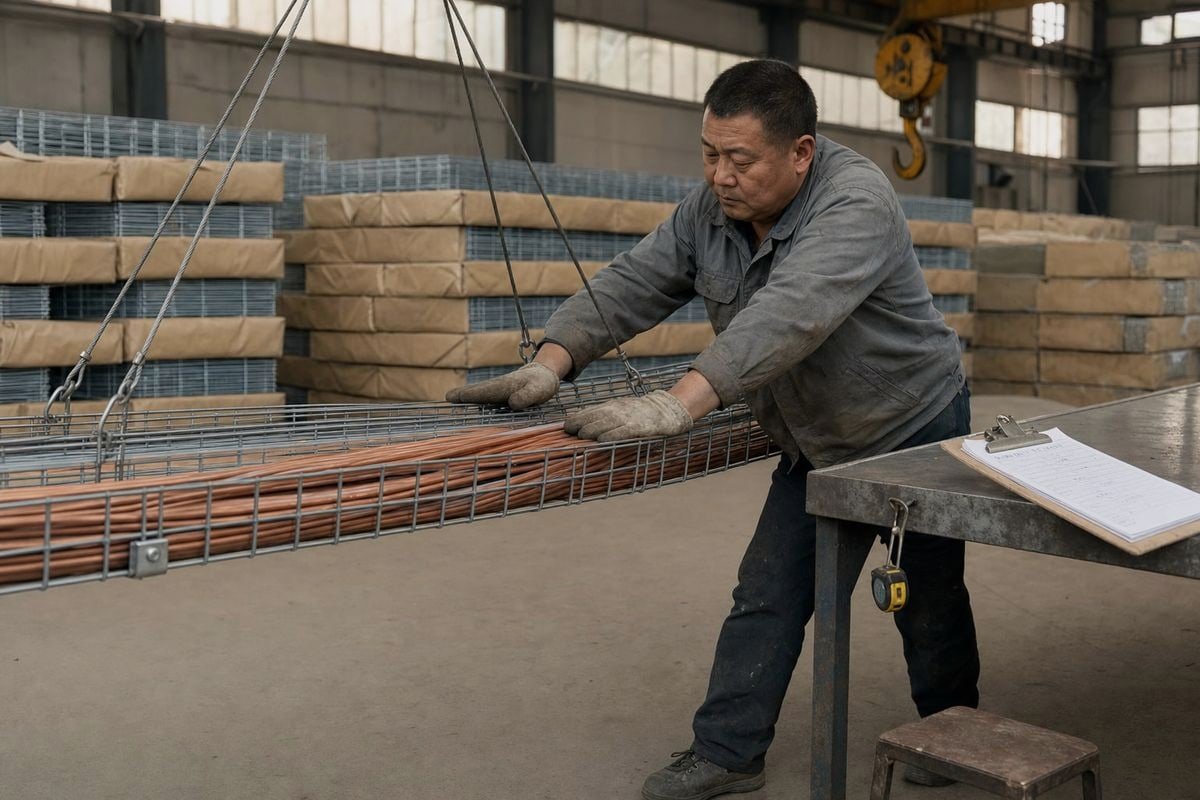
Load capacity is where I see the most costly mistakes. Buyers often size trays for today’s cable count. Then two years later, the facility adds fiber runs and power circuits, and the tray sags. Sagging trays stress cables, violate bend-radius rules 2, and look terrible during audits.
How to Calculate Your Real Load Requirement
Follow this simple process. First, list every cable type going into the tray. Second, multiply each cable’s weight per meter by its quantity. Third, add a growth margin—I recommend at least 30%, and 50% for hyperscale or AI-driven builds. Fourth, check the tray’s safe working load at your actual support span, not the shortest span in the catalog. Load ratings drop sharply as span increases.
| Cable Load Scenario | Approx. Weight per Meter | Suggested Tray Width | Typical Wire Diameter |
|---|---|---|---|
| Light fiber-only runs | 5–15 kg/m | 100–200 mm | 4–5 mm |
| Mixed copper and fiber | 15–40 kg/m | 200–400 mm | 5–6 mm |
| Dense copper plus power | 40–75 kg/m | 400–600 mm | 6 mm, reinforced edge |
At our factory, we weld trays from high-tensile steel wire and test deflection before shipment. In my experience exporting to Singapore and the Philippines, EPC engineers also care about fill ratio. Even a strong tray should not be filled past roughly 50% of its cross-section, because overfilled trays block airflow and make cable pulling difficult. Match capacity to span, load, and fill together—not any single number alone.
Can Wire Mesh Cable Trays Help Me Simplify Future Cable Additions and Maintenance?
Early in my export career, a Thai contractor taught me a lesson: he never judged a tray by its first-day install. He judged it by year five, when the changes start.
Yes. Wire mesh cable trays allow cables to be added, dropped out, or rerouted at any grid point without dismantling anything. Mesh nodes sit 25–50 mm apart, giving dense tie-off points, and the open design makes cable tracing and inspection fast.
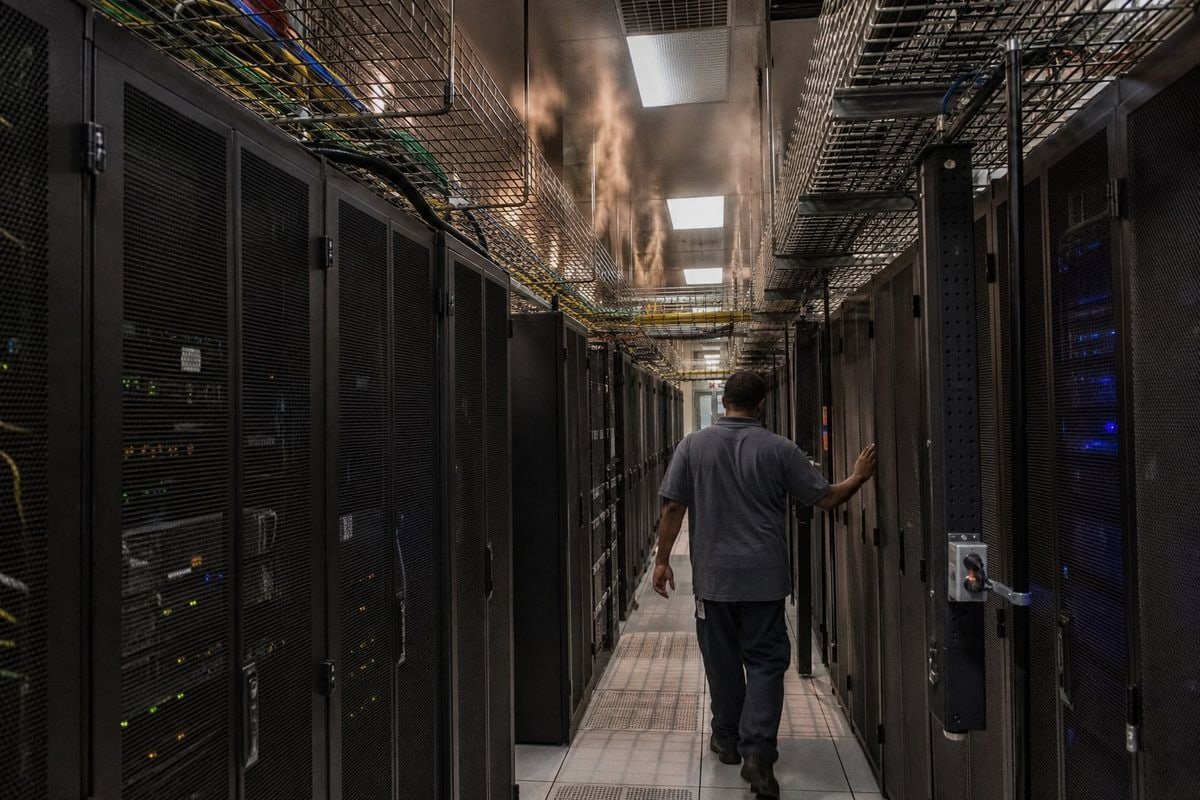
A data center lives 10 to 15 years. During that time, cabling changes constantly—new racks, new fiber, decommissioned circuits, phased expansions. This is where wire mesh cable trays quietly earn their money. Flexibility is not a marketing slogan here. It shows up directly in your total cost of ownership 3.
Why Changes Cost Almost Nothing With Mesh
Consider what a typical moves-adds-changes job looks like with each system:
- Exit at any point. The grid nodes are spaced 25–50 mm apart, so you can drop a cable out anywhere along the run. No pre-cut openings needed.
- Add cables without touching existing ones. Cable retainers and clips snap in from the top. Live cables stay undisturbed.
- Trace faults visually. The open grid lets technicians see every cable. Damaged jackets and congestion points are spotted without removing covers.
- Modify on site. Mesh trays cut and bend with simple hand tools. Tees, risers, and reducers can be field-formed in minutes.
Compare that with enclosed trunking: remove cover plates, drill exit holes, deburr edges, refit covers—all while praying you do not nick a live fiber. The change cost of mesh is close to zero; the change cost of enclosed systems compounds year after year.
Here is my honest procurement insight. The initial purchase cost of a quality wire mesh tray can run slightly higher than basic trunking. But the maintenance savings over three to five years typically cover that difference completely. I tell every buyer the same thing: compare total cost of ownership, not unit price. One fair caution—mesh offers less physical enclosure than solid systems, so dusty or high-impact industrial zones may still justify enclosed trays. Inside a clean data hall, that concern rarely applies.
Which Certifications Should I Look for When Sourcing Wire Mesh Cable Trays for My Data Center Project?
During a factory audit last year, a procurement manager spent more time checking our test reports than our welds. He was right to. Paperwork protects projects.
For data center projects, require compliance with IEC 61537 for load and safety performance, verified electrical continuity for grounding, fire-performance data appropriate to local codes, and coating certifications such as hot-dip galvanizing or stainless steel grades for corrosion resistance.
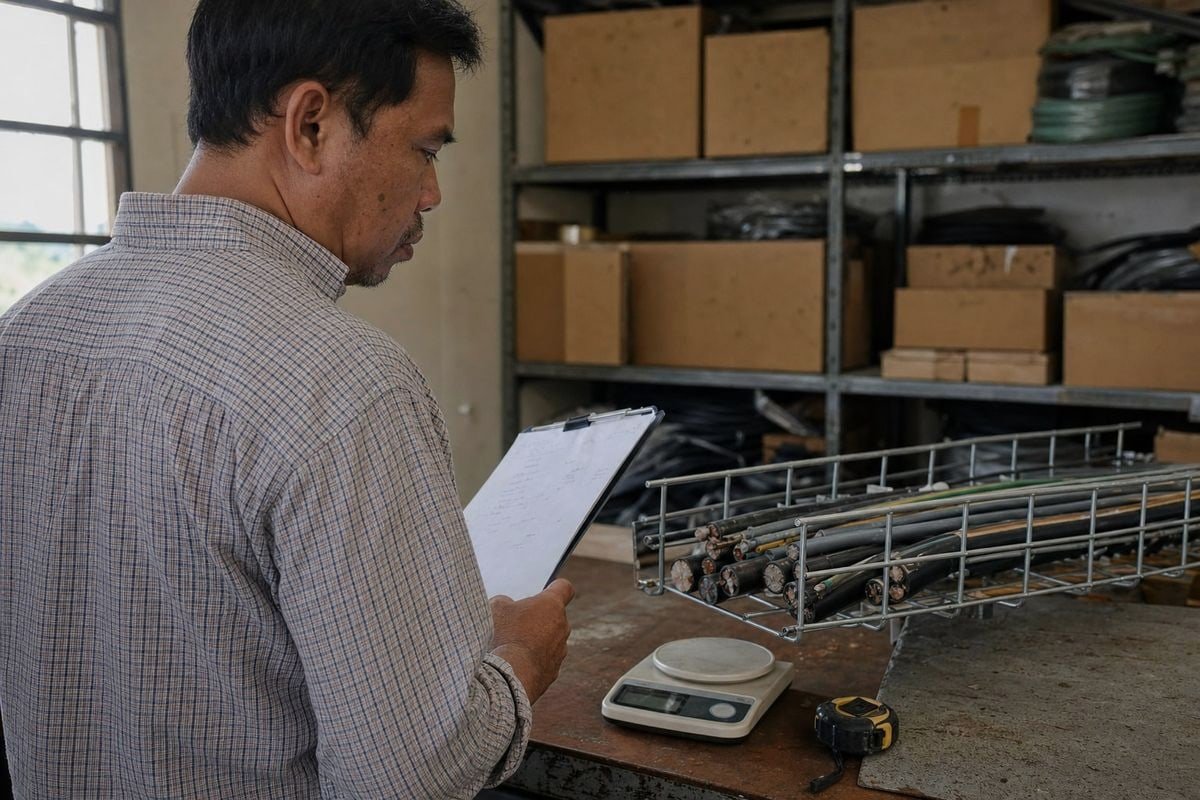
Certifications are where cheap suppliers get exposed. A tray can look fine in photos and still fail a deflection test or a continuity check. When we develop OEM orders for EPC brand owners, the specification sheet always starts with standards, not dimensions. I advise you to do the same.
The Core Standards Checklist
| Requirement Area | What to Ask For | Why It Matters in a Data Center |
|---|---|---|
| Mechanical performance | IEC 61537 4 compliance with test reports | Verifies safe working load, deflection, and impact behavior |
| Electrical continuity | Bonding and grounding test data | Mesh trays often serve as part of the equipotential bonding path 5 |
| Fire performance | Fire-resistance ratings per local code | Critical for circuit integrity 6 during emergencies |
| Corrosion protection | Hot-dip galvanizing 7, electro-zinc, or stainless steel certification | Cooling systems create humidity and condensation exposure |
| Material traceability | Mill certificates for steel wire | Confirms tensile strength matches load claims |
Match the Coating to the Environment
Not every data hall needs stainless steel. Electro-galvanized trays suit dry, climate-controlled white space. Hot-dip galvanized suits plant rooms and areas near cooling infrastructure where condensation occurs. Stainless or epoxy-coated trays fit coastal facilities or containment zones with sustained humidity. In our experience shipping to Southeast Asia, humidity is the silent killer—Singapore and Philippine projects almost always justify the upgrade from basic zinc plating.
One final sourcing tip: ask for batch test reports, not just a certificate PDF. Certificates prove a product family passed once. Batch reports prove your shipment matches. That distinction has saved more than one of my clients from a costly return dispute.
{
“@context”: “https://schema.org”,
“@type”: “FAQPage”,
“mainEntity”: [
{
“@type”: “Question”,
“name”: “Why Are Wire Mesh Cable Trays Ideal for Data Center Cable Management?”,
“acceptedAnswer”: {
“@type”: “Answer”,
“text”: “Wire mesh cable trays are ideal for data center cable management because their open-grid design improves airflow and cooling, supports high-density cabling with strong load capacity, allows fast cable additions at any point, and lowers total cost of ownership across the facility’s 10–15 year lifecycle.”
}
},
{
“@type”: “Question”,
“name”: “How Can Wire Mesh Cable Trays Improve Airflow and Cooling Efficiency in My Data Center?”,
“acceptedAnswer”: {
“@type”: “Answer”,
“text”: “Wire mesh cable trays improve cooling efficiency because their 50–80% open area lets hot and cold air flow freely around cables. This prevents heat traps inside cable bundles, reduces the load on cooling systems, and supports better PUE in high-density data centers.”
}
},
{
“@type”: “Question”,
“name”: “What Load Capacity Do I Need From Wire Mesh Cable Trays to Support High-Density Cabling?”,
“acceptedAnswer”: {
“@type”: “Answer”,
“text”: “For high-density data center cabling, most projects need wire mesh trays rated for 30–75 kg per meter at support spans of 1.5–2 meters. Calculate your actual cable weight per meter, add 30–50% growth margin, then match the tray’s tested safe working load.”
}
},
{
“@type”: “Question”,
“name”: “Can Wire Mesh Cable Trays Help Me Simplify Future Cable Additions and Maintenance?”,
“acceptedAnswer”: {
“@type”: “Answer”,
“text”: “Yes. Wire mesh cable trays allow cables to be added, dropped out, or rerouted at any grid point without dismantling anything. Mesh nodes sit 25–50 mm apart, giving dense tie-off points, and the open design makes cable tracing and inspection fast.”
}
},
{
“@type”: “Question”,
“name”: “Which Certifications Should I Look for When Sourcing Wire Mesh Cable Trays for My Data Center Project?”,
“acceptedAnswer”: {
“@type”: “Answer”,
“text”: “For data center projects, require compliance with IEC 61537 for load and safety performance, verified electrical continuity for grounding, fire-performance data appropriate to local codes, and coating certifications such as hot-dip galvanizing or stainless steel grades for corrosion resistance.”
}
}
]
}