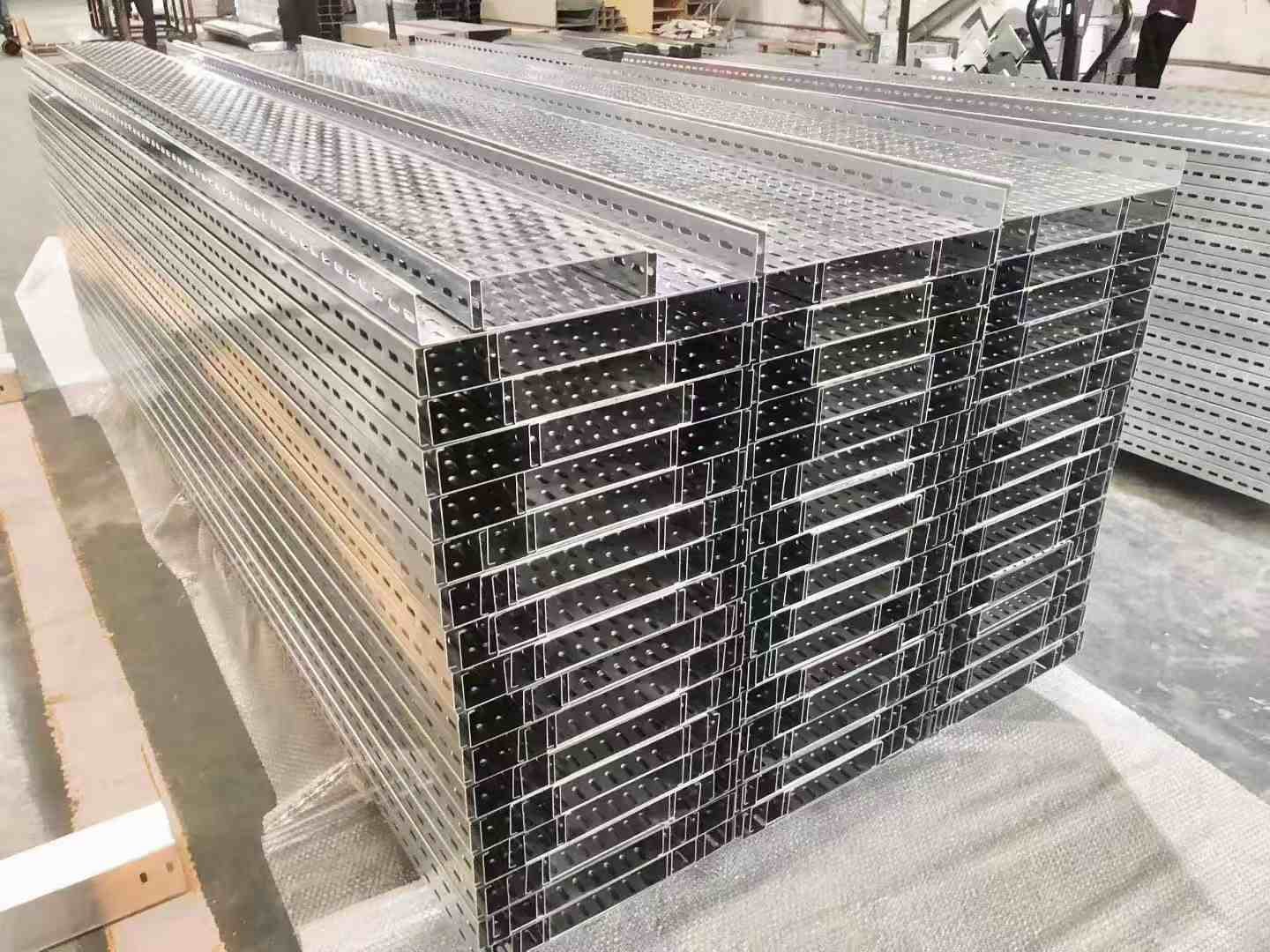
Choosing the wrong tray for a corrosive site ruins projects. I have watched coated steel trays rust within two years. That is why our factory keeps stainless steel 304 perforated cable tray in constant production.
A stainless steel 304 perforated cable tray is a U-shaped cable management system made from SS304 sheet with punched holes in its base. The perforations allow heat dissipation, ventilation, and drainage, while the 304 grade delivers strong corrosion resistance for industrial, commercial, and infrastructure cable routing.
That is the short answer. But the real value lies in the details. Let me walk you through how this tray compares, what it delivers, where it fits, and how to order it correctly.
How does 304 stainless steel perforated cable tray differ from other tray types?
I often tell buyers that the 304 perforated tray is the “all-rounder” of the stainless family. In our workshop in Tai’an, it sits between two extremes we also produce: wire mesh and closed trunking.
A 304 stainless perforated tray offers a continuous punched base, unlike ladder trays with open rungs or wire mesh with welded grids. It balances load-bearing capacity, ventilation, and cable protection, while SS304 outperforms SS202 on corrosion resistance and costs less than SS316.
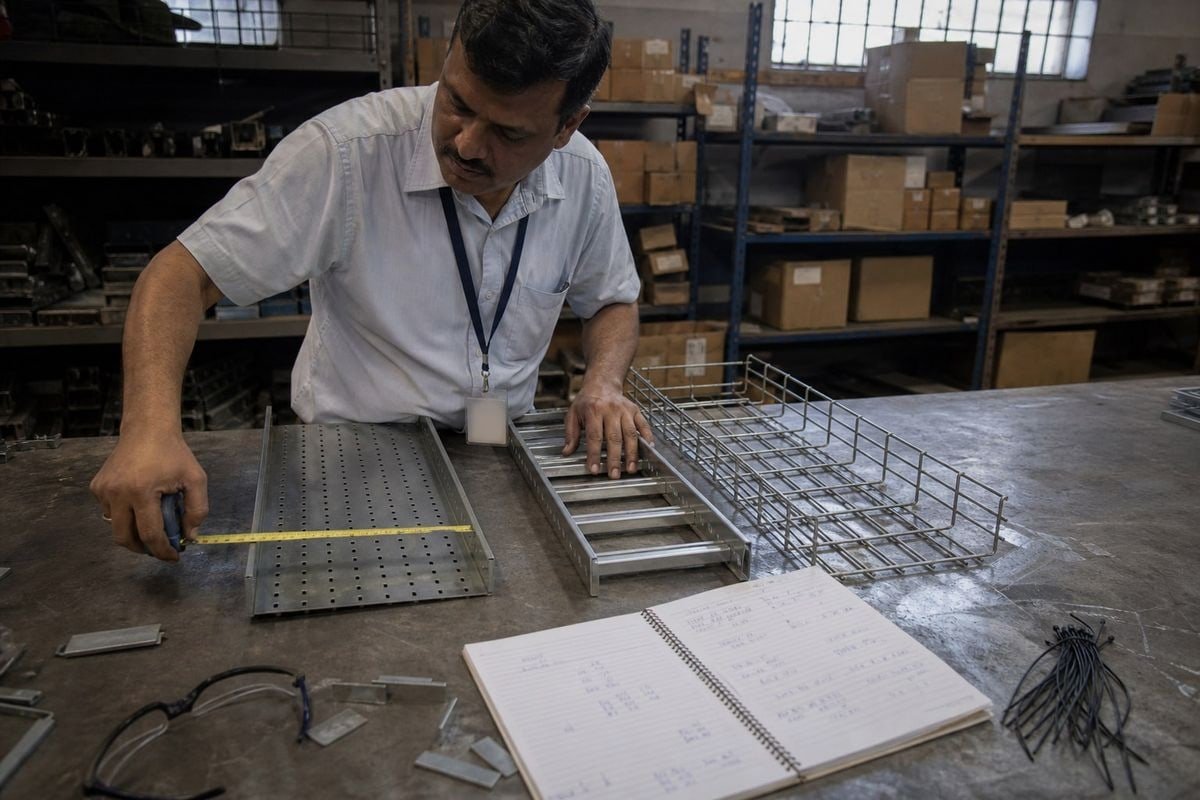
Here is the quickest way to see where the perforated design sits. Think of tray types as a spectrum. On one end, you have fully open wire mesh. On the other, fully enclosed trunking. The perforated tray lands in the middle, and that middle ground is exactly why so many engineers specify it.
Tray type comparison at a glance
| Tray Type | Ventilation | Cable Support | Protection | Typical Use |
|---|---|---|---|---|
| Perforated tray | Good | Continuous base | Moderate | Mixed power and control cables |
| Ladder tray | Excellent | Rung support only | Low | Heavy power cables, long spans |
| Wire mesh tray | Excellent | Grid support | Low | Data cables, light loads |
| Solid trunking | Poor | Full enclosure | High | EMI-sensitive or dusty areas |
The wire mesh vs perforated question comes up in almost every inquiry we receive. Mesh is lighter and faster to cut on site. But it sags under heavier bundles. A perforated tray gives small cables a flat, continuous surface. Nothing droops between rungs. Cable ties anchor directly into the holes. Visual inspection stays easy through the perforations.
Grade also matters. SS202 costs less, but its lower nickel content 1 weakens its corrosion resistance. SS316 handles chlorides better, but you pay a real premium. For most indoor corrosive environments, 304 is the balanced choice. In my experience, if a project needs some load capacity, needs heat dissipation and drainage, and demands rust resistance, the 304 perforated tray is the answer that fits “just right.”
What benefits can I expect when I choose 304 stainless steel for my cable tray project?
Last year, a water treatment contractor from Southeast Asia sent me photos of powder-coated trays that had blistered after eighteen months near a chlorination room. We replaced the run with our 304 perforated tray, and that conversation shaped how I explain this material today.
SS304 contains 18% chromium and 8% nickel, giving strong resistance to atmospheric corrosion and many chemicals. Combined with perforations, you gain heat dissipation that prevents cable derating, easy drainage, cable tie anchoring, a service life around 30 years, and lower total cost of ownership.

Let me break the benefits into three groups: material, design, and lifecycle. Each one answers a different buyer concern.
Material benefits from the 304 grade
The 18/8 chromium-nickel composition forms a passive oxide layer on the surface. This layer self-repairs when scratched. So the tray resists atmospheric corrosion 2 and a wide range of organic and inorganic chemicals without any coating. There is no zinc layer to wear off, unlike galvanized steel. The polished stainless finish also gives a cleaner appearance, which matters in visible commercial installations.
Design benefits from the perforations
The punched holes are not decoration. They do real work:
- Heat dissipation. Continuous airflow around cables prevents heat buildup. This protects insulation and avoids cable derating in dense runs.
- Drainage. Moisture and wash-down water escape instead of pooling in the tray.
- Anchoring. Every hole is a fixing point for cable ties and clamps.
- Inspection. Technicians can visually check wiring through the base without dismantling anything.
- Shielding control. The ratio of perforation to solid metal can even be engineered to provide targeted EMI/RFI shielding for sensitive data cables while keeping ventilation.
Lifecycle benefits
Here is the objection I hear most: “Stainless costs more than galvanized.” That is true upfront. But in non-saline environments, SS304 delivers roughly a 30-year lifecycle with minimal maintenance. No repainting. No re-galvanizing. Fewer replacements. The total cost of ownership ends up lower. And because SS304 is 100% recyclable and often contains high recycled content, it can contribute to LEED and green building certifications — a point EPC clients increasingly ask us about.
| Benefit Area | Galvanized Steel Tray | SS304 Perforated Tray |
|---|---|---|
| Upfront cost | Lower | Higher |
| Corrosion protection | Zinc coating, wears over time | Self-repairing passive layer |
| Expected lifespan | 10–15 years typical | ~30 years in non-saline settings |
| Maintenance | Touch-up, possible replacement | Minimal |
| Green building value | Limited | Recyclable, supports LEED credits |
Which industries and applications are best suited for stainless steel 304 perforated cable trays?
One trade-off I weigh with every client is exposure level. When a Singapore project director asked me whether 304 would survive his coastal plant, my honest answer was: it depends on how close the salt spray gets. Matching the tray to the environment is the whole game.
SS304 perforated trays suit food and beverage plants, pharmaceutical facilities, water treatment works, solar farms, oil and gas sites, and commercial infrastructure. They excel in indoor corrosive or wash-down environments, while direct marine splash zones usually justify an upgrade to SS316.
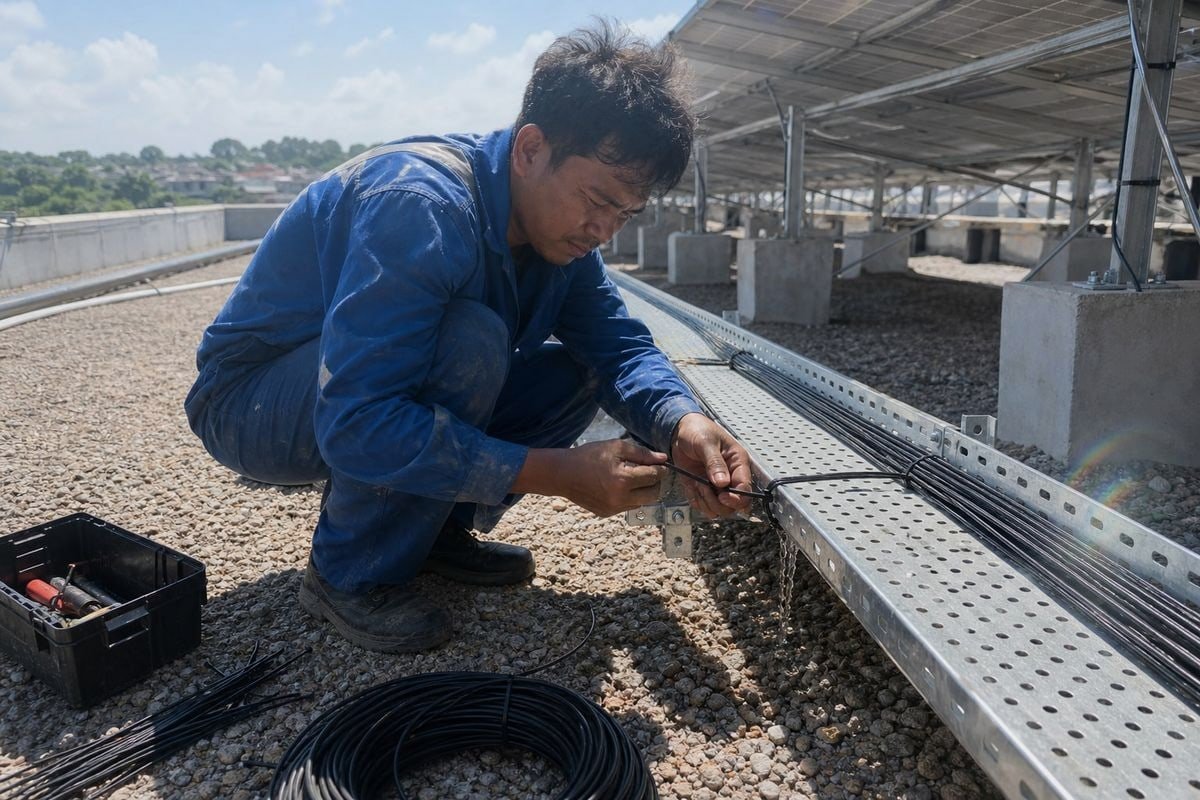
Industrial cable routing is the core use case. These trays carry power, control, and communication cables through plants where ordinary coated steel would fail early. But let me get more specific, because “industrial” covers a lot of ground.
Where SS304 shines
Food, beverage, and pharmaceutical plants. These facilities run rigorous high-pressure wash-down procedures. SS304 withstands the water, the detergents, and the sanitizing chemicals. The perforations then drain that water instead of trapping it. This is one of the strongest matches for this product, and it is why hygiene-driven industries specify stainless almost by default.
Water treatment facilities. Chlorine vapor and constant humidity destroy zinc coatings. Our water treatment clients choose 304 perforated trays for dosing rooms, filter halls, and pump galleries. The drainage holes matter here too — condensation never pools.
Solar and renewable energy. Outdoor DC cable runs need trays that survive UV, rain, and temperature swings 3 for decades. Many of the solar EPC contractors we supply pair 304 trays with matching support brackets and hangers for rooftop and ground-mount arrays.
Oil, gas, and petrochemical. For onshore process areas with chemical exposure, 304 is a common baseline. Offshore platforms and splash zones push chloride levels higher, and that is where the SS316 comparison becomes a real conversation rather than an upsell.
When to upgrade beyond 304
This is the honest part. If your site involves seawater immersion, heavy de-icing salt, or concentrated acid exposure, 304 can pit over time. I tell buyers plainly: 304 is enough for most indoor corrosive and general outdoor environments; 316 is the answer for aggressive chloride exposure. Buying 316 everywhere wastes budget. Buying 304 in a splash zone wastes the tray.
One more practical note for hot environments: on long runs near furnaces or in high-temperature zones, engineers must specify thermal expansion splice plates. Stainless steel expands linearly with heat, and long unbroken runs will buckle without expansion joints.
How do I select the right specifications and supplier for my stainless steel 304 perforated cable tray order?
A lesson I learned early in exporting: a spec sheet that looks complete on paper can still sink a project at the port. One client once received trays from another vendor with 1.0 mm walls when the drawing said 1.5 mm. Since then, our QC team measures thickness on every production batch before packing.
Select trays by cable load, width (50–1200 mm), thickness (1.0–3.0 mm), side height (25–125 mm), and length (typically 2.5 m). Then verify the supplier’s material certificates, IEC 61537 compliance or NEMA standards testing, customization ability, and realistic delivery lead times.
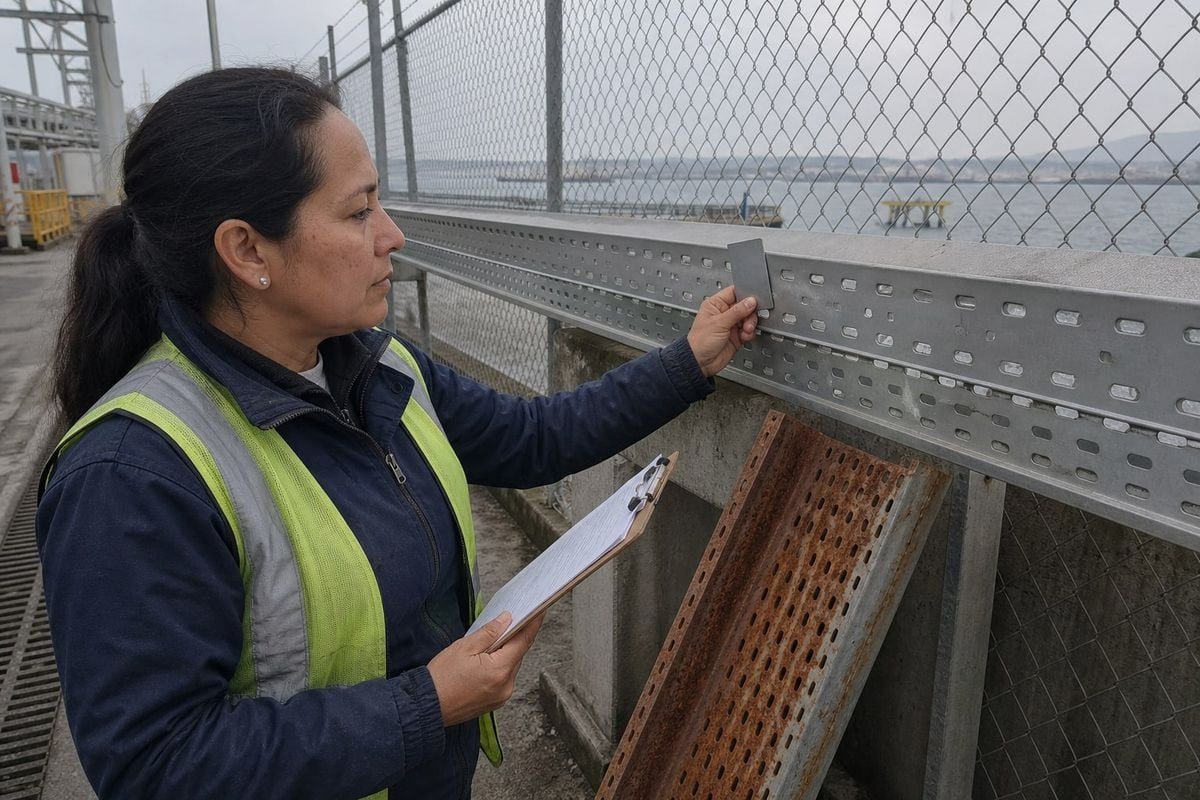
Specification comes first. Supplier vetting comes second. Skip either step and you inherit the pain points I hear about weekly: delivery delays, quality disputes, and returned goods.
Step one: size the tray to the cable load
Start with your cable schedule. Add up the bundle weight per meter, then add at least 20–30% spare capacity for future circuits. The tray’s load-bearing capacity depends mainly on sheet thickness, side rail height, and support spacing. Wider trays with thin walls deflect more, so do not chase width alone.
| Specification | Common Range | Typical Standard Option |
|---|---|---|
| Length | 2400–3000 mm | 2500 mm |
| Width | 50–1200 mm | 100, 200, 300, 600 mm |
| Sheet thickness | 1.0–3.0 mm | 1.2, 1.6, 2.0 mm |
| Side rail height | 25–125 mm | 50, 75, 100 mm |
| Finish | Plain, polished | Plain stainless |
Heavier power cables in industrial runs usually call for 1.6–3.0 mm thickness. Light control and data cables can ride in 1.0–1.2 mm trays. Custom side rail heights and non-standard widths are routine requests — our line handles them as OEM work, which is most of what we ship to Southeast Asia and South America.
Step two: plan the full system, not just straight lengths
A tray run is never only straight tray. Count your elbows, tees, reducers, and crosses from the layout drawing. Modular accessories let you route around obstacles in complex plants. Order matching support brackets and hangers in the same material grade; mixing stainless tray with galvanized supports creates galvanic corrosion 4 at every contact point. This complete cable management system approach is what separates smooth installs from site headaches.
Step three: vet the supplier
Ask for these four things before paying a deposit:
- Material test certificates proving genuine 304 composition, not 202 substituted to cut cost.
- Standards compliance — request IEC 61537 compliance test data or NEMA standards classification for load and deflection.
- Pre-shipment QC evidence — thickness measurements, dimension checks, and photos of packed goods.
- A written lead time with penalties — vague promises cause the delays that stall EPC schedules.
When we quote a project, we lock the production schedule in writing and send inspection photos before container loading. That habit came directly from listening to project directors burned by silent delays.
Conclusion
A stainless steel 304 perforated cable tray balances ventilation, strength, and corrosion resistance. Specify dimensions carefully, verify certificates, and it will protect your cables for decades.
Footnotes
- The Nickel Institute provides authoritative data on how nickel levels influence the corrosion resistance of stainless steel grades. ↩︎
- ISO provides international standards for classifying the corrosivity of various atmospheric environments and material resistance. ↩︎
- Authoritative Wikipedia source covering the thermal and mechanical properties of 304 stainless steel. ↩︎
- Explains the electrochemical process that occurs when dissimilar metals, like stainless and galvanized steel, are in contact. ↩︎