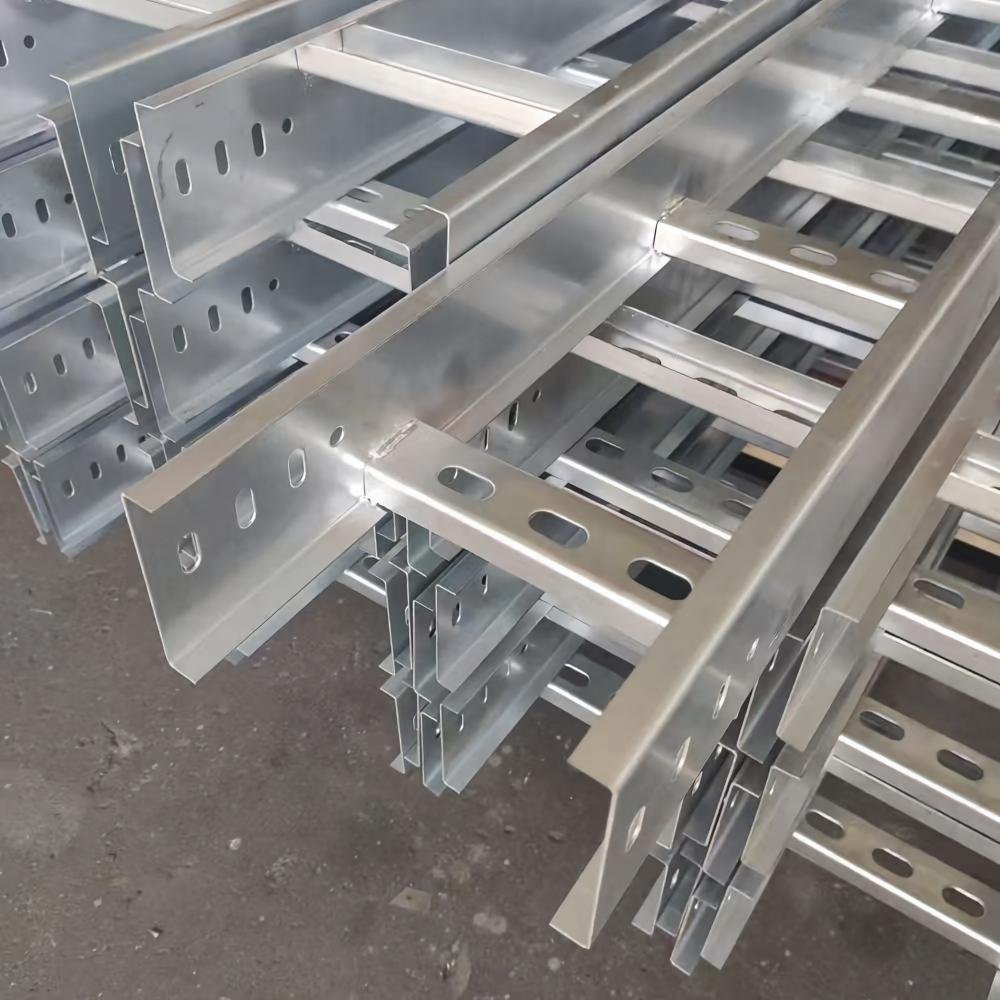
Corroded cable supports fail quietly, then expensively. I have seen a stainless steel 304 ladder cable tray outlast three galvanized replacements, which is why our Tai’an workshop builds them daily.
A stainless steel 304 ladder cable tray is a cable support system made of two parallel side rails joined by cross rungs, fabricated entirely from austenitic 304 stainless steel. It resists corrosion through a self-healing chromium oxide layer, carries heavy power cables, and maximizes airflow.
That definition covers the basics. But the real questions are why the material matters, where this tray belongs, and how to specify it correctly. Let me walk you through each one.
How does 304 stainless steel affect the durability of my cable ladder tray?
A buyer in Singapore once asked me why our stainless ladder tray costs two to three times more than hot-dip galvanized. My answer came down to one word: genetics.
Grade 304 stainless steel, containing 18% chromium and 8% nickel, forms a passive chromium oxide film that self-heals when scratched. Unlike galvanized coatings that wear out, this built-in corrosion resistance gives the ladder tray a 20–30 year service life in harsh environments.

This is the most important point to understand about stainless steel bridging systems. The difference is not a matter of degree. It is a completely different protection philosophy.
Coating protection vs. body protection
A hot-dip galvanized tray starts as ordinary carbon steel. Carbon steel rusts easily on its own. Its protection is an external zinc layer, essentially “bolted-on” armor. Once that zinc layer gets scratched through or slowly consumed, the steel underneath begins to rust. The tray’s lifespan depends entirely on the thickness and integrity of that coating.
A 304 stainless steel ladder tray is different at the material level. The chromium in the alloy reacts with oxygen and forms an extremely thin, dense, and tightly bonded chromium-rich oxide film across the surface. Here is the remarkable part: if you scratch that film during installation, it regenerates on its own in the presence of oxygen. The protection repairs itself. No touch-up paint. No re-coating schedule.
| Feature | SS304 Ladder Tray | Hot-Dip Galvanized Ladder Tray |
|---|---|---|
| Protection principle | Self-healing passive film in the material itself | External zinc layer (physical barrier / sacrificial anode) |
| Life in harsh environments | Long (20–30+ years) | Shorter; coating can fail and needs maintenance |
| Chloride (seawater) tolerance | Moderate (pitting possible) | Poor (coating damages easily) |
| Working temperature | -196°C to 800°C | Typically -50°C to 200°C |
| Initial cost | High (often 2–3x) | Medium |
| Maintenance cost | Nearly zero | Higher; requires inspection and repair |
Strength, temperature, and honest limits
Mechanically, 304 austenitic stainless steel 1 matches ordinary carbon steel in strength, so load-bearing capacity is not compromised. Its working temperature range of -196°C to 800°C far exceeds galvanized products. Like carbon steel, it is non-combustible, so fire performance is excellent. It is also non-magnetic, which eliminates inductive heating losses around high-amperage single-conductor AC cables.
I will be honest about the limits too. In our export projects, we always flag chloride exposure. In seawater spray or hot concentrated acids, 304 can suffer pitting or stress corrosion cracking. Those jobs need an upgrade to 316L. One more engineering note: 304 has a higher coefficient of thermal expansion 2 than carbon steel, so long outdoor runs need expansion splice plate connectors to prevent warping.
What applications is a stainless steel 304 ladder cable tray best suited for?
The trade-off we weigh with every EPC client is simple: strong corrosion resistance and zero maintenance, versus a much higher upfront invoice. That equation decides where 304 belongs.
Stainless steel 304 ladder cable trays are best suited for corrosive industrial environments such as chemical plants, pharmaceutical facilities, food processing washdown zones, coastal installations, data centers, and hospitals — anywhere corrosion, hygiene, or cleanliness requirements make galvanized steel a costly liability.
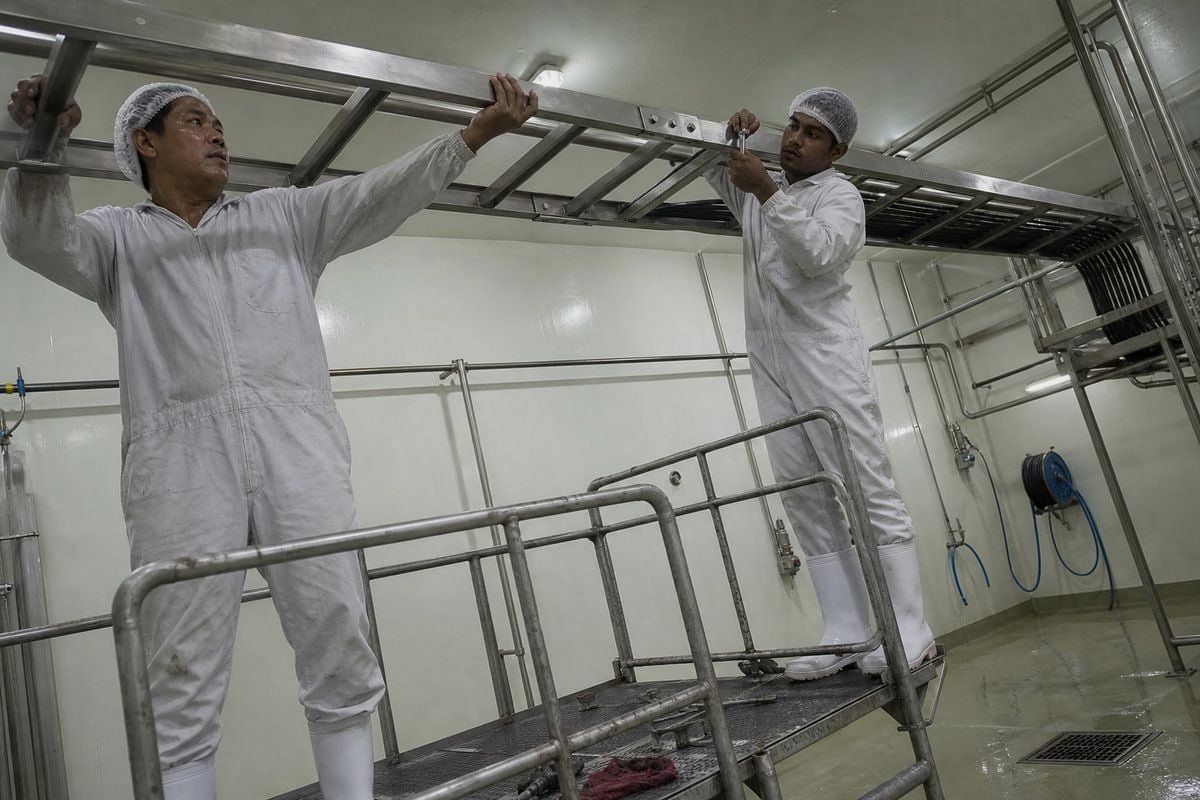
Because 304 carries a premium price, it earns its keep in specific battlegrounds. Based on the projects we have supplied across Southeast Asia and South America, the typical scenarios fall into four groups.
Where 304 earns its cost
| Environment type | Examples | Why 304 wins |
|---|---|---|
| Highly corrosive industry | Chemical plants, pharmaceutical plants, electroplating workshops | Withstands acids, alkalis, and salts that destroy zinc coatings |
| Harsh natural settings | Coastal and near-shore facilities, island buildings | Long life where galvanized coatings fail early |
| High-cleanliness sites | Data centers, semiconductor workshops, hospital operating theaters | Bright, clean surface; no white rust or flaking zinc |
| Visible installations | Commercial buildings, public spaces with exposed cable routing | Keeps a silver metallic finish that does not darken over time |
Washdown and hygiene zones
Food and beverage plants deserve special mention. These facilities use aggressive sanitizing agents and high-pressure cleaning several times a day. Galvanized coatings degrade fast under that chemical assault. SS304 shrugs it off. We have also fabricated trays supporting aseptic design standards for high-care zones, using radius-edged rungs and side rails. Sharp corners create harborage points where bacterial biofilms accumulate. Rounded edges eliminate them.
Why the ladder format specifically
The ladder geometry matters as much as the material in these industrial applications. The open-rung structure provides essentially 100% ventilation, so heat does not accumulate and cables can run at maximum current-carrying capacity without derating. Cables can also enter or exit at any point along the run, which makes maintenance and future cable additions simple. Manufacturers consistently rank ladder tray as the most rigid tray style for medium-to-heavy power cables over long spans, and among cable management systems it delivers the best strength-to-material ratio.
How do I choose the right size and load capacity for my project?
Early in my export career, I learned a hard lesson: a project in the Philippines ordered trays by width alone, ignored support span, and the site team had to add posts mid-installation.
Choose tray width based on cable fill plus 20–30% future capacity, side-rail height based on cable bundle depth, and load class per NEMA VE 1 ratings matched to your support span distance. Then confirm rung spacing suits your smallest cable diameter.
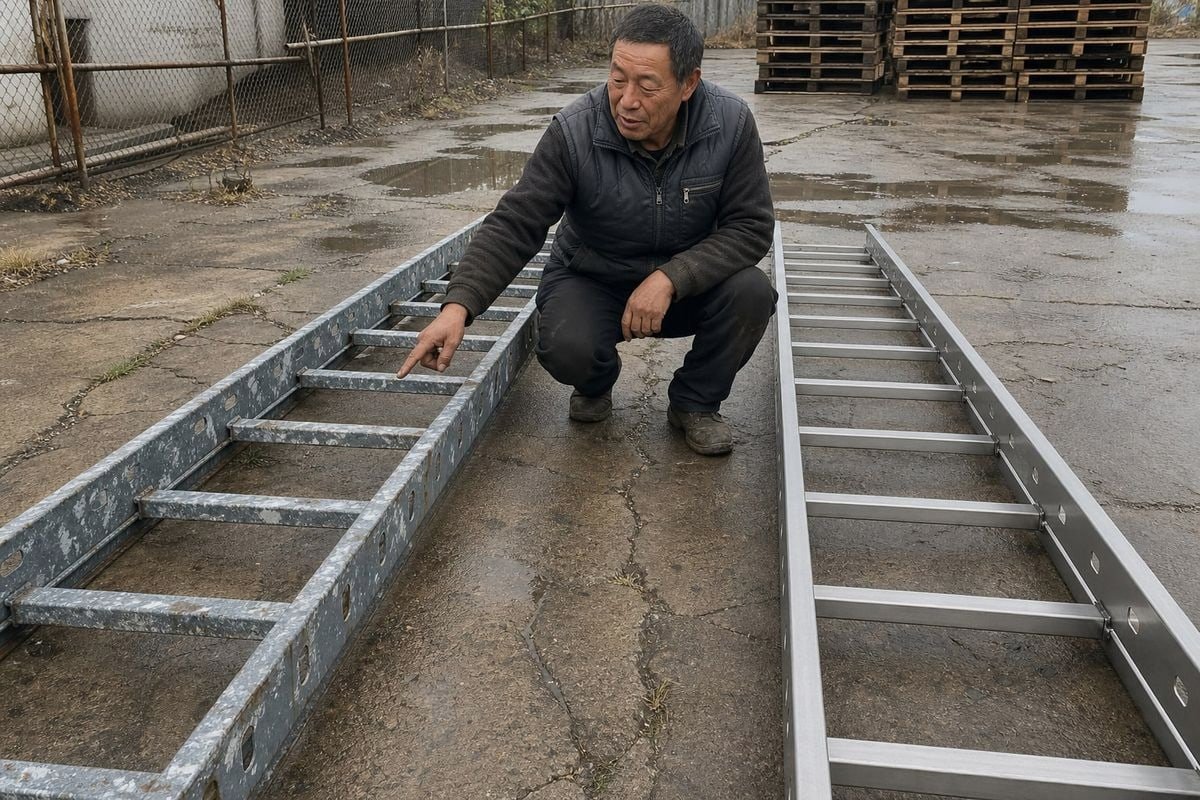
Sizing is where most specification mistakes happen. Let me break the decision into a simple sequence our engineers use when quoting.
The five procurement variables
- Width. Common metric widths run from 100 mm to 900 mm (roughly 6 to 36 inches in imperial systems). Calculate the total cross-section of your cables, then add spare capacity for future runs.
- Side-rail height. Standard heights range from about 25 mm to 200 mm. Deeper rails hold more cable layers and also increase the tray’s load-bearing capacity, because the rail acts as the structural beam.
- Length. Straight sections typically ship in 10-foot or 12-foot lengths (3 m or 6 m in metric markets), with some systems available up to 24 feet.
- Load class and support span distance. These two are inseparable. A tray rated for a heavy load at 1.5 m spans may fail at 3 m spans. NEMA VE 1 3 standards define the load-and-span classes that most international projects reference.
- Rung spacing. Typical options are 150 mm, 225 mm, or 300 mm. Smaller cables need closer rung spacing to prevent sagging between rungs.
Quick reference for load planning
| Duty level | Typical side-rail height | Typical support span | Common use |
|---|---|---|---|
| Light | 50–75 mm | 1.5–2.0 m | Control and instrumentation cables |
| Medium | 100–150 mm | 2.0–3.0 m | Mixed power and control runs |
| Heavy | 150–200 mm | 3.0–6.0 m | Large power cables, long pipe-rack spans |
One more reminder from the durability section: for long outdoor runs, specify expansion splice plate connectors. Because 304 expands more with heat than carbon steel, ignoring thermal movement on a 100-meter run can warp the entire line. Always share your ambient temperature range and span layout with your supplier before finalizing the bill of materials.
What should I look for when sourcing a reliable stainless steel 304 ladder cable tray supplier?
A project director from Singapore once messaged me on WhatsApp with three pain points: late deliveries, inconsistent quality, and costly returns. His checklist became the backbone of how we run LANYE CABLETRAY.
Look for verified material certificates proving genuine 304 austenitic stainless steel, manufacturing to NEMA VE 1 or equivalent standards, documented load testing, OEM/ODM customization capability, transparent lead times, and photographic QC reports before shipment. Confirm export packaging and logistics experience too.
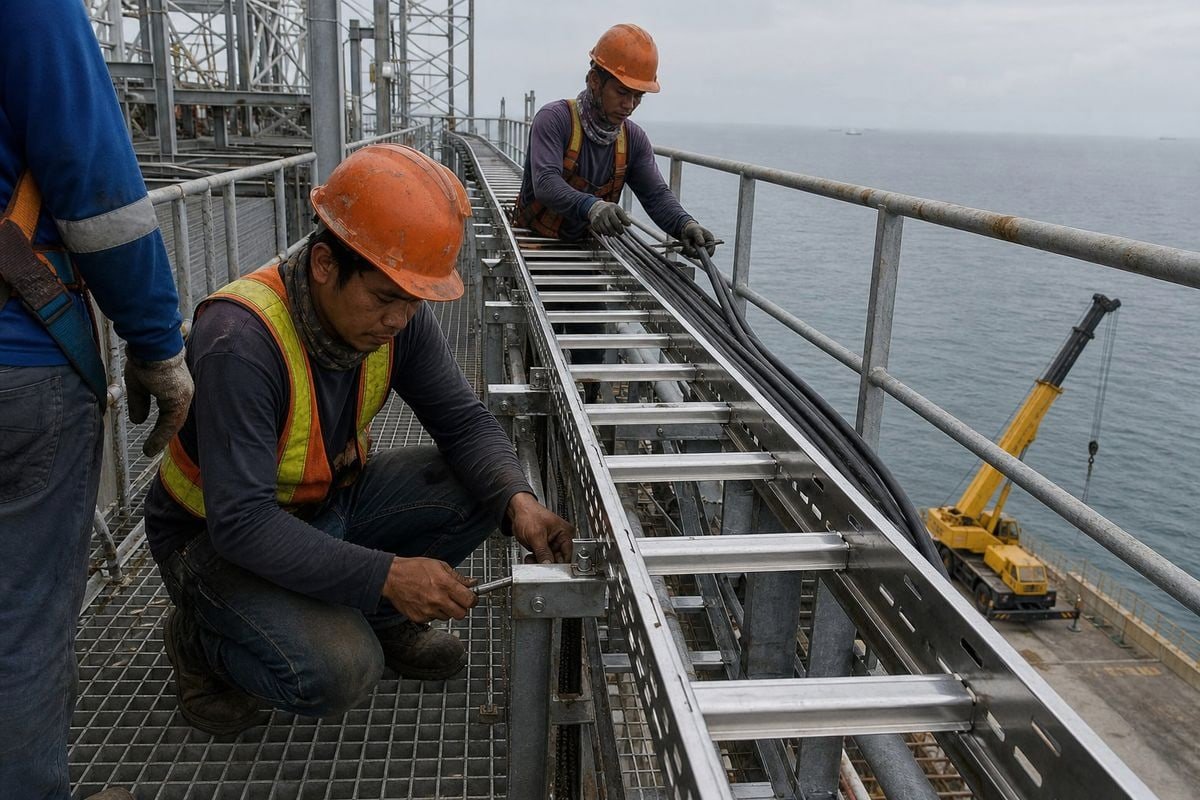
Sourcing from overseas adds risk, but the risk is manageable if you audit the right things. Here is the checklist I recommend to every EPC buyer, based on what actually goes wrong in this trade.
Verify the material first
The most common fraud in this product category is substituting 201-grade stainless steel for 304. The two look identical. Grade 201 has far less nickel, so its corrosion resistance is dramatically weaker. Demand mill test certificates for every batch, and ask whether the supplier performs on-site spectrometer or acid-spot testing. At our facility, we test incoming coils before fabrication begins, because one wrong coil can contaminate an entire project. This matters more than any 304 versus SS316 comparison discussion, because fake 304 fails faster than honest galvanized steel.
Check fabrication and standards discipline
Ask which standard the trays are built to. NEMA VE 1 is the common North American reference; IEC 61537 4 covers many international projects. A serious supplier can show load-deflection test data for the exact span you plan to use, not just a generic brochure claim. Also inspect weld quality on sample photos. Poor welds on stainless steel create heat-affected zones where corrosion starts first.
Evaluate the commercial side
Quality means nothing if the goods arrive late or damaged. Probe these areas directly:
- Lead time honesty. Ask for the realistic production schedule in writing, not a sales promise.
- Customization depth. Can they adjust rung spacing, rail height, fittings, and splice plate connectors to your drawings? OEM/ODM collaboration saves site rework.
- QC documentation. Insist on dimensional reports and photos of your actual order before it leaves the factory.
- Export packaging. Stainless surfaces scratch during transit; proper interleaving and strapping prevent claims and returns.
- Communication speed. In our experience exporting to Southeast Asia and South America, a supplier who answers within hours on WhatsApp during production will also answer fast when a problem appears on site.
Conclusion
Corrosion destroys cheap trays and project budgets alike. A stainless steel 304 ladder cable tray solves this with self-healing protection, high load capacity, and near-zero maintenance — specify it wisely, source it carefully.
Footnotes
- Authoritative industry association providing technical data and standards for stainless steel materials. ↩︎
- Scientific reference explaining the physical property of thermal expansion in metallic materials. ↩︎
- Official standard for metal cable tray systems defining load and span requirements. ↩︎
- International organization establishing global standards for cable management and electrical systems. ↩︎