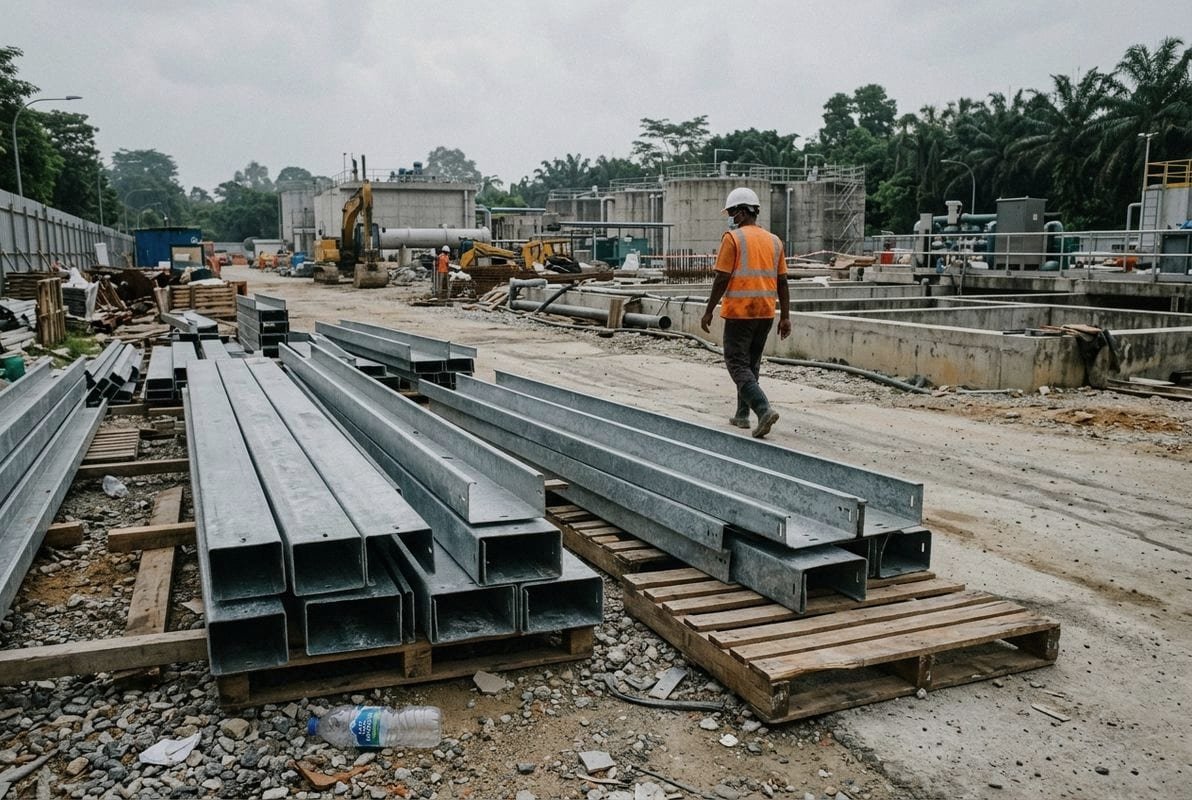
Last month, a project director in Singapore messaged me on WhatsApp about premature rusting on hot-dip galvanized trough cable trays 1 installed just eighteen months earlier inside a wastewater treatment plant.
Hot-dip galvanized trough cable trays used in Singapore wastewater treatment plants must meet ISO 1461 zinc coating requirements, with a minimum average thickness of 65 µm and ideally 85 µm or higher, within an ISO 12944 C4-to-C5 corrosion category classification, to ensure adequate service life expectancy in aggressive environments.
This article breaks down the specific standards, coating thicknesses, quality control steps, and custom OEM options you need to get right magnetic or electromagnetic gauge 2. Let me walk you through each one based on real project experience.
Which Singapore-specific standards must my hot-dip galvanized cable trays meet for wastewater treatment plants?
A question I hear regularly from EPC contractors sourcing cable trays for PUB-regulated projects is exactly which standards apply—and which ones overlap. When we prepare shipments bound for Singapore wastewater facilities 3, the documentation package alone can run over a dozen pages.
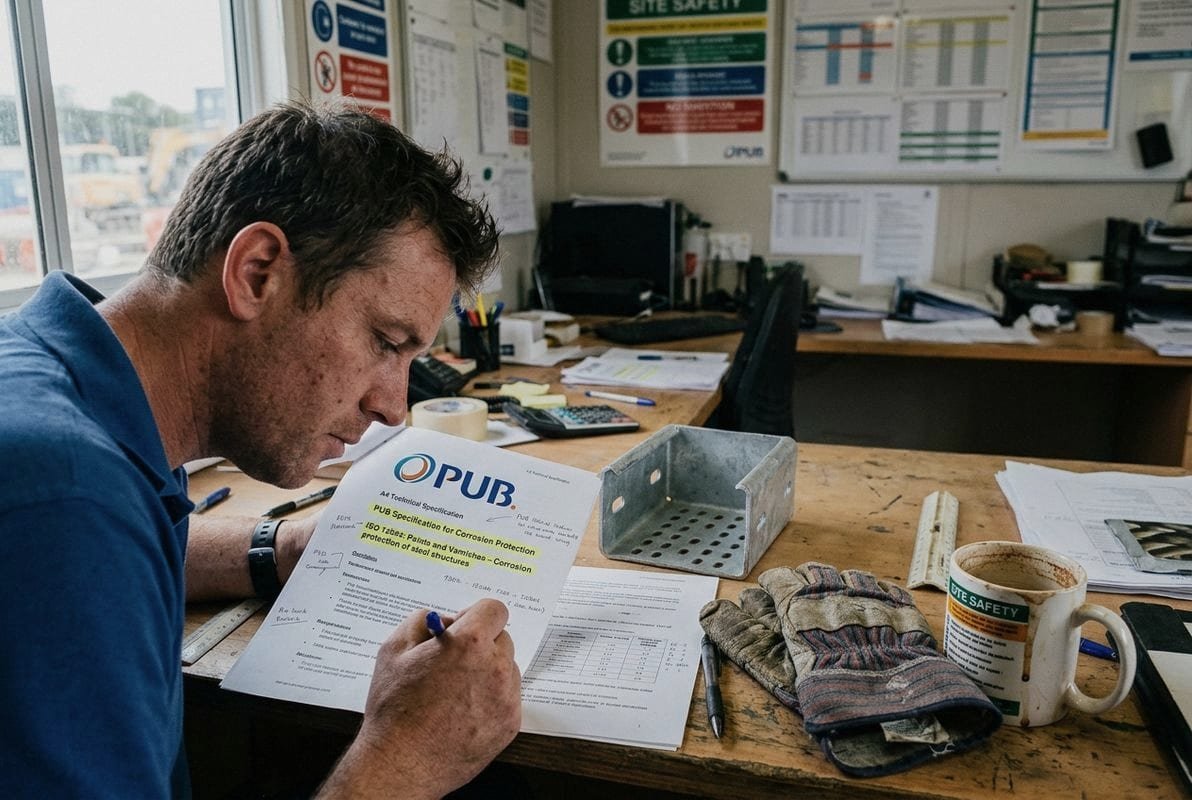
Singapore wastewater projects typically require hot-dip galvanized cable trays to comply with SS249 for general construction steel, ISO 1461 or ASTM A123 for galvanizing quality, and ISO 12944 for corrosion category classification—usually C4 (High) or C5 (Very High) depending on the specific plant zone.
Understanding the Corrosion Category
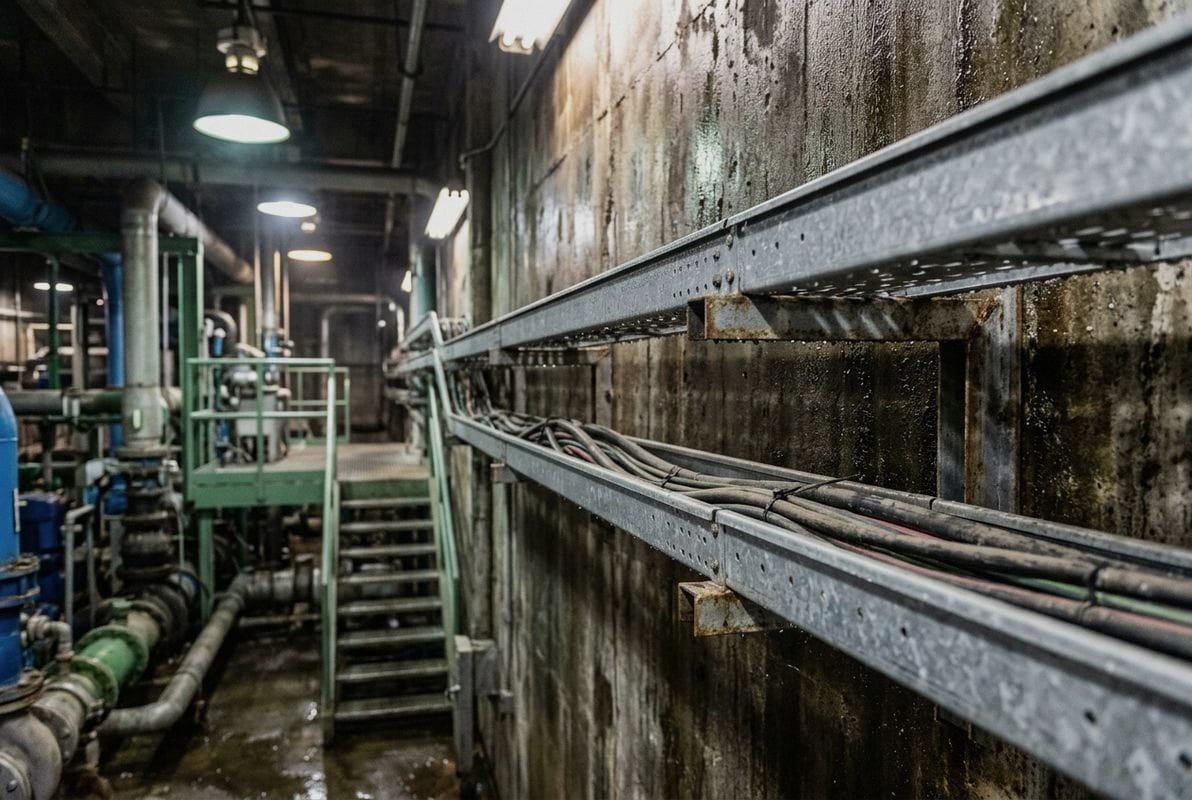
Singapore’s tropical climate creates a unique challenge. Year-round humidity above 80%, coastal salt air, and the gases generated inside wastewater treatment plants combine to push the environment well beyond a typical indoor industrial setting. Under ISO 12944, most areas within a Singapore wastewater treatment plant fall into C4 (High) or C5 (Very High) corrosion categories 4. Some zones—particularly near anaerobic digesters where hydrogen sulfide concentrations 5 spike—may even approach the CX (Extreme) classification.
Hydrogen sulfide is the silent killer of galvanized steel in these plants. Microorganisms convert it to sulfuric acid on moist surfaces. This is what engineers call microbial induced corrosion 6, and it accelerates zinc consumption far beyond what standard atmospheric models predict.
Key Standards at a Glance
| Standard | Scope | Relevance to Singapore Wastewater |
|---|---|---|
| SS249 | Hot-rolled structural steel specifications | Base material quality for cable tray construction |
| ISO 1461 / EN ISO 1461 | Hot-dip galvanizing on fabricated iron and steel | Minimum zinc coating thickness and quality requirements |
| ASTM A123 | Zinc coatings on iron and steel products | Often specifies thicker coatings than ISO 1461 for heavier sections |
| ISO 12944 | Corrosion protection of steel by protective paint systems | Defines corrosion categories (C4, C5, CX) and expected durability |
| EN 61537 7 | Cable management—cable tray and cable ladder systems | Structural and fire performance testing for cable tray assemblies |
| PUB requirements | Singapore’s national water agency regulations | Project-specific material and testing mandates for water infrastructure |
What PUB Requirements Add
PUB requirements for wastewater infrastructure in Singapore go beyond generic international standards. Project specifications often mandate third-party inspection of galvanizing quality, salt spray testing certificates, and sometimes duplex coating systems for cable trays installed in splash zones or chemical dosing rooms. When we prepare orders for Singapore-bound wastewater projects, we always confirm the specific PUB project spec with our buyer before production starts. Missing even one documentation requirement can delay site acceptance by weeks.
The complete cable tray system—tray body, covers, brackets, and fixings—should ideally be system-tested to EN 61537. This standard covers not just corrosion but also structural load performance and fire behavior. In our experience shipping to Southeast Asia, Singapore contractors are among the most thorough in checking for this compliance.
How can I determine if the coating thickness on my trough trays is sufficient for high-corrosion environments?
One lesson I learned early in this business came from a return shipment. A batch of cable trays we supplied met the minimum ISO 1461 thickness 8 on paper, but the client’s site engineer measured several points below 50 µm on the inner bends of the trough. That experience changed how we approach coating inspection on our production line.
To determine coating sufficiency, measure zinc thickness at multiple points using a magnetic or electromagnetic gauge per ISO 2178. For Singapore wastewater environments, the average thickness should reach at least 85 µm—well above the ISO 1461 minimum of 65 µm—with no single point reading below 45 µm.
Why the Standard Minimum Is Not Enough
ISO 1461 sets a minimum average zinc coating thickness of 65 µm for steel sections thicker than 3 mm, with a minimum local thickness of 45 µm. These numbers represent the floor—not the target. In a C4 or C5 environment like a Singapore wastewater treatment plant, zinc corrodes at roughly 2–8 µm per year depending on local conditions. At the lower end of that range, a 65 µm coating might last 8–10 years. At the higher end, it could fail in under 5 years.
This is why, from practical engineering experience, I always recommend specifying 85 µm average thickness or higher for trough cable trays in these aggressive environments. Some of our buyers request 100 µm or more for zones near chemical dosing or dewatering buildings.
Coating Thickness vs. Expected Service Life
| Average Zinc Thickness (µm) | Estimated Service Life in C4 | Estimated Service Life in C5 |
|---|---|---|
| 45 (minimum local) | 5–8 years | 3–5 years |
| 65 (ISO 1461 minimum avg.) | 8–12 years | 5–8 years |
| 85 (recommended for wastewater) | 12–18 years | 8–12 years |
| 100+ (premium specification) | 15–25 years | 10–15 years |
These figures assume atmospheric exposure only—not direct immersion in wastewater. For components in continuous contact with water, the service life expectancy becomes unpredictable. Case histories show galvanized steel lasting anywhere from 2 to 20+ years in direct wastewater contact because water chemistry parameters like pH, chloride exposure, dissolved oxygen, and temperature all interact in complex ways.
The Role of Trough Design and Covers
Here is a point I always raise with my Singapore buyers: a trough cable tray with a properly fitted cover dramatically extends coating life. The enclosed trough design blocks water vapor and corrosive gases from reaching the cables and the inner tray surface. In wastewater treatment plants, airborne moisture carries dissolved hydrogen sulfide and chloride ions. Without a cover, these settle on the tray surface and accelerate zinc consumption.
Sacrificial corrosion protection—where the zinc layer corrodes preferentially to protect the underlying steel—only works as long as zinc remains. Once the zinc is depleted at any point, red rust begins. A cover slows this process significantly.
Critical Water Chemistry Factors
Zinc coatings remain stable in solutions with a pH between 5.5 and 12. Outside this range, corrosion rates spike. Wastewater pH can fluctuate, especially near chemical dosing points where acids or alkalis are introduced. Temperature also matters: between 60°C and 82°C, the polarity between zinc and steel can reverse in certain water chemistries containing dissolved oxygen and bicarbonate or nitrate ions, causing the zinc coating to fail unpredictably.
For cable trays installed above open tanks or in splash zones, these factors matter even though the tray is not submerged. Condensation on the tray surface creates a thin film of liquid with concentrated dissolved gases—effectively a more aggressive environment than the bulk water below.
What steps should I take to verify the quality control of my cable tray supplier to avoid premature rusting?
When a buyer named Shimkien reached out to us about a replacement order for cable trays that had failed prematurely on a water treatment project, the first thing I asked for was the original supplier’s QC documentation. There was almost none. No coating thickness reports, no salt spray test certificates, no material traceability. That scenario is far more common than it should be.
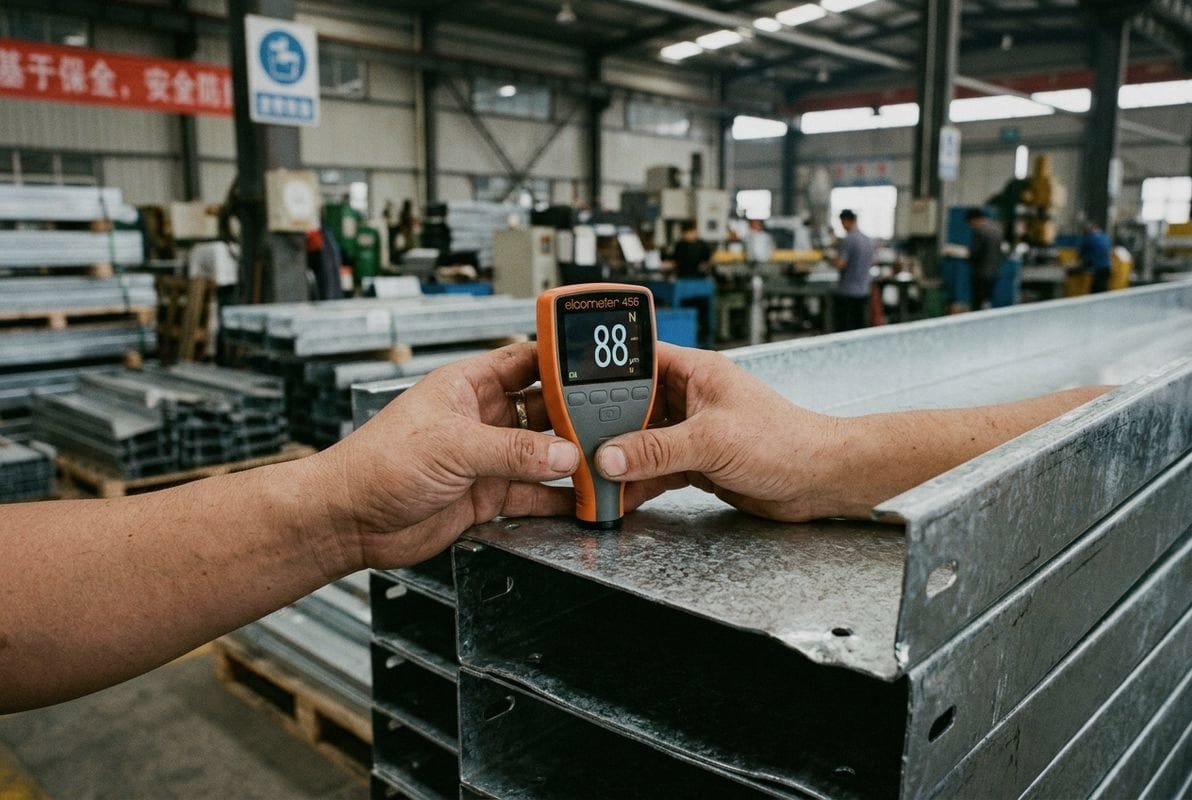
To verify supplier quality control, request ISO 1461 mill certificates, independent coating thickness test reports, salt spray test results per ASTM B117, material traceability documentation, and—if possible—arrange third-party pre-shipment inspection at the factory before containers are sealed.
A Practical QC Checklist
I have organized the verification steps into a practical sequence. This is the same process we follow internally before any shipment leaves our facility, and it is what I recommend buyers demand from any supplier.
Step 1: Request raw material certificates. The base steel must meet the grade specified in the project documents. For Singapore projects following SS249 or equivalent 9, the mill certificate should confirm yield strength, tensile strength, and chemical composition. Pay attention to silicon and phosphorus content—these elements affect how zinc bonds to the steel surface during hot-dip galvanizing.
Step 2: Confirm galvanizing process compliance. The supplier should provide documentation confirming their galvanizing bath chemistry, immersion time, and withdrawal speed are controlled per ISO 1461. Ask whether the galvanizer is ISO 9001 certified for process quality management.
Step 3: Verify coating thickness independently. Do not rely solely on the supplier’s in-house measurements. A magnetic thickness gauge reading taken by a third-party inspector at 5–10 random points per tray gives a reliable picture. Record both the average and the minimum single-point reading.
Step 4: Request salt spray test results. ASTM B117 salt spray testing 10 is the industry standard for accelerated corrosion evaluation. For C4–C5 environments, request at least 500 hours of salt spray testing on sample pieces from the production batch.
Step 5: Check for galvanic isolation details. If the cable tray system includes stainless steel fasteners, aluminum conduit connections, or other dissimilar metals, the supplier should provide isolation gaskets or washers to prevent galvanic corrosion in the conductive wastewater environment.
Red Flags to Watch For
| Red Flag | What It Means | What to Do |
|---|---|---|
| No mill certificate for base steel | Unknown material grade; possible inferior steel | Reject the batch or request independent testing |
| Coating thickness report shows only averages | Low spots may be hidden | Demand individual point readings |
| Visible bare spots or rough texture | Poor surface preparation before galvanizing | Reject affected pieces; request rework |
| No salt spray test available | Supplier may not test corrosion performance | Request testing or switch suppliers |
| Mixed fastener metals without isolation | Galvanic corrosion risk in humid environments | Require nylon washers or coated fasteners |
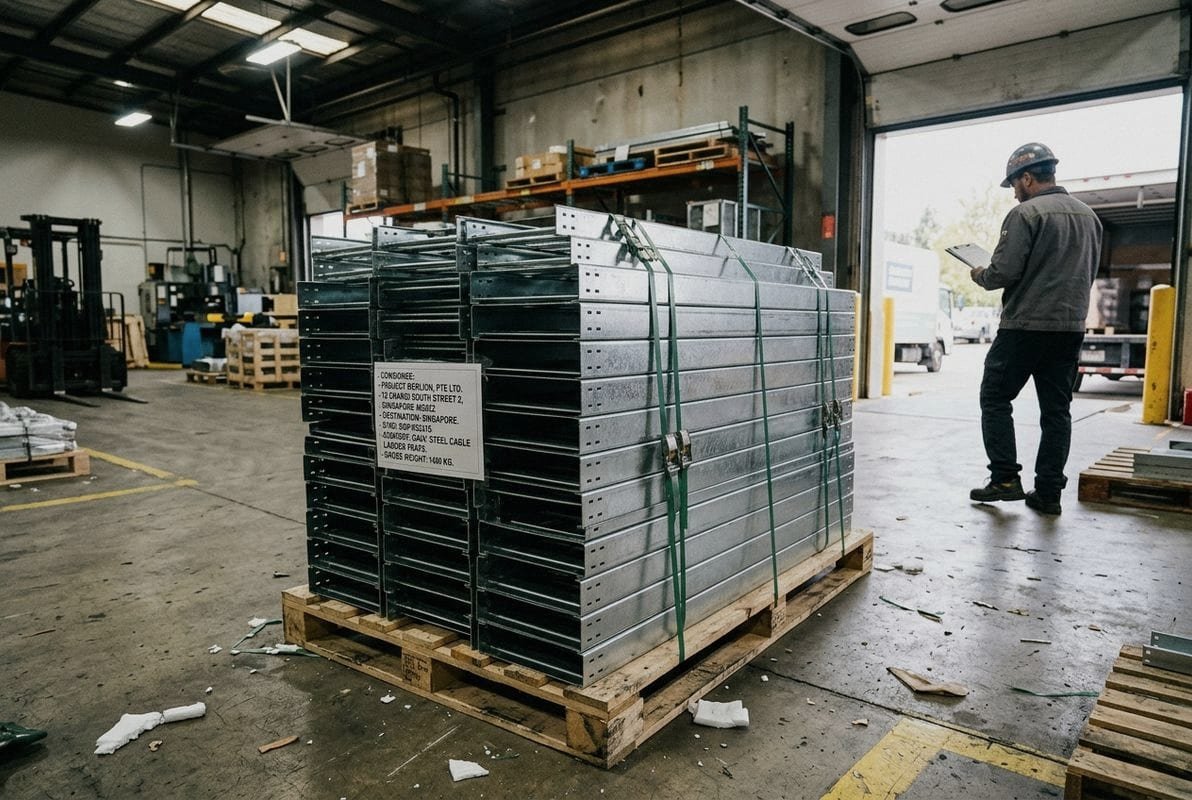
| Delivery without protective packaging | Zinc surface can be scratched during transit | Insist on foam separators and shrink wrap |
Why Pre-Shipment Inspection Matters
On our production line, we conduct three-stage inspection: incoming raw material check, in-process galvanizing verification, and final pre-shipment dimensional and coating review. But I always tell buyers: trust but verify. Hiring a third-party inspection company—SGS, Bureau Veritas, or a local Singapore-approved inspector—to visit the factory before the container is sealed costs a fraction of what a failed installation costs. For wastewater treatment plants where replacement means shutting down a process area, the math is obvious.
Can I request custom OEM specifications for my cable management system to withstand Singapore’s humid wastewater conditions?
A trade-off I weigh on nearly every Singapore wastewater project is balancing cost against longevity. When a procurement manager asks whether we can customize the cable tray specification beyond the standard catalog, the answer is always yes—but the conversation that follows determines whether the customization actually solves the corrosion problem or just adds cost without benefit.
Yes, reputable cable tray manufacturers offer custom OEM specifications including increased zinc coating thickness, duplex coating systems, alternative materials like 316L stainless steel or FRP for extreme zones, modified trough dimensions, and integrated cover designs—all tailored to Singapore’s humid wastewater conditions.
What Can Be Customized
The range of customization we offer covers material, coating, dimensions, and accessories. Here is a breakdown of the most common OEM requests we receive for Singapore wastewater projects:
Material selection by zone. Not every part of a wastewater plant needs the same material. A hybrid approach—using hot-dip galvanized steel for general cable runs in corridors and equipment rooms, and switching to 316L stainless steel or FRP for cable trays above chemical tanks, in wash-down areas, or near anaerobic digesters—optimizes both performance and budget. This is the most intelligent strategy I can recommend.
Enhanced zinc thickness. Instead of the standard ISO 1461 minimum, we can specify and verify 85 µm, 100 µm, or even 120 µm average coating on the production order. This requires coordination with the galvanizing plant to adjust immersion time and withdrawal parameters.
Duplex coating systems. For the highest protection, a duplex system combines hot-dip galvanizing with an additional paint or powder coat layer on top. The synergy between the two layers provides protection that exceeds the sum of each layer’s individual lifespan. In C5 or CX zones, this is often the most cost-effective path to a 25-year service life without requiring stainless steel.
Trough dimensions and cover integration. Standard trough widths may not match the cable fill requirements of a specific project. We produce troughs from 100 mm to 1000 mm width with integrated flanged covers that snap or bolt securely in place. For wastewater plants, I strongly recommend trough trays with covers. The sealed enclosure prevents corrosive gases and moisture from reaching the cables, and it also slows zinc consumption on the inner tray surfaces.
Material Comparison for Wastewater Zones
| Feature | Hot-Dip Galvanized Steel | 316L Stainless Steel | FRP (Fiberglass) |
|---|---|---|---|
| Corrosion resistance (atmospheric) | Good to Very Good (C4–C5) | Excellent | Excellent |
| Corrosion resistance (immersed) | Unpredictable (2–20+ years) | Very Good | Excellent |
| Chloride exposure tolerance | Moderate | High | Very High |
| Weight | Heavy | Heavy | Light (30–40% less) |
| Cost (relative) | 1x (baseline) | 3–4x | 2–3x |
| Field modification | Easy (cut and bolt) | Requires special tools | Requires special cutting |
| Availability | Very High | Moderate | Moderate |
| Recommended zones | General areas, corridors, dry rooms | Chemical rooms, splash zones | Severe chemical exposure, immersion |
The Hybrid Strategy in Practice
On a recent project for a water treatment facility, the buyer initially specified 316L stainless steel throughout the entire plant. The cost was prohibitive. After reviewing the plant layout together, we proposed hot-dip galvanized trough trays with 85 µm coating and covers for approximately 70% of the cable runs—office areas, electrical rooms, main corridors, and dry process buildings. For the remaining 30%—chemical dosing rooms, areas above the aerobic and anaerobic basins, and the sludge dewatering building—we supplied 316L stainless steel trays. The total project cost dropped by nearly 40% compared to all-stainless, with no compromise in expected service life.
This hybrid approach is becoming the standard best practice in wastewater infrastructure design across Southeast Asia. It acknowledges that different zones within the same plant create fundamentally different corrosive conditions, and it matches the material to the actual threat rather than applying a blanket specification.
OEM Collaboration Process
Our OEM process starts with a technical review of the project drawings and environmental conditions. The buyer shares the plant layout, zone classifications, cable schedules, and any project-specific corrosion requirements from PUB or the consulting engineer. We then propose material and coating specifications zone by zone, prepare shop drawings for approval, and produce sample pieces for buyer inspection before mass production begins. Lead times for custom OEM orders typically run four to six weeks from drawing approval to container loading—a timeline we commit to and track daily because delivery delays are among the top pain points our Singapore buyers face.
Conclusion
Specifying hot-dip galvanized trough cable trays for Singapore wastewater projects demands attention to coating thickness, zone-specific material selection, rigorous QC verification, and smart customization to balance performance with budget. Understanding how hot-dip galvanized, pre-galvanized, and zinc magnesium aluminum coatings compare can further inform your sourcing decisions, while reviewing guidance on choosing galvanized cable trays for Singapore EPC projects provides additional context for navigating local project requirements.
Footnotes
- Provides information on hot-dip galvanized cable trays, their manufacturing process, and suitable applications. ↩︎
- Explains the principles of magnetic and electromagnetic gauges for coating thickness measurement. ↩︎
- Official document from PUB, Singapore’s National Water Agency, detailing sewerage and sanitary works. ↩︎
- Explains ISO 12944 corrosion classes, including C4 and C5, and their relevance to aggressive environments. ↩︎
- Discusses hydrogen sulfide corrosion mechanisms and its impact on materials in industrial operations. ↩︎
- Provides a clear explanation of microbial induced corrosion (MIC), its causes, and effects on materials. ↩︎
- Direct link to the IEC 61537 standard for cable tray and cable ladder systems. ↩︎
- Details the ISO 1461 standard for hot-dip galvanized coatings, including specifications and test methods. ↩︎
- Official page for Singapore Standard SS 249, relevant for steel surface cable trunking and accessories. ↩︎
- Describes ASTM B117, the widely used standard for salt spray (fog) testing for corrosion resistance. ↩︎