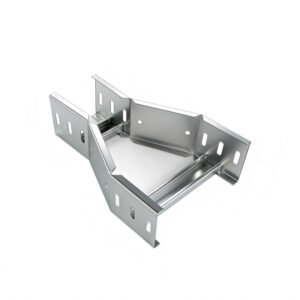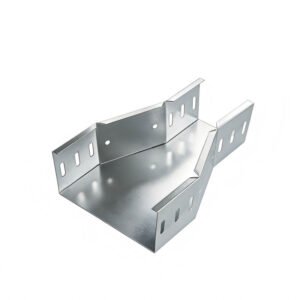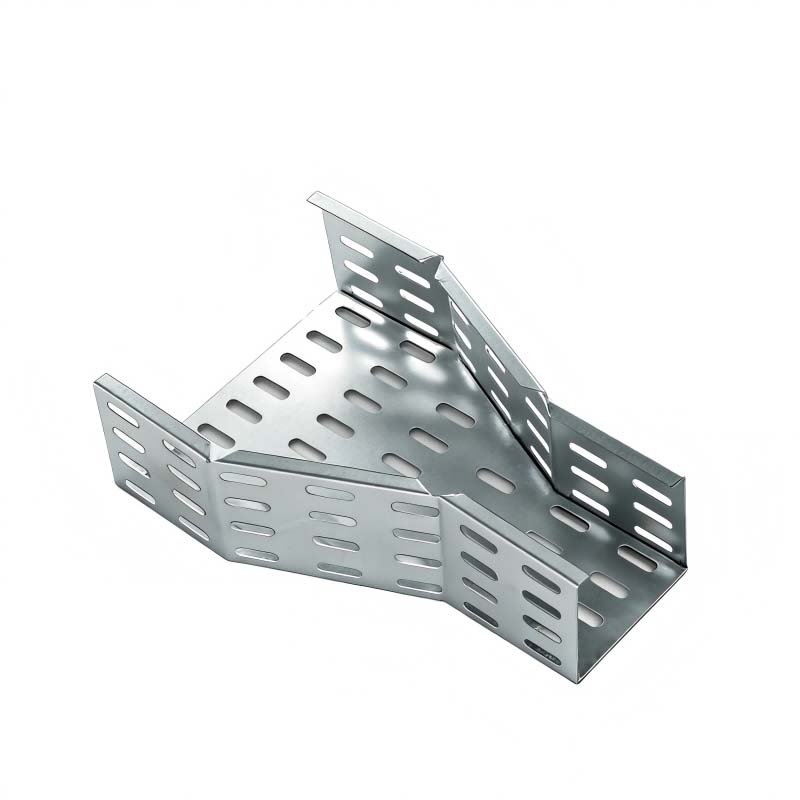
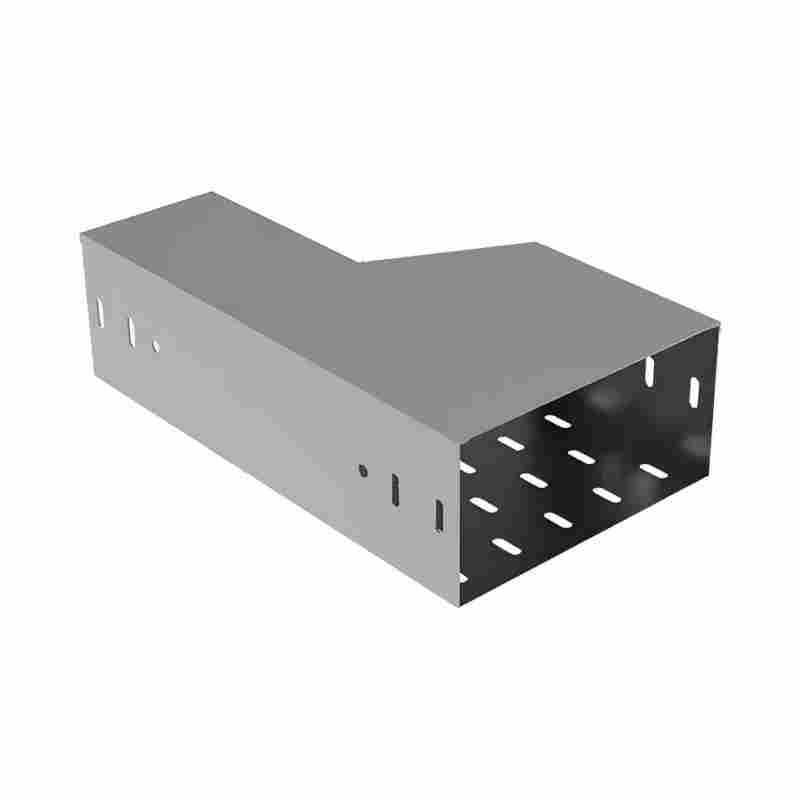
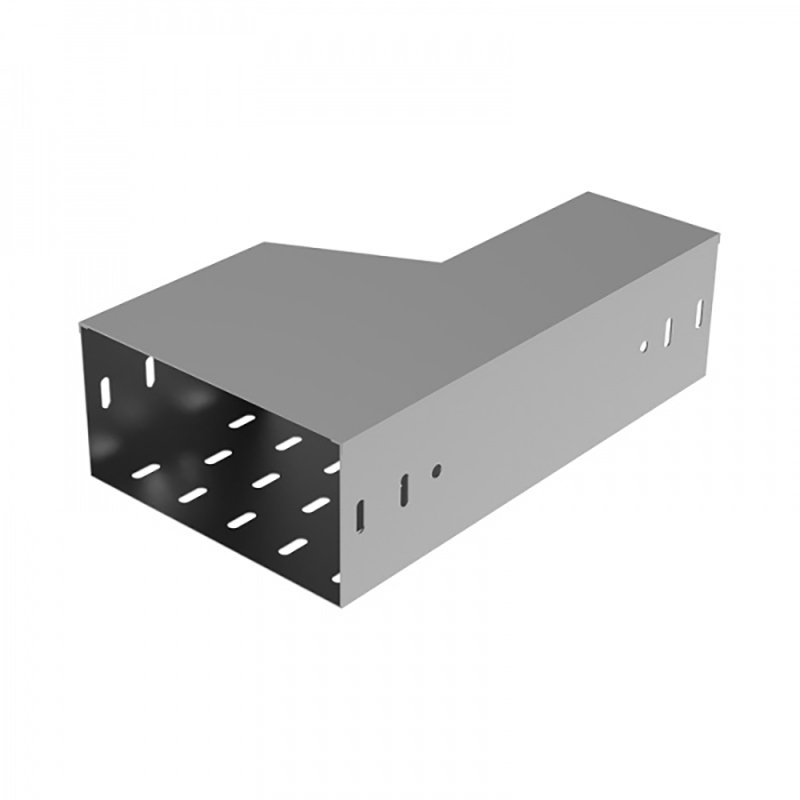

Perforated cable tray reducer, also known as perforated cable tray reducing fitting or ventilated cable tray reducer, is specially designed and engineered for transitioning between different widths of perforated cable tray sections, allowing smooth cable flow from a larger tray to a smaller tray or vice versa. As the reliable cable tray manufacturer, Lanye brand custom perforated cable tray reducer is available in various configurations, materials, sizes and forms to suit the location and requirements of the installation. Our perforated cable tray reducer can be used in almost any places including data centers, commercial buildings, industrial facilities, power plants, hospitals, airports, and large-scale cable management installations, etc.
A Perforated Cable Tray Reducer is engineered to help you connect two sections of perforated cable tray with different widths or dimensions—without forcing cables to bend awkwardly or creating a messy, high-risk transition zone. With perforated side rails and ladder-like tray construction, these reducers maintain the same airflow and cable support characteristics as your existing perforated tray system, while providing a neat, consistent look across the entire installation.
A perforated cable tray reducer is a specialized component used to reduce (or adapt) the tray width from one size to another. Unlike a generic connector that only joins segments with no geometric transition, the reducer is designed with a gradual taper or step profile that allows cables to maintain proper support and routing.
Perforated cable tray reducer is commonly fabricated using carbon steel grades Q195 or Q235, as well as stainless steel 304/316 and aluminum. The reducer features a perforated bottom pattern matching straight sections, ensuring consistent airflow and cable support through the transition. The reducer is manufactured through standard procedures such as punching, bending, and welding, carried out by a flexible automatic production line, with the same surface finish as straight sections (pre-galvanized, hot-dip galvanized, stainless steel, or aluminum).
Galvanized perforated cable tray reducer exhibits excellent qualities including high strength, a robust design, durability, and resistance to rust. The perforated bottom provides excellent ventilation for cable heat dissipation while offering continuous cable support during the width transition. The tapered design allows cables to transition smoothly without sharp edges or sudden changes that could damage insulation. These characteristics make it an ideal choice for cable management where cable volume changes along the routing path. Perforated cable tray reducer is the reliable cable management solution to ensure the longevity and proper functioning of cables when transitioning between different tray widths.
| Function | Description |
|---|---|
| Width Transition | Smoothly transitions between different tray widths |
| Cable Volume Management | Accommodates reducing or increasing cable volume |
| Ventilation | Perforated bottom maintains airflow through transition |
| Cable Protection | Smooth tapered design prevents cable damage |
| Space Optimization | Allows tray width to match cable volume requirements |
| Easy Installation | Pre-fabricated design with standard connection holes |
| Feature | Perforated Reducer | Field Fabricated Transition |
|---|---|---|
| Smooth Transition | Yes (engineered taper) | Varies |
| Cable Protection | Radiused edges | May have sharp edges |
| Installation Time | Fast | Slow |
| Consistent Perforations | Yes | No |
| Load Rating | Certified | Unknown |
| Professional Appearance | Excellent | Varies |
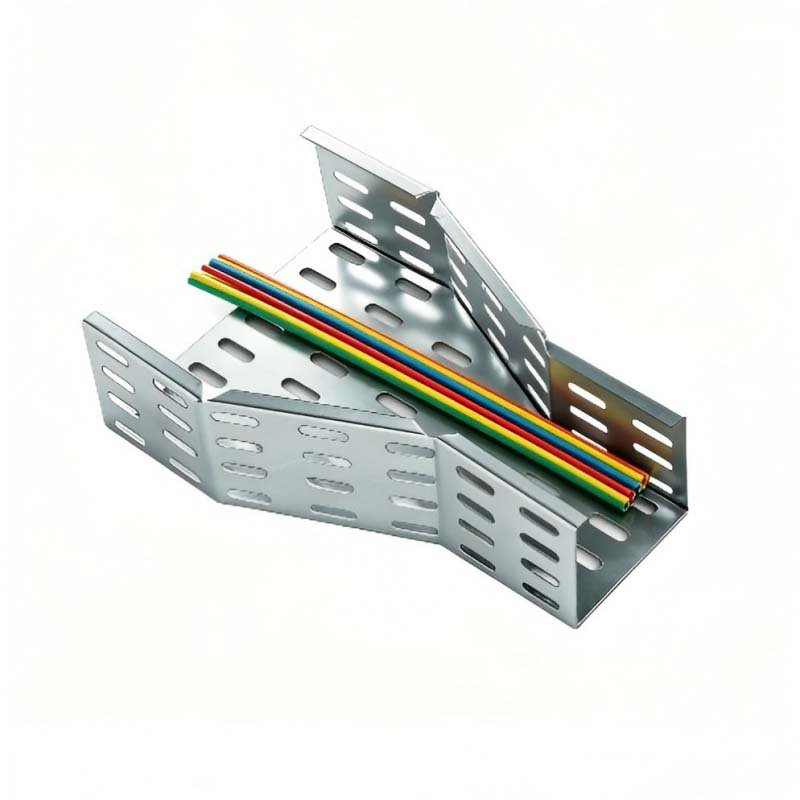
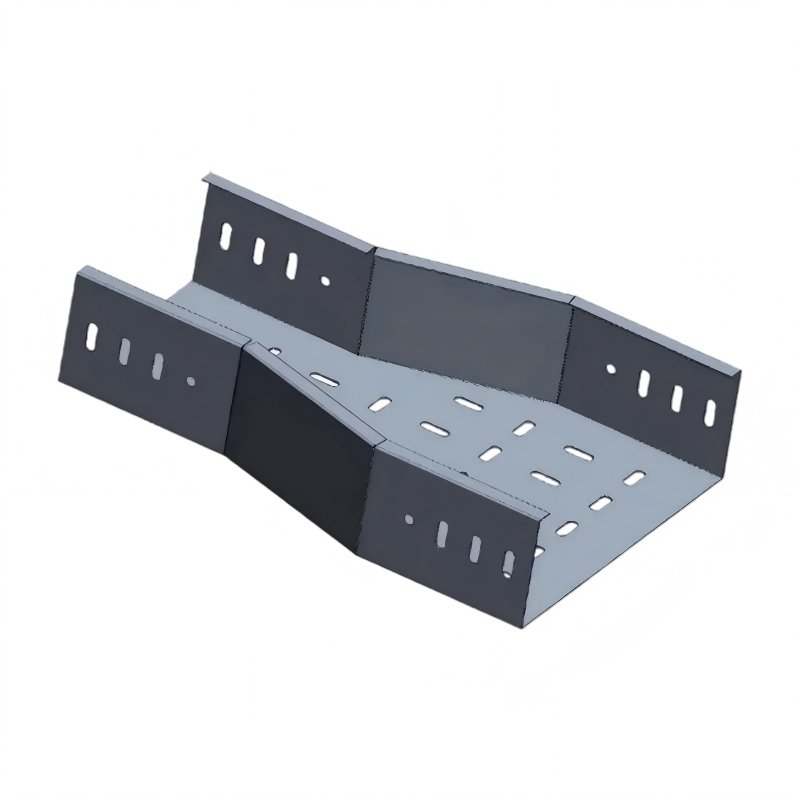
Raw material: carbon steel Q235, SS304, SS316, or aluminum
Product type: perforated cable tray reducer fitting
Surface treatment: pre-galvanized, hot-dip galvanized, stainless steel, or aluminum
Appearance: smooth and even finish matching straight sections
MOQ: 60 pieces (can be mixed sizes and types)
OEM/ODM: acceptable and according to your specifications
Certification: CE, ISO, CCC certificates
Delivery: 15-20 days after deposit received
Payment terms: T/T, LC at sight acceptable
Application: data centers, commercial buildings, industrial facilities, power plants, cablemanagement systems, and more.
| No | Type | Large Width (mm) | Small Width (mm) | Height (mm) | Length (mm) | Material | Weight (kg/pc) |
|---|---|---|---|---|---|---|---|
| 1 | Lanye-PCR-1 | 200 | 100 | 50 | 600 | Pre-galvanized Steel | 4.2 |
| 2 | Lanye-PCR-2 | 200 | 150 | 50 | 600 | Pre-galvanized Steel | 4.8 |
| 3 | Lanye-PCR-3 | 300 | 150 | 75 | 800 | Pre-galvanized Steel | 7.5 |
| 4 | Lanye-PCR-4 | 300 | 200 | 75 | 800 | Pre-galvanized Steel | 8.2 |
| 5 | Lanye-PCR-5 | 400 | 200 | 100 | 1000 | Pre-galvanized Steel | 11.6 |
| 6 | Lanye-PCR-6 | 400 | 300 | 100 | 1000 | Pre-galvanized Steel | 12.8 |
| 7 | Lanye-PCR-7 | 500 | 300 | 100 | 1000 | Hot-dip Galvanized Steel | 15.4 |
| 8 | Lanye-PCR-8 | 500 | 400 | 100 | 1000 | Hot-dip Galvanized Steel | 16.5 |
| 9 | Lanye-PCR-9 | 600 | 400 | 150 | 1200 | Hot-dip Galvanized Steel | 22.8 |
| 10 | Lanye-PCR-10 | 600 | 500 | 150 | 1200 | Hot-dip Galvanized Steel | 24.2 |
| 11 | Lanye-PCR-11 | 800 | 600 | 150 | 1200 | Stainless Steel 304 | 32.6 |
| 12 | Lanye-PCR-12 | 900 | 600 | 150 | 1200 | Stainless Steel 316 | 38.4 |
| Reducer Type | Description | Typical Application |
|---|---|---|
| Concentric Reducer | Centered transition (both sides taper equally) | General purpose, overhead runs |
| Eccentric Reducer | Offset transition (one side straight, one side tapers) | Wall-mounted runs, cable alignment |
| Gradual Reducer | Longer length for very gradual transition | Sensitive cables, high-speed pulls |
| Width Reduction | Recommended Reducer Length | Minimum Length |
|---|---|---|
| 50mm | 300mm | 200mm |
| 100mm | 600mm | 400mm |
| 150mm | 800mm | 600mm |
| 200mm | 1000mm | 800mm |
| 300mm | 1200mm | 1000mm |
| Accessory | Availability |
|---|---|
| Cover (Perforated or Solid) | Yes |
| Divider / Separator Kit | Yes |
| Splice Plates and Hardware | Yes |
| Support Brackets | Yes |
| Earth Bonding Kits | Yes |
| Eccentric Reducer | Yes |

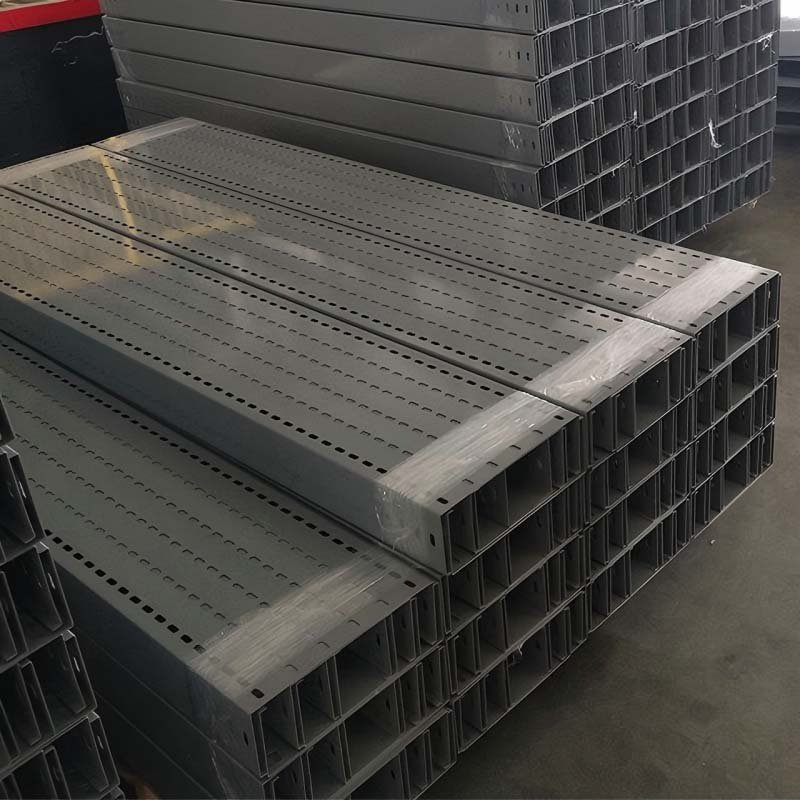
“From” size
The tray width where your current perforated tray run begins.
“To” size
The target tray width your run must transition into.
Ensure the reducer matches your tray style
A perforated cable tray reducer should be compatible with perforated tray supports, perforation geometry, and loading expectations.
Indoor vs. outdoor
Outdoor installations typically require stronger corrosion protection.
Aggressive atmosphere considerations
Factories, chemical plants, wastewater facilities, or coastal regions may need higher-end materials and coatings.
Reduced width transition length
Some reducers provide a specific reduction profile length. Confirm it fits:
Maintain cable support density
If the reducer reduces width, ensure that cable placement and support points remain appropriate.
A high-quality perforated cable tray reducer should match the performance of the rest of your cable tray system. Below are the features you should expect.
Smooth width reduction profile
The reducer is shaped to gradually transition between tray sizes. This reduces cable strain and avoids creating sharp bends or awkward cable lay-in paths.
Maintained tray identity across the transition
The perforation pattern and tray “feel” remain consistent across the run, supporting:
Built for structural stability
Reducers are designed to resist deformation under cable load and handling during installation.
Works with common perforated tray accessories
A proper reducer fits the tray system’s standard mounting points and joining principles—so you do not need to redesign your support plan.
Finish designed for indoor and outdoor environments
Depending on your project requirements, reducers can be offered with different coatings such as:
To get the correct Perforated Cable Tray Reducer for your project, provide the following:
A perforated cable tray reducer is used to transition between two perforated cable tray sections with different widths or dimensions, helping maintain safe cable routing, proper support, and a clean system appearance.
You must identify the “from” tray size and the “to” tray size (including width and matching tray geometry). Then ensure the reducer matches the perforated tray type, height/rail profile, and connector requirements.
Yes, but only if the reducer material and coating are suitable for outdoor exposure (for example, galvanized or project-approved coated finishes). Your project environment should determine the best protection level.
A good perforated cable tray reducer is designed to support cables during a width transition, reducing unnecessary stress. However, you should still follow applicable cabling bend radius requirements and installation practices.
Compatibility depends on geometry and system design. If your adjacent sections are solid trays, the reducer should be chosen based on your engineering plan for cable routing and tray transition strategy.
Common options include galvanized or coated steel, and stainless steel for more demanding environments. The best choice depends on corrosion resistance needs and project specifications.
It is usually connected using tray joining hardware and appropriate connectors (and sometimes bonding/grounding methods as required). Always use recommended hardware and follow your system’s installation standards.
Often, yes—depending on hanger spacing rules, tray load calculations, and the engineering design. Check your support plan and local code requirements to confirm the correct support strategy.