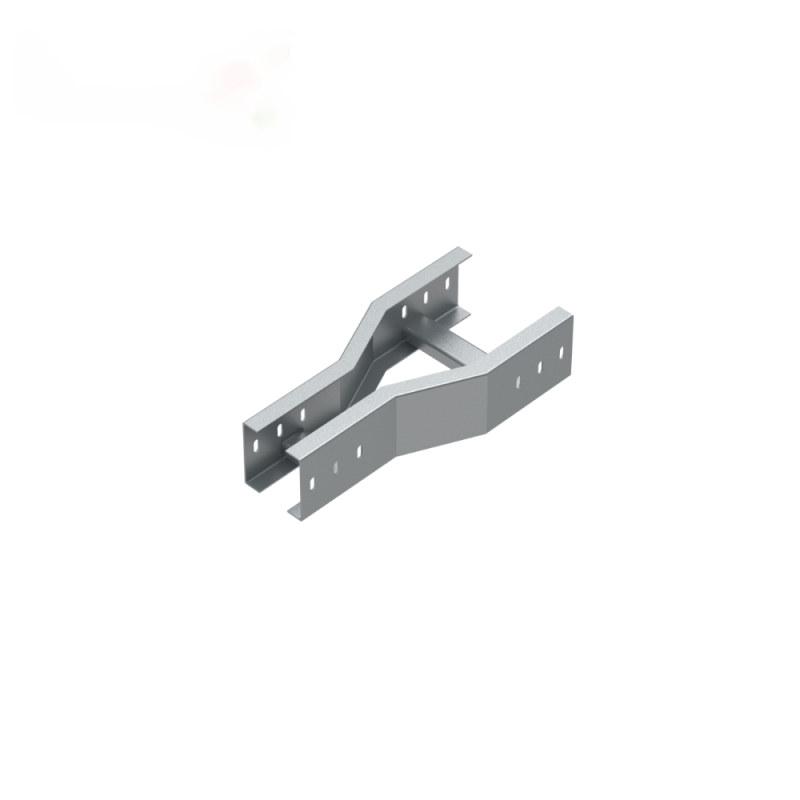
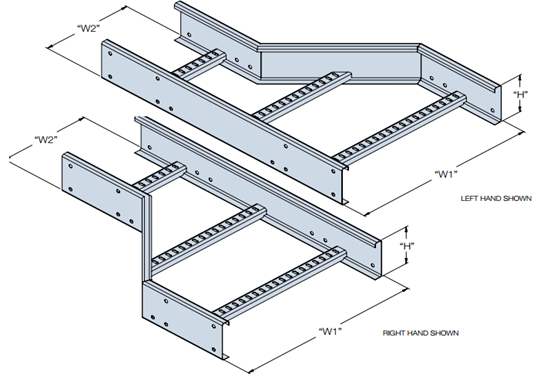
1. Smooth Width Transition for Cable Ladder Systems
2. Durable Construction for Industrial Applications
3. Complete Set with All Mounting Hardware
4. Custom Sizes and Materials Available
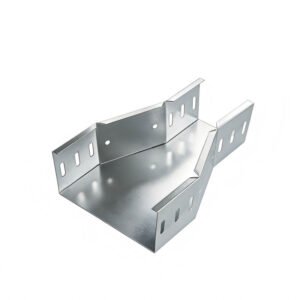
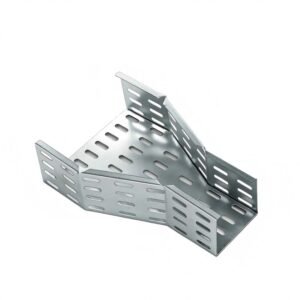
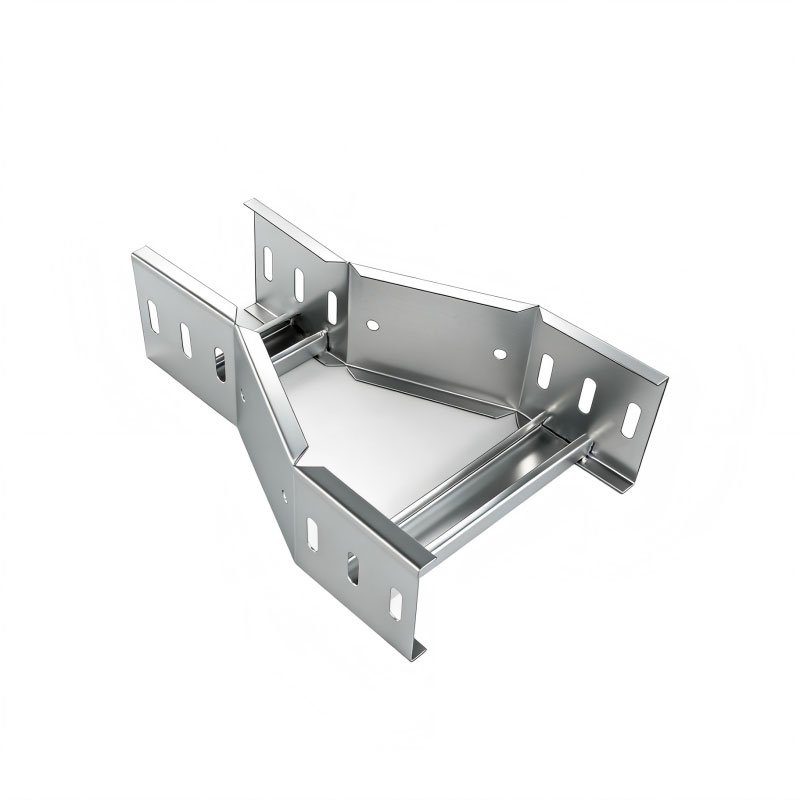
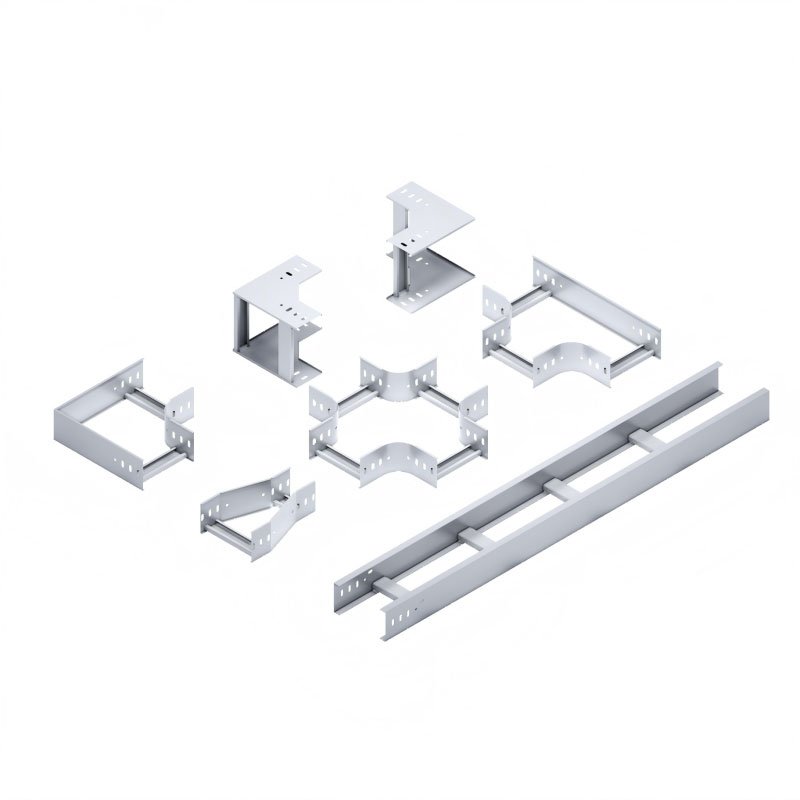
Cable ladder reducer, also known as cable ladder reducing fitting or ladder type reducer, is specially designed and engineered for transitioning between different widths of cable ladder sections, allowing smooth cable flow from a larger ladder to a smaller ladder or vice versa, whilst maintaining the open rung design for excellent ventilation and heavy load support. As the reliable cable ladder manufacturer, Lanye brand custom cable ladder reducer is available in various configurations, materials, sizes and forms to suit the location and requirements of the installation. Our cable ladder reducer can be used in almost any places including power generation plants, oil refineries, industrial facilities, shipbuilding, mining operations, and heavy industrial construction, etc.
A cable ladder reducer is a pre-fabricated fitting used to transition between two different widths of cable ladder. When a cable ladder run needs to change from a larger width to a smaller width (or vice versa) due to reduced cable volume, space constraints, or routing requirements, the reducer provides a smooth, gradual transition that maintains proper cable support and prevents cable damage while preserving the open rung structure for ventilation.
Cable ladder reducer is commonly fabricated using carbon steel grades Q195 or Q235, as well as stainless steel 304/316 and aluminum. The reducer features open rungs and heavy-duty side rails matching straight ladder sections, ensuring consistent ventilation, structural strength, and cable support through the transition. The reducer is manufactured through standard procedures such as punching, bending, and welding, carried out by a flexible automatic production line, with the same surface finish as straight sections (pre-galvanized, hot-dip galvanized, stainless steel, or aluminum).
Galvanized cable ladder reducer exhibits excellent qualities including high strength, a robust design, durability, and resistance to rust. The open rung design provides excellent ventilation for cable heat dissipation while offering strong support for heavy power cables, control cables, and instrumentation wiring during the width transition. The tapered design allows cables to transition smoothly without sharp edges or sudden changes that could damage insulation. These characteristics make it an ideal choice for cable management where heavy cable volume changes along the routing path. Cable ladder reducer is the reliable cable management solution to ensure the longevity and proper functioning of heavy cables when transitioning between different ladder widths.
| Function | Description |
|---|---|
| Width Transition | Smoothly transitions between different ladder widths |
| Cable Volume Management | Accommodates reducing or increasing heavy cable volume |
| Ventilation | Open rungs maintain airflow through transition |
| Heavy Cable Support | Robust construction for large diameter power cables |
| Smooth Transition | Tapered design prevents cable damage |
| Load Distribution | Evenly distributes cable weight through transition |
| Feature | Cable Ladder Reducer | Cable Tray Reducer |
|---|---|---|
| Bottom Surface | Open rungs (spaced cross members) | Solid / Perforated bottom |
| Typical Cable Type | Heavy power (e.g., 500 MCM, 750 MCM) | Light to medium power & data |
| Load Capacity | Higher (up to 150 lb/ft or more) | Moderate (typically <100 lb/ft) |
| Airflow & Heat Dissipation | Excellent | Moderate to good |
| Small Cable Support | Poor (cables may sag) | Good to excellent |
| Typical Industries | Power gen, oil & gas, mining | Commercial, IT, light industrial |
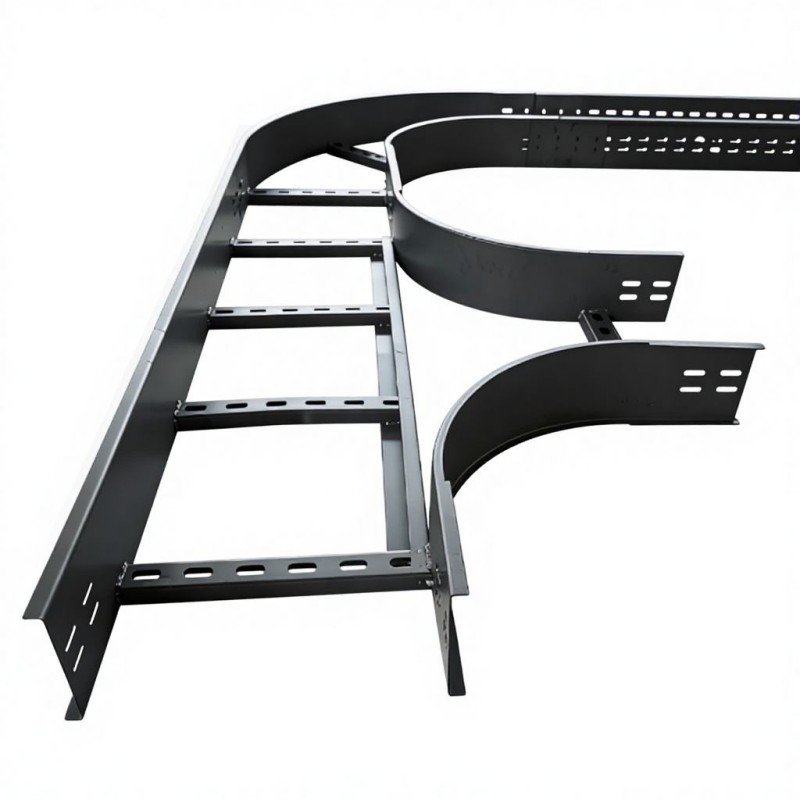
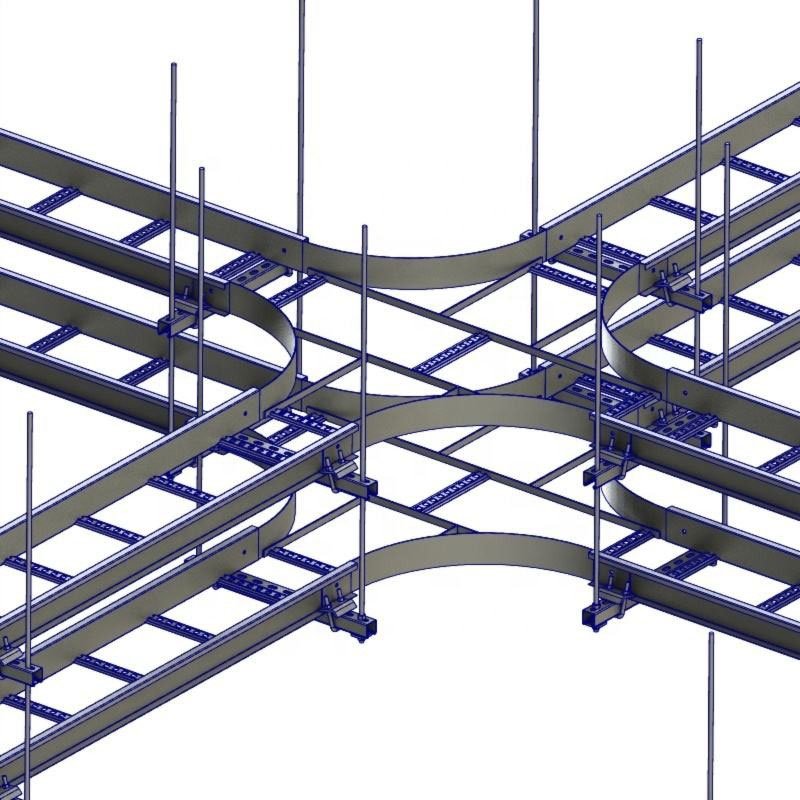
| No | Type | Large Width (mm) | Small Width (mm) | Side Rail Height (mm) | Rung Spacing (mm) | Length (mm) | Material | Weight (kg/pc) |
|---|---|---|---|---|---|---|---|---|
| 1 | Lanye-CLR-1 | 300 | 200 | 50 | 225 | 600 | Pre-galvanized Steel | 8.5 |
| 2 | Lanye-CLR-2 | 300 | 225 | 75 | 225 | 600 | Pre-galvanized Steel | 9.8 |
| 3 | Lanye-CLR-3 | 400 | 300 | 75 | 300 | 800 | Pre-galvanized Steel | 14.2 |
| 4 | Lanye-CLR-4 | 450 | 300 | 75 | 300 | 800 | Pre-galvanized Steel | 16.5 |
| 5 | Lanye-CLR-5 | 500 | 300 | 100 | 300 | 800 | Pre-galvanized Steel | 20.6 |
| 6 | Lanye-CLR-6 | 500 | 400 | 100 | 300 | 800 | Pre-galvanized Steel | 22.8 |
| 7 | Lanye-CLR-7 | 600 | 400 | 100 | 300 | 1000 | Hot-dip Galvanized Steel | 28.4 |
| 8 | Lanye-CLR-8 | 600 | 450 | 100 | 300 | 1000 | Hot-dip Galvanized Steel | 30.2 |
| 9 | Lanye-CLR-9 | 700 | 500 | 150 | 300 | 1000 | Hot-dip Galvanized Steel | 38.6 |
| 10 | Lanye-CLR-10 | 800 | 600 | 150 | 300 | 1200 | Hot-dip Galvanized Steel | 48.4 |
| 11 | Lanye-CLR-11 | 900 | 600 | 150 | 300 | 1200 | Stainless Steel 304 | 56.8 |
| 12 | Lanye-CLR-12 | 900 | 700 | 150 | 300 | 1200 | Stainless Steel 316 | 62.4 |
| Reducer Type | Description | Typical Application |
|---|---|---|
| Concentric Reducer | Centered transition (both sides taper equally) | General purpose, overhead runs |
| Eccentric Reducer | Offset transition (one side straight, one side tapers) | Wall-mounted runs, cable alignment |
| Gradual Reducer | Longer length for very gradual transition | Sensitive cables, high-speed pulls |
| Width Reduction | Recommended Reducer Length | Minimum Length |
|---|---|---|
| 50mm | 400mm | 300mm |
| 75mm | 600mm | 450mm |
| 100mm | 600mm | 500mm |
| 150mm | 800mm | 600mm |
| 200mm | 1000mm | 800mm |
| 300mm | 1200mm | 1000mm |
| Rung Type | Cross Section | Best For |
|---|---|---|
| Round Bar | 8mm-12mm diameter | General purpose, lighter loads |
| Flat Bar | 25mm x 5mm to 40mm x 6mm | Heavy loads, cable sliding |
| Accessory | Availability |
|---|---|
| Divider / Separator Kit | Yes |
| Splice Plates and Hardware | Yes |
| Support Brackets | Yes |
| Cover (where required) | Yes |
| Earth Bonding Kits | Yes |
| Eccentric Reducer | Yes |
Lanye custom cable ladder reducer has the following advantages which make it an excellent choice for efficient cable management solutions.
The engineered taper of Lanye cable ladder reducers provides a smooth, gradual transition between different ladder widths. This allows heavy power and control cables to transition without sharp bends or sudden changes that could damage insulation or impede cable pulling.
The open rung design maintains consistent airflow through the transition section, preventing heat buildup where cable density may change. This is particularly important when transitioning from a larger to a smaller ladder where cable packing may be tighter.
Cable ladder reducers are designed for heavy-duty applications. With side rail heights up to 150mm and rung spacing optimized for strength, Lanye cable ladder reducers maintain load capacity through the transition, supporting heavy power cables including 500 MCM, 750 MCM, and larger.
Cable ladder reducers are available in concentric (centered) and eccentric (offset) configurations. Concentric reducers are ideal for overhead runs, while eccentric reducers are preferred for wall-mounted runs where keeping one side of the cable ladder aligned with a wall or other reference is important.
All rungs and rail edges are deburred and rounded to prevent cable jacket abrasion during pulling through the reducer. Flat bar rungs are recommended for cable sliding applications as they provide a smoother surface than round rungs.
The zinc coating (or stainless steel/aluminum material) provides excellent corrosion resistance, safeguarding the reducer from rust and corrosion due to moisture, chemicals, and environmental factors. HDG and stainless steel options provide maximum protection for outdoor and harsh environments.
Lanye reducers feature a gradual taper angle (typically 15-30 degrees) that provides a smooth transition without creating cable trapping points or excessive sidewall pressure on heavy cables.
Unlike field-fabricated transitions, Lanye factory reducers are engineered to maintain the load rating of the cable ladder system. Structural integrity is preserved through the transition.
Both ends of the reducer include pre-punched splice holes that align perfectly with straight cable ladder sections. Splice plates and bolts are available for every reducer order.
Custom cable ladder reducers offer OEM/ODM options for tailored solutions, including custom width transitions, eccentric configurations, and special lengths to meet specific project requirements.
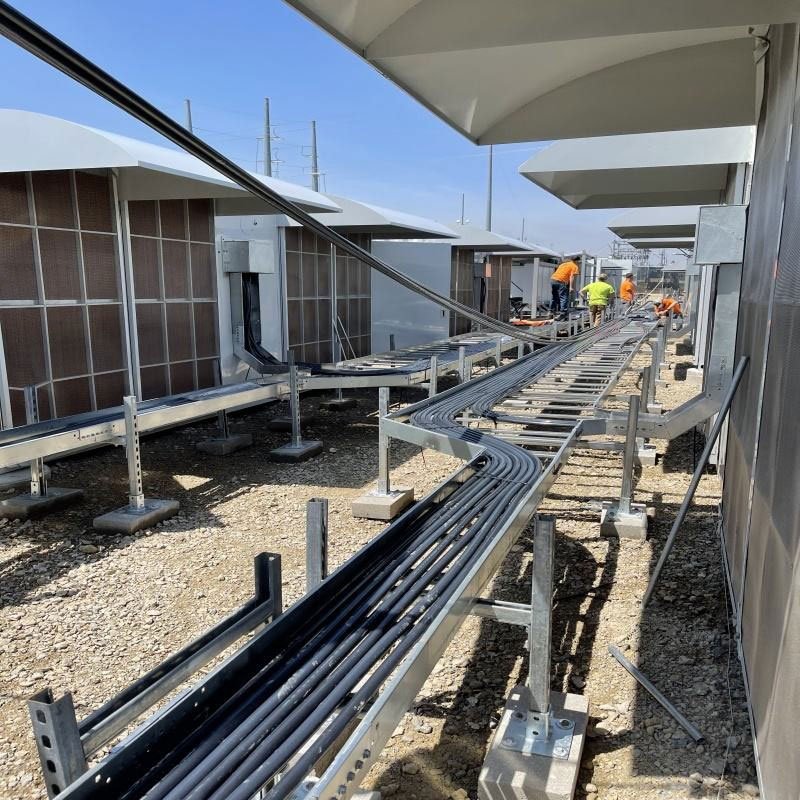
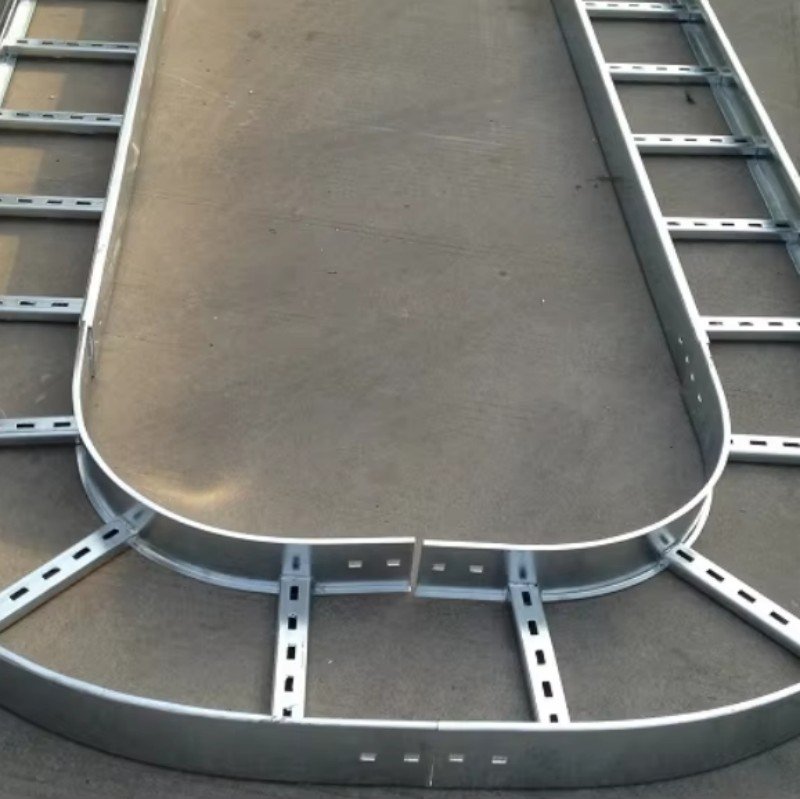
Cable ladder reducer is widely used across many industries where heavy cable volume changes along the routing path require transitions between different ladder widths.
In power plants, cable ladder reducers transition main power cable runs to smaller branch runs feeding generators, transformers, switchgear, and auxiliary equipment.
Refineries use cable ladder reducers where main power and control cable routes reduce to smaller branches serving process units, storage tanks, and loading facilities.
Large industrial facilities use cable ladder reducers where main power feeds transition to smaller equipment feeders or where cable volume reduces after dropping cables to machinery.
Mines and processing plants use cable ladder reducers where main power feeds branch to crushers, conveyors, pumps, and processing equipment with varying power requirements.
Large vessels use cable ladder reducers where main power distribution transitions to smaller branch runs for propulsion, navigation, lighting, and shipboard systems.
Substations use cable ladder reducers where transformer feeders transition to smaller outgoing distribution cables for different voltage levels.
Large treatment facilities use cable ladder reducers where main power feeds transition to smaller branch runs for pumps, blowers, and processing equipment.
For large data centers, utility feeder distribution often uses cable ladder systems with reducers where main feeds transition to smaller distribution cables to UPS systems and PDU panels.
Identify where cable volume reduces sufficiently to justify transitioning to a smaller ladder width. Plan the reducer location for efficient cable routing.
Choose concentric reducer for overhead runs or when centered alignment is acceptable. Choose eccentric reducer for wall-mounted runs or when alignment with one side is required.
Ensure the reducer length is adequate for the width reduction. Lanye recommends longer reducers for larger width reductions to maintain a gradual taper angle.
Install supports within 300mm on each side of the reducer. For large reducers (over 200mm width reduction), install an additional support directly under the reducer midpoint.
Connect the large end to the larger ladder section and the small end to the smaller ladder section using splice plates and hardware. Ensure proper alignment before tightening.
If cable separation is required and the divider continues through the reducer, ensure the divider-compatible reducer is used with proper divider alignment.
Pull cables through the reducer from the larger end toward the smaller end when possible. For heavy power cables, use cable rollers to reduce friction. For sensitive cables, use pulling lubricant.
Secure cables with cable ties or heavy-duty cable cleats. Complete grounding path across the reducer using bonding jumpers as required by NEC and local codes.
| Large Width (mm) | Small Width (mm) | Recommended Reducer Length | Recommended Type |
|---|---|---|---|
| 300 | 200 | 600mm | Concentric or Eccentric |
| 300 | 225 | 600mm | Concentric or Eccentric |
| 400 | 300 | 800mm | Concentric |
| 450 | 300 | 800mm | Eccentric (wall-mount) |
| 500 | 300 | 800mm | Eccentric (wall-mount) |
| 500 | 400 | 800mm | Concentric |
| 600 | 400 | 1000mm | Concentric or Eccentric |
| 600 | 450 | 1000mm | Concentric |
| 700 | 500 | 1000mm | Eccentric (wall-mount) |
| 800 | 600 | 1200mm | Concentric |
| 900 | 600 | 1200mm | Eccentric (wall-mount) |
Lanye cable ladder reducers are built for heavy industrial applications with robust side rails, securely welded rungs, and certified load ratings through the transition.
Lanye ladder reducers feature engineered taper angles and smooth transitions that protect heavy cables and maintain system integrity.
All Lanye cable ladder reducers are precision-manufactured to match straight sections exactly, ensuring proper fit and alignment at both ends.
As a professional cable ladder manufacturer, Lanye can provide custom reducers based on project drawings, specific width transitions, and eccentric offset requirements.
Lanye supports OEM and ODM supply for distributors, contractors, and engineering buyers. Private labeling and custom configurations are available.
All Lanye cable ladder reducers undergo strict quality control including dimensional inspection, weld inspection, load testing verification, and finish inspection.
A: A cable ladder reducer is a pre-fabricated fitting used to transition between different widths of cable ladder, allowing smooth cable flow from a larger ladder to a smaller ladder or vice versa. It features open rungs for ventilation and heavy-duty construction for power cables.
A: A concentric reducer is centered (both sides taper equally), suitable for overhead runs. An eccentric reducer is offset (one side straight, one side tapers), used for wall-mounted runs to maintain consistent alignment with the wall.
A: Cable ladder reducers are designed for heavy power cables. For small diameter cables (e.g., instrumentation, data), Lanye recommends using cable tray reducers with solid or perforated bottoms to prevent cable sagging between rungs.
A: Yes. Reducers can be used in both directions. When increasing width, pull cables from the smaller ladder into the larger ladder. The smooth taper works equally well in either direction.
A: Install supports within 300mm on each side of the reducer. For large reducers (over 200mm width reduction), install an additional support directly under the reducer midpoint.
A: Lanye standard cable ladder reducers use 225mm or 300mm rung spacing depending on the side rail height and load rating, matching straight section rung spacing.
A: Yes. Lanye offers divider-compatible cable ladder reducers with pre-slotted side rails that maintain continuous separation through the transition. This is essential for separating power and data cables or different voltage levels.
A: Lanye cable ladder reducers are available in pre-galvanized steel, hot-dip galvanized steel (HDG), stainless steel 304, stainless steel 316, and aluminum.
A: Standard sizes from Lanye typically ship in 5-7 business days. Custom width transitions, eccentric configurations, or special materials require 10-15 business days.
A: Load capacity depends on width, side rail height, material, and rung spacing. Example: 600mm wide, 100mm side rail, HDG steel: safe working load of approximately 100-120 lb/ft through the reducer. Always refer to Lanye certified load tables for specific configurations.
A: Yes. Lanye offers sample cable ladder reducers for customer evaluation. Please contact our sales team to discuss sample requirements, sizes, and lead time.
A: Yes. Lanye cable ladder reducers meet NEMA VE 1, IEC 61537, and CSA C22.2 No. 126.1 standards. CE and ISO 9001 certified.