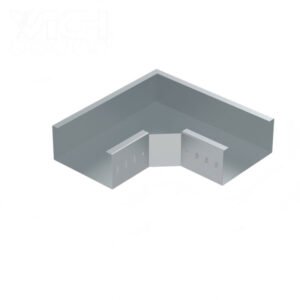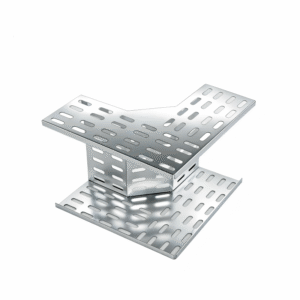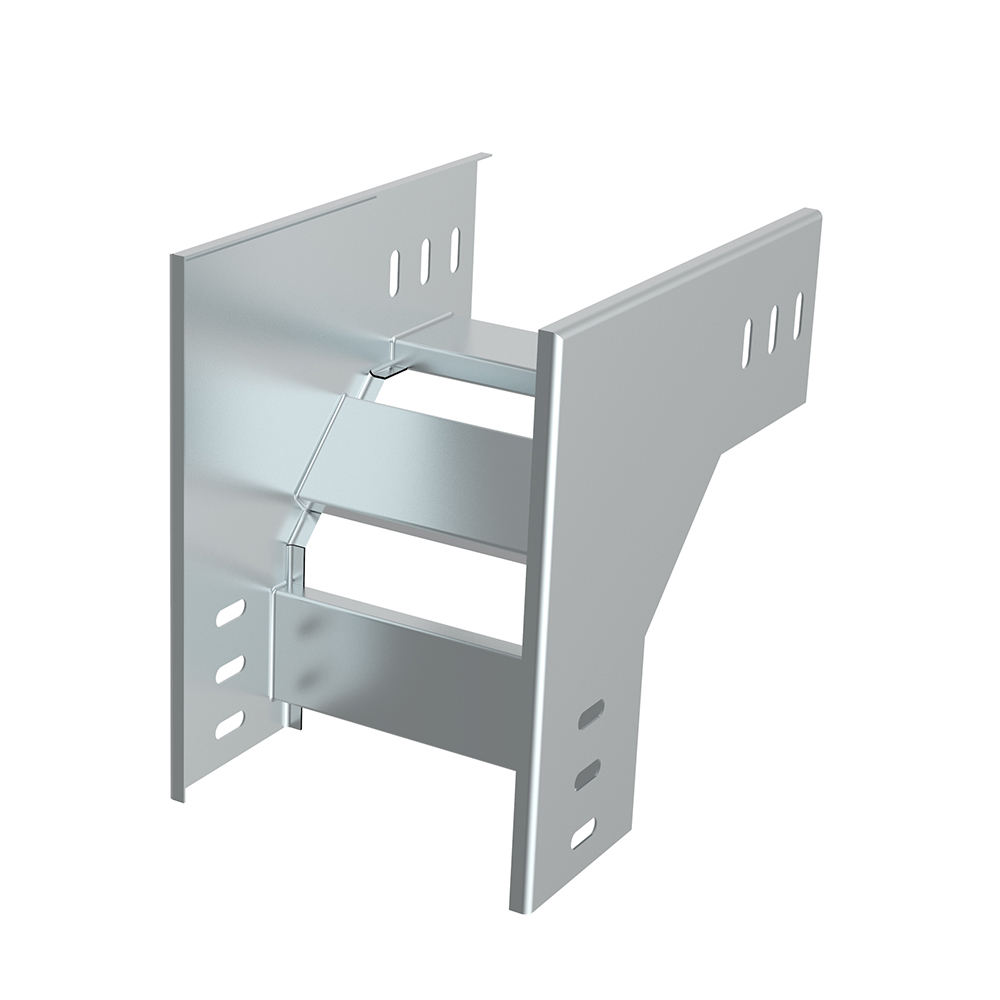
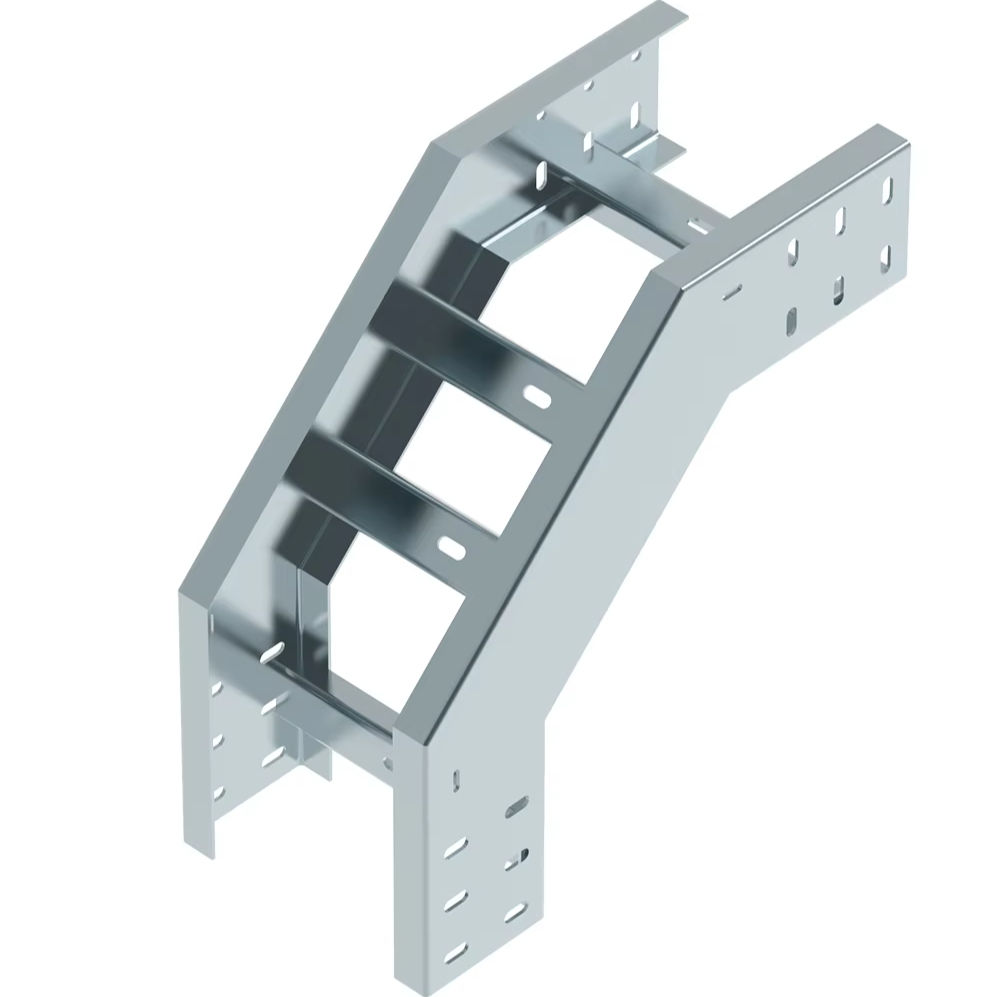


1. Change cable ladder direction horizontally or vertically easily.**
2. Heavy duty bend for large power and control cables.**
3. Maintains cable bend radius and reduces stress.**
4. Pre-fabricated galvanized steel ladder bend fitting.**
Cable ladder bend is a structural accessory used in cable ladder systems to change the direction of cable routing. It connects straight cable ladder sections and allows cables to turn safely without sharp angles that could damage insulation or reduce performance. As the reliable cable ladder bend manufacturer, Lanye brand custom cable ladder bend is available in various configurations, materials, sizes and forms to suit the location and requirements of the installation. Our cable ladder bends can be used in almost any places including power generation plants, oil refineries, shipbuilding, data centers, tunnels and high rise buildings, etc.
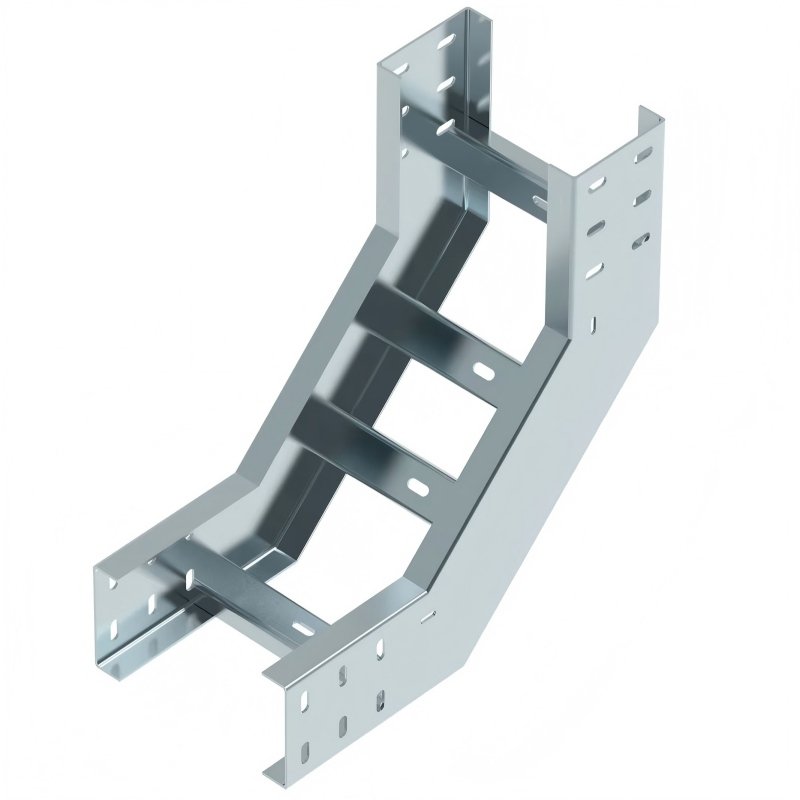
A cable ladder bend is a structural fitting designed to change the direction of a cable ladder run horizontally or vertically. Unlike a cable tray bend (which typically has a solid or perforated bottom), a ladder bend features open rungs and two heavy-duty side rails, maintaining the same structural characteristics as a straight cable ladder section. Cable ladder bends come in various configurations to support different directional changes: horizontal bends for left or right turns, vertical bends for upward or downward transitions, and adjustable bends for flexible installation needs. These components are critical in maintaining organized cable layouts, especially in complex installations where routing paths must adapt to structural constraints.
| Feature | Cable Ladder Bend | Cable Tray Bend |
|---|---|---|
| Bottom surface | Open rungs (spaced cross members) | Solid / perforated / ventilated |
| Typical cable type | Heavy power (e.g., 500 MCM, 750 MCM) | Light to medium power & data |
| Load capacity | Higher (up to 150 lb/ft or more) | Moderate (typically <100 lb/ft) |
| Airflow & heat dissipation | Excellent | Moderate |
| Typical industries | Power gen, oil & gas, mining | Commercial, IT, light industrial |
Changing direction horizontally (left or right turn)
Changing vertical direction (upward or downward bend)
Obstacle avoidance (pipes, ducts, structural steel)
Transition between different elevation levels in a cable runway
Maintaining minimum bend radius for large diameter power cables
Raw material: carbon steel Q235
Product type: ladder bend
Surface treatment: pre-galvanized, hot-dip galvanized, stainless steel, aluminum
Appearance: smooth and even zinc layer, or as specified
MOQ: 60 pieces (can be mixed angles)
OEM/ODM: acceptable and according to your specifications
Certification: CE, ISO, CCC certificates
Delivery: 15-20 days after deposit received
Payment terms: T/T, LC at sight acceptable
Application: building, construction, industrial plants, cable management, cable support, and more.

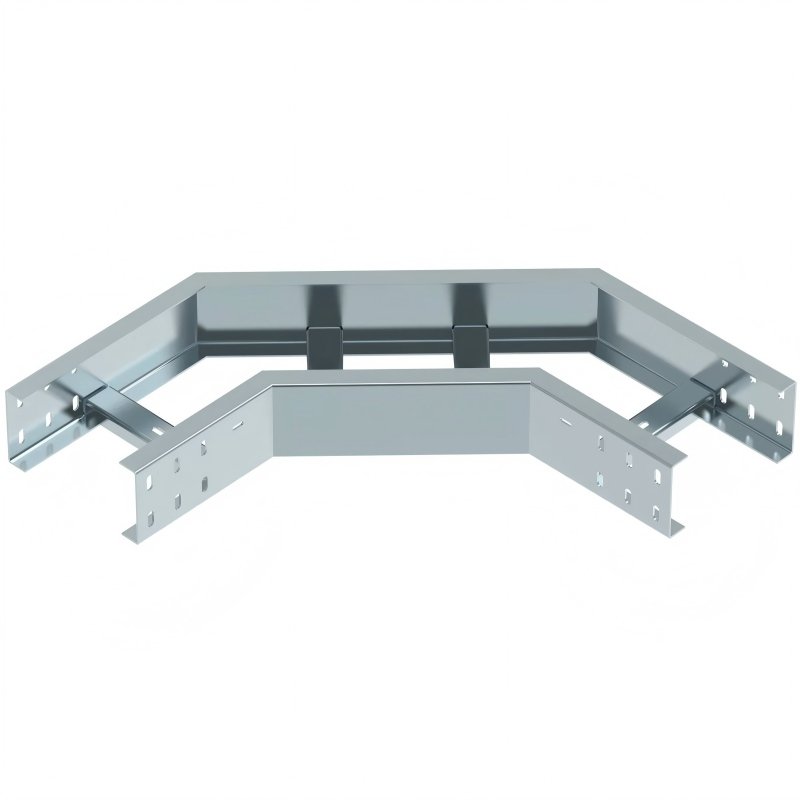
| No | Type | Bend Angle | Ladder Width (mm) | Side Rail Height (mm) | Material | Load Capacity (lb/ft) |
|---|---|---|---|---|---|---|
| 1 | Lanye-HB-1 | 30° Horizontal | 300 | 75 | Pre-galvanized Steel | 80 |
| 2 | Lanye-HB-2 | 45° Horizontal | 450 | 100 | Pre-galvanized Steel | 100 |
| 3 | Lanye-HB-3 | 60° Horizontal | 600 | 150 | Hot-dip Galvanized Steel | 120 |
| 4 | Lanye-HB-4 | 90° Horizontal | 600 | 150 | Hot-dip Galvanized Steel | 120 |
| 5 | Lanye-VB-1 | 45° Vertical Inside | 300 | 75 | Stainless Steel 304 | 90 |
| 6 | Lanye-VB-2 | 90° Vertical Outside | 600 | 150 | Stainless Steel 316 | 135 |
| 7 | Lanye-VB-3 | 60° Vertical Inside | 450 | 100 | Aluminum 6063-T6 | 80 |
| 8 | Lanye-CB-1 | Custom Angle (0-180°) | 900 | 200 | Hot-dip Galvanized Steel | 150 |
| 9 | Remark | – Centerline radius: standard 12″, 18″, 24″, 36″; custom up to 72″ |
Rung spacing: 9″ or 12″ standard; rung type: flat bar or round
ODM/OEM Availability for custom angles and radii
Lanye custom cable ladder bend has the following advantages which make it an excellent choice for efficient cable management solutions.
Large power cables (e.g., 4/0 AWG, 500 MCM, 750 MCM) have strict minimum bend radius requirements (typically 5x to 12x cable diameter). Our ladder bends are fabricated with generous centerline radii that prevent cable kinking, insulation damage, and conductor stress – directly supporting NEC Article 300.34 and IEEE 422 compliance.
Unlike field-cut and welded bends, our factory-fabricated cable ladder bend retains the same structural strength as straight sections. We provide certified load tables for each bend angle and radius, so engineers can confidently calculate support spacing and total cable weight. Example load rating (24″ wide, 6″ side rail, 90° horizontal bend, HDG steel): Safe working load of 120 lb/ft with deflection at 120 lb/ft less than 0.25″.
All rungs and rail edges are deburred and rounded to prevent cable jacket abrasion. For long pulls (over 200ft), we can supply roller-equipped bends or nylon glide strips as optional upgrades.
Each end of the bend includes pre-punched splice holes that align perfectly with our straight ladder sections. Splice plates, bolts, and grounding jumpers are included with every bend order.
If your cable ladder includes a center divider (for power/data separation), we offer divider-compatible bends with pre-slotted or pre-welded divider brackets that maintain separation through the bend. Solid or ventilated covers can also be fitted.
For outdoor, chemical, or marine installations, our hot-dip galvanized (HDG) and stainless steel 316 bends provide 20+ years of maintenance-free service. HDG coating thickness exceeds ASTM A123 (min 2.5 mils for steel <1/4″ thick).
A wide selection of matching bend angles (15°, 30°, 45°, 60°, 90° and custom) allows for versatile and efficient cable routing solutions tailored to specific path requirements.
Custom cable ladder bends offer OEM/ODM options for tailored solutions, including custom radii up to 72″ for large diameter cables, to meet specific project requirements.
These custom cable ladder bend solutions come at a competitive factory price, offering cost-effective cable management without compromising on quality or performance.
Angle tolerance: ±1°
Width tolerance: ±1/8″
Radius tolerance: ±1/4″ for radii ≤36″, ±1/2″ for larger custom radii
When installing a cable ladder bend, supports should be placed: within 12 inches on each side of the bend tangent points, and at the bend midpoint (for 60° or 90° bends) if span exceeds 5ft.
To avoid excessive sidewall pressure, the following maximum cable fill is recommended for ladder bends:
Steel (galvanized): -30°F to +400°F (-34°C to 204°C)
Stainless steel: -50°F to +600°F (-45°C to 315°C)
Aluminum: -30°F to +200°F (-34°C to 93°C)
Step 1 – Verify Bend Angle & Radius
Before installation, confirm that the cable ladder bend matches your design drawings. Check that the bend radius accommodates the largest cable in the run.
Step 2 – Mount End Supports
Install a support (trapeze hanger, wall bracket, or floor stand) immediately before and after the bend. For 90° bends, also support the midpoint if the distance between end supports exceeds 4ft.
Step 3 – Connect to Straight Sections
Use the included splice plates and hardware. Do not fully tighten until all sections and the bend are aligned. For outdoor runs, leave a 1/8″ gap per 50ft for thermal expansion.
Step 4 – Install Dividers (if applicable)
If you use a center or offset divider, install the divider bend insert before placing cables. Our divider-compatible bends feature pre-machined slots that guide the divider through the radius smoothly.
Step 5 – Pull Cables
Use pulling grips or cable rollers. For high-tension pulls, apply pulling lubricant compatible with cable jacket material (e.g., polywater for power cables). Never exceed the cable manufacturer’s maximum sidewall pressure rating.
Step 6 – Secure & Ground
Secure cables with cable ties or cleats after pulling. Complete the grounding path by connecting a bonding jumper across the bend’s splice points (required for metal ladder systems per NEC 250.96).

Custom cable ladder bend is widely used across many industries including power generation, industrial manufacturing, energy, transportation, data centers, and infrastructure projects. These bends provide essential direction changes for diverse cable ladder systems.
In a 500MW combined cycle plant, cable ladder bends route 15kV generator leads from the turbine deck down to the switchgear room. Vertical inside bends with 36″ radius ensure safe bending of large copper cables.
HDG ladder bends with 60° horizontal offset navigate around distillation columns and pipe racks. Stainless steel 316 bends are used near cooling towers where salt and moisture are present.
Aluminum cable ladder bends (marine grade 6063-T6) provide lightweight corrosion resistance. Vertical outside bends allow cable transitions between deck levels without exceeding overhead clearance limits.
While most data center cable runs are small, the main utility feeder (2000A – 4000A) requires large parallel 750 MCM cables. Steel ladder bends with 24″ radius and non-metallic dividers separate utility power from generator feeders in the same ladder.
In highway tunnels (lighting, ventilation, cameras), stainless steel ladder bends resist road salts and vehicle exhaust. 45° horizontal bends allow the ladder to follow curved tunnel walls.
Pre-galvanized cable ladder bends are extensively used in commercial construction, providing vital cable routing changes for power, lighting, and communication systems in supermarkets, hotels, hospitals, and high rise buildings
Q1: Can a cable ladder bend be used in the same run as a cable tray with separator?
A: Yes, but you must order a divider-compatible bend. Lanye ladder bends can be manufactured with pre-slotted inner and outer rails that accept standard dividers, ensuring continuous separation through the direction change.
Q2: What is the standard lead time for a cable ladder bend?
A: Standard angles (30°, 45°, 60°, 90°) in pre-galvanized or HDG steel typically ship in 5–7 business days. Stainless steel and aluminum, or custom angles/radii, require 10–15 business days from Lanye.
Q3: Do cable ladder bends require special supports compared to straight sections?
A: Yes. Supports must be placed closer together at bends because the bend concentrates mechanical stress. Lanye recommends supports within 12″ of the bend’s start and end, plus a support at the bend midpoint for 60°–90° bends. Engineering load tables are available upon request.
Q4: How do I calculate the minimum bend radius needed for my cables?
A: Check your cable manufacturer’s datasheet for minimum allowable bending radius (often expressed as a multiple of cable diameter). For example: single conductor 5kV – 15kV power requires 8x to 12x cable diameter; multi-conductor power requires 7x to 10x cable diameter; fiber optic requires 10x to 20x cable diameter (non-load bearing). Choose a ladder bend radius equal to or greater than the largest required radius among all cables in the bend.
Q5: Can I field-modify a standard cable ladder bend to add a divider later?
A: Not recommended. Drilling or welding a divider support into a finished galvanized bend damages the coating and may void structural integrity. Always order a divider-ready bend from Lanye factory.
Q6: Are your cable ladder bends compliant with UL, CSA, or FM standards?
A: Yes. Lanye standard steel ladder bends meet UL 1565 (Cable Trays) and CSA C22.2 No. 126.1. FM Approved (Class 4975) options are available for fire pump and emergency system applications.
Q7: What is the difference between a vertical inside bend and a vertical outside bend?
A: Vertical inside bend – The ladder turns upward or downward on the same side of the side rails (radius on the inner rail). Used when cables rise or drop within a footprint. Vertical outside bend – The ladder turns away from the original axis (radius on the outer rail). Used for transitioning around obstacles or changing elevation without using a separate vertical riser.
Q8: Can I order a cable ladder bend with a radius larger than 36″?
A: Absolutely. For large diameter power cables (e.g., 750 MCM or 1000 MCM), Lanye manufactures custom bends up to 72″ centerline radius in any angle. Additional lead time and engineering review apply.
Q9: How do I ground a cable ladder bend?
A: For metal ladders, a continuous grounding path is required. Use the pre-punched holes at each end of the bend with a tinned copper bonding jumper (supplied or field installed). If the bend includes a metal divider, bond the divider to the side rails as well.
Q10: What is the maximum cable load for a 90° horizontal ladder bend?
A: This depends on width, side rail height, material, and radius. Example – 24″ wide, 6″ side rail, HDG steel, 24″ radius: safe working load = 100 lb/ft for the bend section (approximately 80% of the straight section rating). Always refer to Lanye certified load tables for your specific configuration.