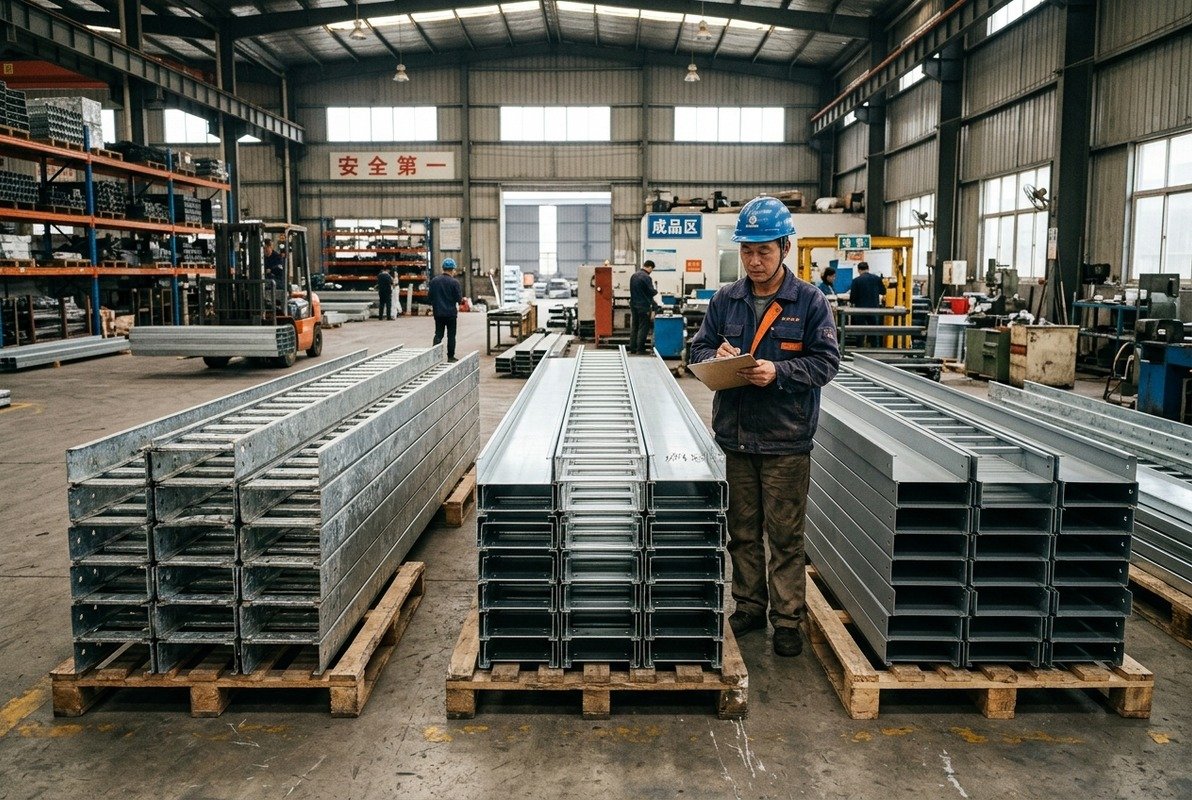
Choosing between hot-dip galvanized 1, pre-galvanized, and zinc magnesium aluminum coatings is a decision I help procurement managers navigate on nearly every cable tray project that comes through our production line.
Hot-dip galvanized, pre-galvanized, and zinc magnesium aluminum differ significantly in coating thickness, corrosion resistance, lifecycle cost, and ideal application environment. Hot-dip galvanized suits harsh outdoor projects, pre-galvanized fits dry indoor settings, and zinc magnesium aluminum excels in solar and coastal installations with its self-healing properties.
Each finish serves a distinct purpose. The wrong choice can mean premature rust, project delays, or wasted budget coating thickness gauges 2. Below, I break down every factor that matters when you are sourcing cable management systems with these three coatings.
How do I choose the right finish to balance my project costs and durability requirements?
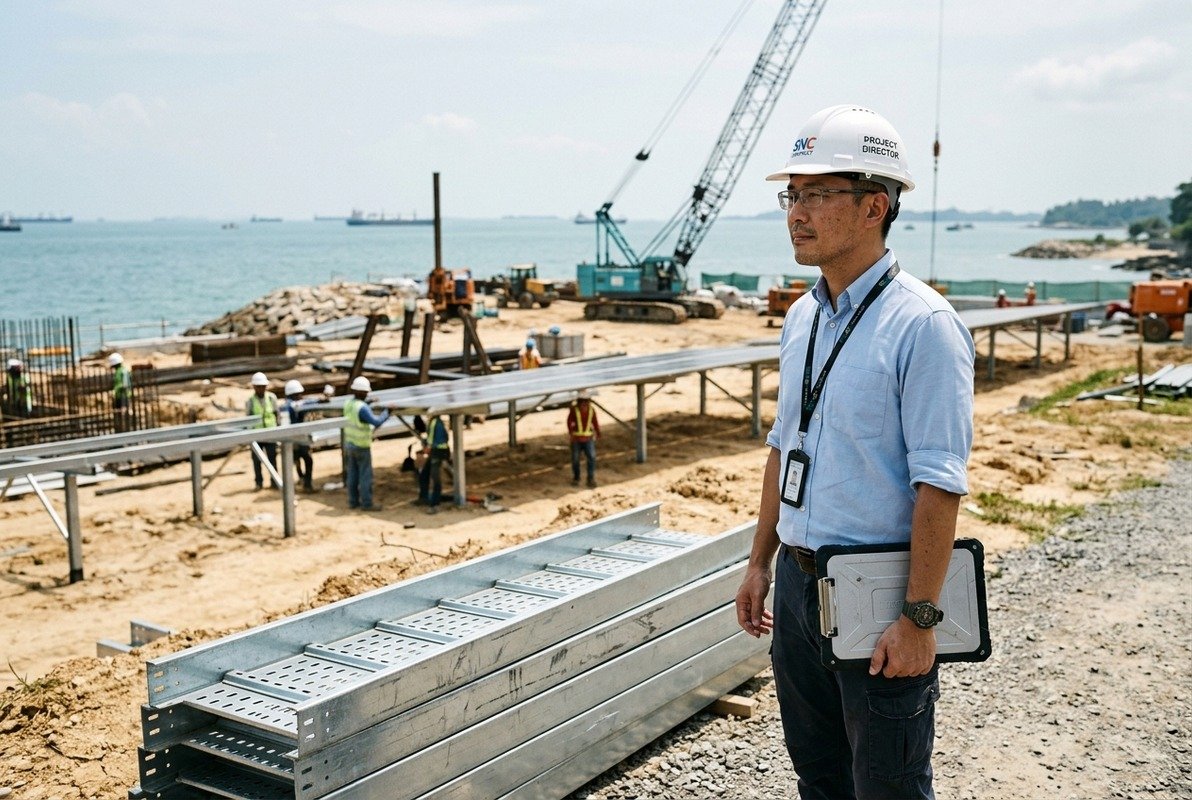
A buyer in Singapore once asked me to quote the same ladder-type cable tray in all three finishes for a single mixed-use development — one section outdoors near a cooling tower, one inside a parking garage, and one on a rooftop solar array.
Match the finish to the environment’s severity: use hot-dip galvanized for aggressive outdoor or chemical exposure, pre-galvanized for protected indoor spaces, and zinc magnesium aluminum for solar or coastal projects where long-term durability and reduced maintenance outweigh the higher upfront material cost.
Understanding the Three Coating Processes
The differences start at the production stage. Hot-dip galvanizing (HDG) means the fully fabricated cable tray is dipped into a bath of molten zinc 3 at roughly 450 °C. The zinc reacts with the steel substrate to form a thick, metallurgically bonded layer — typically 55 to 200 microns. This process covers every surface, including internal areas, weld seams, and cut edges. On our production floor, the trays come out with that distinctive crystalline “spangle” pattern.
Pre-galvanized 4 (Pre-Gal) steel is different. The steel coil is zinc-plated in a continuous line before it is cut, punched, and formed into a cable tray. The result is a thinner, more uniform coating. It looks cleaner and smoother. But the moment we cut or punch the sheet, those edges lose their zinc protection.
Zinc Magnesium Aluminum 5 (ZAM or ZM) is the newest entrant. The coating alloy contains roughly 80–90% zinc, 5–11% aluminum, and 1–3% magnesium. The aluminum improves oxidation resistance. The magnesium enables a self-healing mechanism 6 at scratches and cut edges. When moisture contacts a damaged spot, magnesium compounds form a protective barrier that blocks red rust.
A Side-by-Side Decision Matrix
| Factor | Hot-Dip Galvanized (HDG) | Pre-Galvanized (Pre-Gal) | Zinc Magnesium Aluminum (ZAM/ZM) |
|---|---|---|---|
| Coating thickness | 55–200 microns | 7–20 microns | 10–30 microns (thinner needed for equal life) |
| Coating adhesion | Metallurgical bond, very strong | Mechanical/electrochemical bond | Metallurgical bond with alloy intermetallics |
| Cut edge protection | Sacrificial protection, moderate | Weak — requires touch-up paint | Excellent — self-healing magnesium barrier |
| Corrosion resistance 7 | High | Moderate | Very high (2–10× longer than HDG at same thickness) |
| Best environment | Outdoor, chemical, industrial | Indoor, dry, mild | Coastal, solar, industrial, outdoor |
| Initial material cost | Medium | Low | Higher |
| Lifecycle cost 8 | Medium-low in harsh settings | Low in mild settings | Lowest in harsh or long-life settings |
| Surface finish | Rough, spangled | Smooth, uniform | Smooth, matte gray |
Matching Finish to Real Projects
From our experience exporting cable trays to Southeast Asia, Africa, and South America, the pattern is consistent. Hot-dip galvanized cable trays go to crude oil refineries, water treatment plants, petrochemical facilities, and power substations — places where chemical fumes, moisture, and abrasion are constant threats. The thick zinc layer and full post-fabrication coverage make HDG the reliable workhorse for these harsh environments.
Pre-galvanized cable trays are the go-to for underground parking garages, commercial building interiors, and data centers. These are dry, climate-controlled spaces. The thinner coating keeps costs down, and the smooth surface looks tidy above a suspended ceiling. There is no need to pay for heavy corrosion resistance when the tray will never see rain or salt air.
Zinc magnesium aluminum cable trays have surged in demand on solar energy projects. The rooftop or ground-mount solar environment combines UV exposure, temperature swings, and occasional coastal humidity. ZAM handles all of that. Its durability means project owners can trust a 25-year solar installation without worrying about tray replacement at year 10.
The material selection decision always comes down to one question: what will the tray face over its full service life? Answer that honestly, and the right finish becomes obvious. For additional guidance on selecting the appropriate tray type alongside the finish, see our guide on how to choose the right wire mesh cable tray for your project.
Is Zinc Magnesium Aluminum a better long-term investment for my cable management needs?
Last quarter, an EPC contractor planning a coastal solar farm asked whether the price premium for ZAM cable trays would actually pay off over the project’s 25-year design life — a fair question that deserves a data-driven answer.
Zinc Magnesium Aluminum is a better long-term investment when the installation faces coastal salt spray, industrial pollutants, or extended outdoor exposure, because its self-healing properties and 2–10 times longer service life dramatically reduce maintenance and replacement costs over the project lifecycle.
Why ZAM Outperforms in Harsh Conditions
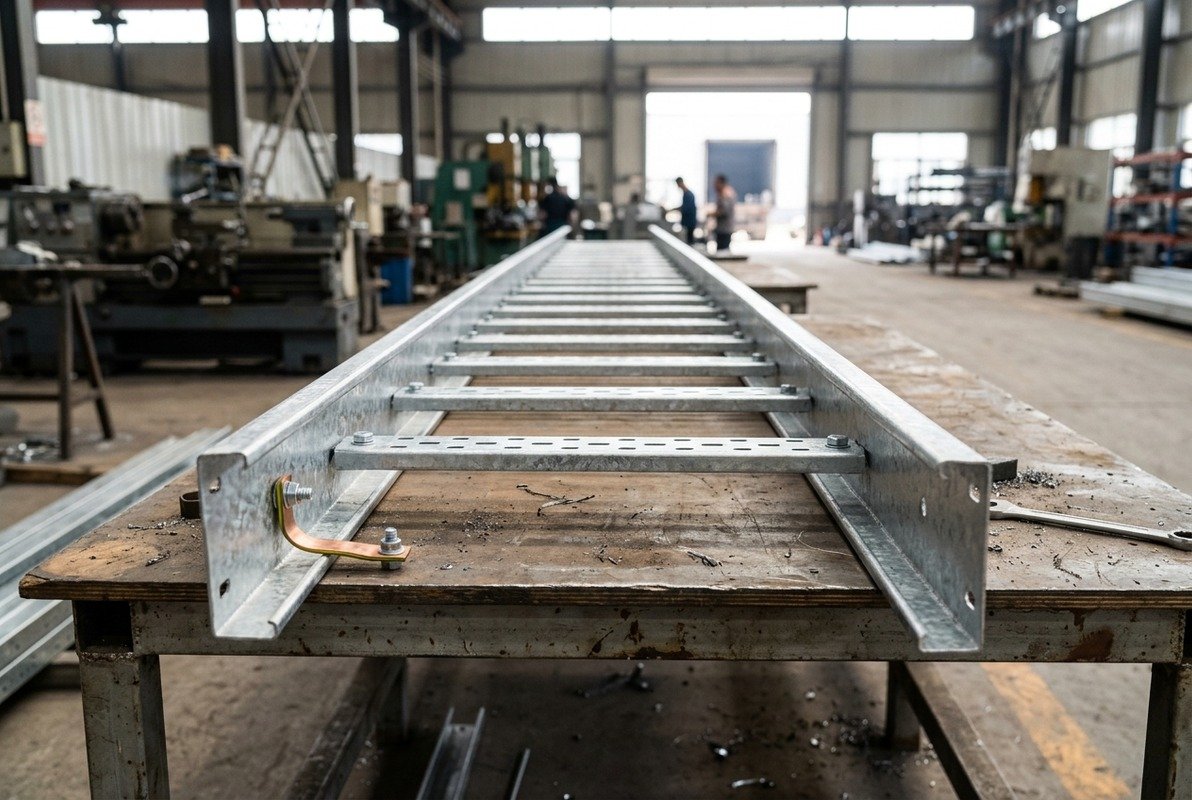
The secret is the magnesium. When a ZAM-coated surface is scratched, bent, or cut during installation, moisture triggers a reaction. Magnesium compounds migrate to the damaged spot and seal it. This self-healing effect is not marketing language — it is a measurable electrochemical process. Traditional hot-dip galvanized coatings offer sacrificial protection too, but they lack this active repair mechanism. Over years of exposure, the difference compounds. In salt spray tests, ZAM coatings consistently delay red rust formation far longer than pure zinc coatings of the same thickness.
Lifecycle Cost Breakdown
I put together simplified lifecycle cost comparisons for our buyers. Here is a typical scenario for a 25-year outdoor cable tray installation in a coastal or semi-industrial zone.
| Cost Element | HDG Cable Tray | ZAM Cable Tray |
|---|---|---|
| Initial material cost (per meter) | $12–$18 | $16–$24 |
| Expected service life (coastal) | 10–15 years | 25+ years |
| Mid-life replacement needed? | Likely yes | No |
| Maintenance (recoating, inspection) | Moderate — every 5–8 years | Minimal — visual checks only |
| Total 25-year cost (per meter, estimated) | $28–$40 | $16–$24 |
| Downtime / disruption cost | Higher due to replacement | Near zero |
The numbers shift based on local labor rates and environment severity, but the pattern holds. ZAM’s higher upfront price is offset — often more than offset — by the elimination of mid-life replacement and reduced maintenance. For an EPC project manager tracking total installed cost across hundreds or thousands of meters of cable tray, these savings are substantial.
Where HDG Still Wins
I want to be honest. ZAM is not always the right answer. In extremely abrasive environments — think trays running through tunnels where heavy mechanical contact is constant — the sheer thickness of a hot-dip galvanized coating provides a physical buffer that a thinner ZAM layer cannot match. HDG is also the more widely available and proven option. Supply chains for HDG cable trays are mature across Africa, South America, and Southeast Asia. ZAM supply is growing fast, especially driven by solar project demand, but availability can still vary by region.
The Solar Project Connection
Zinc magnesium aluminum cable trays have become almost standard on large-scale solar energy installations. The combination of outdoor exposure, long design life, and minimal access for maintenance makes ZAM ideal. When we ship ZAM trays for ground-mount solar farms, the project teams appreciate the lighter weight too. Thinner ZAM coatings achieve equal or better corrosion resistance compared to thicker HDG coatings. That means less steel weight per tray, lower shipping costs, and easier handling on site.
The industry is clearly shifting. Steel producers are investing in ZM-grade production lines. New pre-galvanized sheets with small additions of aluminum and magnesium — sometimes called ZM grades — are blending the cost efficiency of pre-gal with enhanced durability. This middle-ground option is worth watching for projects in moderate environments where pure ZAM may be overkill.
How will the coating type I select impact my delivery schedule and logistics planning?
Delivery delays are the number-one pain point I hear from project directors, and the coating you specify can add or subtract weeks from your timeline in ways most buyers do not anticipate until the order is placed.
Hot-dip galvanized cable trays require post-fabrication dipping, adding 5–10 days to production lead time. Pre-galvanized trays ship fastest because the steel is already coated before fabrication. Zinc magnesium aluminum lead times fall in between but depend heavily on regional coil stock availability.

Production Sequence and Its Effect on Lead Time
The production flow is different for each coating, and that directly sets the delivery window.
For pre-galvanized cable trays, the coil arrives at our facility already coated. We uncoil, level, punch, cut, form, and pack. The process is linear and fast. No secondary coating step. No waiting for an external galvanizing plant. This is why pre-gal trays consistently have the shortest lead times — often 10 to 15 working days from order confirmation for standard sizes.
Hot-dip galvanized cable trays follow a longer path. We fabricate the raw steel trays first, then transport them to a galvanizing facility for immersion. After dipping, the trays need cooling, inspection, and sometimes deburring of zinc drips or runs. Then they return for final QC and packing. This extra loop adds 5 to 10 working days, depending on the galvanizing plant’s queue.
For ZAM cable trays, the process mirrors pre-gal in many ways — the ZAM-coated coil is fabricated into trays directly. However, the lead-time variable shifts to coil procurement. ZAM coils are not yet as universally stocked as standard galvanized coils. If we do not have ZAM coil in inventory, sourcing it from the steel mill may add 2 to 4 weeks at the front end.
Lead Time Comparison
| Stage | Pre-Galvanized | Hot-Dip Galvanized | Zinc Magnesium Aluminum |
|---|---|---|---|
| Coil / raw material procurement | 3–5 days (widely stocked) | 3–5 days (raw steel) | 7–20 days (ZAM coil, varies) |
| Fabrication | 5–7 days | 5–7 days | 5–7 days |
| Coating process | None (already coated) | 5–10 days (external dip) | None (already coated) |
| QC and packing | 2–3 days | 2–3 days | 2–3 days |
| Total estimated lead time | 10–15 days | 15–25 days | 14–30 days |
Logistics and Shipping Considerations
Weight matters in logistics planning. Hot-dip galvanized trays are heavier because of the thick zinc layer. A container of HDG ladder-type cable trays holds fewer linear meters than the same container packed with pre-gal or ZAM trays. That affects freight cost per meter.
ZAM’s thinner coating means lighter trays. I have seen projects where switching from HDG to ZAM allowed the buyer to fit an extra 8–12% of product in each 40-foot container — a meaningful saving on ocean freight, especially for bulk shipments to Africa or South America.
Packaging also differs. HDG trays have a rougher surface that can scratch adjacent trays during transit. We use extra interleaving material for HDG shipments. Pre-gal and ZAM trays, with their smoother finishes, pack more neatly and require less protective material.
For buyers on tight project timelines, my advice is simple: confirm coil availability before placing the order, especially for ZAM. A quick check with us on current ZAM coil stock can prevent a three-week surprise later.
What quality control benchmarks should I set for my supplier across these different finishes?
On a recent water treatment project order, our QC team caught a batch of HDG trays where the zinc coating dipped below the minimum spec at weld joints — we reworked the entire batch before shipping, because quality failures discovered on site cost ten times more than catching them at the factory.
Set clear benchmarks for coating thickness, adhesion strength, cut edge condition, surface uniformity, and salt spray test performance. Require mill test certificates for the steel substrate, coating weight reports, and independent third-party inspection for critical projects to ensure consistent quality across all three finishes.
Coating Thickness — The First Checkpoint
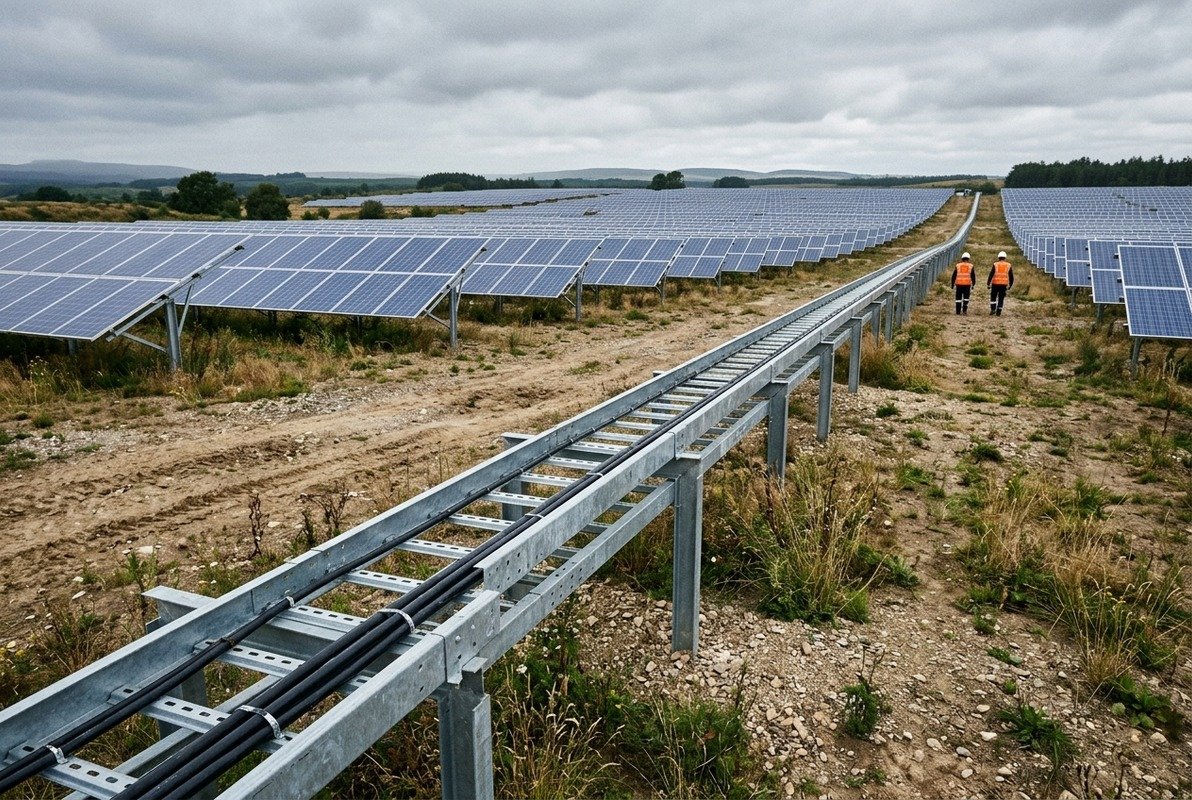
Coating thickness is the most direct indicator of corrosion resistance. Buyers should specify minimum micron values and require measurement reports. We use magnetic thickness gauges and measure at multiple points on each tray — side rails, rungs, and bend areas.
For HDG, international standards typically call for a minimum of 55 microns on steel thicker than 1.5 mm, and the actual range we see in production is 65–150 microns. Pre-gal coatings are much thinner, generally 7–20 microns. ZAM coatings range from 10–30 microns, but because of the alloy’s superior performance, a thinner ZAM coat can match or outperform a much thicker HDG coat.
Adhesion and Bend Tests
Coating adhesion tells you whether the zinc layer will stay bonded to the steel substrate under stress. For HDG, the metallurgical bond is inherently strong, but poor process control (wrong bath temperature, contaminated flux) can weaken it. A simple bend test — bending a coated sample to a specified angle and checking for flaking or delamination — is standard practice.
For pre-gal and ZAM, adhesion is tested similarly. We perform 180-degree bend tests on sample coupons from each production coil. No cracking or flaking at the bend means the coating adhesion meets spec.
Key QC Benchmarks by Finish
| QC Benchmark | HDG Requirement | Pre-Gal Requirement | ZAM Requirement |
|---|---|---|---|
| Minimum coating thickness | ≥55 µm (typically 65–150 µm) | ≥7 µm (typically 10–20 µm) | ≥10 µm (typically 15–25 µm) |
| Adhesion test (bend) | No flaking at specified bend angle | No cracking at 180° bend | No cracking at 180° bend |
| Salt spray test (hours to red rust) | 500–1000 hours | 100–300 hours | 1000–3000+ hours |
| Cut edge condition | Zinc coverage via dipping — inspect for voids | Bare — requires touch-up verification | Self-healing — inspect for coating integrity nearby |
| Surface uniformity | Allow for spangle variation, check for lumps/runs | Must be smooth and consistent | Must be smooth, matte gray, no streaks |
| Documentation | Mill cert + galvanizer cert + thickness report | Mill cert + coil coating cert | Mill cert + ZAM coil cert + thickness report |
Third-Party Inspection
For high-value EPC projects, I always recommend third-party inspection 9. This is not a sign of distrust — it is standard practice in international trade. An independent inspector visits the factory before shipment, verifies coating thickness, checks dimensions, reviews documentation, and signs off on the lot. It protects both the buyer and the supplier. On our side, we welcome inspections because they confirm what our internal QC already reports.
Post-Fabrication Checks Specific to Pre-Gal
Pre-galvanized trays deserve extra attention at cut edges and punched holes. Since the coating was applied before fabrication, every cut, drill hole, and weld exposes raw steel. The buyer should verify that the supplier applies zinc-rich cold galvanizing spray or paint to these areas. Ask for photos and records of this step. Missing it is the most common quality control gap I see with pre-gal cable trays in the field.
For ZAM, the self-healing properties handle minor post-fabrication damage. But major scratches or deep gouges should still be inspected. The self-healing mechanism works best on surface-level damage. Deep cuts through the full coating layer still need attention.
Setting these benchmarks in your purchase order — with specific numbers, test methods, and documentation requirements — eliminates ambiguity and ensures your supplier delivers consistent quality regardless of the coating type.
Conclusion
Choosing between hot-dip galvanized, pre-galvanized, and zinc magnesium aluminum comes down to environment, budget horizon, and project timeline — match the coating to the challenge, and the investment always pays off.
Footnotes
- Explains the process of hot-dip galvanization where steel is immersed in molten zinc. ↩︎
- Describes how coating thickness gauges measure dry film thickness using electromagnetic induction or eddy current principles. ↩︎
- Explains the role of molten zinc in the hot-dip galvanizing process. ↩︎
- Describes the pre-galvanizing process where steel coils are coated before forming. ↩︎
- Explains the composition and benefits of Zn-Al-Mg coatings for superior corrosion resistance. ↩︎