Specifying the wrong tray grade wastes budget or invites corrosion failure. I have seen both happen on projects our Tai’an factory supplied, so choosing an SS316 cable tray deserves scrutiny.
To choose the right SS316 cable tray, first confirm chloride exposure justifies the grade, then match the tray type to cable heat load, verify NEMA or IEC 61537 load ratings against your support spans, and vet the supplier’s material certification and delivery track record.
That single sentence hides four separate decisions. Each one can go wrong on its own. In this article, I will walk through all four, in the order I use when I review a customer’s specification.
How do I know if SS316 is the right material for my cable tray project?
A project director in Singapore once asked me to quote full SS316 for an indoor data center. His spec had no chloride source at all. That conversation changed his budget.
SS316 is the right material when your cable tray faces chloride ions—salt spray, seawater, de-icing salts, or chlorine-based chemicals. If no chloride source exists, SS304 or hot-dip galvanized steel usually delivers adequate corrosion resistance at a lower cost.
Many projects fall into over-design. Engineers see “harsh environment” in a site report and jump straight to the highest stainless grade. In my experience, a more economical method is to ask one question first: is the corrosion source chloride ions? If yes, choose SS316. If not, SS304 or hot-dip galvanized steel is often the more reasonable plan. That one check has saved several of our EPC clients a large slice of their material budget.
Trace the Chloride Before You Sign Off
Chlorides are the specific enemy that SS316 was built to fight. Its molybdenum content 1, typically two to three percent, blocks the pitting and crevice corrosion that chloride ions cause. This is exactly why the industry calls it marine grade stainless steel. So look for real chloride sources on your site. Coastal salt spray counts. Offshore splash zones count. Chlorine dosing rooms in water treatment plants count. Many chemical processing lines count too. Plain humidity, indoor dust, and mild industrial fumes usually do not.
SS304 vs SS316 Comparison at a Glance
| Grade | Typical best use | Main advantage | Main limitation |
|---|---|---|---|
| SS201 | Dry, low-corrosion indoor areas | Lowest cost | Weak corrosion resistance properties |
| SS304 | General indoor or mildly corrosive settings | Balanced cost and durability | Not suited to high chloride exposure |
| SS316 / SS316L | Marine, offshore, chemical, salt-exposed sites | Strong chloride and pitting resistance | Higher upfront cost |
One nuance matters here. SS316L is the low-carbon cousin of SS316. For weld-heavy fabrication or splash-zone duty, SS316L reduces intergranular corrosion risk at the weld zones. If your site sits in the most aggressive harsh environment applications, ask your supplier which variant they actually roll. Also review a chemical resistance chart against the specific media on your site before you finalize the grade.
What specifications and load ratings should I check before ordering an SS316 cable tray?
Every quote we prepare balances two numbers: side rail height and steel thickness. Push either too low and the tray sags; push both too high and freight costs jump.
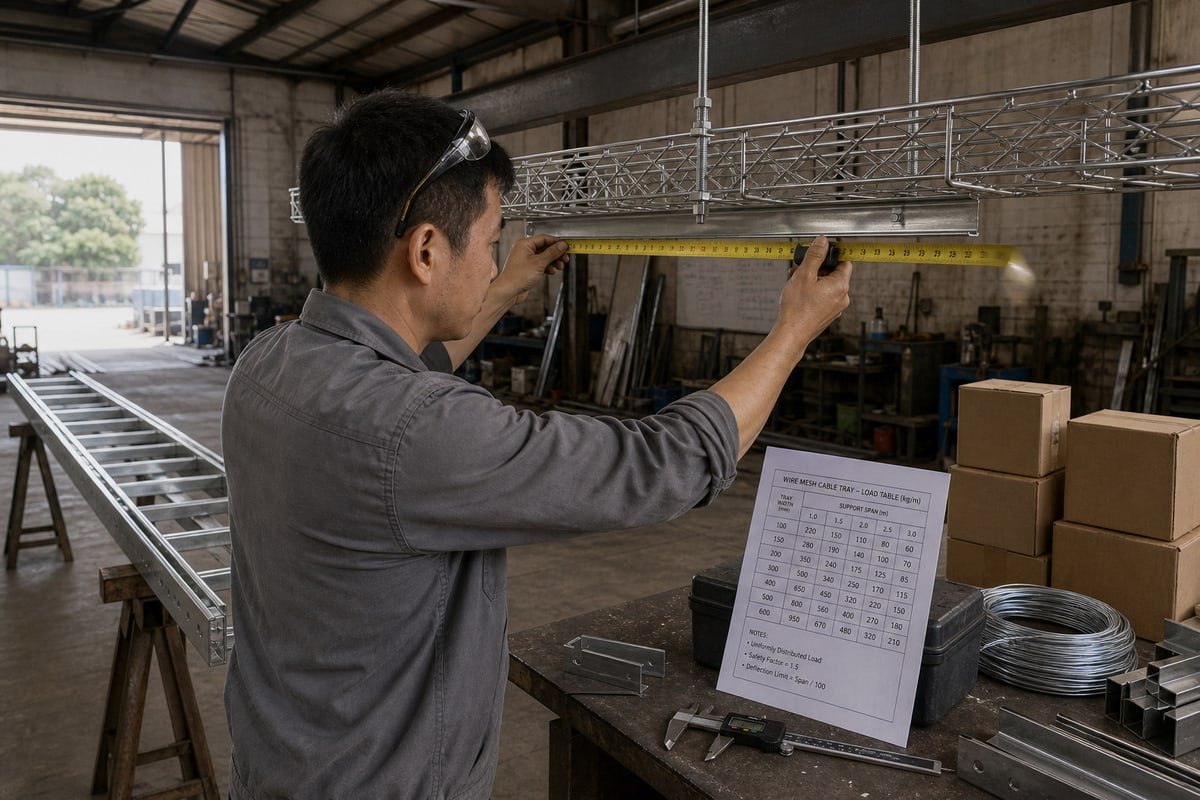
Check the tray’s rated working load per meter, the tested support span under NEMA VE 1 or IEC 61537, side rail height, material thickness, and fill capacity. Add a 20–30% weight margin for future cables before finalizing the width.
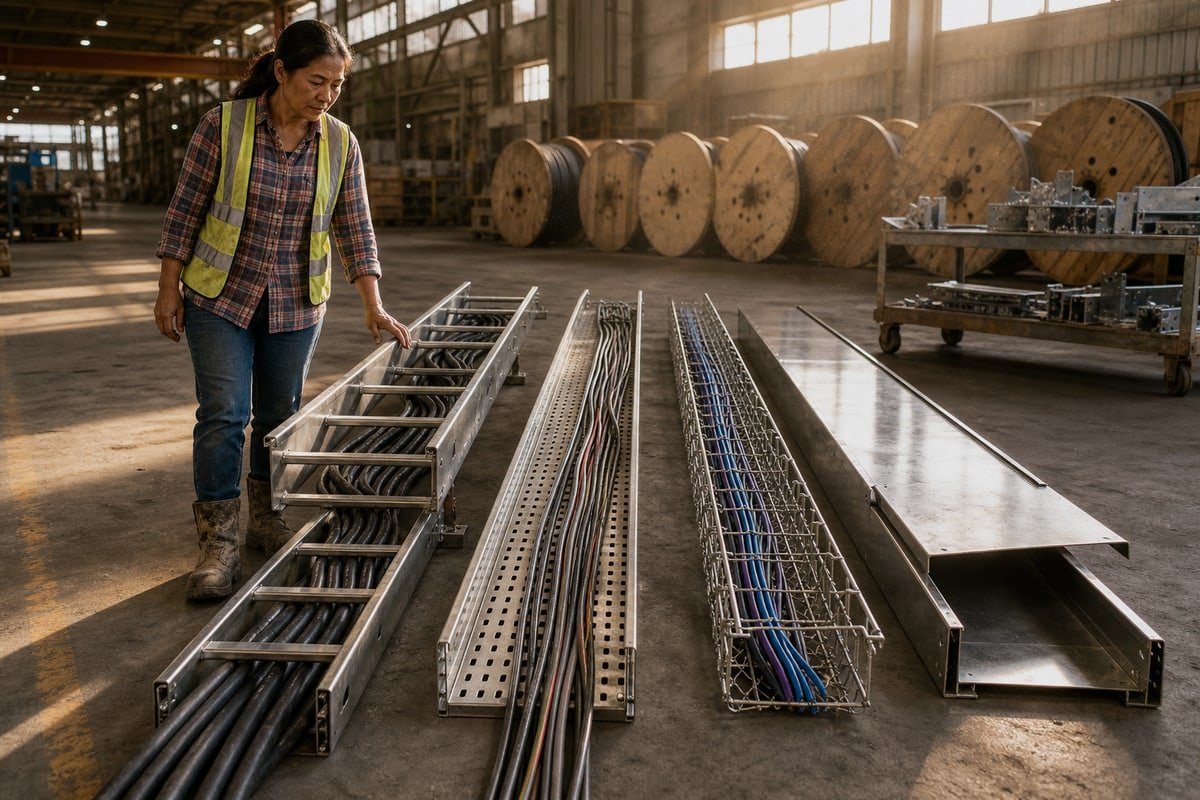
Once you confirm SS316 is necessary, the next core decision is structure. This choice is driven mainly by two things: how much heat your cables generate, and what type of cables they are. Heavy power cables need airflow. Light data cables need protection and neat routing. Getting this wrong means either overheated conductors or an oversized, overpriced system.
Match the Tray Type to Cable Heat and Class
| Tray type | Best for | Why it fits |
|---|---|---|
| Ladder type cable tray | Heavy power and medium-voltage cables | Open rungs give maximum heat dissipation |
| Perforated cable tray | Mixed power and control circuits | Moderate ventilation plus continuous support |
| Wire mesh basket tray | Data, instrumentation, light control wiring | Fast installation, easy visual inspection |
| Solid-bottom trunking | Sensitive instrumentation and shielded runs | Full enclosure limits dust and interference |
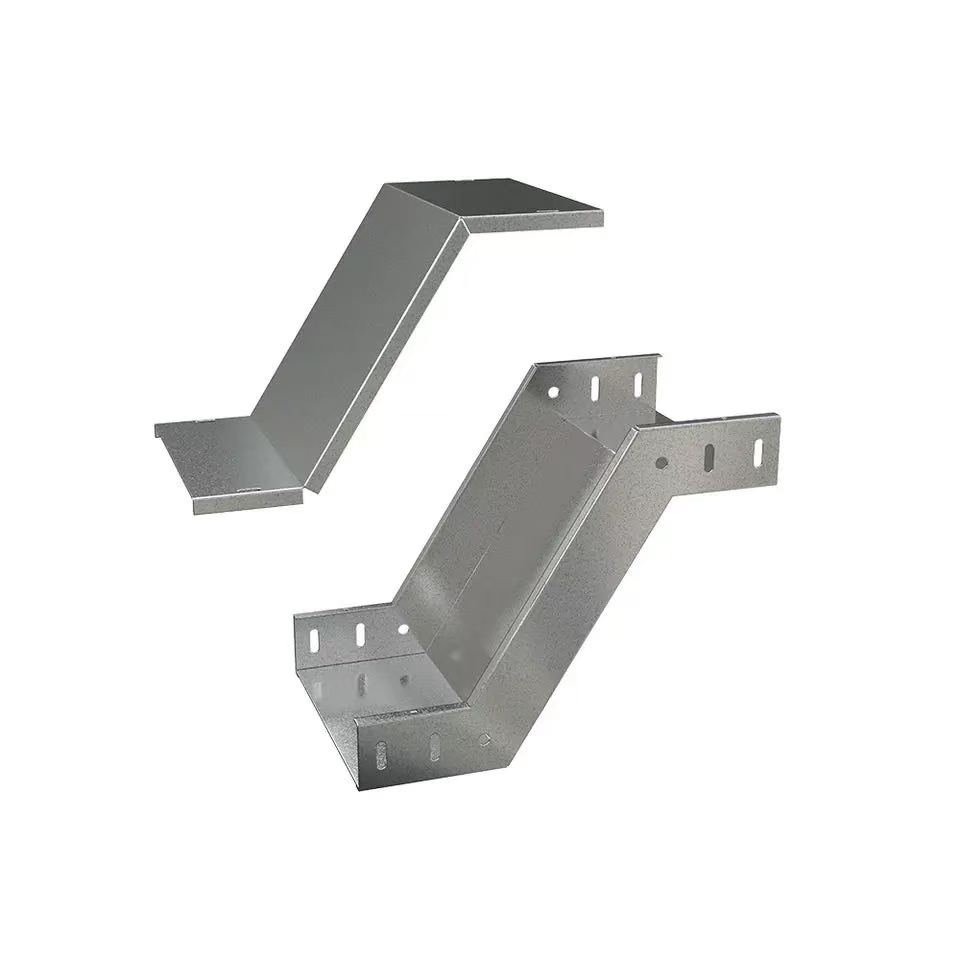
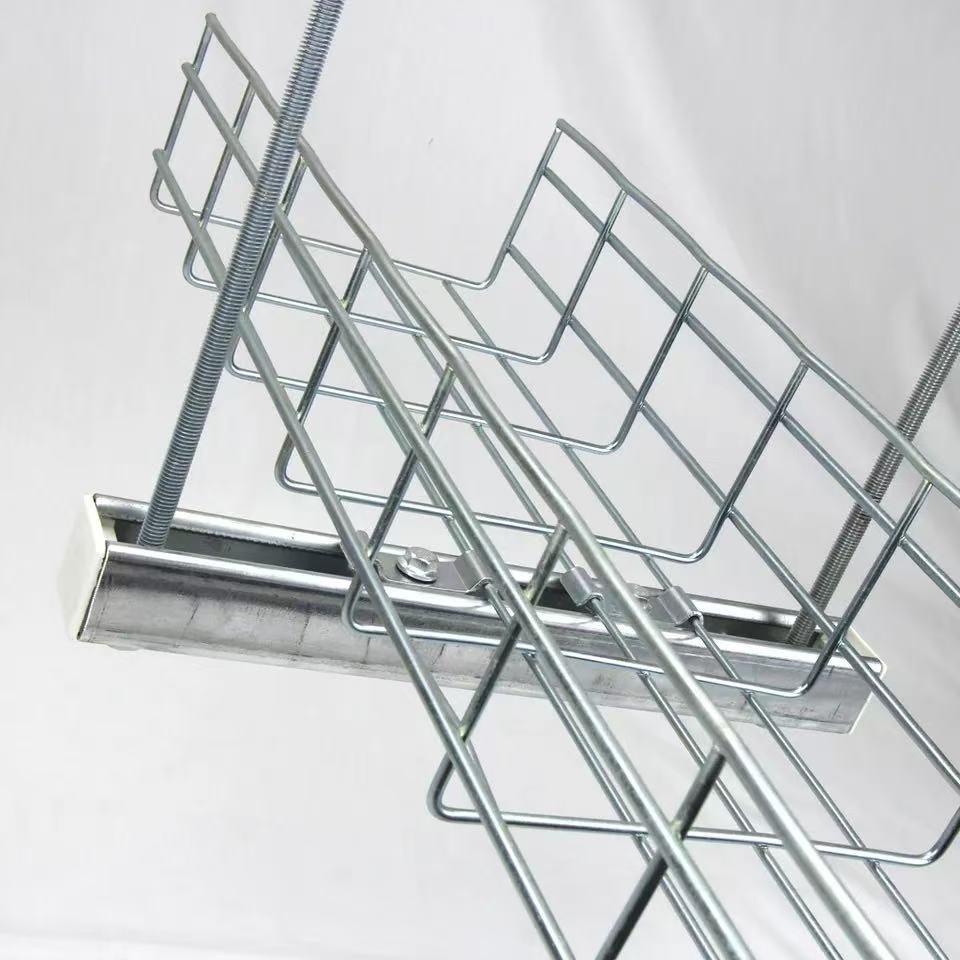
Our own product range follows this same logic. We build welded wire mesh basket trays for data-heavy plants, angled riser fittings with matching covers for level changes, and closed-top trunking ducts where cables need full enclosure.
Load Class, Span, and Fill
Load ratings only mean something when paired with a span. NEMA load classes always tie a working load to a tested support distance, and the IEC 61537 2 standard verifies safe working load through deflection testing. So confirm your cable tray support span on site first, then check it against the manufacturer’s tested tables. A tray section should also be at least as long as the distance between supports.
For width, calculate from actual cable outside diameters, not a rough guess. Then add a 20–30% margin for future circuits. Two more points deserve attention. Stainless steel has a high thermal expansion coefficient, so long outdoor runs need engineered expansion joint intervals. And every splice plate, bracket, and fastener must match the SS316 grade of the tray, or galvanic corrosion 3 will start at the very joints holding the system together. On critical infrastructure, some clients now even add IoT thermal and strain sensors to monitor overheating and sagging in real time.
How can I verify quality control standards when sourcing SS316 cable trays from a supplier?
Last year our team PMI-tested a batch of incoming coil sold as SS316. The molybdenum reading came back low, and we rejected the entire lot before cutting a single piece.
Verify SS316 quality by requesting mill test certificates, PMI spot testing for molybdenum content, weld inspection reports, pickling and passivation records, and IEC 61537 type-test documentation. Also confirm that all fasteners and splice plates match the tray’s stainless grade.

Here is the uncomfortable truth I share with every new buyer: SS304 and SS316 look identical. The eye cannot tell them apart. Neither can a magnet, in most cases. Only documents and instruments can. That is why our QC process leans on paperwork and spot testing rather than visual judgment alone. Buyers reselling into projects, like many of our Singapore and Philippines clients, carry the return risk if the grade is wrong. So verification is worth the effort.
Paperwork That Proves the Grade
Ask for a mill test certificate tied to the actual heat number of your coil. Then go one step further. A positive material identification (PMI) test uses a handheld analyzer to confirm the molybdenum content on the finished tray. It takes seconds per piece. We run it on incoming material and again on random finished goods.
Checkpoints Worth Putting in Your Contract
| QC checkpoint | Method | What it catches |
|---|---|---|
| Material grade | Mill certificate + PMI spot test | SS304 substituted for SS316 |
| Weld quality | Visual and dye penetrant inspection | Cracks, porosity, weak weld zones |
| Surface finish | Pickling and passivation records | Weld scale that triggers rust spots |
| Load performance | IEC 61537 type-test reports | Trays that sag below rated load |
| Dimensions | Random sampling against drawings | Fittings that fail to align on site |
A pickled and passivated surface finish deserves special mention. It restores the protective oxide layer after welding, and it is essential where hygiene matters, such as food and pharmaceutical plants. For high-care cleanrooms, ultra-smooth or antimicrobial surface treatments go further by inhibiting biofilm and easing washdowns. Finally, check the electrical continuity results within the type-test file, and cross-check the supplier’s chemical resistance chart against your plant’s actual chemicals.
What should I look for in a supplier to avoid delivery delays on custom SS316 cable tray orders?
Missing a vessel booking taught me more about lead times than any textbook. Since then, we lock raw material before confirming any custom SS316 order.
Choose a supplier that confirms SS316 raw material stock before quoting, provides a written production schedule with milestone photos, handles custom fittings in-house, offers pre-shipment inspection, and communicates proactively through channels like WhatsApp or email.
Delivery delays are the number one pain point I hear from project directors. A delayed tray shipment can stall an entire cable pulling schedule, and the penalty flows straight down to the reseller. The good news is that most delays are predictable. They come from a handful of causes, and each one can be screened out before you place the order. Here is the sequence I recommend to buyers evaluating any SS316 cable tray supplier, including us.
- Confirm raw material in writing. SS316 coil is stocked far less commonly than SS304 or galvanized sheet. Ask the supplier to state, in the quotation, whether the coil is on the floor or on order from the mill. This single question exposes most unrealistic lead times.
- Ask who makes the fittings. Custom risers, bends, tees, reducers, and covers often cause more delay than straight lengths. A factory that outsources fittings adds a hidden second lead time. We fabricate our angled risers and matching covers in-house for exactly this reason.
- Demand a milestone schedule with photos. Cutting, forming, welding, passivation, packing. Each stage should have a date and photo evidence. Our overseas clients receive these updates on WhatsApp, which suits fast-moving project teams.
- Book a pre-shipment inspection. Either a third party or your own checklist. It catches dimensional errors before the goods spend weeks at sea.
- Plan logistics realistically. For custom orders, ask whether partial shipments are possible so critical straight runs arrive first. Confirm sea-freight packaging that protects the passivated surface.
One extra question is worth asking during supplier evaluation: what is the recycled content 4 of the SS316? Modern stainless production can use over 70% recycled scrap, and that figure feeds directly into corporate ESG reporting for many EPC brand owners.
Conclusion
Over-specifying wastes money and under-specifying invites failure. Confirm chloride exposure, match tray type to heat, verify load ratings and QC documents, then choose suppliers who prove their schedules.
Footnotes
- Background on molybdenum’s chemistry, supporting why it blocks chloride-driven corrosion in SS316. ↩︎
- Official standards body publishing IEC 61537, the cable tray load-rating test standard referenced. ↩︎
- Explains the mechanism behind mismatched fasteners causing joint failure in stainless steel systems. ↩︎
- EPA resource on sustainable materials management relevant to recycled stainless steel content and ESG. ↩︎