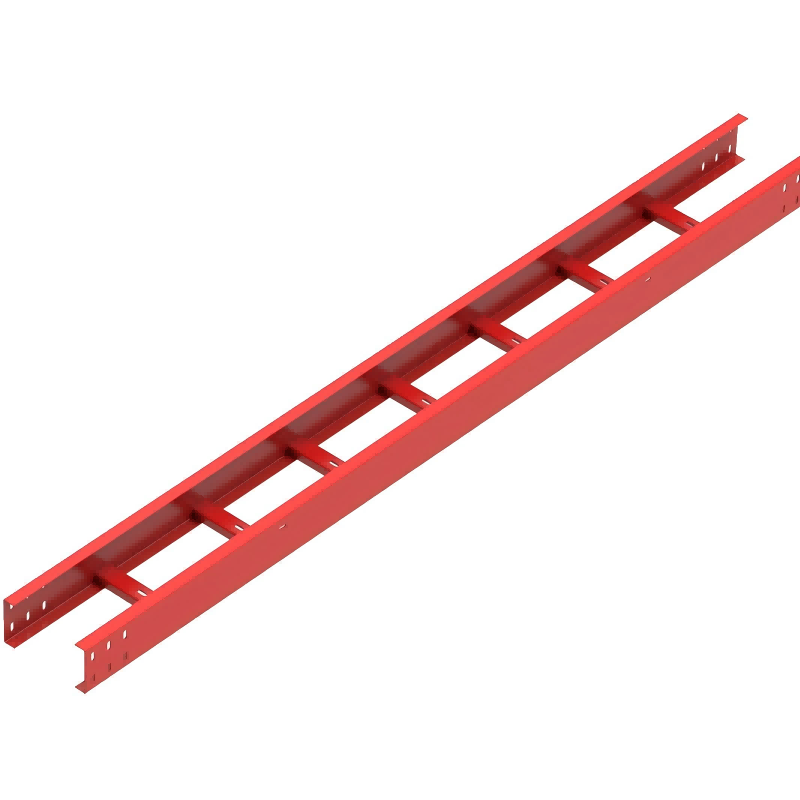
A fire-retardant powder-coated ladder cable tray can decide whether critical circuits survive a fire. On our Tai’an production line, we constantly see buyers confuse it with ordinary painted trays.
A fire-retardant powder-coated ladder cable tray is a steel ladder-style cable support finished with a specialized flame-retardant coating. The coating slows flame spread and delays heat transfer to cables during a fire, while still delivering the corrosion protection and clean appearance of standard powder coating.
That short definition hides a lot of detail. The coating chemistry matters. The certifications matter. The application environment matters too. In this article, I will break down how the protection works, who actually needs it, what documents to demand, and how far customization can go.
How Does Fire-Retardant Powder Coating Actually Protect My Cable Tray Installation?
Last year our QC team burn-tested two sample rungs side by side—one with standard epoxy powder coating, one with an intumescent system 1. Thirty seconds of flame convinced every skeptic in the room.
Fire-retardant powder coating reacts to heat by expanding into an insulating carbonized foam layer. This barrier slows heat transfer to the cables, delays flame spread along the tray, and helps the steel structure keep its load-bearing capacity longer during a fire.
The key word here is intumescent. A normal decorative powder coat does nothing special when flames arrive. It chars, blisters, and burns away. A true fire-retardant system behaves very differently. When temperatures climb, the coating swells and foams. It forms a carbonized insulating layer many times its original thickness. That layer has genuine thermal insulation properties. It shields the steel underneath and buys time for the cables running through the tray.
The Coating Thickness Question
Thickness is not a cosmetic detail. Industry sources describe effective fire-resistant coating systems at thicknesses above 500 microns. Compare that with a standard decorative powder coat, which usually sits between 60 and 120 microns. When we quote a fire-retardant project, we always confirm the target film thickness in writing, because it directly drives both performance and price.
Standard vs Fire-Retardant Coating at a Glance
| Feature | Standard Epoxy/Polyester Powder | Fire-Retardant Coating System |
|---|---|---|
| Primary purpose | Corrosion protection, appearance | Slowing flame spread, insulating cables |
| Reaction to heat | Chars and degrades | Expands into carbonized foam |
| Typical thickness | 60–120 μm | Often above 500 μm |
| Fire testing | Usually none | UL 94 V-0 2 or equivalent reports |
| Relative cost | Lower | Higher |
Why the Ladder Design Still Matters
The open-rung structure is not just tradition. During normal operation, the ladder shape allows maximum airflow around cables. That keeps heat from building up and protects current-carrying capacity. The hollow structure also makes inspection and future cable additions easier. So you get two layers of protection: ventilation every day, and passive fire defense in an emergency.
Which Industries and Projects Really Need Fire-Retardant Ladder Cable Trays?
A project director in Singapore once messaged me on WhatsApp asking whether his office tower truly needed fire-retardant trays. His question comes up in almost every EPC inquiry we handle.
Fire-retardant ladder cable trays are essential in data centers, tunnels, metro stations, commercial buildings, and industrial control rooms—anywhere fire codes demand protected cable routing or emergency circuits must stay live. They suit indoor and sheltered environments, not harsh outdoor or high-corrosion sites.

Let me be honest about positioning, because this saves buyers money. This product is a practical middle path. It satisfies mandatory fire code requirements in ordinary environments—indoor commercial buildings and light industrial plants—at a relatively controlled cost. It balances appearance, since colors are selectable, with real fire safety. But its protection is not designed for outdoor exposure or high-corrosion atmospheres. It will never match the long-term corrosion resistance of 316 stainless steel. If your site is coastal or chemical-heavy, we steer clients toward hot-dip galvanized steel or stainless options instead.
Where the Product Fits Best
| Industry / Project | Why Fire-Retardant Trays Fit | Typical Environment |
|---|---|---|
| Data centers | Emergency circuits must survive early fire stages | Climate-controlled indoor |
| Metro stations and tunnels | Codes require slowed flame spread on cable routes | Sheltered infrastructure |
| Commercial buildings and offices | Fire regulations plus visible, clean finish | Indoor |
| Industrial control rooms | Protects control wiring feeding critical processes | Indoor light industrial |
| Solar and water treatment plants | Electrical rooms need compliant industrial wiring support | Indoor equipment rooms |
Critical Circuits Are the Real Driver
The strongest use case is circuit survival. In critical infrastructure like data centers and tunnels, the goal is keeping emergency lighting, alarms, and shutdown systems running while people evacuate. Modern cable management systems in these projects are specified with that scenario in mind. We supply EPC contractors across Southeast Asia and South America, and the specification almost always traces back to a local fire code clause, not a preference. So before ordering, check which code applies to your project. That answer tells you whether fire-retardant trays are optional or mandatory.
What Certifications Should I Look for When Sourcing Fire-Retardant Cable Trays?
Early in our export business, we lost a Philippine tender because our fire test report covered only the coating, not the full tray assembly. That lesson still shapes our documentation today.
Look for fire test certifications such as UL 94 V-0, IEC 60332, DIN 4102-12, or UL 1709, plus structural compliance with IEC 61537 or NEMA VE 1. Always demand test reports covering the complete tray-and-coating system, including smoke density and toxic gas emission data.
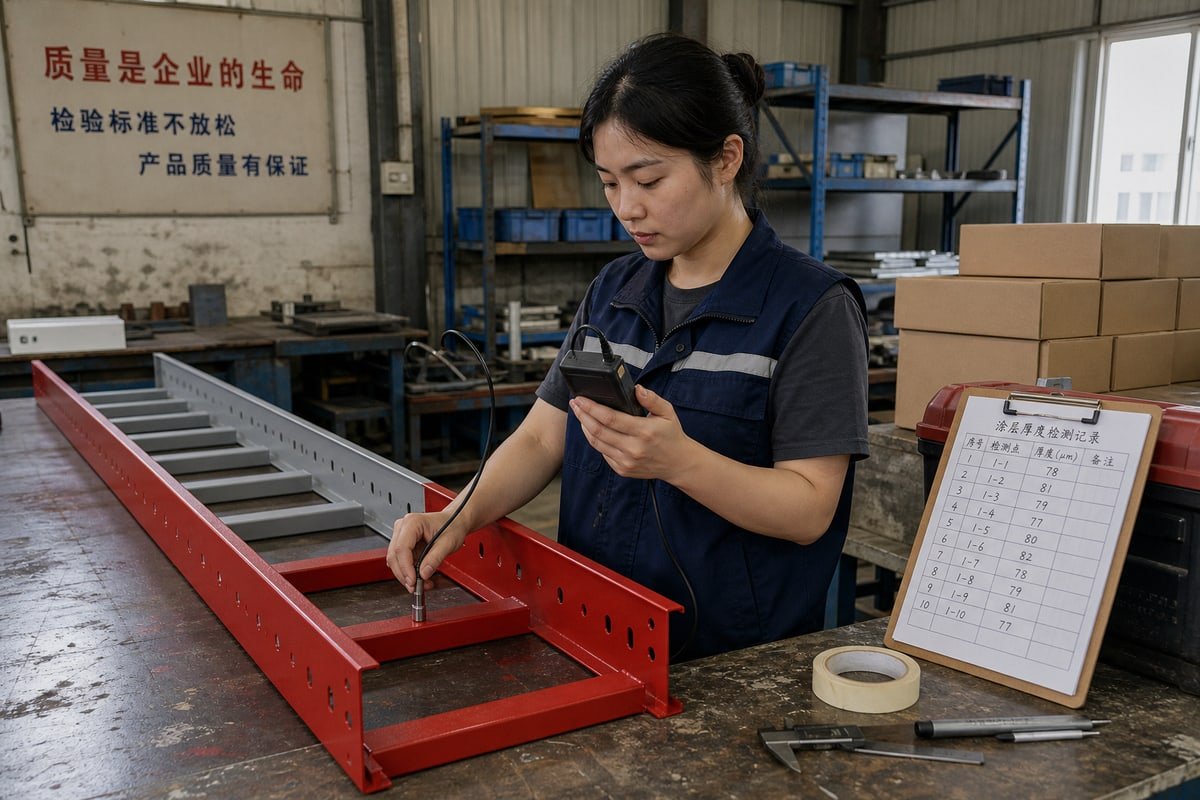
Certifications are where marketing language and engineering reality collide. Supplier pages often use the words fireproof, fire-resistant, and fire-retardant loosely and interchangeably. The more careful technical position is simple: powder-coated describes the finish, not the fire resistance rating. Only verified test documentation can justify a fire safety claim. So treat every claim as unproven until you see the paperwork.
Key Standards and What They Actually Cover
| Standard | What It Covers | Why It Matters |
|---|---|---|
| UL 94 V-0 | Material flammability and self-extinguishing behavior | Baseline proof the coating resists ignition |
| IEC 60332 | Flame spread on cables and cable arrangements | Relevant when cables and tray are tested together |
| DIN 4102-12 | Circuit integrity under fire conditions | Critical for emergency circuit survival claims |
| UL 1709 | Rapid-rise fire exposure for structural protection | Applies to severe hydrocarbon fire scenarios |
| IEC 61537 3 | Cable tray mechanical performance and safety | Confirms load and structural compliance |
| NEMA VE 1 4 | Tray design, manufacture, and load testing | The North American structural benchmark |
The Documentation Checklist I Give Buyers
- Ask which exact test method was used, and on what assembly—coating alone, tray alone, or loaded tray.
- Request the flame resistance duration figures, not just a pass/fail summary.
- Check for smoke density and toxic gas data if the project involves enclosed public spaces.
- Confirm IEC 61537 compliance or NEMA VE 1 standards conformity for the structural side.
- Verify the report matches your local building and electrical code requirements.
When we prepare quotations for EPC clients, we attach this evidence package up front. It shortens approval cycles and prevents disputes after delivery.
Can I Customize Fire-Retardant Powder-Coated Ladder Trays for My Project Specifications?
Every custom order forces a balance between coating thickness, lead time, and cost. Our engineers in Tai’an walk clients through these trade-offs before we cut a single side rail.
Yes. Fire-retardant powder-coated ladder cable trays can be customized in width (50–600 mm), height (50–200 mm), steel thickness (0.8–3.0 mm), coating color, and fittings like tees and cross junctions. Capable suppliers also adjust coating thickness and rung spacing to match project specifications.
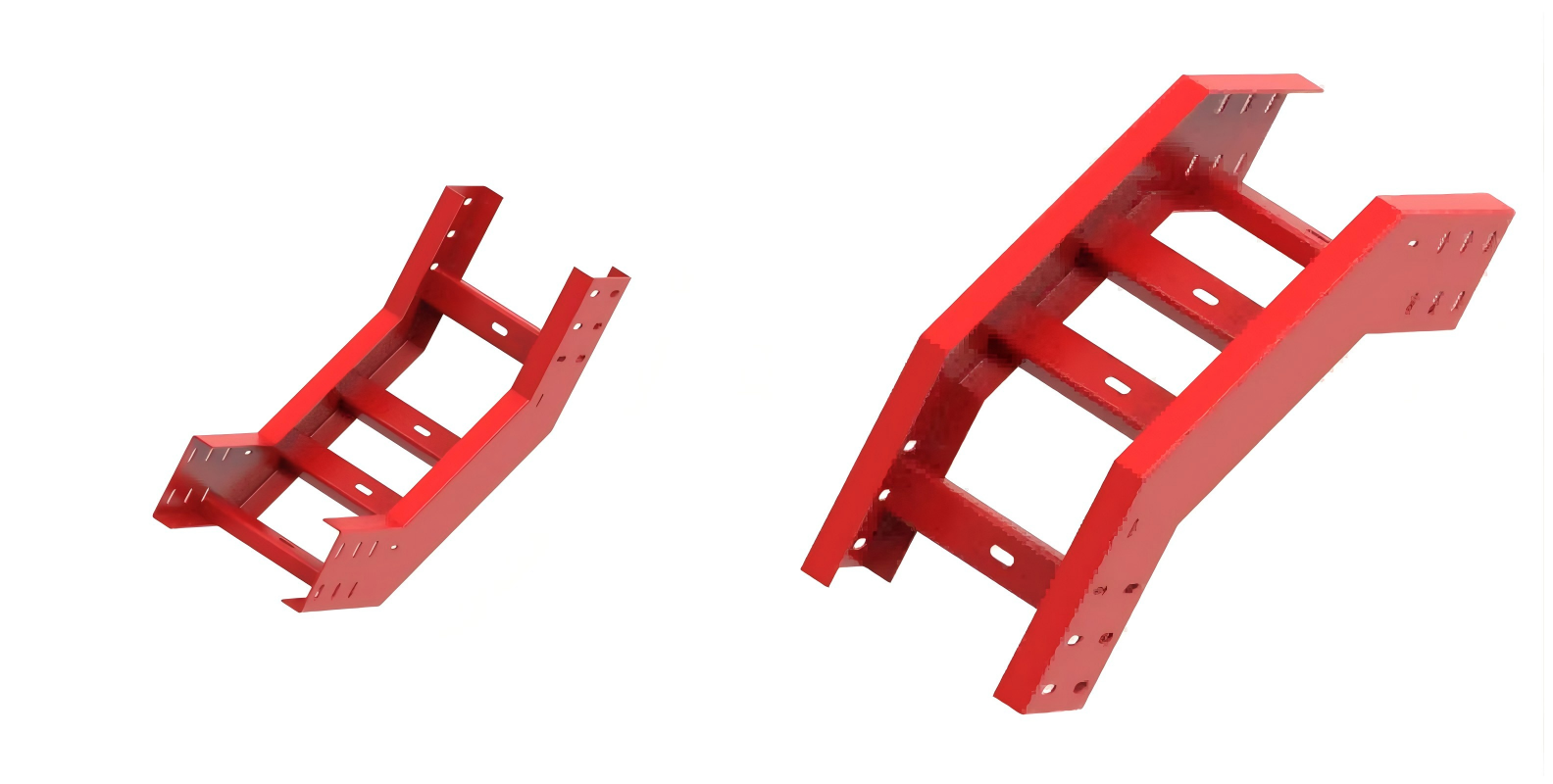
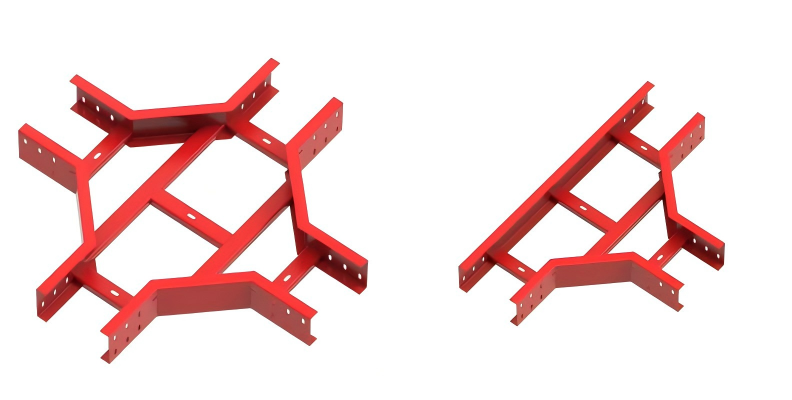
Customization is where OEM/ODM collaboration earns its keep. A straight tray run is easy. Real projects need the full system: straight lengths, three-way tee junctions, four-way cross junctions, risers, and reducers, all in matching finish. We regularly produce bright red powder-coated ladder systems with perforated side-rail flanges and bolt-hole end plates, so every fitting connects cleanly on site. Consistent color across straights and fittings also matters for visual inspection and building aesthetics.
Core Customization Parameters
| Parameter | Available Options |
|---|---|
| Width | 50 mm to 600 mm |
| Side rail height | 50 mm to 200 mm |
| Steel thickness | 0.8 mm to 3.0 mm |
| Base material | Mild steel, pre-galvanized steel, stainless steel |
| Coating color | Full RAL range, red and orange popular for safety visibility |
| Fittings | Tees, crosses, bends, risers, reducers, end plates |
| Coating build | Standard decorative up to 500+ μm fire-resistant systems |
Emerging Options Worth Asking About
The coating field is moving fast. Advanced formulations now include thermal-gradient pigments that permanently change color to reveal hidden heat damage after a minor incident. Some high-performance systems add molecular elasticity so the fire barrier resists cracking during seismic vibration—useful for buyers in earthquake-prone Southeast Asia. Bio-based resins are starting to replace petroleum-derived powders for green building and LEED targets. Micro-encapsulated self-healing agents that repair surface scratches are also emerging. These innovations are not standard yet, so treat them as project-specific requests and verify each claim.
One practical warning from experience: dimension changes affect load-bearing capacity and support span. Whenever a client widens a tray or thins the steel, we re-check the span tables before confirming the order. Good customization never sacrifices structural safety, and it should never quietly extend your delivery lead time either.
Conclusion
Fire-retardant powder-coated ladder cable trays buy your cables precious time when fire strikes. Verify the coating chemistry, demand full test reports, and specify carefully—your project’s safety depends on it.
Footnotes
- Explains the chemical expansion mechanism of intumescent coatings used for passive fire protection. ↩︎
- Authoritative source for the flammability standard used to classify self-extinguishing properties of coating materials. ↩︎
- Official site for the international standard governing cable tray and ladder system requirements and tests. ↩︎
- The primary North American standard for the manufacturing and performance of metal cable tray systems. ↩︎