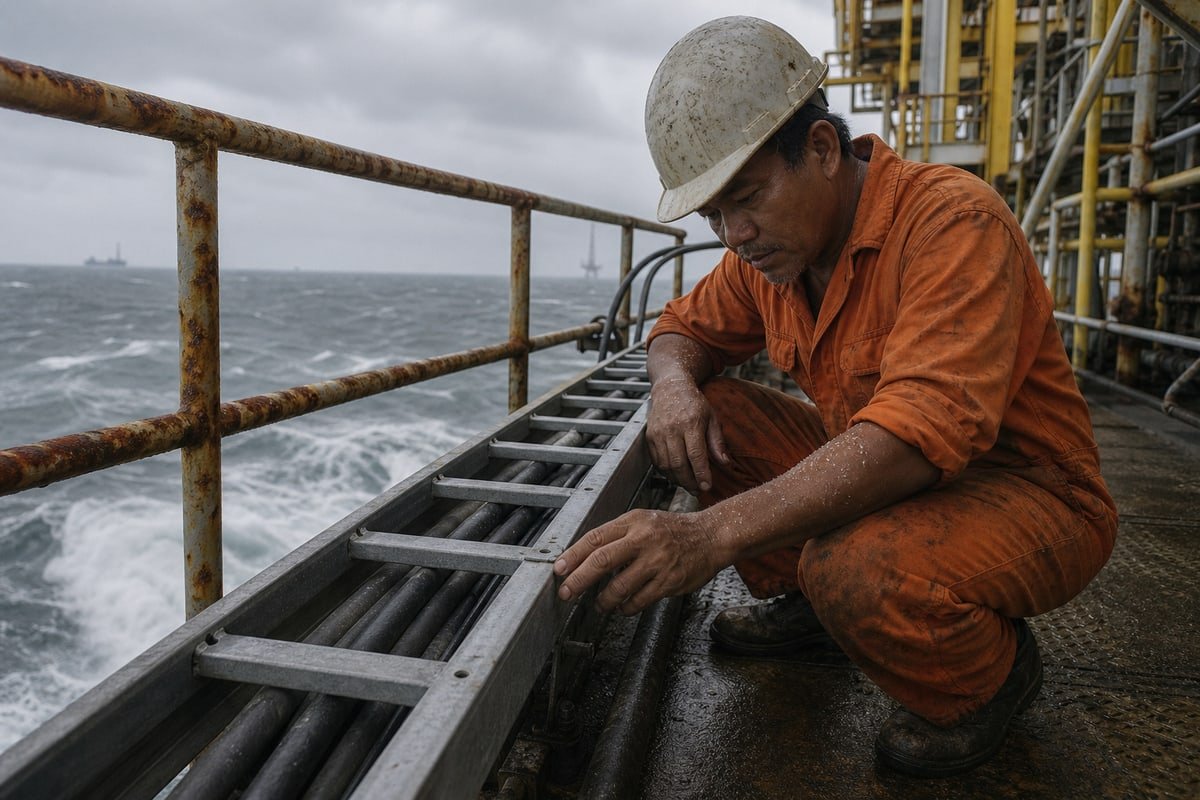
One corroded tray can shut down an offshore platform. I have watched it happen. That is why our Tai’an workshop builds stainless steel 316 ladder-type cable trays for chloride-heavy projects.
A stainless steel 316 ladder-type cable tray is an open cable management system with two side rails joined by cross rungs, made from marine grade stainless steel containing 2–3% molybdenum. It routes and supports heavy power cables in chloride-rich, corrosive environments like coastal and offshore sites.
That definition covers the basics. But the real question is not what this tray is. It is why engineers pick it over cheaper options. Let me walk you through the material, the design, the applications, and the specifications, one step at a time.
What makes 316 stainless steel different from 304 for cable tray applications?
A project director in Singapore once asked me why he should pay more for 316 when the 304 samples looked identical. The answer sits in one element: molybdenum.
Grade 316 stainless steel contains 2–3% molybdenum, which 304 lacks. This molybdenum content gives 316 far better resistance to pitting and crevice corrosion in chloride-rich environments, making it suitable for ISO 12944 C5-M marine conditions, while 304 is generally limited to C4 environments.

To the naked eye, 304 and 316 trays are twins. Both are shiny. Both resist rust in normal air. The difference only shows up when chloride ions arrive. Salt spray, seawater, and de-icing salts all carry chlorides. Chlorides attack the passive chromium oxide layer 1 on stainless steel. They punch tiny holes into the metal. This is called pitting. On a 304 tray, pits grow into structural failures over time. On a 316 tray, the molybdenum content blocks that attack.
The Decision Rule We Give Our Buyers
Here is the practical rule I share with every EPC client. If the environment has persistent liquid water, especially pooling water, or high humidity, and chlorides may be present, then 316 is necessary. If the site only sees light salt fog, such as an inland location several hundred meters or more from the coastline, or the main threat is acidic gas rather than salt, then 304 is usually enough and costs less. For exposed trays that take direct sea wind, we recommend 316L, the low-carbon version, as the safer engineering practice.
| Property | 304 Stainless Steel | 316 Stainless Steel |
|---|---|---|
| Molybdenum content | None | 2–3% |
| Chloride pitting resistance | Moderate | Excellent |
| ISO 12944 corrosivity rating | Up to C4 (high) | C5-M (very high, marine) and above |
| Typical placement | Inland, mild salt fog | Coastal, offshore, de-icing salt zones |
| Relative cost | Lower | Higher upfront, lower lifecycle cost |
Yes, 316 costs more upfront. But lifecycle cost analysis tells a different story. A 316 tray can serve 50+ years in a corrosive zone. That eliminates the replacement cycles that galvanized steel would need. Over the project life, the corrosion resistance of 316 delivers the higher return.
Why should I choose a ladder-type design over solid-bottom cable trays?
Every enclosed tray we quote forces a trade-off: more physical protection, but less airflow. For heavy power circuits, that trade-off usually decides itself in favor of the ladder.
A ladder-type design uses open rungs that ventilate cables, dissipate heat, and let cables enter or exit at any point along the run. Solid-bottom trays protect against dust but trap heat, add weight, and make cable pulls, inspections, and future expansion much harder.
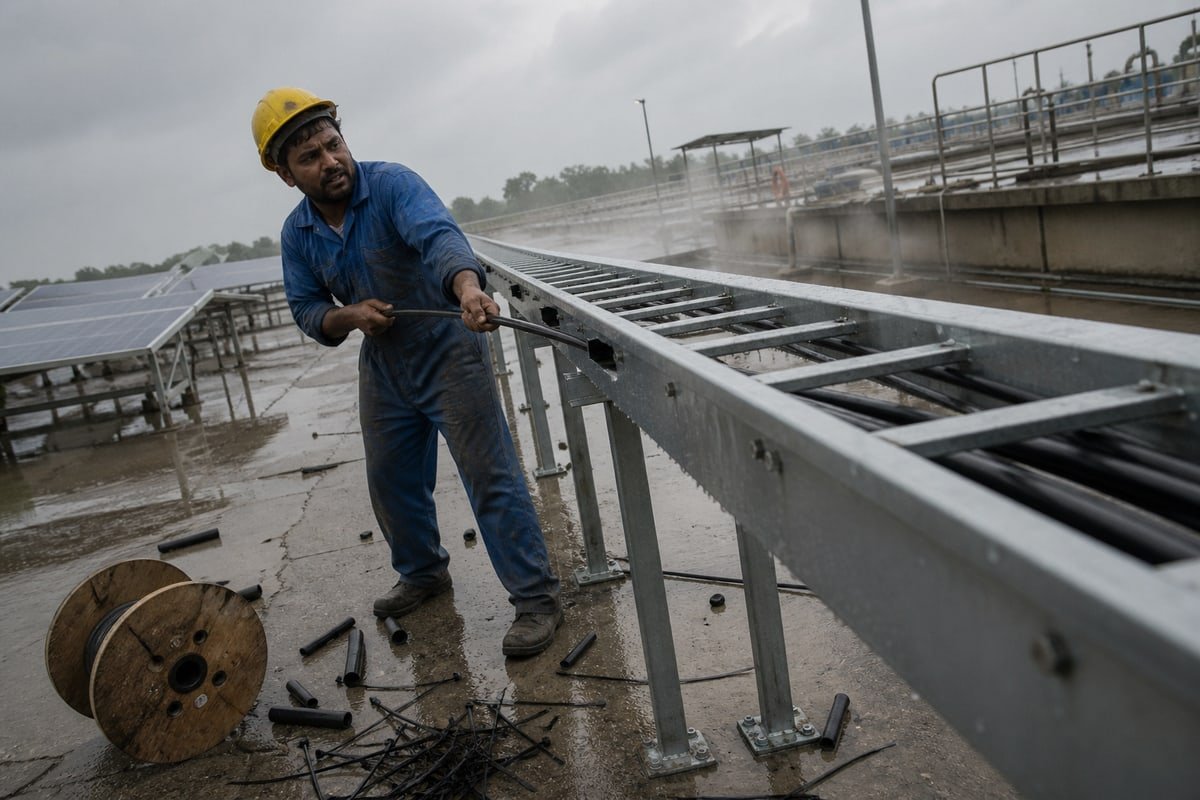
The ladder tray gets its name honestly. Two longitudinal side rails 2 are connected by transverse rungs, exactly like a ladder laid flat. Those open rectangular gaps between rungs are not a cost-saving shortcut. They are the whole point of the design.
Power cables generate heat under load. In an enclosed tray, that heat builds up. Trapped heat forces engineers to derate cables or upsize conductors. The open rung layout lets air flow around every cable, so heat escapes naturally. This is why ladder trays are the standard choice for medium-to-heavy power cables.
There is a second benefit that buyers often overlook. Open rungs let water drain instead of pool. Remember my decision rule from the last section: pooling water plus chlorides is the worst-case scenario for corrosion. A solid-bottom tray outdoors can hold puddles of salty water against the metal for weeks. A ladder tray sheds it immediately.
| Feature | Ladder-Type Tray | Solid-Bottom Tray |
|---|---|---|
| Ventilation and heat dissipation | Excellent | Poor |
| Load-bearing capacity for large power cables | High, with strong side rails | Moderate |
| Cable entry/exit points | Anywhere along the run | Limited, may require cutting |
| Water drainage outdoors | Immediate | Can pool water |
| Dust and debris protection | Low | High |
| Weight and material cost | Lower | Higher |
When a Ladder Is Not the Answer
I will be honest with you, because our clients resell into real projects. For small instrumentation cables 3, delicate data lines, or very dusty indoor plants, a solid-bottom tray or trunking can be the better call. The ladder wins when heat, load-bearing capacity, drainage, and future access matter most.
What industries and environments require 316 stainless steel cable trays?
Last year our team ran salt-spray checks on sample rails headed for a desalination project. Watching the 304 coupons pit while the 316 pieces stayed clean told the whole story.
Industries that require 316 stainless steel cable trays include offshore oil platforms, ships, coastal power plants, desalination facilities, wastewater treatment, chemical and bleaching plants, electroplating lines, and cold-region infrastructure exposed to de-icing salts. Any environment combining persistent chlorides and moisture calls for grade 316.
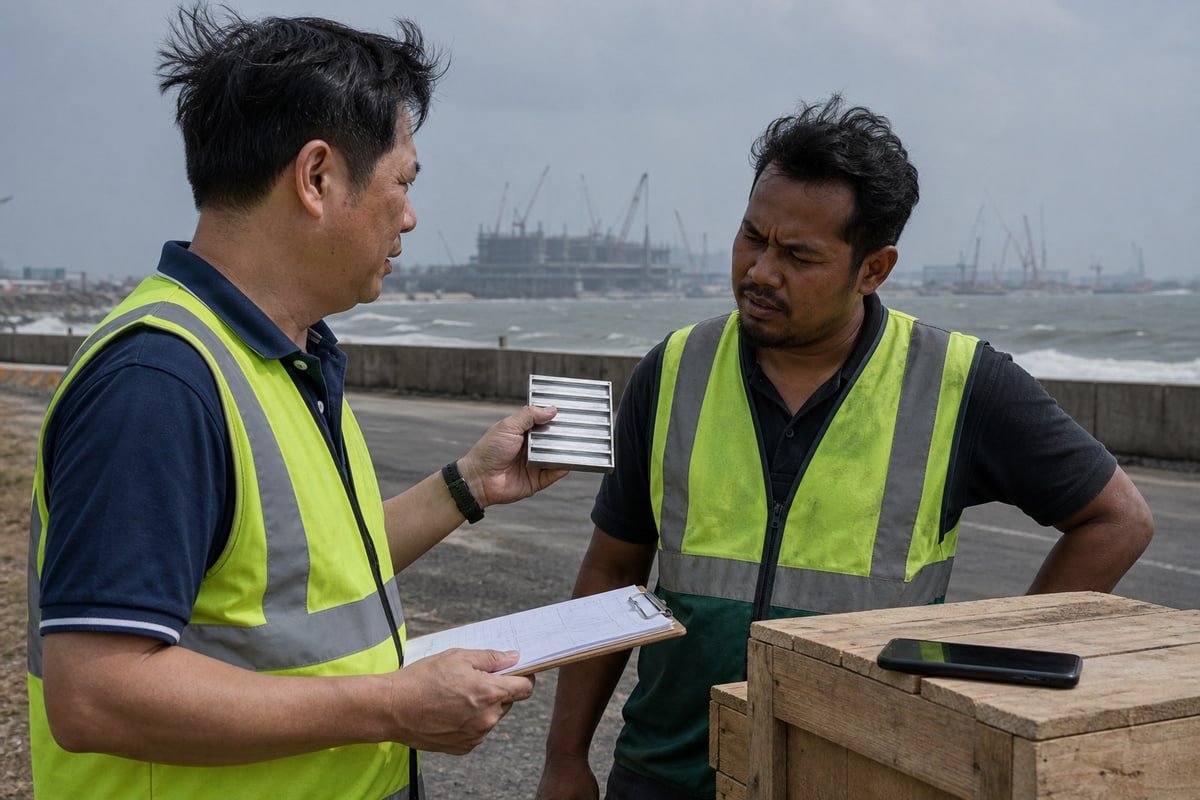
In my experience quoting projects across Southeast Asia and South America, a stainless steel 316 ladder-type cable tray is almost always linked to two words: chlorides and severity. If neither word applies to your site, you probably do not need this product. If both apply, nothing else will last.
| Environment | Chloride Source | Why 316 Is Required |
|---|---|---|
| Offshore platforms, ships, coastal plants | Direct seawater and sea mist | Constant salt spray defeats 304 and galvanized coatings |
| Bridges, highway tunnels, airport perimeters in cold regions | De-icing salts | Salt-laden meltwater pools on trays every winter |
| Chemical plants, bleaching workshops, electroplating lines | Process chemicals with high chloride concentration | Aggressive chemical attack causes rapid pitting in lesser grades |
| Desalination and wastewater treatment plants | Brine and treated effluent | Continuous wet, chloride-rich exposure |
These offshore and coastal applications share one profile: ISO 12944 class C5-M or worse. In that class, a 316 tray keeps its structural integrity for the long haul, avoiding the pitting-driven failures that end a 304 tray’s life early.
Beyond Corrosion: Fire, Hygiene, and Seismic Performance
Grade 316 brings extra advantages that matter in these industries. It is non-magnetic and fire-rated, holding its shape at extreme temperatures where aluminum or plastic supports would melt or fail. Its high ductility lets a ladder run absorb and dissipate energy during seismic events 4 instead of snapping like brittle lower-grade alloys. And with electropolishing, the surface becomes microscopically smooth, preventing bacterial adhesion. That finish makes 316 ladder trays essential for ISO-rated cleanrooms and vaccine manufacturing lines.
How do I select the right specifications and customization options for my project?
Early in my export career, one shipment taught me a hard lesson: mismatched splice plates delayed a whole substation hookup. Now we lock every specification before anything reaches the laser cutter.
Select tray width (150–900 mm), side rail height (100, 125, or 150 mm), rung spacing (typically 300 mm), section length, and load class per NEMA VE 1 or IEC 61537. Confirm 316 or 316L material certificates, pickling and passivation, matching splice plates, and isolation pads for carbon steel supports.
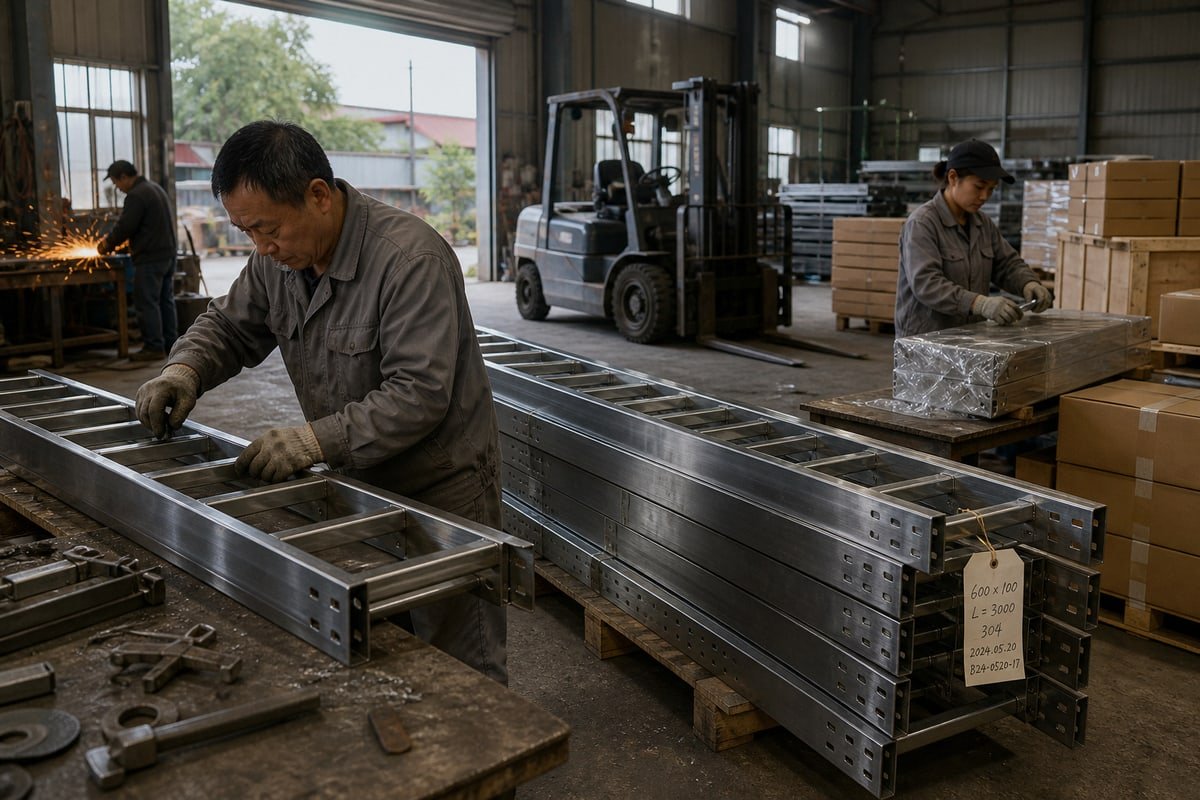
Specifications vary by manufacturer and project, so I always tell buyers to start from the cable schedule, not from a catalog page. Cable fill and cable weight drive the width and the load class. Support span drives the side rail height. Everything else follows.
| Parameter | Common Options | Notes |
|---|---|---|
| Width | 150–900 mm (6–36 inches) | Sized by cable fill plus 20–30% spare capacity |
| Side rail height | 100 mm, 125 mm, 150 mm (4–6 inches) | Taller rails carry longer spans and heavier loads |
| Rung spacing | 300 mm typical | Tighter spacing supports smaller-diameter cables |
| Section length | 3–6 m (10–24 feet) | Longer sections mean fewer joints on site |
| Load class | NEMA Class 12B, 20C, or IEC classes | Verify by test report, not by width alone |
| Standards | NEMA VE 1 standards, IEC 61537 compliance | Match the standard your project specification cites |
Details That Prevent Field Failures
Order accessories in the same grade: bends, tees, reducers, covers, and splice plates all in 316. A carbon steel splice plate on a 316 run becomes the first failure point. Also, when a 316 tray mounts onto carbon steel supports, the dissimilar metals form a galvanic circuit. Specify nylon isolation pads and bushings to break that circuit. On the quality side, ask for post-production pickling and passivation. This removes weld impurities and rebuilds the protective chromium oxide layer. At our factory, we treat this as a standard QC gate, alongside material test certificates for every heat number.
A Practical Selection Hierarchy
- Extreme loads plus high-chloride corrosion → 316 stainless steel ladder tray.
- Heavy loads plus general corrosion → 304 stainless steel ladder tray.
- Heavy loads outdoors with little or no corrosion → hot-dip galvanized ladder tray.
Conclusion
Chlorides destroy ordinary trays quietly, then expensively. A stainless steel 316 ladder-type cable tray stops that loss. Match the grade to your environment, verify the specs, and it will outlast the project.
Footnotes
- Global organization providing technical expertise on the corrosion resistance and properties of stainless steel. ↩︎
- Official NEMA standard defining the structural components and testing for metal cable tray systems. ↩︎
- Professional association setting standards for automation and instrumentation systems in industrial environments. ↩︎
- Authoritative government source for information on seismic activity and its impact on infrastructure. ↩︎