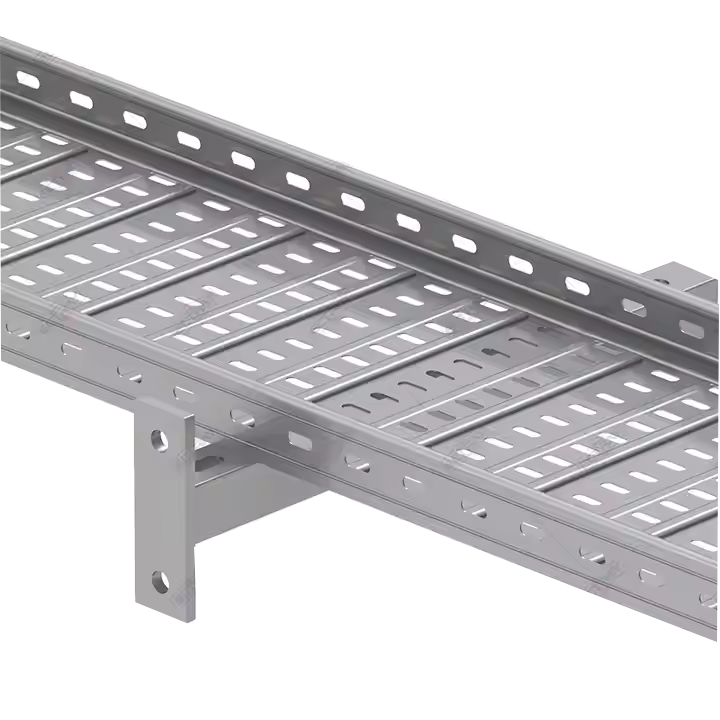
Buyers keep asking me why stainless steel 304 molded cable tray costs more than flat-bent tray hot-dip galvanized tray 1. Then a humid plant corrodes their cheap tray, and our Tai’an workshop gets the rush order.
Stainless steel 304 molded cable tray is a cable support system stamped from austenitic stainless steel sheet using precision dies. The molding process creates a three-dimensional corrugated structure that boosts load capacity, improves heat dissipation, and delivers strong corrosion resistance for industrial wiring protection.
That definition covers the basics. But the word “molded” confuses many buyers, and the choice between 304 and other materials is not always obvious. Let me break it down section by section.
How does the manufacturing process ensure quality in a 304 molded cable tray?
A client in Singapore once asked me why our molded tray felt lighter than his old stock yet held more cable. The answer sits in our stamping dies, not the steel thickness.
Quality in a 304 molded cable tray comes from precision stamping dies that form flat sheet into a rigid three-dimensional profile. This increases the moment of inertia, so a thinner sheet carries heavier loads. Strict die maintenance, material certification, and dimensional checks keep every batch consistent.
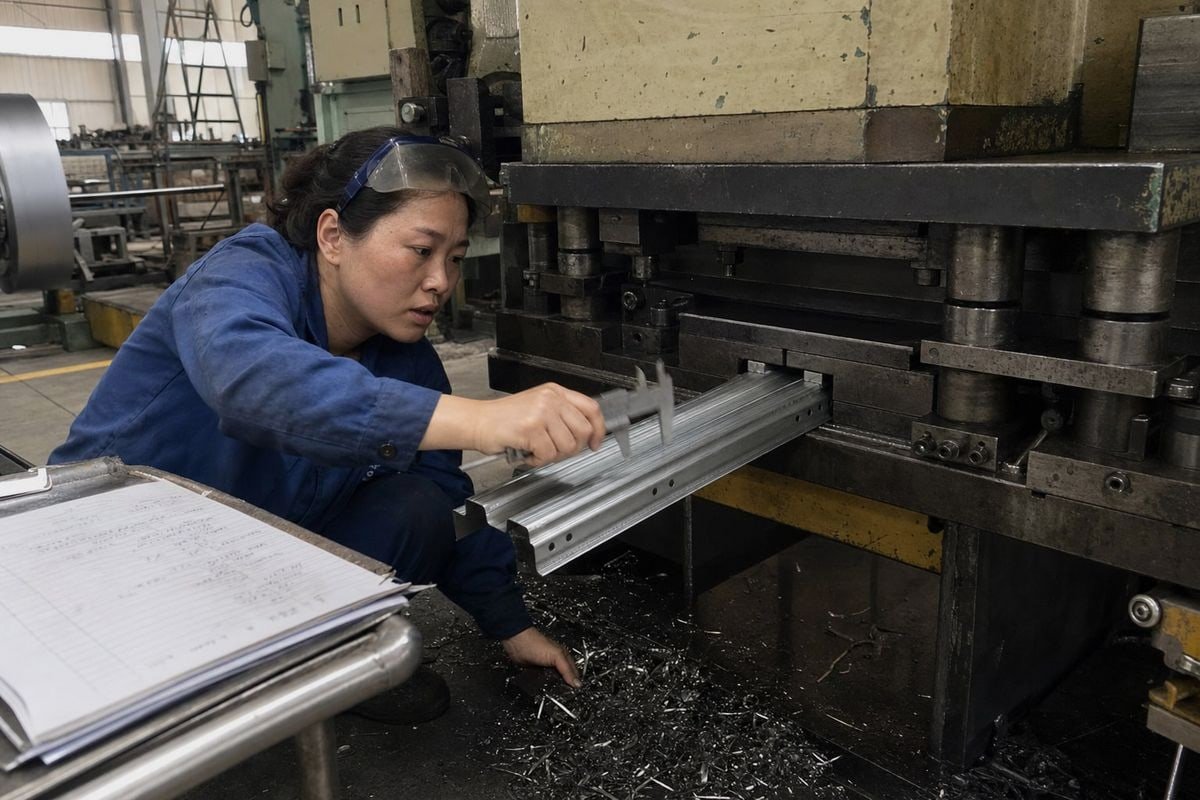
First, let me clear up the terminology. “Molded” does not mean injection-molded plastic. Traditional trays are made by bending flat steel sheet into a simple U-channel. Molded trays go through precision stamping dies that press the sheet into a corrugated, three-dimensional structure with raised and recessed patterns. This one-piece cold-forming approach also removes many welded joints, which are classic weak points and crevice corrosion sites.
Why the 3D structure matters
The physics here is simple. A corrugated cross-section increases the moment of inertia 2 of the sheet. In plain terms, the effective bending resistance goes up dramatically. Data cited by the China Concrete and Cement Products Association makes this concrete: a 400×150mm molded tray at only 1.0mm thickness carried over 460 kilograms, while a conventional 1.5mm tray of the same size carried about 180 kilograms. That is more than 2.5 times the load capacity with just two-thirds of the material thickness.
Our quality control steps
At our Tai’an facility, we run every production batch through a fixed sequence:
- Verify the 304 mill certificate before the coil enters the line.
- Check die condition, because worn dies produce shallow corrugations and weaker trays.
- Stamp and form the sections, then measure depth and pitch of the pattern.
- Deburr edges so installers do not damage cable jackets.
- Spot-test sample sections against the target NEMA load classes.
| Process Stage | What We Check | Why It Matters |
|---|---|---|
| Material intake | 18/8 composition certificate | Confirms genuine austenitic stainless steel |
| Die inspection | Corrugation depth tolerance | Shallow patterns cut load capacity |
| Forming | Dimensional accuracy | Ensures sections and fittings align on site |
| Finishing | Edge smoothness, surface finish | Protects cables and appearance |
The corrugated bottom does one more job. The uneven surface creates small air convection channels under the cables. Heat escapes more easily, which reduces thermal loss on loaded power runs.
What are the key benefits of choosing 304 stainless steel for my cable tray project?
There is a trade-off I walk buyers through every week: pay more upfront for 304, or pay repeatedly for coating repairs on galvanized tray. The environment usually decides the answer.
Grade 304 stainless steel offers inherent corrosion resistance from its 18% chromium and 8% nickel composition, needs no protective coating, tolerates temperatures up to 800°F (427°C), suits washdown and food grade applications, and delivers decades of low-maintenance service in most industrial environments.
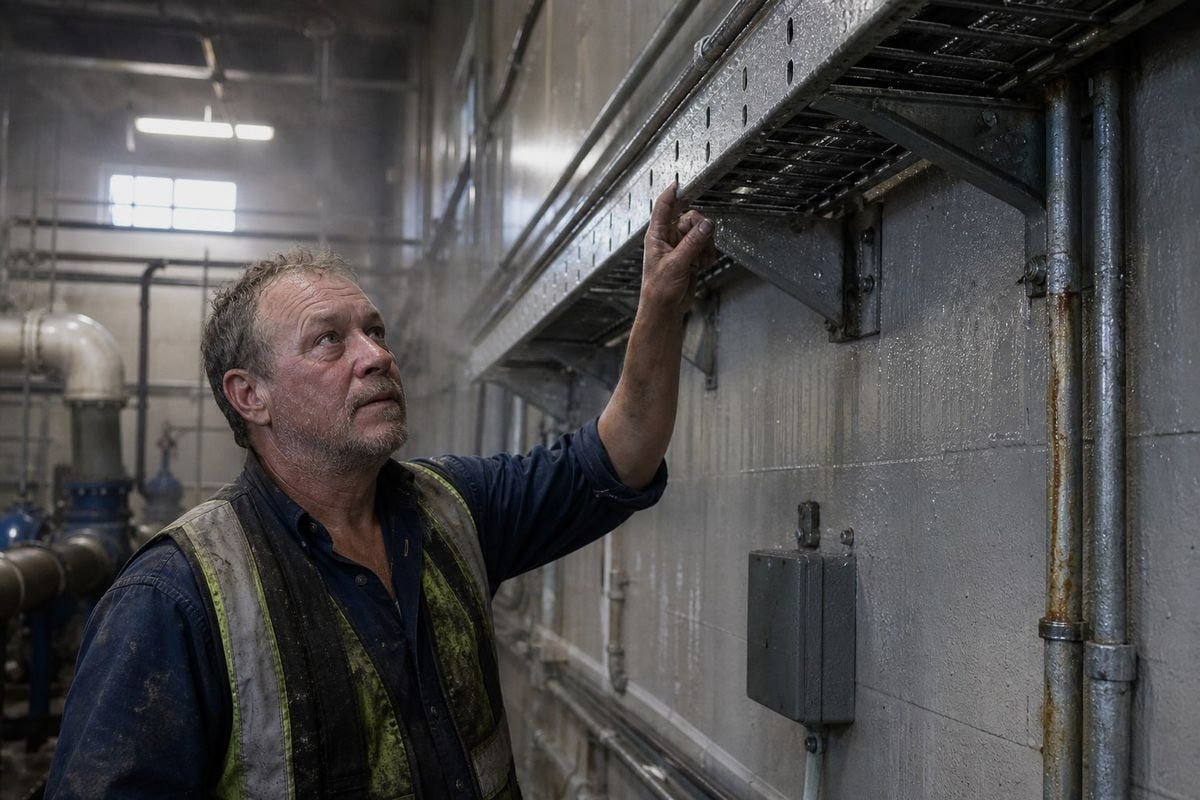
Grade 304 is the classic 18/8 austenitic stainless steel. Its corrosion resistance 3 is built into the alloy itself, not applied as a surface layer. That single fact changes the maintenance picture. A galvanized tray depends on its zinc coating. Scratch it during installation, and rust starts at that point. Scratch a 304 tray, and the exposed surface simply re-passivates.
Where 304 performs best
304 is engineered for ISO C3 and C4 corrosion categories. That covers most industrial plants, humid interiors, water treatment areas, and commercial buildings. It is also the standard choice for food processing and pharmaceutical facilities. The non-porous surface resists aggressive cleaning agents, which makes it the preferred material for washdown zones where bacterial control is mandatory. Its thermal stability is another quiet benefit: 304 maintains structural integrity at continuous temperatures up to 800°F (427°C).
The honest limitations
I will not oversell it. In high-salt coastal air, offshore platforms, or plants with strong chemical resistance demands, a Grade 316 comparison 4 usually favors 316 because of its added molybdenum. And yes, 304 costs more upfront than galvanized steel. Vendor tables often claim 50+ years of service life for stainless versus 20–30 years for hot-dip galvanized; treat those figures as marketing estimates, but the direction is right.
| Material | Corrosion Resistance | Relative Cost | Typical Environment |
|---|---|---|---|
| 304 Stainless | Very good (ISO C3/C4) | Medium-high | Industrial, food, water treatment |
| 316 Stainless | Excellent (marine, chemical) | Highest | Coastal, offshore, chemical plants |
| Hot-dip Galvanized | Moderate, coating-dependent | Medium | Dry indoor, general utility |
| Pre-galvanized | Low to moderate | Lowest | Light indoor use only |
How do I customize molded cable trays to fit my project’s specific requirements?
Last year an EPC project director sent me a hand sketch over WhatsApp: an odd 350mm width for a solar inverter room. Two weeks later, our team had drawings approved and samples formed.
You customize molded cable trays by specifying width, height, sheet thickness, perforation pattern, tray style, surface finish, and fittings. A capable OEM/ODM supplier converts your drawings or site constraints into production drawings, confirms load ratings, and forms matching elbows, tees, and support brackets.
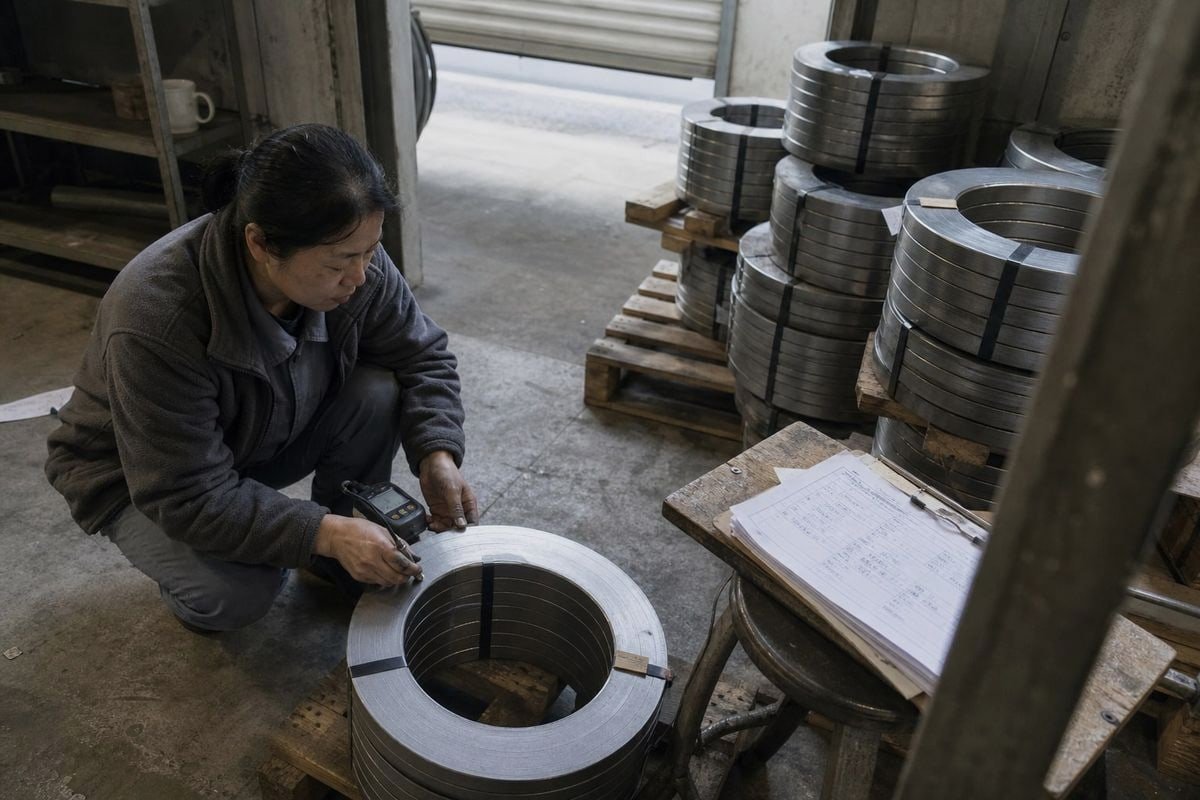
Customization is where a good supplier earns their keep. A cable management system is never just straight sections. It includes bends, risers, reducers, covers, and hardware, and all of them must match dimensionally. In our OEM/ODM work with EPC contractors across Southeast Asia and South America, we usually start from one of three inputs: a formal drawing, a competitor sample, or a plain description of the cable load and environment.
The main variables you can specify
- Tray style: perforated tray design for balanced ventilation and support, ladder type tray for maximum airflow on power cables, wire mesh tray for light-duty data runs, or solid trough where EMI shielding matters. A one-piece molded trough forms a continuous metallic barrier, which shields signal cables from electromagnetic interference better than open mesh.
- Dimensions: width, side-rail height, and length per section.
- Thickness: thanks to the molded structure, 1.0mm can often replace 1.2–1.5mm conventional sheet. That structural lightweighting cuts steel weight by roughly 20–30% without dropping below the required NEMA or IEC load class.
- Perforation pattern: slot size and spacing affect ventilation, drainage, and cable-tie positions.
- Accessories: support brackets, splice plates, hold-down clamps, and grounding hardware.
A practical specification checklist
| Question to Answer | Why It Drives the Spec |
|---|---|
| Total cable weight per meter? | Sets duty level and rung/corrugation design |
| Support span between brackets? | Determines required rigidity and thickness |
| Washdown or hygienic zone? | Pushes toward 304 with smooth finish |
| Data or power cables? | Decides mesh, perforated, or solid trough |
| Outdoor or coastal exposure? | May shift the grade from 304 to 316 |
One more trend worth asking about: boltless snap-lock accessories. Press-fit assembly can cut installation time significantly and removes fastener points where crevice corrosion likes to start. We now quote these as an option on most molded tray projects.
What should I check regarding lead times and logistics when sourcing 304 cable trays from China?
A hard lesson shaped how we quote today: early on, a shipment sat at port for a week because the packing list did not match the fittings count. We never let paperwork lag production again.
Check the supplier’s confirmed production lead time, raw material stock of 304 coil, packing method for long tray sections, container loading plan, export documentation accuracy, and pre-shipment QC reports. Build a small buffer into your project schedule for ocean freight variability.
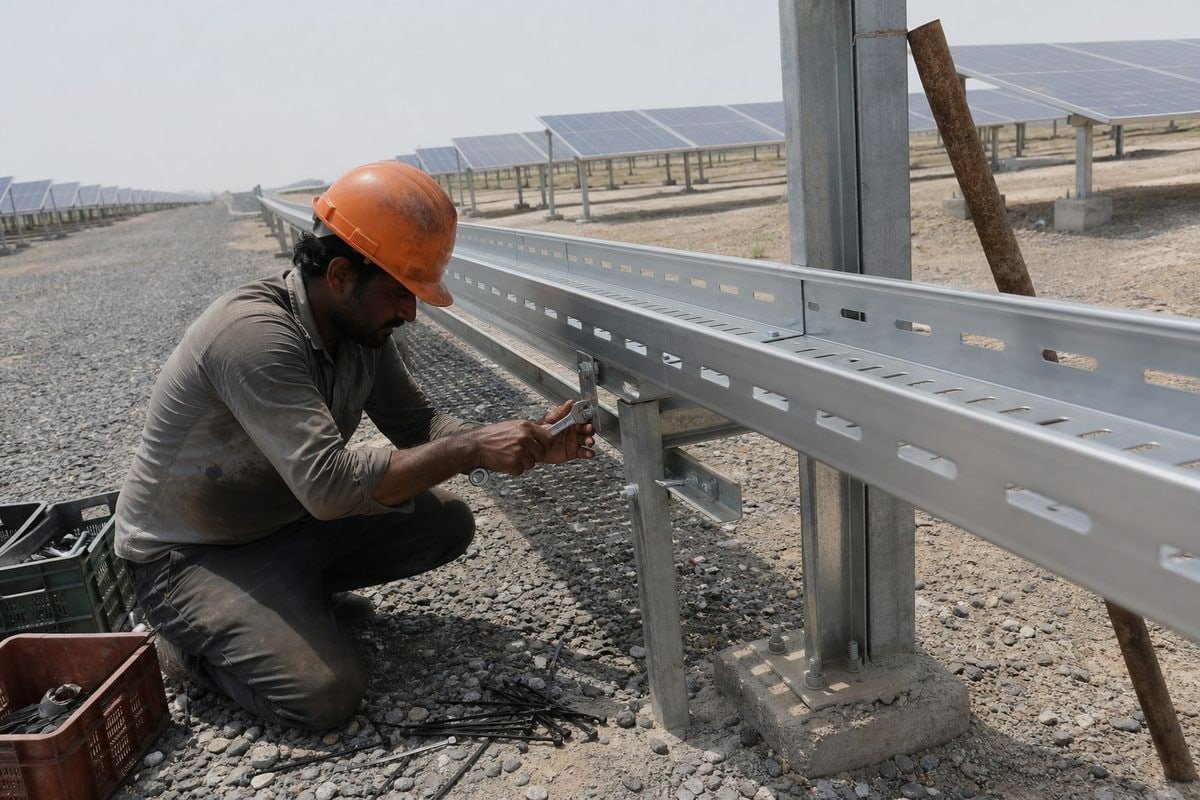
Sourcing from China gives you strong pricing and customization, but logistics discipline separates a smooth project from a delayed one. I know delivery delays, quality slips, and product returns are the three pain points that keep project directors awake. Here is how I suggest you manage each one before you place the order.
Lead time realities
Standard molded tray sections typically ship faster than fully custom profiles, because custom work needs die adjustment and sample approval. Ask your supplier three direct questions. Does the factory hold 304 coil in stock, or does it order per project? Are the stamping dies for your profile ready, or do they need modification? What is the confirmed date for the first inspectable batch? Vague answers here predict late deliveries. In our own workflow, we send weekly photo updates from the production line so buyers in Singapore or Manila never wonder where their order stands.
Logistics and QC checkpoints
Follow a simple sequence and most risk disappears:
- Approve a physical sample or first-article inspection before mass production.
- Request a mill certificate for the 304 material with each batch.
- Review the pre-shipment QC report with photos of dimensions and finish.
- Confirm the packing plan. Long sections need edge protection and rigid bundling, or oval punch-outs and flanges get bent in transit.
- Verify the packing list matches the fittings, support brackets, and hardware counts exactly.
- Clarify Incoterms and who handles destination clearance.
For Southeast Asia, ocean transit is usually short, but port congestion still happens. I always recommend a one-to-two-week buffer between the quoted arrival date and your site installation date. It costs nothing and saves projects.
Conclusion
Stainless steel 304 molded cable tray combines stamped 3D strength, inherent corrosion resistance, and lighter weight. Specify it carefully, verify QC, and plan logistics — and your project runs smoothly.
Footnotes
- ISO 1461 is the international standard for hot-dip galvanized coatings on iron and steel articles. ↩︎
- Explains the physical principle of how cross-sectional geometry affects the bending stiffness and load capacity of materials. ↩︎
- Provides a fundamental overview of how materials like stainless steel resist chemical degradation in industrial environments. ↩︎
- ISO 15510 specifies the chemical composition of stainless steels, including the molybdenum-alloyed Grade 316. ↩︎