Hot dipped galvanized marine cable tray is a question I hear weekly from EPC buyers, because a wrong coating choice offshore can destroy a cable run within two years.
Hot dipped galvanized marine cable tray is a fabricated steel cable support system immersed in molten zinc after cutting and welding, built to marine standards like VG 88900-1 with 65–85μm coatings to survive C5-M salt-spray environments on ships and offshore platforms.
That short answer covers the basics. But the real story is in the details: the coating process, the standards, and how to source it correctly. Let me walk you through each part.
How does hot dip galvanization make marine cable trays more corrosion-resistant?
Last year, our workshop in Tai’an re-galvanized a batch of trays because the coating on the cut edges measured below spec. That lesson taught me why the process order matters so much.
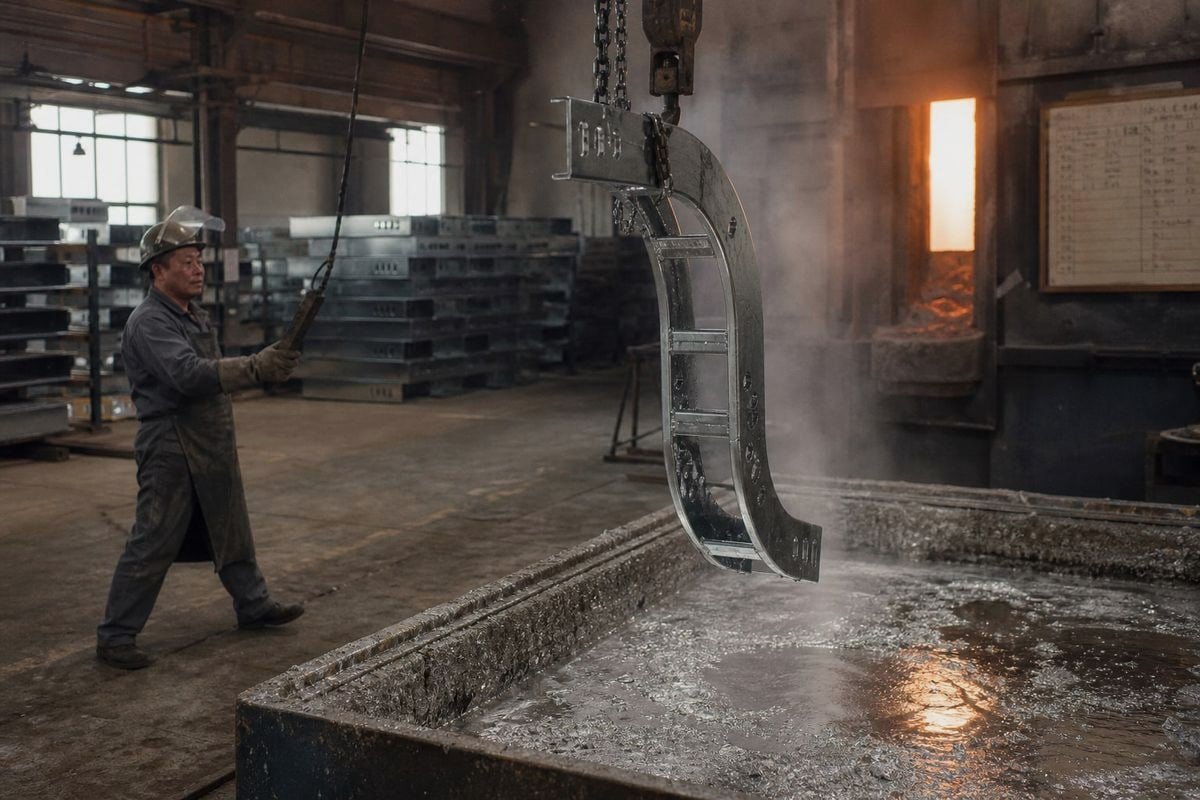
Hot dip galvanization immerses fully fabricated steel trays into a 450°C molten zinc bath, creating a metallurgically bonded coating that covers every edge, weld, and perforation. The zinc acts as a sacrificial layer, corroding first to protect the steel underneath from salt spray.
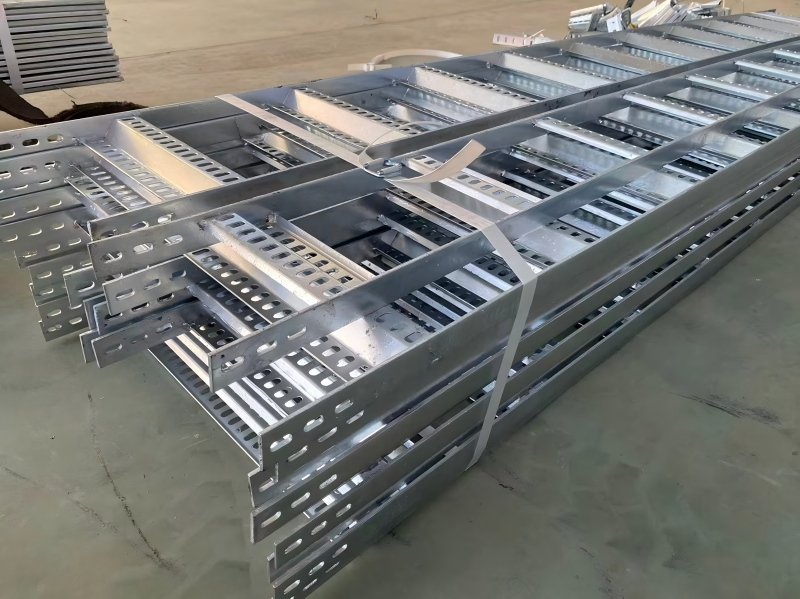
The key word here is “after.” Hot dipped galvanized trays are coated after all cutting, punching, and welding are done. Pre-galvanized steel is coated first and fabricated later. That leaves raw steel exposed at every cut edge and drilled hole. In a marine environment, those exposed edges rust fast.
The metallurgical bond
When steel enters the 450°C zinc bath, the zinc does not just sit on the surface. It reacts with the iron and forms layered zinc-iron alloys. These layers are harder than the base steel in some zones. So the coating resists scratches during shipping and installation. Even if the surface gets scratched, sacrificial anode protection kicks in. The zinc corrodes preferentially and shields the exposed steel.
Why this matters at sea
Marine environments fall under the C5-M corrosion category in ISO 12944. That means constant salt spray, high humidity, and chloride attack. Guidance under EN ISO 14713-1 1 puts zinc loss in marine environments at a minimum of 4 to 8 µm per year. So coating thickness directly determines service life.
| Finish Type | Coating Applied | Edge Protection | Marine Service Life |
|---|---|---|---|
| Electro-galvanized | Before fabrication | Poor | Under 2 years |
| Pre-galvanized | Before fabrication | Weak at cuts | 3–5 years |
| Hot dipped galvanized (65–85μm) | After fabrication | Full encapsulation | 20+ years |
In our export orders to Singapore and the Philippines, we always confirm the zinc coating thickness against the project’s exposure zone before quoting. It saves everyone a painful conversation later.
What thickness and coating standards should I check before ordering marine cable trays?
A project director in Singapore once sent me a spec sheet that just said “galvanized tray.” We spent two days clarifying it, because that phrase alone tells you almost nothing about marine suitability.
Check that the zinc coating thickness is 65–85μm or higher for C5-M marine zones, verified against ISO 1461 or ASTM A123. Also confirm the tray system meets IEC 61537 performance tests and marine product standards such as DIN VG 88900-1.
Standards are your protection as a buyer. Without them, “marine grade” is just a marketing phrase. Here are the ones I ask my clients to write into every purchase order.
The core standards to specify
| Standard | What It Covers | Why You Need It |
|---|---|---|
| ISO 1461 / ASTM A123 | Hot-dip galvanized coating quality and minimum thickness | Verifies the coating itself |
| IEC 61537 2 | Cable tray system performance and load classification | Verifies structural performance; HDG is corrosion class 6 |
| DIN VG 88900-1 | Detailed product standard for shipboard cable trays | The true marine benchmark; brands like OBO produce to it |
| ISO 12944 (C5-M) | Environmental corrosivity classification | Matches coating thickness to exposure severity |
Matching thickness to environment
Not every project needs the thickest coating. A general outdoor site may only need 45μm. Industrial outdoor environments typically call for 65μm. Harsh coastal conditions push toward 70–85μm. Highly aggressive splash zones may demand 100μm or a switch to Stainless Steel 316L entirely. I will be honest with buyers here: for direct saltwater immersion, hot dipped galvanized steel may not be the right answer, and stainless steel often justifies its cost. But for decks, coastal plants, and platform interiors, HDG at 65–85μm delivers the best durability-to-cost balance.
Beyond the coating
Also check load class per IEC 61537, side rail height, and material gauge. Marine series trays commonly run 0.8mm to 2.0mm steel thickness, with widths from 50mm up to 1200mm. Some buyers now also ask about DNV classification or ABS approval for shipboard use, which is a fair request for offshore projects.
Why do EPC contractors prefer hot dipped galvanized cable trays for offshore and coastal projects?
When we quote EPC contractors for solar and water treatment projects in Southeast Asia, one trade-off always comes up: HDG steel versus aluminum versus stainless. Cost and fire safety usually decide it.
EPC contractors choose hot dipped galvanized cable trays because they combine 20-plus years of salt spray resistance with a much lower price than Stainless Steel 316L, higher yield strength than aluminum, and fire resistance above 1000°C for critical electrical safety zones.
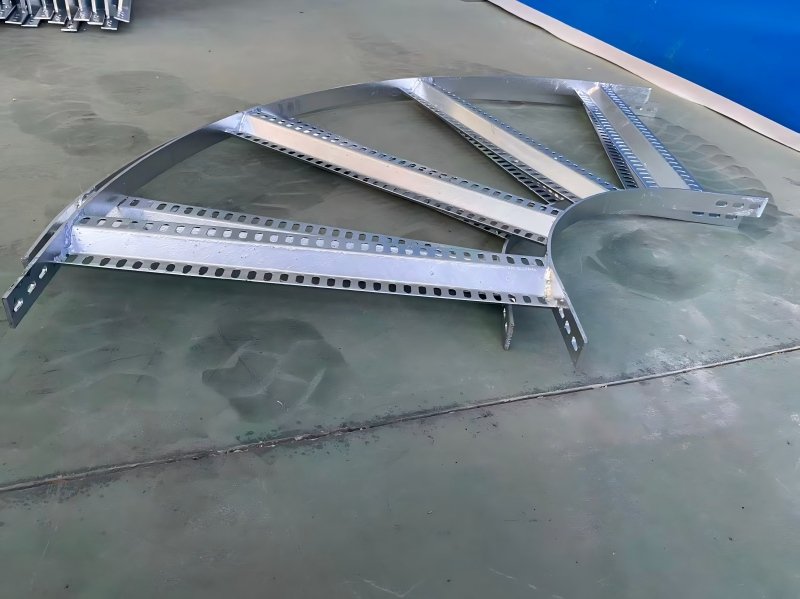
Let me break down how contractors actually weigh this decision.
The material comparison
| Factor | HDG Steel | Aluminum | Stainless Steel 316L |
|---|---|---|---|
| Cost | Moderate | Moderate-high | High |
| Yield strength | High | Lower | High |
| Fire resistance | Withstands 1000°C+ | Melts at ~660°C | Excellent |
| Salt spray resistance | Very good at 65–85μm | Good | Best |
| Best fit | Decks, coastal plants, platforms | Weight-critical runs | Splash zones, immersion |
Built for dynamic loads
Ships and offshore platforms are never still. Wind, waves, and running machinery create constant vibration and shock loads. HDG steel trays hold their shape under these forces better than lighter alternatives. Installation details matter too. On marine jobs, fixing bolts must use anti-loosening washers or double nuts to resist hull vibration. We include these hardware notes in our installation drawings because a loose connection at sea is not a small problem.
The ladder design advantage
The heavy-duty ladder type cable tray 3 is the industry standard for marine power runs. Open rungs give maximum ventilation, which prevents heat buildup in dense power cable bundles. Our ladder trays for the Philippines market ship in 2500mm or 3000mm lengths, bundled and strapped to protect the zinc spangle during ocean freight.
Where the industry is heading
Newer options are emerging. Zinc-Magnesium-Aluminum (ZMA) alloy coatings can offer up to three times the lifespan of pure zinc in splash zones. Some offshore operators now attach RFID tags to trays for digital-twin corrosion tracking. Hybrid systems pair HDG trays with composite fasteners to stop galvanic corrosion 4 between dissimilar metals. These trends are worth watching, but for most coastal EPC budgets today, standard HDG remains the workhorse choice.
How can I verify the quality and lead time when sourcing marine cable trays from a Chinese supplier?
Shimkien, a project director I work with in Singapore, told me his biggest fears in one WhatsApp message: delayed delivery, failed QC, and returned goods. His checklist shaped how we run our supply chain today.
Verify quality by requesting mill certificates, zinc coating thickness reports against ISO 1461 or ASTM A123, salt spray test results, and third-party inspection before shipment. Confirm lead time in writing with production milestones, and check the supplier’s export track record for marine projects.

Sourcing from China works well when you verify systematically. Here is the process I recommend to every new buyer, based on how we handle orders from our Tai’an operation.
A five-step verification process
- Request documentation first. Ask for material certificates, coating thickness test reports, and any DNV classification or type-approval documents if the project is shipboard. A serious supplier sends these within a day.
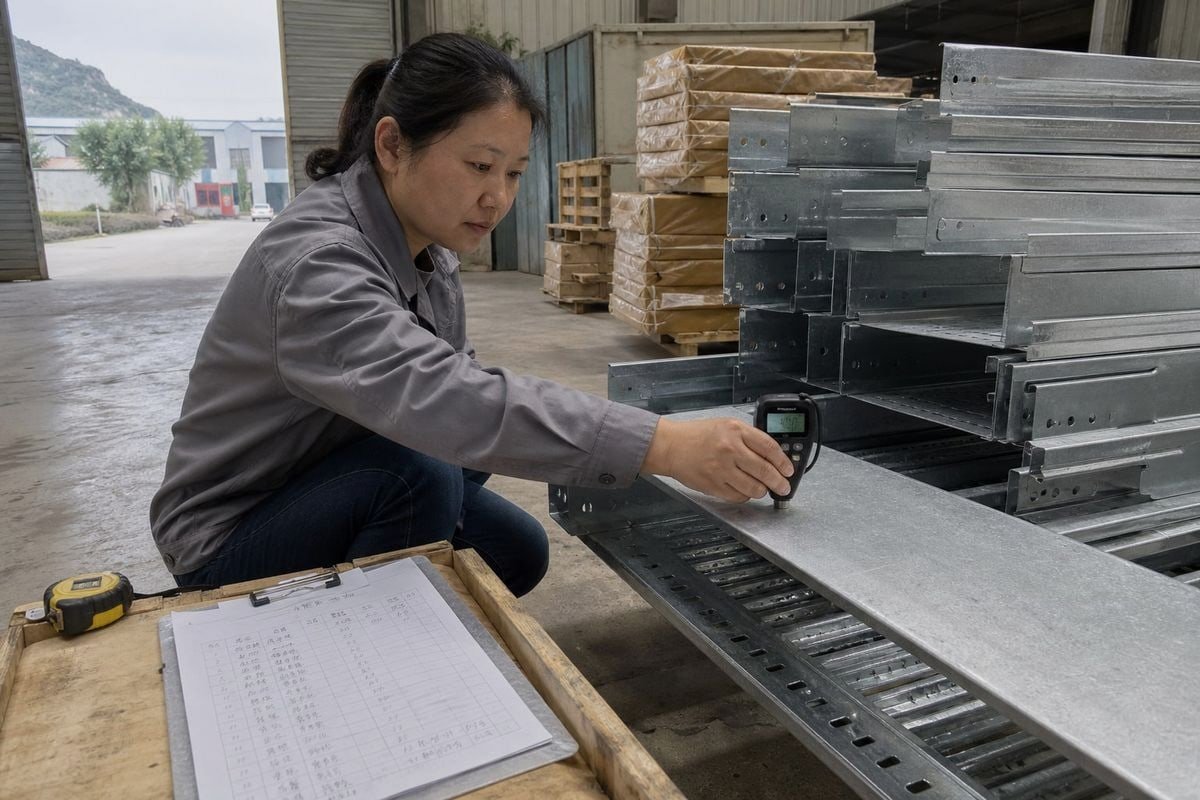
- Order a sample or arrange a video factory audit. Check the zinc coating for uniformity, smooth welds, and clean edges. Measure coating thickness with a magnetic gauge at edges and welds, not just flat surfaces. Edges are where cheap galvanizing fails.
- Lock the specification sheet. Confirm width, rail height, steel gauge, coating thickness in microns, load class per IEC 61537, and accessory list. Vague specs cause returns. Our OEM/ODM projects always start with a signed drawing.
- Agree on milestones, not just a delivery date. We give buyers three checkpoints: raw material ready, fabrication complete, and galvanizing complete. Photos at each stage. This is how we keep Southeast Asian project schedules honest.
- Book third-party inspection before loading. SGS or similar. Check coating thickness, dimensions, packing, and quantity. It costs little compared to a rejected container.
Lead time realities
Standard HDG ladder tray sizes typically ship within a few weeks. Custom bends, reducers, and non-standard widths add time because galvanizing happens after fabrication. Ask your supplier whether they run their own galvanizing line or subcontract it. Subcontracted galvanizing is a common hidden cause of delays. We flag this openly in our quotations, because a surprise two-week slip hurts an EPC schedule far more than an honest timeline upfront.
Conclusion
Hot dipped galvanized marine cable tray pairs post-fabrication zinc coating with marine standards like VG 88900-1. Specify 65–85μm for C5-M zones, verify against ISO 1461, and audit your supplier before ordering.
Footnotes
- Official ISO website for the standard providing guidelines for the corrosion protection of iron and steel in structures. ↩︎
- Official site for the International Electrotechnical Commission, which defines the global standards for cable tray system performance. ↩︎
- Wikipedia overview of cable tray systems, specifically the ladder design used for heavy-duty industrial and offshore power distribution. ↩︎
- Authoritative Wikipedia entry explaining the electrochemical process of galvanic corrosion between different metals in marine environments. ↩︎