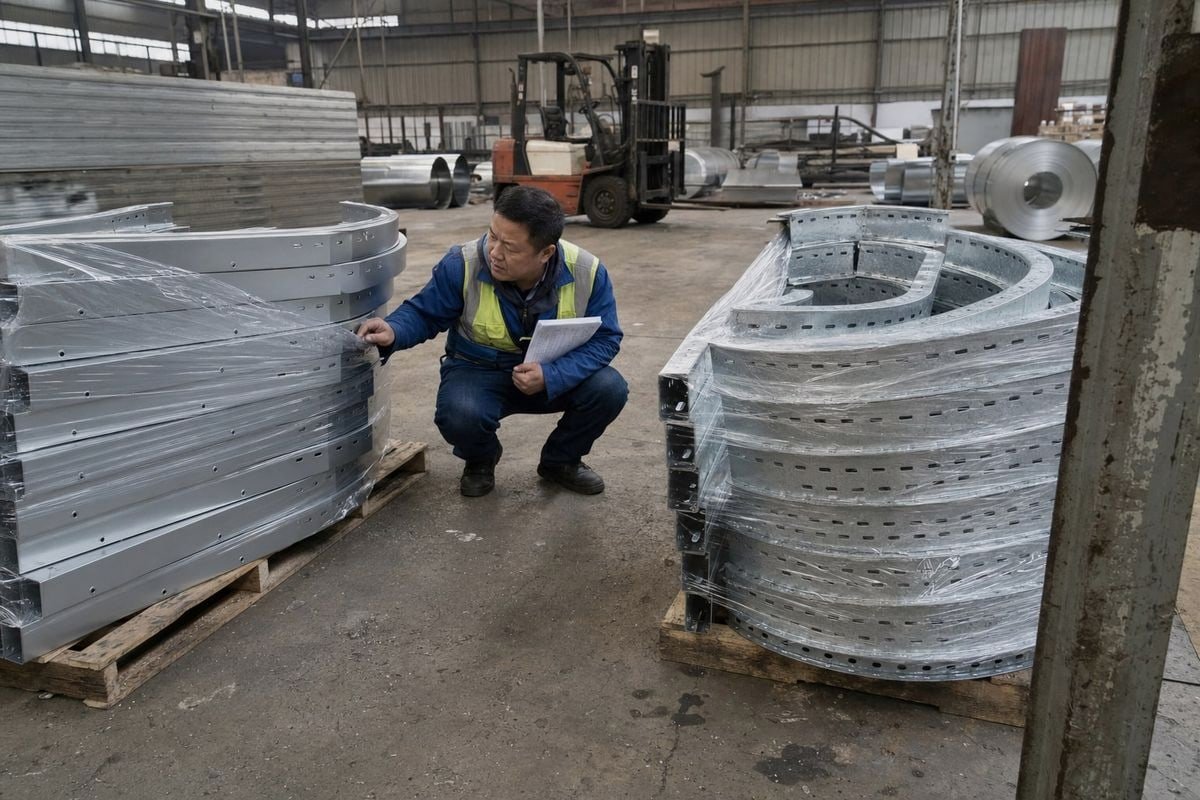
Choosing between galvanized indoors and HDG for coastal areas confuses many buyers corrosion resistance 1. I see this on our production line weekly: wrong coating, rusted trays, angry contractors, and costly returns.
Choose standard galvanized cable trays for dry indoor environments because corrosion risk is low and cost stays down. Choose hot-dip galvanized (HDG) for coastal areas because its thicker zinc layer resists salt spray, chlorides, and humidity far better than lighter coatings.
The logic is simple. The coating must match the exposure. Below, I break down how to make that call for your own project, step by step.
How do I know if galvanized coating is enough for my indoor cable tray project?
Last month I photographed two of our bend fittings side by side — one cold galvanized, one hot-dip galvanized — for a client in Singapore who could not decide which finish his indoor plant needed salt spray test 2.
Standard galvanized coating is enough for indoor cable tray projects when the environment stays dry, enclosed, and free of chemical fumes or salt-laden air. Typical zinc thickness of 10–20 microns protects steel for decades in clean interior conditions with minimal maintenance.
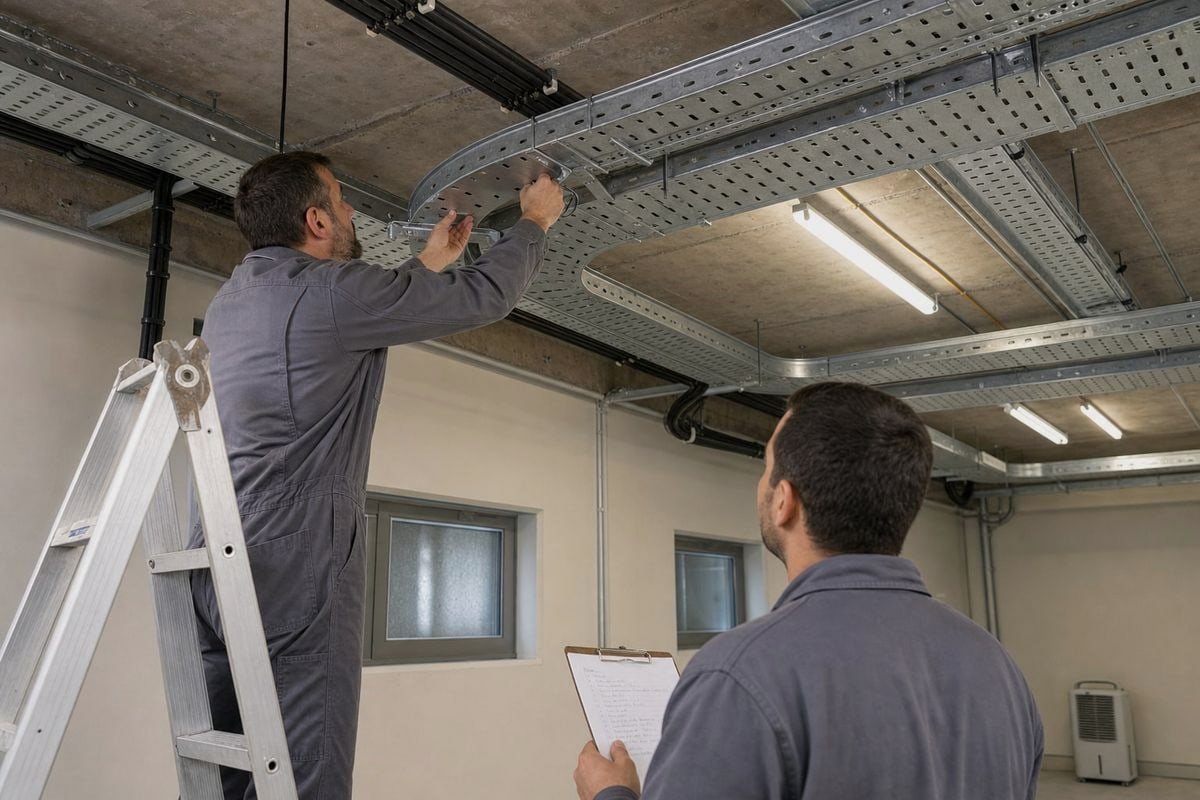
Indoors, the corrosion load on steel drops sharply. There is no rain. There is no direct salt spray. Humidity is usually controlled. So the zinc layer on a pre-galvanized or electro-galvanized tray corrodes very slowly. In our experience shipping to Southeast Asian plants, standard galvanized trays in dry mechanical rooms still look clean after many years.
But you should still check three things before you sign off.
Three questions to ask about your indoor site
- Is the space truly dry? Basements, wet-process rooms, and unsealed warehouses can hold moisture. Condensation on cold steel acts like slow rain.
- Is the air clean? Water treatment rooms, battery rooms, and chemical storage areas release fumes that attack zinc. Standard galvanizing may fail early there.
- Is the building near the coast? This is the trap. An “indoor” tray in a coastal warehouse still breathes salt-laden air through HVAC intakes, open bay doors, and unsealed envelopes. Indoor does not always mean low corrosion.
Quick suitability check
| Indoor Condition | Standard Galvanized OK? | Better Option |
|---|---|---|
| Dry office ceiling void | Yes | — |
| Climate-controlled data room | Yes | — |
| Humid basement plant room | Borderline | HDG |
| Indoor space, coastal building with open doors | Risky | HDG |
| Chemical or chlorine dosing room | No | HDG or duplex |
If your project passes all three questions, standard galvanized gives you solid protection at the lowest lifecycle cost 3. That is exactly why we recommend it for normal dry interiors.
Why does hot-dip galvanizing perform better in coastal and high-humidity environments?
A project director once sent me photos of a competitor’s electro-galvanized ladder rack installed near a Philippine port. Red rust appeared within eighteen months. Our HDG replacement fittings are still holding up today.
Hot-dip galvanizing performs better in coastal environments because immersion in molten zinc builds a thick coating of 85 microns or more, bonded through zinc-iron alloy layers. This layer resists chlorides, corrodes sacrificially at scratches, and lasts far longer than thin electroplated finishes.
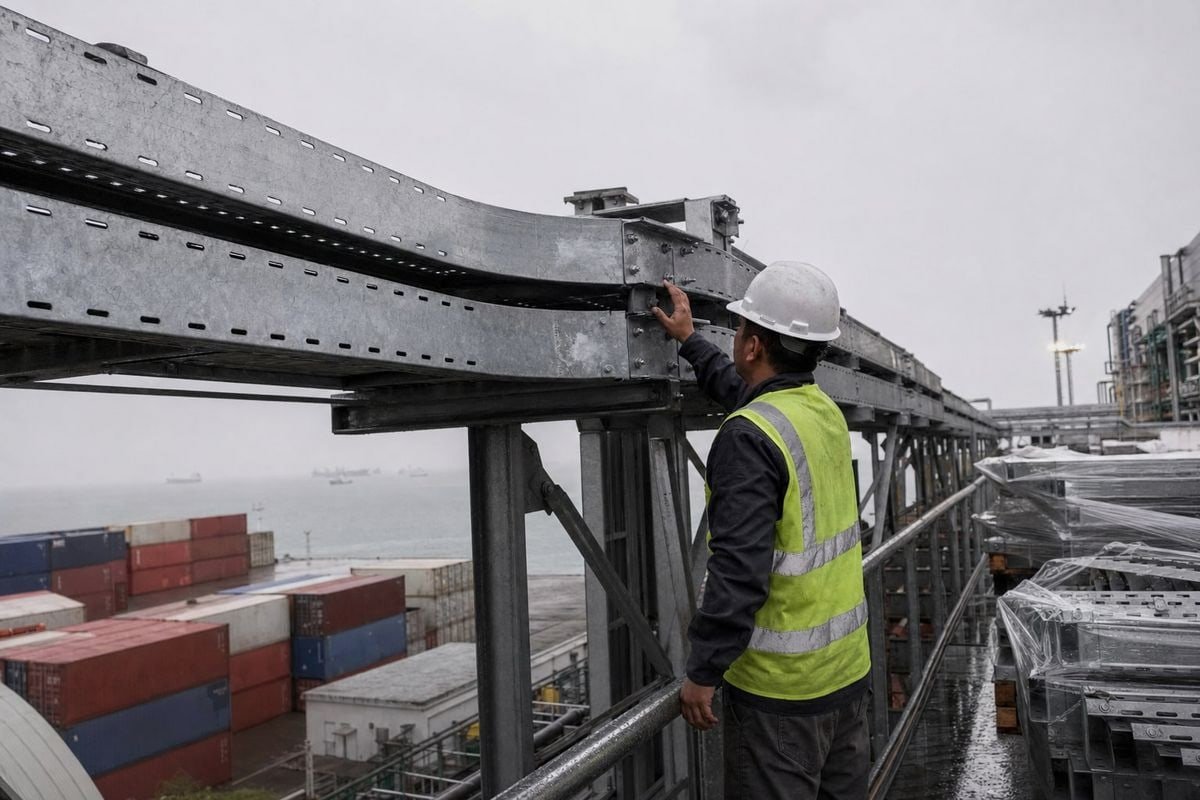
Coastal air is aggressive for two reasons. First, it carries chlorides. Salt particles land on steel and pull moisture out of the air, keeping surfaces wet longer. Second, high humidity means the steel rarely dries out fully. Wet time plus chlorides equals fast corrosion. Bare steel near a shoreline can show heavy rust in months, not years.
HDG fights back in three ways.
Barrier, sacrifice, and structure
Barrier protection. The thick zinc layer physically separates steel from salt and moisture. More thickness means more years before the barrier wears through.
Sacrificial protection. Zinc is more reactive than steel. If the coating gets scratched during transport or bolting sacrificial protection 4, the surrounding zinc corrodes first and protects the exposed steel. Thin coatings run out of sacrificial zinc quickly. HDG has reserves.
Metallurgical bonding. The hot-dip process forms zinc-iron alloy layers 5 — Gamma, Delta, Zeta, and Eta — that are actually harder than the base steel in places. That is why HDG fittings survive rough handling on coastal construction sites where painted or electroplated parts chip and fail.
One honest caution I always give buyers: HDG is not rust-proof. In severe splash zones within one or two kilometers of the shoreline, even HDG benefits from help. A duplex system — HDG plus a compatible topcoat — can extend life 1.5 to 2.5 times beyond either treatment alone. Design also matters. Trays and bends should drain water, ventilate freely, and avoid trapping salt. Our perforated side panels help here, since airflow lets salt-wet surfaces dry faster.
What is the real cost difference between standard galvanized and HDG cable trays?
Price talks come up in almost every WhatsApp negotiation I handle, so let me put the numbers on the table the way I do for our EPC clients.
HDG cable trays typically cost 20–40% more upfront than standard pre-galvanized trays due to thicker zinc and extra processing. Over a coastal project’s life, HDG usually costs less because it avoids early replacement, repainting, rework labor, and downtime.
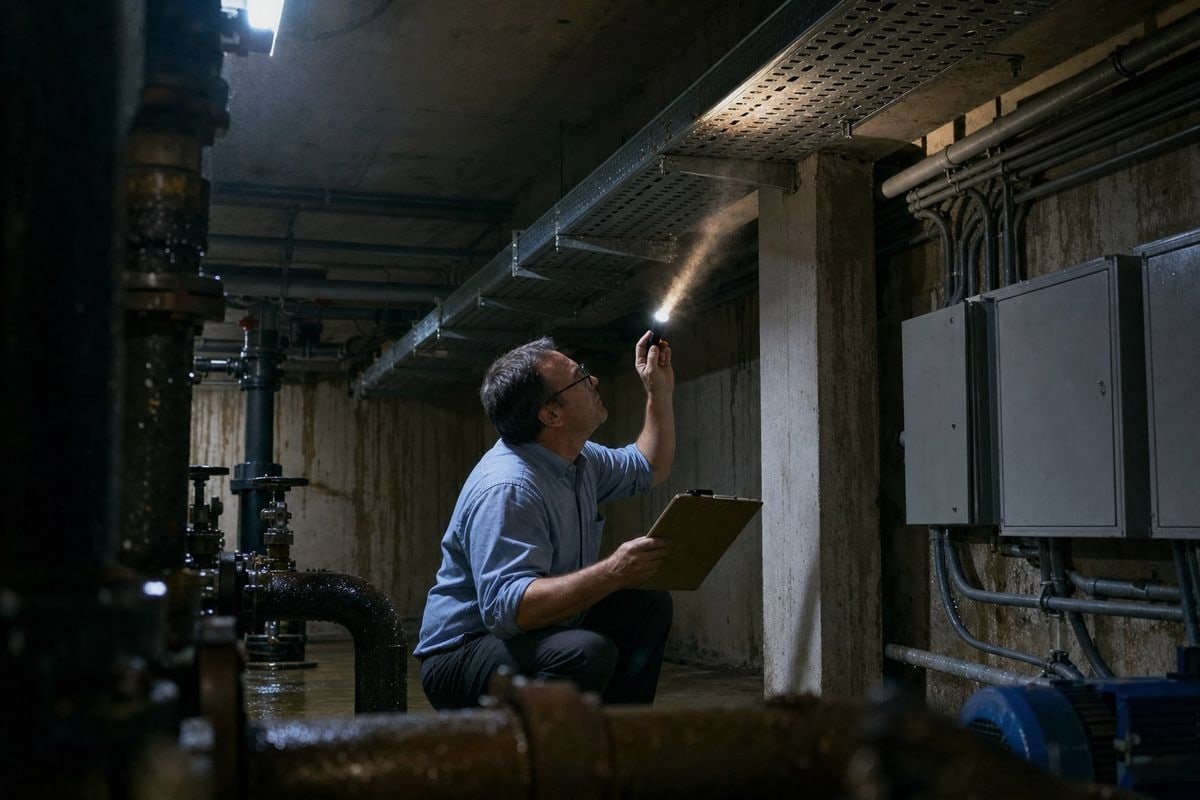
The purchase price is only the first line of the budget. The real comparison is lifecycle cost. Here is how I lay it out for procurement managers.
| Factor | Standard Galvanized | Hot-Dip Galvanized |
|---|---|---|
| Typical zinc thickness | 10–20 microns | 85+ microns |
| Upfront price | Baseline | Roughly 20–40% higher |
| Dry indoor service life | Decades | Decades (overkill) |
| Coastal service life | Often under 5 years | 25–50+ years when detailed well |
| Maintenance in coastal use | Frequent repair or replacement | Near zero |
| Handling damage tolerance | Low | High |
Where buyers lose money
The expensive mistake is not buying HDG for a dry warehouse. That only wastes the price premium. The truly expensive mistake is installing standard galvanized trays in a coastal plant. Then you pay three times: once for the original trays, once for removal labor at height, and once for HDG replacements — plus the project delays in between. One water treatment contractor told me his rework labor cost more than the entire original tray order.
There is also a hidden saving with HDG that few buyers price in. HDG survives shipping and rough site handling. Fewer damaged fittings on arrival means fewer claims, fewer replacements, and fewer schedule slips. For our clients reselling into projects, that reliability protects their own reputation with the end client.
So my honest advice matches our own quoting practice: never pay the HDG premium for a clean, dry interior, and never skip it near the sea. Matching coating to exposure is the cheapest strategy of all.
How can I ensure my supplier’s HDG quality meets coastal corrosion resistance standards?
Before we ship any coastal order from Tai’an, our team checks coating thickness on random fittings with a magnetic gauge — a habit we built after seeing how much thin spots on bends and edges can vary between galvanizing batches.
Verify HDG quality by requesting compliance with ASTM A123 or A153, demanding coating thickness reports of 85 microns or more, inspecting cut edges and welds for full coverage, and asking for salt spray test data plus real photos of the actual production batch.
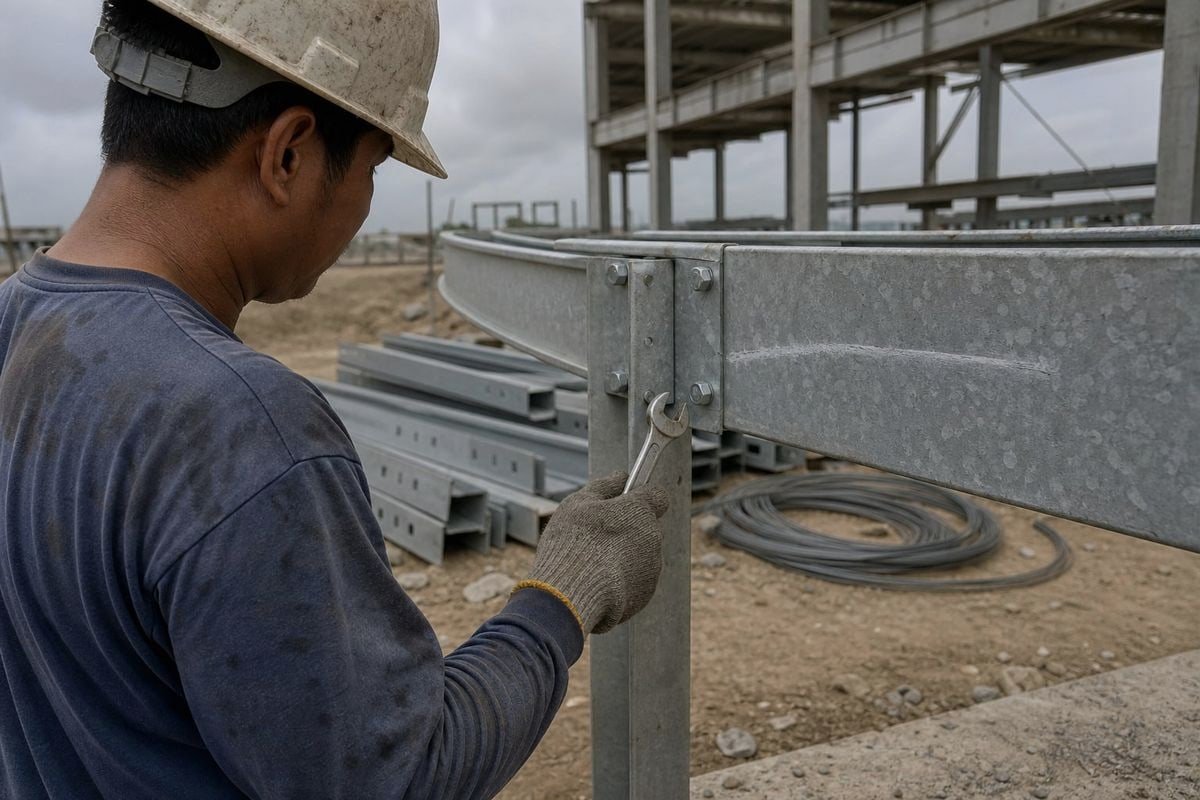
Paperwork alone is not enough. I have seen certificates that looked perfect while the actual parts carried half the promised zinc. Here is the verification process I recommend to every buyer, based on how we run our own QC.
A five-step supplier verification process
- Ask for the standard, in writing. HDG for coastal cable trays should reference ASTM A123 6 (fabricated products) or A153 (hardware and fasteners). These standards tie minimum zinc thickness to steel gauge and exposure, so service life becomes predictable.
- Demand thickness readings, not just a certificate. Request magnetic gauge readings at multiple points — flat surfaces, bends, flanges, and edges. Thin spots hide at corners and cut edges.
- Inspect the details that fail first. Bolt holes, welds, and connector plates are the usual weak points. Every accessory should carry the same protection as the tray body. This is why we supply complete matched sets — bends at every angle, tees, crosses, covers, and hardware — so no lightly coated part becomes the corrosion entry point in a coastal run.
- Request real batch photos or samples. Genuine HDG has a distinctive matte-to-spangled surface. Comparing a real HDG bend next to a cold galvanized one, the difference in coating texture and edge coverage is visible to the naked eye. Ask your supplier to show you both.
- Confirm packing for sea freight. Salt exposure starts in transit. Look for proper strapping, palletizing, and wrap that prevents trapped condensation between stacked fittings.
Red flags versus green flags
| Red Flag | Green Flag |
|---|---|
| “It’s galvanized” with no standard named | ASTM A123 7/A153 cited on the quote |
| No thickness data available | Micron readings per batch |
| Trays HDG but fasteners electroplated | Full system coated to the same grade |
| Stock photos only | Photos or video of your actual order |
A supplier who welcomes these questions is usually a supplier whose coating survives the coast.
Conclusion
Wrong coating choices waste money twice — first on the premium, then on the rework. Match galvanized to dry interiors, HDG to coastal exposure, and verify every micron before shipping.
Footnotes
- ISO sets international standards for coatings and corrosion resistance testing relevant to HDG verification. ↩︎
- Explains the standardized corrosion test method mentioned for verifying coating durability. ↩︎
- Background concept explaining the total cost of ownership analysis used in the cost comparison section. ↩︎
- Explains the galvanic corrosion principle underlying zinc’s sacrificial protective behavior. ↩︎
- General reference on galvanization metallurgy relevant to the alloy layer discussion. ↩︎
- Background on hot-dip galvanizing process referenced throughout the article’s technical explanations. ↩︎
- Direct citation for the coating thickness standard referenced for HDG verification. ↩︎