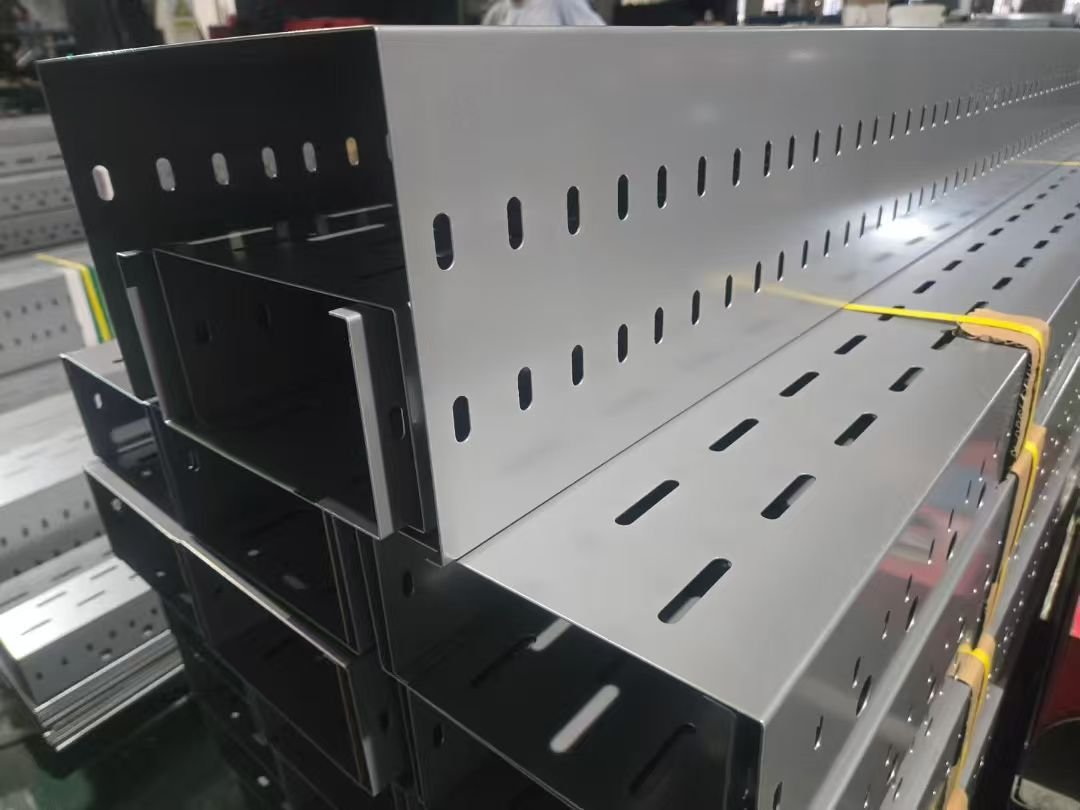
Buyers ask me almost weekly whether RAL 7035 perforated cable tray 1 beats hot-dip galvanized 2 on bulk price. Pick wrong, and our production line has seen the costly results.
RAL 7035 perforated cable tray is more cost-effective in bulk only for dry indoor projects, where its lower coating cost cuts upfront spend. For outdoor, coastal, or corrosive sites, hot-dip galvanized costs 15%–20% more upfront but lasts 3–5 times longer, making it cheaper over the project’s life.
So the honest answer is: it depends on where the tray will live electrostatic powder coating 3. Let me break down the numbers, the risks, and the procurement details so you can decide with confidence.
How Do I Compare the Long-Term Costs of RAL 7035 and Hot-Dip Galvanized Cable Trays for Large Projects?
Last year, a water treatment contractor in Southeast Asia sent us an inquiry asking for our cheapest finish. When I saw the site photos, I told him the cheap option would cost him double within five years.
Compare cost per usable service year, not price per meter. Divide the total landed cost by expected service life in your environment. Hot-dip galvanized trays typically last 25+ years outdoors, while powder-coated RAL 7035 trays last 10–15 years indoors and far less in corrosive conditions.
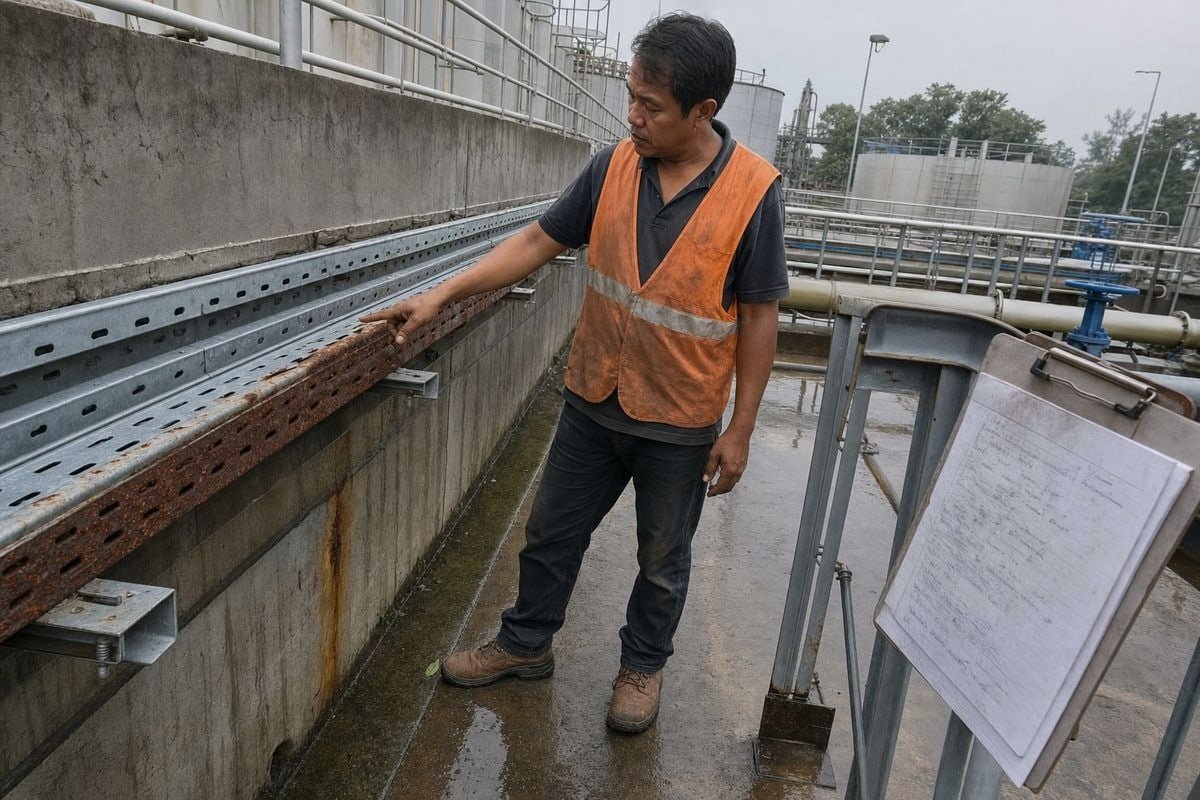
The mistake I see most often in large tenders is comparing invoices instead of lifecycles. A RAL 7035 perforated cable tray usually looks cheaper on the quotation. The powder coating process is simpler than a zinc 4 bath. But the invoice only tells you the day-one story. Long-term cost includes replacement, maintenance labor, downtime, and site access. On an operating plant, scaffolding and shutdown time to replace a corroded tray run can cost more than the tray itself.
A Simple Formula I Give Our EPC Clients
I ask buyers to run this calculation before they lock in a spec:
- Take the landed price per meter (product + freight + duties).
- Add the installation cost per meter.
- Estimate realistic service life for your environment.
- Divide total cost by service years.
- Compare the two finishes on cost per year, not cost per meter.
Example Comparison for a Typical Project
| Factor | RAL 7035 Powder-Coated | Hot-Dip Galvanized |
|---|---|---|
| Typical upfront price | Lower (often under $6/m for coating in budget ranges) | Roughly 15%–20% higher than pre-galvanized base |
| Example market pricing | Wide range by gauge and brand | Around $8.20–$11.50/m for 1.6 mm, 3.0 m perforated tray |
| Service life indoors (dry) | 10–15 years | 25+ years |
| Service life outdoors/coastal | Short, high risk | 3–5× longer than lighter finishes |
| Replacement risk | Higher in wet or industrial zones | Low |
| Cost per service year outdoors | High | Usually lowest |
When we run this exercise with EPC project managers, the outcome flips depending on the environment. Indoors, RAL 7035 often wins. Outdoors, HDG almost always does. That is why I never quote a finish before I ask where the tray will be installed.
What Factors Should I Consider When Choosing Between Powder-Coated and Galvanized Cable Trays for Bulk Orders?
In our experience exporting to Singapore and the Philippines, the two finishes are really two different products with different jobs. RAL 7035 organizes and protects indoor cabling neatly; HDG survives seaside air and chemical plants.
Choose based on environment first: RAL 7035 powder-coated trays suit dry indoor spaces like data rooms and commercial buildings; hot-dip galvanized trays suit outdoor, coastal, water treatment, and petrochemical sites. Then weigh coating standards, freight weight, lead times, and touch-up costs.
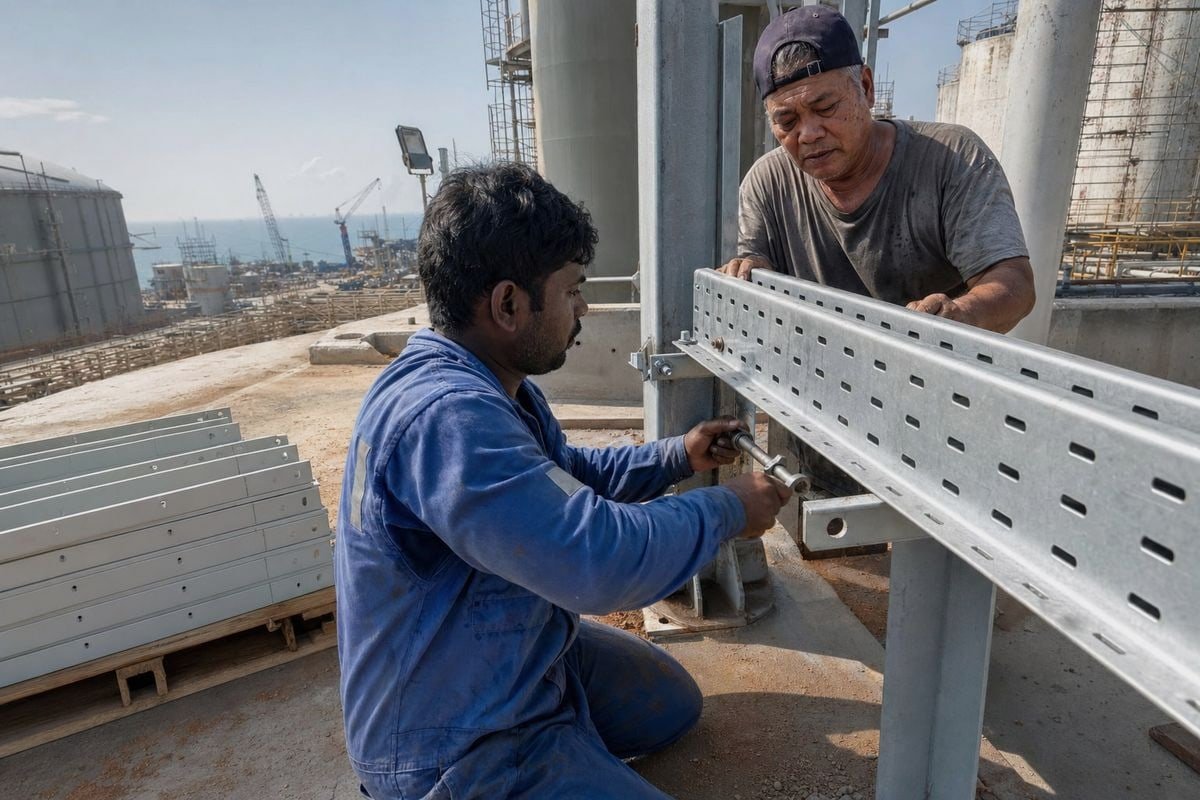
From the orders we process at our Tai’an facility, the environment decides at least 80% of the choice. The remaining 20% is procurement detail, and that is where bulk buyers can win or lose real money.
Environment Is the First Filter
RAL 7035 perforated cable tray is built for indoor cable installation, organization, and protection. It gives a clean, tidy appearance and supports fire safety 5 in commercial interiors. HDG is built for harsh conditions: seaside projects, water treatment plants, and aggressive chemical or oil-and-gas environments. I have seen buyers try to save money by putting powder-coated tray in a coastal plant. Rust bloomed at the cut edges within the first rainy season.
Procurement Factors That Change the Bulk Math
| Factor | RAL 7035 Powder-Coated | Hot-Dip Galvanized |
|---|---|---|
| Batch flexibility | Coating lines allow flexible batch sizes | Zinc bath minimums can restrict small runs |
| Lead time | Often faster; coating facilities are dispersed | Centralized galvanizing plants can extend lead times |
| Freight weight | Lighter, cheaper to ship long distances | Zinc adds weight and freight cost |
| Cut edges and scratches | Need manual paint touch-up on site | Zinc gives galvanic self-healing at minor damage |
| End-of-life value | Lower scrap value | Higher scrap resale value from recoverable zinc |
| Standards compliance | Must meet IEC 6/NEMA coating and load specs | Must meet zinc thickness and load specs |
Both finishes must comply with the same load and material standards, such as IEC or NEMA specifications 7. That means the base steel gauge and width should be identical in your comparison. If a supplier quotes a cheaper RAL 7035 tray, check the sheet thickness. Some quotes hide a thinner gauge behind an attractive finish price. We always publish gauge alongside finish so our EPC clients compare like for like.
Can I Get Better Bulk Pricing on RAL 7035 Perforated Cable Trays Compared to Hot-Dip Galvanized Options?
A project director from Singapore once messaged me on WhatsApp asking for a 20-container price on both finishes. His question taught me that bulk discounts behave very differently for each coating process.
Yes, RAL 7035 perforated cable trays usually secure better bulk pricing because electrostatic powder coating is simpler and cheaper than zinc-bath galvanizing, with more flexible batch sizes. HDG bulk pricing improves with volume too, but zinc costs and bath minimums keep its floor price higher.
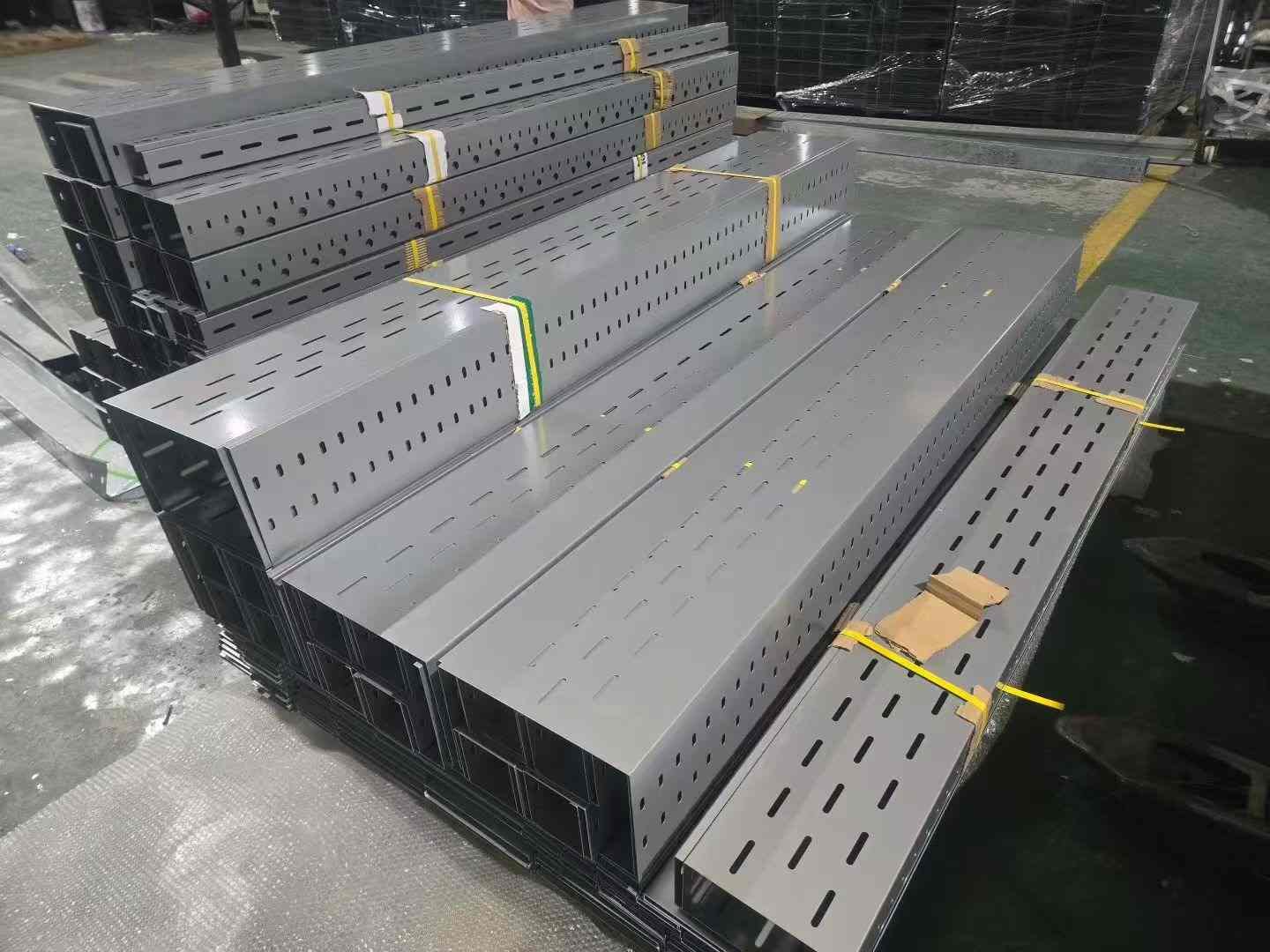
The pricing structures behind the two finishes are genuinely different, and understanding them helps you negotiate. Powder coating runs on a continuous line. Once the line is set to RAL 7035, adding more meters costs mainly powder and electricity. So volume discounts scale smoothly. Hot-dip galvanizing depends on zinc market prices and bath scheduling. Zinc is a commodity, so an HDG quote carries a raw material floor that no discount can break through.
Where Bulk Savings Actually Come From
From our export operations, these are the levers that move a bulk quote:
- Order volume. Larger runs spread setup costs across more meters for both finishes.
- Standardization. One width, one gauge, one length reduces changeovers and scrap.
- Freight planning. RAL 7035 trays are lighter, so more meters fit per container weight limit. HDG’s zinc adds weight, which can offset material savings on long-distance shipments to South America or Africa.
- Accessories bundled together. Bends, tees, and covers coated in the same batch keep color consistent and cost down.
- Lead time flexibility. If you can accept our standard production schedule instead of a rush slot, we can slot your order into efficient batches.
Typical Bulk Price Behavior
| Order Scale | RAL 7035 Behavior | HDG Behavior |
|---|---|---|
| Small trial order | Flexible, low minimums | Bath minimums may raise unit cost |
| Mid-size project | Steady discounts per tier | Discounts appear but zinc floor remains |
| Full container loads | Best per-meter rates, lighter freight | Good rates, but heavier freight per meter |
Broader market snapshots show perforated tray prices running roughly $10–$28/m FOB depending on type and specification, so the finish and gauge often dominate the final number. My advice: request both quotes on identical steel, then compare landed cost, not FOB.
Which Coating Option Offers Better Durability and ROI for My Industrial or EPC Project Needs?
One lesson stuck with me from a solar farm inquiry we handled: the client initially specified RAL 7035 for outdoor rows to match indoor control rooms. We flagged it, and switching to HDG saved the project a repaint cycle before year five.
Hot-dip galvanized offers better durability and ROI for outdoor, coastal, solar, water treatment, and petrochemical projects, typically lasting 25+ years. RAL 7035 delivers better ROI for controlled indoor environments—data centers, offices, retail—where appearance, fire safety, and lower upfront cost matter more than corrosion resistance.
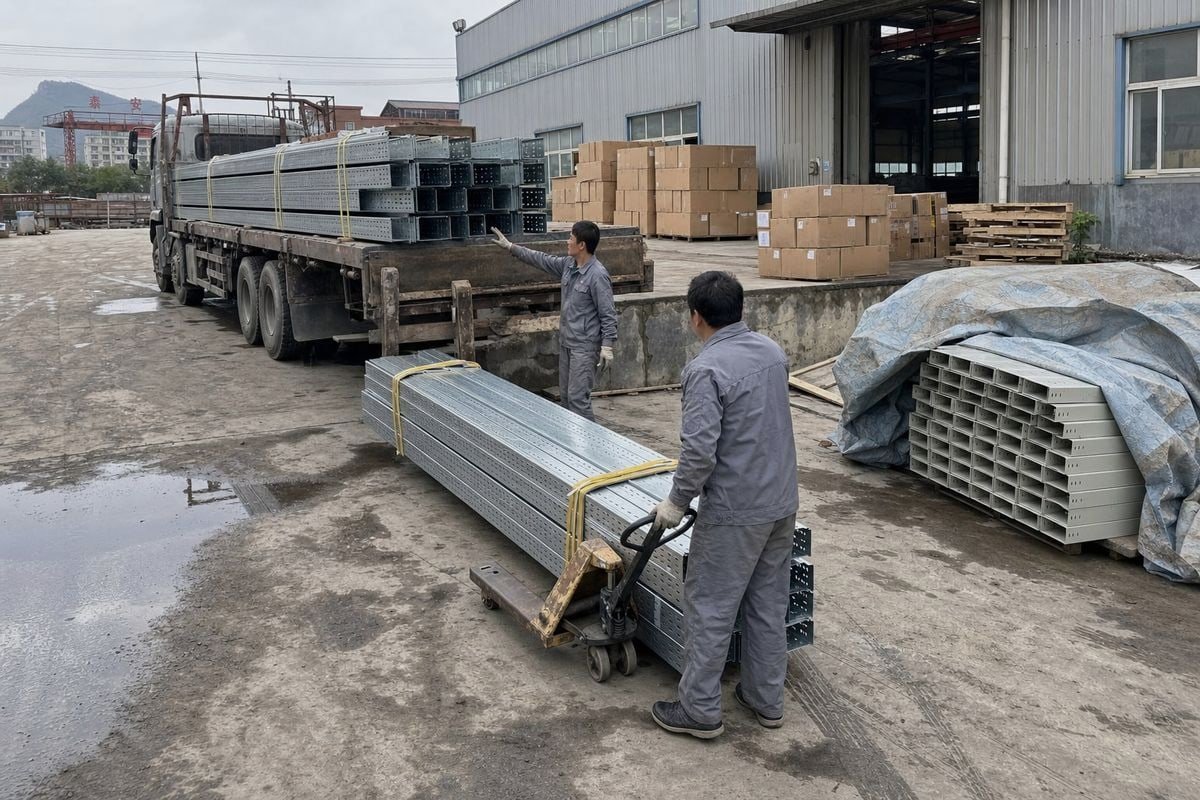
ROI on cable tray is really a question of matching the finish to the exposure. I think of it as a simple decision matrix rather than a winner-takes-all debate.
Where HDG Wins Decisively
Tunnels, bridges, outdoor solar farms, coastal substations, water treatment basins, and chemical or oil facilities all punish coatings. Humidity, salt spray, and chemical vapor attack steel constantly. In these settings, the zinc layer’s sacrificial protection is not a luxury. It is the only thing standing between your cable runs and a premature replacement project. The higher upfront cost gets absorbed quickly by avoided maintenance and downtime. For the water treatment contractors we serve, HDG is our default recommendation, and I say that even though the powder-coated line carries a better margin for a supplier on smaller runs.
Where RAL 7035 Makes Real Sense
Commercial interiors, data rooms, control rooms, and retail fit-outs are dry, climate-controlled, and visible. Here, RAL 7035 perforated cable tray earns its keep in three ways. First, the light gray finish standardizes the look of the installation, which speeds up client walk-throughs and approvals. Second, the perforated design keeps cables ventilated, organized, and protected, supporting fire safety in occupied buildings. Third, the lower coating cost frees budget for other scope items. In these environments, paying the HDG premium buys corrosion resistance you will never use.
The Middle-Ground Approach Most EPC Projects Should Take
The smartest tenders we supply split the specification. Indoor zones get RAL 7035; outdoor and utility zones get HDG. Ordering both from one supplier keeps dimensions, splice plates, and accessories compatible across the transition points. It also consolidates QC, documentation, and shipping, which addresses the delivery-delay and quality-control headaches that project directors tell me keep them up at night.
Conclusion
Choosing wrong wastes money either way: overpaying for zinc indoors, or replacing rusted trays outdoors. Match the finish to the environment, compare cost per service year, and split specs when projects mix zones.
Footnotes
- Wikipedia background on the core product category discussed in the article. ↩︎
- Explains the zinc coating process referenced throughout the cost comparison. ↩︎
- Background on the coating process behind RAL 7035 finishes. ↩︎
- Zinc as a commodity material with environmental and recycling considerations noted for scrap value. ↩︎
- National Fire Protection Association relevant to fire safety claims about cable tray installations. ↩︎
- International Electrotechnical Commission sets the coating and load specs mentioned. ↩︎
- Official standards body referenced for cable tray load and material compliance. ↩︎