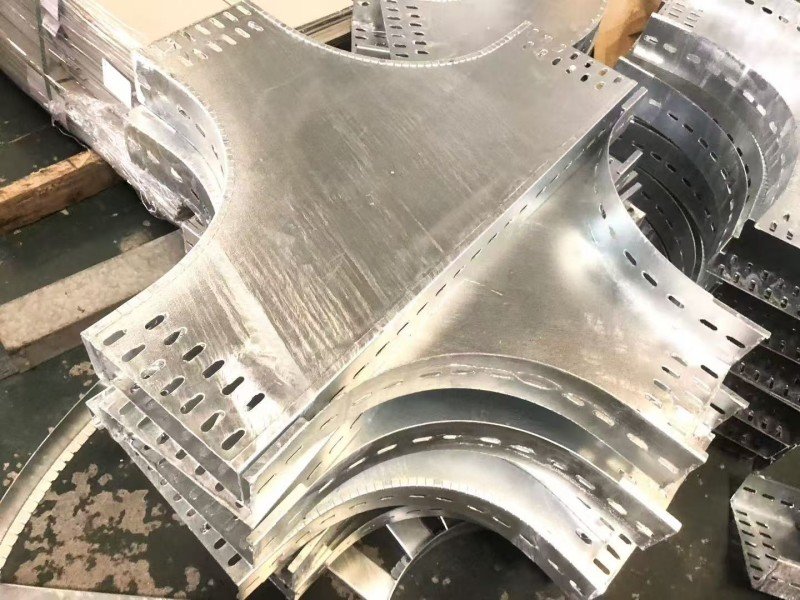
Choosing between Zn-Mg-Al vs hot-dip galvanized cable tray 1 bends stumps many buyers ISO 9001 2. On our production line, bends fail inspections far more often than straight sections — and coating choice decides why.
Zn-Mg-Al cable tray bends perform better in solar farms and chloride-exposed sites at a lower cost, while hot-dip galvanized bends win in refineries, chemical plants, coastal plants, and water treatment projects, lasting 20+ years outdoors thanks to their thicker, post-fabrication zinc coating.
The right answer depends on your environment, your budget, and your tolerance for risk. Below, I break down each factor the way I explain it to our EPC clients.
How do I know which coating will last longer in my project’s environment?
Last year, a project director in Singapore sent me photos of rusted bends from another supplier — installed near a jetty, spec’d with the wrong coating. Environment decides everything.
Match the coating to the corrosion load: Zn-Mg-Al lasts longer in solar farms, open outdoor sites, and moderate chloride exposure, while thick hot-dip galvanizing lasts longer in coking plants, refineries, chemical plants, coastal industrial zones, and water treatment facilities with constant chemical attack.
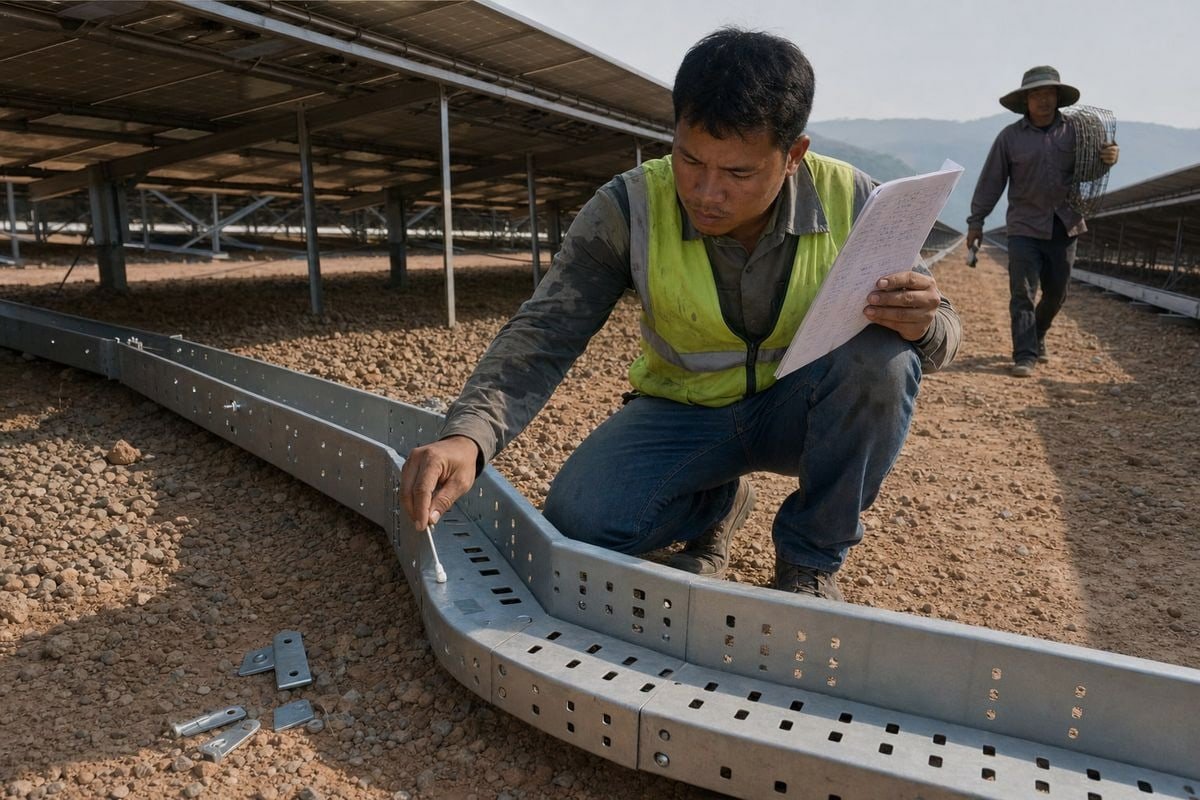
The core science is simple. Zn-Mg-Al coatings mix zinc with small amounts of magnesium and aluminum. That alloy forms a denser, more stable corrosion product layer than pure zinc. In salt spray test 3s, Zn-Mg-Al can delay red rust by 2 to 10 times compared with standard galvanizing at the same thickness. In field exposure studies, Zn-Al-Mg alloys showed roughly half the corrosion rate of HDG in early years at some reference sites.
But thickness matters too. Hot-dip galvanizing 4 after fabrication builds a coating of 45–85 microns, metallurgically bonded to the steel. Zn-Mg-Al coil coatings are usually thinner. So in the harshest chemical environments, the sheer zinc reservoir of HDG still carries the day.
Our field observations by environment
From two decades of supplying trays into Southeast Asia, Africa, and South America, here is how I advise clients:
| Project environment | Better coating choice | Why |
|---|---|---|
| Solar farms (ground-mount, rooftop) | Zn-Mg-Al | Excellent corrosion resistance 5 at lower cost; best value |
| Coking plants and refineries | Hot-dip galvanized | Thick coating survives acidic gases and abrasion |
| Coastal industrial projects | Hot-dip galvanized | Heavy zinc layer handles constant salt plus industrial pollutants |
| Chemical plants | Hot-dip galvanized | Proven 20+ year outdoor life under chemical splash |
| Water treatment plants | Hot-dip galvanized | Resists high humidity and treatment chemicals |
| Tunnels, de-icing salt zones | Zn-Mg-Al | Superior chloride performance in lab and field data |
| General dry outdoor / indoor | Either | Both exceed the design life; pick on cost |
My honest rule of thumb: for solar projects, Zn-Mg-Al is the first choice — cost-effective and priced attractively. For heavy plant environments, HDG remains the safer, longer-lived option.
Can I justify the extra cost of Zn-Mg-Al coating for my next EPC project?
Here is a trade-off I weigh with buyers every week: pay more per meter now, or pay for touch-ups, replacements, and site downtime later. The math is rarely obvious.
Yes, when corrosion risk is moderate to high and access for maintenance is difficult. Zn-Mg-Al typically carries a modest premium over pre-galvanized stock but can cut 30-year maintenance and replacement costs by up to 40% in humid or chloride-exposed installations.
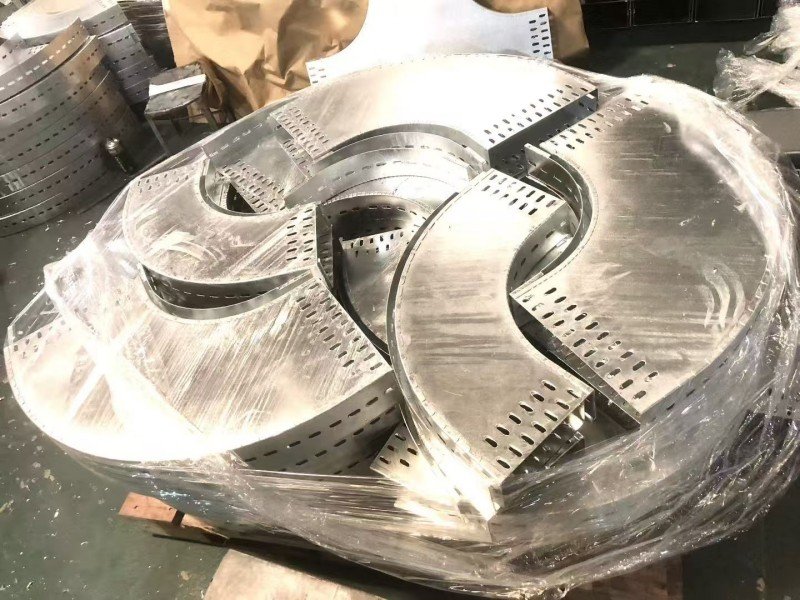
Let me be precise about what you are comparing, because the pricing picture confuses many procurement managers. Zn-Mg-Al bends are formed from pre-coated coil. That keeps fabrication fast and unit prices competitive. Hot-dip galvanized bends are fabricated first, then dipped in molten zinc — an extra process step that adds cost and lead time, but seals every cut edge and weld.
For solar EPC projects 6, I steer clients toward Zn-Mg-Al almost every time. The performance is more than sufficient for open-field exposure, and the price advantage is real. Our solar clients in the Philippines and Thailand consistently confirm this: Zn-Mg-Al delivers the best cost-performance ratio for that application.
For plant projects, the calculation flips. HDG costs more upfront than Zn-Mg-Al coil product in many cases, but its 20-year outdoor rust-proof track record means fewer mid-life interventions in aggressive settings.
A simple lifecycle framing
- Estimate exposure class: rural, urban, industrial, coastal, or chemical.
- Price both options delivered, including bends and fittings.
- Add the cost of one mid-life recoating or partial replacement for the weaker option in your environment.
- Compare totals over the design life, not the purchase order.
There is a bonus argument for sustainability-driven owners: Zn-Mg-Al achieves equivalent protection with 30–50% less coating metal by weight, lowering embodied carbon 7 per meter of tray. Several of our EPC clients now cite this in their tender submissions.
| Cost factor | Zn-Mg-Al bends | HDG bends |
|---|---|---|
| Unit price | Competitive; excellent for solar budgets | Higher due to post-fab dipping |
| Coating material used | 30–50% less metal by weight | Thicker layer, more zinc |
| Maintenance in harsh plants | May need earlier attention if thin | Minimal for 20+ years |
| Maintenance in solar/outdoor | Minimal | Minimal but overspecified |
| Best lifecycle value | Solar, tunnels, chloride zones | Refineries, chemical, coastal, water treatment |
What quality control checks should I request before placing a bulk order?
A lesson I learned early in our export business: one skipped coating test on a container of bends costs more than a hundred tests ever will. QC on bends deserves extra attention.
Request coating thickness readings at bend radii and flat faces, salt spray test reports, adhesion tests after forming, edge and weld inspection on HDG parts, dimensional checks against drawings, and packaging verification — all documented with photos before the container is sealed.
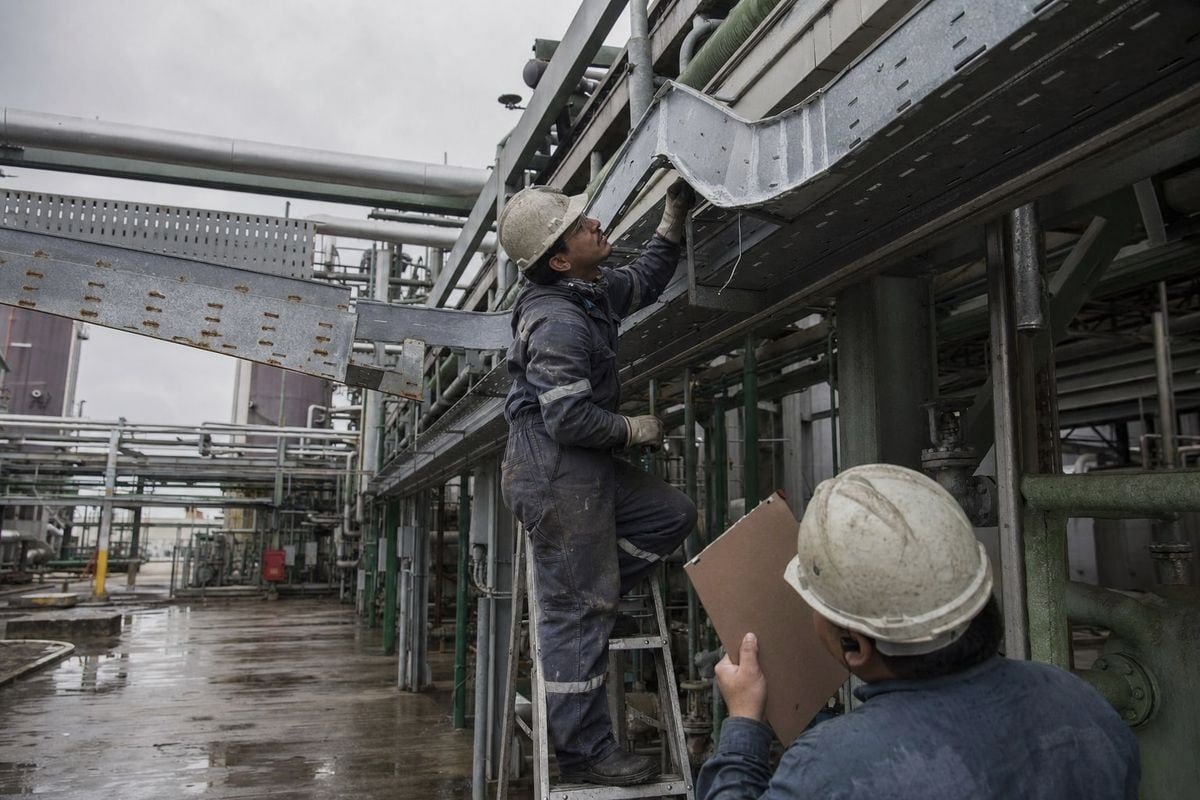
Bends are the weakest link in any tray system. Forming stresses the coating exactly where corrosion attacks first. That is why our factory in Tai’an runs additional checks on every bend and fitting batch, beyond the standard checks for straight lengths.
The checklist I give every new client
Here is the exact QC scope I recommend you write into your purchase order:
| Check | Zn-Mg-Al bends | HDG bends | Method |
|---|---|---|---|
| Coating thickness | Verify coil coating class on flats and bend radii | Confirm 45–85 μm average, no bare spots | Magnetic gauge, multiple points |
| Bend zone integrity | Look for cracking or flaking at formed edges | Check for zinc buildup, drips, roughness | Visual + 10x magnification |
| Cut edges and holes | Confirm alloy edge protection is intact | Confirm edges were galvanized after cutting | Visual inspection |
| Weld seams | Check corner joints for coating continuity | Verify zinc coverage over welds | Visual + thickness gauge |
| Adhesion | Bend/tape test on sample pieces | Hammer or knife test per standard | Sample destructive test |
| Dimensions | Width, height, angle, slot pattern vs drawing | Same | Calipers, templates |
| Salt spray report | Batch or coil certificate | Batch certificate | Third-party or mill report |
One detail buyers often miss: manufacturing sequence. For HDG, insist that bends are fabricated before galvanizing. If a supplier bends pre-galvanized stock and calls it hot-dip, the coating micro-cracks at every radius. We photograph our dipping process for clients precisely to prove this sequence. For Zn-Mg-Al, ask for the coil mill certificate showing coating weight — heavier coating classes show dramatically less metal loss in mechanistic studies, so the certificate matters.
Request pre-shipment photos of stacked, strapped pallets too. Coating damage during transit is a silent killer of otherwise good product.
Which coating option will minimize my delivery delays and returns?
When a Singapore client once asked me to compress a lead time by two weeks, the answer hinged entirely on coating choice. The two processes have very different supply chains.
Zn-Mg-Al bends usually ship faster because they are formed from pre-coated coil in one production flow, avoiding the external galvanizing step. HDG bends add dipping time and transport to the zinc bath, but generate fewer returns in aggressive environments where thin coatings underperform.
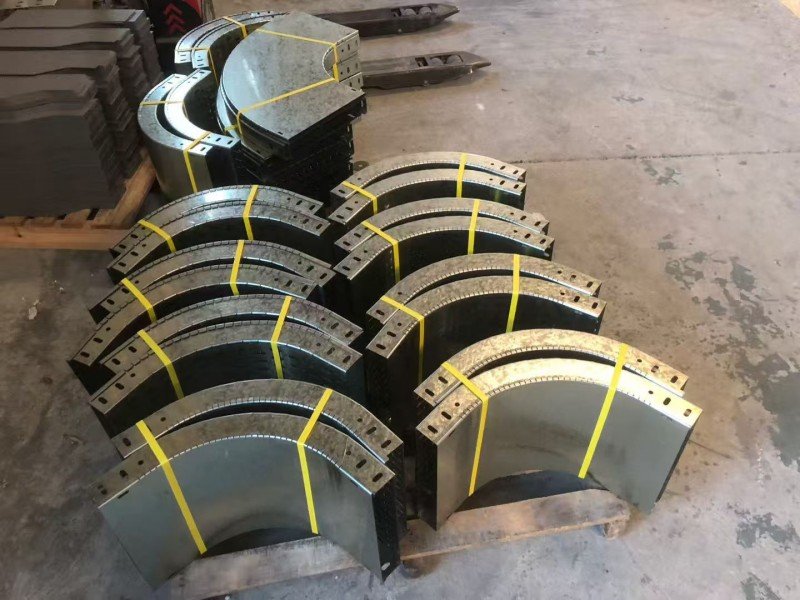
Delivery delays and returns are the two pain points I hear most from project directors, so let me separate them clearly.
Lead time realities
Zn-Mg-Al production is a single continuous flow. We cut, punch, form, and pack from pre-coated coil. No waiting for a galvanizing plant slot. For a typical container of bends and fittings, this saves meaningful days versus HDG.
HDG adds steps: fabricate, transport to the zinc bath, dip, cool, inspect, rework drips, then pack. During peak construction season, galvanizing plants run backlogs, and that backlog becomes your delay. We manage this by booking bath capacity when we confirm the order — a habit that has kept our Southeast Asian solar and plant clients on schedule.
Return risk realities
Returns almost always trace back to one of three causes:
- Wrong coating for the environment — the most expensive mistake, and the reason this whole article exists.
- Coating damage at bends — from bad fabrication sequence or rough handling in transit.
- Dimensional mismatch — bends that do not mate with straight sections on site.
Zn-Mg-Al reduces cause number two because the alloy coating resists cracking during forming and offers a self-healing effect at cut edges. HDG reduces cause number one in refineries, chemical plants, coastal plants, and water treatment projects, where its 20-year outdoor durability keeps rust claims off your desk. Either way, cause number three is solved by drawings signed off before production — something we require on every OEM order, no exceptions.
The practical takeaway: match the coating to the site first, then lock QC and drawings. Do both, and returns become rare events instead of recurring headaches.
Conclusion
Zn-Mg-Al wins for solar and chloride-exposed sites on cost and performance; hot-dip galvanized wins in refineries, chemical, coastal, and water treatment plants. Match coating to environment, verify QC at the bends, and both delays and returns fall away.
Footnotes
- Background reference for the core product type discussed in the article. ↩︎
- ISO standards underpin the quality control and manufacturing processes described. ↩︎
- Explains the standard corrosion testing method mentioned for coating comparisons. ↩︎
- Provides background on the galvanizing process referenced throughout the article. ↩︎
- Relevant to environmental durability standards for industrial coatings mentioned. ↩︎
- Defines the EPC project model referenced repeatedly for cost justification. ↩︎
- Clarifies the sustainability concept cited regarding coating metal reduction. ↩︎