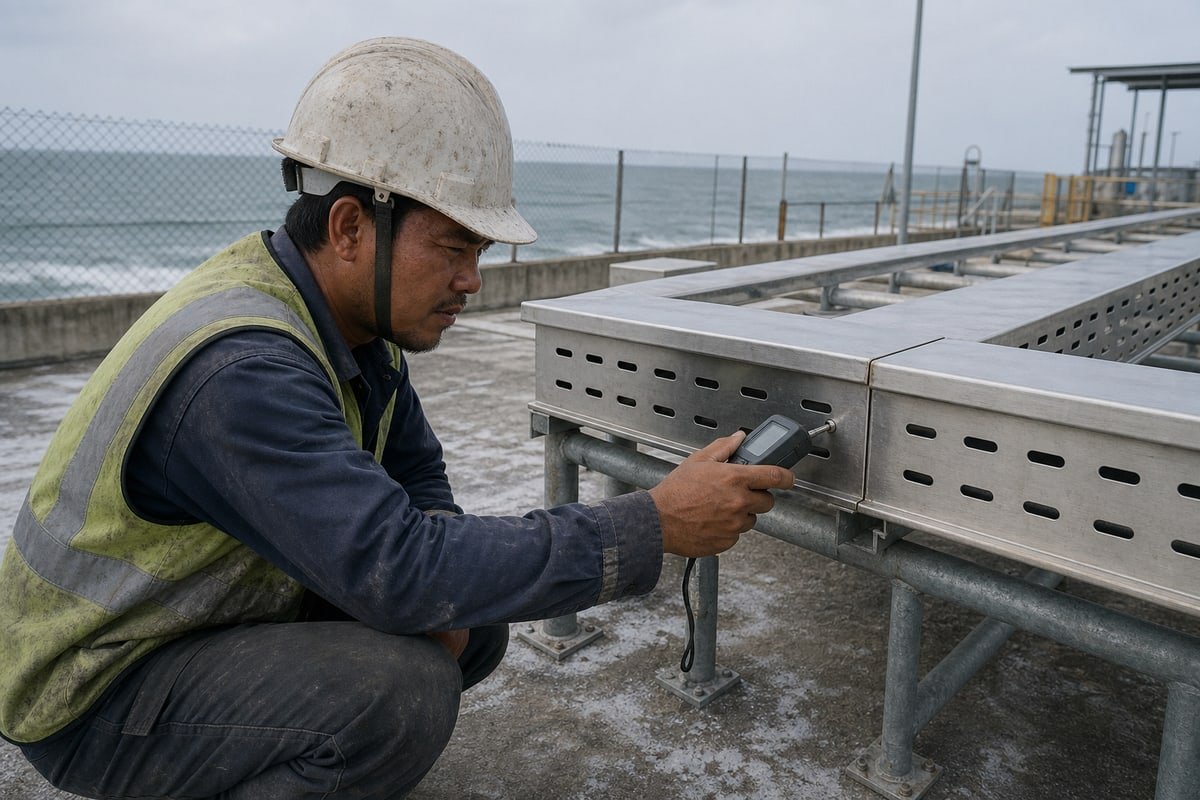
One pinhole of rust can kill an offshore instrument loop. That risk is why our production line in Tai’an builds stainless steel 316 cable trunking to such tight standards.
Stainless steel 316 cable trunking is a fully enclosed cable management channel made from AISI 316 stainless steel, which contains 2–3% molybdenum. It routes and protects control, signal, and data cables in corrosive settings such as marine, coastal, chemical, and pharmaceutical environments where 304 grade would pit and fail.
That short answer covers the definition. But the real questions come next. Why does molybdenum matter? Which cables belong inside an enclosed box? Where does 316 truly earn its premium? And what should you ask before you order? I will walk through each one, using lessons from our own cable management systems exports across Southeast Asia and South America.
What Makes Stainless Steel 316 Different From 304 for Cable Trunking Applications?
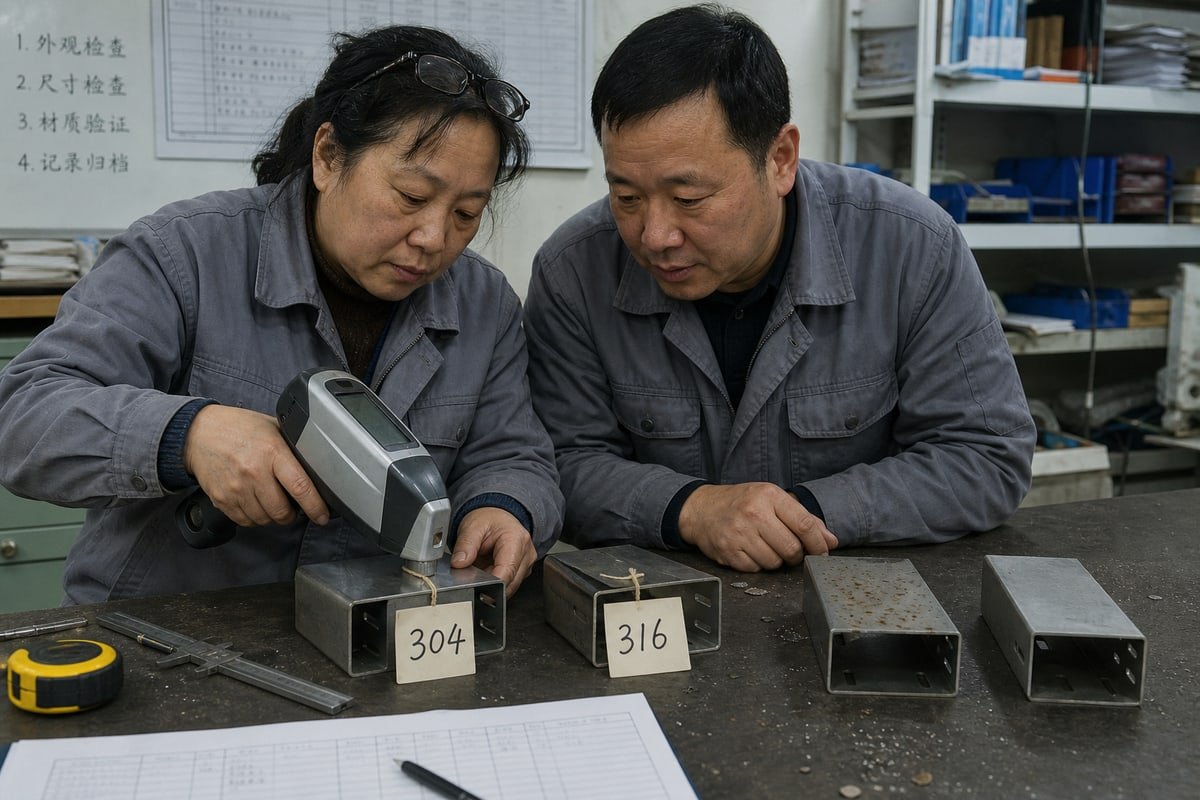
During a batch inspection last year, our QC team caught coil stock labeled 316 that tested as 304. That near miss taught us why grade verification matters so much.
The key difference is molybdenum content. Grade 316 contains 2–3% molybdenum, while 304 contains none. That addition gives 316 strong resistance to pitting and crevice corrosion from chlorides, so it survives seawater, salt spray, and de-icing salts that would destroy 304 trunking.
The two grades look identical on the shelf. Both have the same brushed silver finish. Both share broadly similar mechanical and physical properties. So buyers often ask me why one costs noticeably more. The answer sits inside the alloy, not on the surface.
The Molybdenum Difference
Chloride ions attack stainless steel in a sneaky way. They do not cause uniform rust. Instead, they punch tiny, deep pits through the passive oxide layer. A trunking run can look clean while pits eat through the wall. The 2–3% molybdenum content in 316 stabilizes that passive layer. It blocks pitting and crevice corrosion 1 where 304 gives way. This is exactly why the industry calls 316 the standard for marine grade corrosion resistance.
Side-by-Side Comparison
| Property | 304 Stainless | 316 Stainless |
|---|---|---|
| Molybdenum content | None | 2–3% |
| Chloride and salt spray resistance | Moderate; pits over time | Excellent; resists pitting long term |
| Mechanical strength | Similar | Similar |
| Relative cost | Lower | Higher upfront |
| Best fit | Indoor, low-chloride sites | Offshore, coastal, chemical, washdown zones |
Standards, Not Marketing Labels
Stainless grades are defined by real standards, not supplier slogans. We produce against AISI 316 specifications and reference BS EN 10088-1 2 and 10088-2 on material certificates. If a quote just says “marine grade” with no standard behind it, treat that as a warning sign. Also remember the second golden rule of selection: chloride concentration 3 decides the material. If your site has seawater, de-icing salts, or heavy salt fog, 316 is mandatory. If chlorides are absent or minimal, 304 is sufficient and more economical. Paying for 316 in a dry indoor plant wastes budget.
How Do I Choose the Right Cable Trunking Size and Type for My Project?
Every quote we prepare involves the same trade-off: a fully enclosed box protects cables better, but it also traps heat. Getting the balance right decides project success.
Match structure to cable type first: enclosed trunking suits low-heat control, instrument, and communication cables only; power cables need ventilated ladder. Then size the trunking with 40–50% spare fill capacity, and choose solid walls for maximum ingress protection or slotted walls for easier fixing.
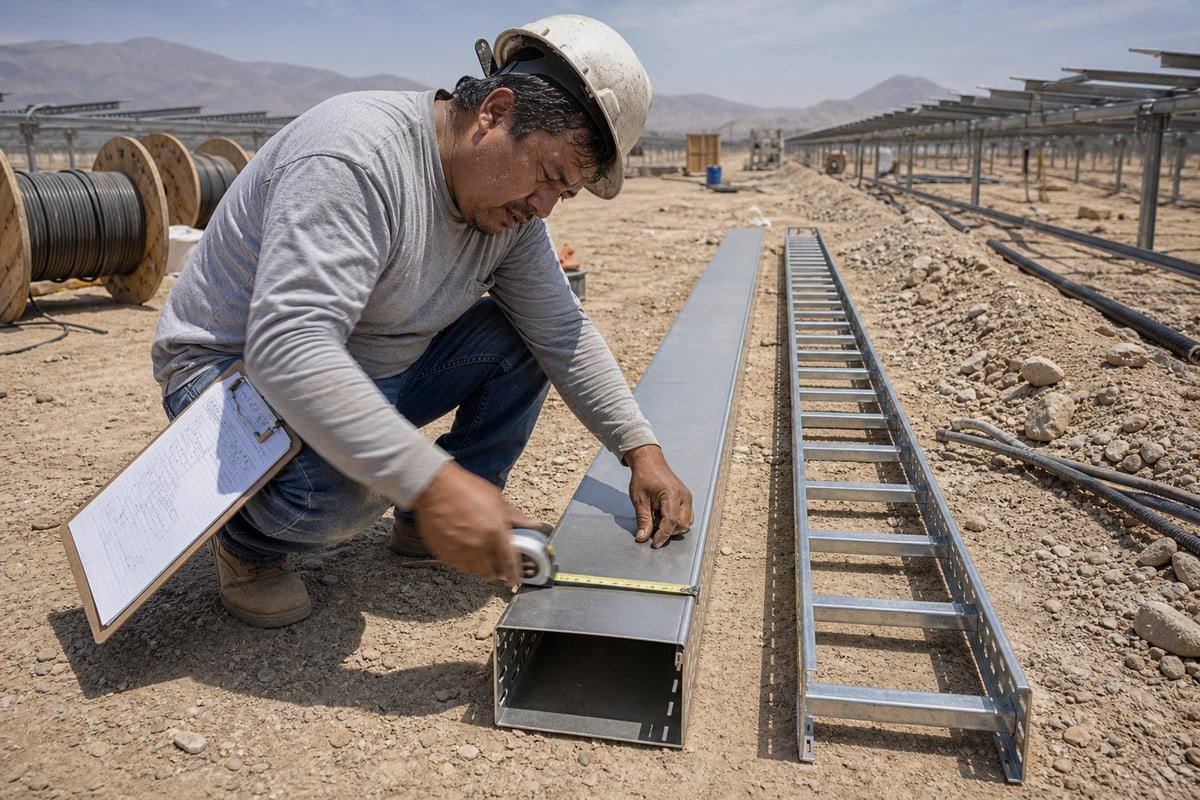
I want to be blunt here, because this is where I see the most expensive mistakes in industrial electrical containment. Stainless steel conducts heat worse than carbon steel. Trunking is a fully sealed structure. Stack those two facts together and the heat problem reaches its peak in a 316 stainless trunking run.
The Heat Warning You Cannot Ignore
If you force large-diameter power cables into enclosed 316 trunking, heat builds up with nowhere to go. The consequences are serious. Cable ampacity must be derated heavily. Insulation ages faster. In the worst case, you create a genuine safety hazard. So the rule is absolute: enclosed 316 trunking is only for low-heat cables. That means control cables, instrument signal lines, and communication fiber. For any power cable, specify a ladder structure instead, no matter which stainless grade you choose.
Structure Selection at a Glance
| Cable Type | Heat Output | Correct Containment |
|---|---|---|
| Power cables | High | Cable ladder (open, ventilated) |
| Control cables | Very low | Enclosed trunking acceptable |
| Instrument signal lines | Very low | Enclosed trunking preferred |
| Communication fiber | Negligible | Enclosed trunking preferred |
Wall Type, Size, and Access
The slotted vs solid wall choice comes next. Solid walls give the tightest seal against dust and water, supporting higher IP rating standards at joints and covers. Slotted walls, like the oval perforations on our standard profiles, speed up mounting and accessory fixing. For sizing, I always recommend generous spare capacity, roughly 40–50%, so future circuits drop in without rework. Modular lay-in designs help here too. The removable lid lets installers lay cables straight into the channel instead of pulling them through conduit, which cuts installation hours and future-proofs the run. One more bonus for signal work: the austenitic 316 structure acts as a natural Faraday cage, giving meaningful EMI attenuation that protects signal integrity.
Where Should I Use 316 Stainless Steel Cable Trunking in Harsh Environments?
A project director in Singapore once messaged me on WhatsApp about trunking for a coastal desalination plant. His previous 304 install had pitted within two years.
Use 316 stainless steel cable trunking wherever chlorides meet high-value signal cables: offshore oil platforms, FPSO vessels, ships, coastal chemical processing plants, electroplating and bleaching works, and pharmaceutical or food cleanrooms washed down with chlorine-based disinfectants. In these zones, 304 pits and galvanized steel fails fast.
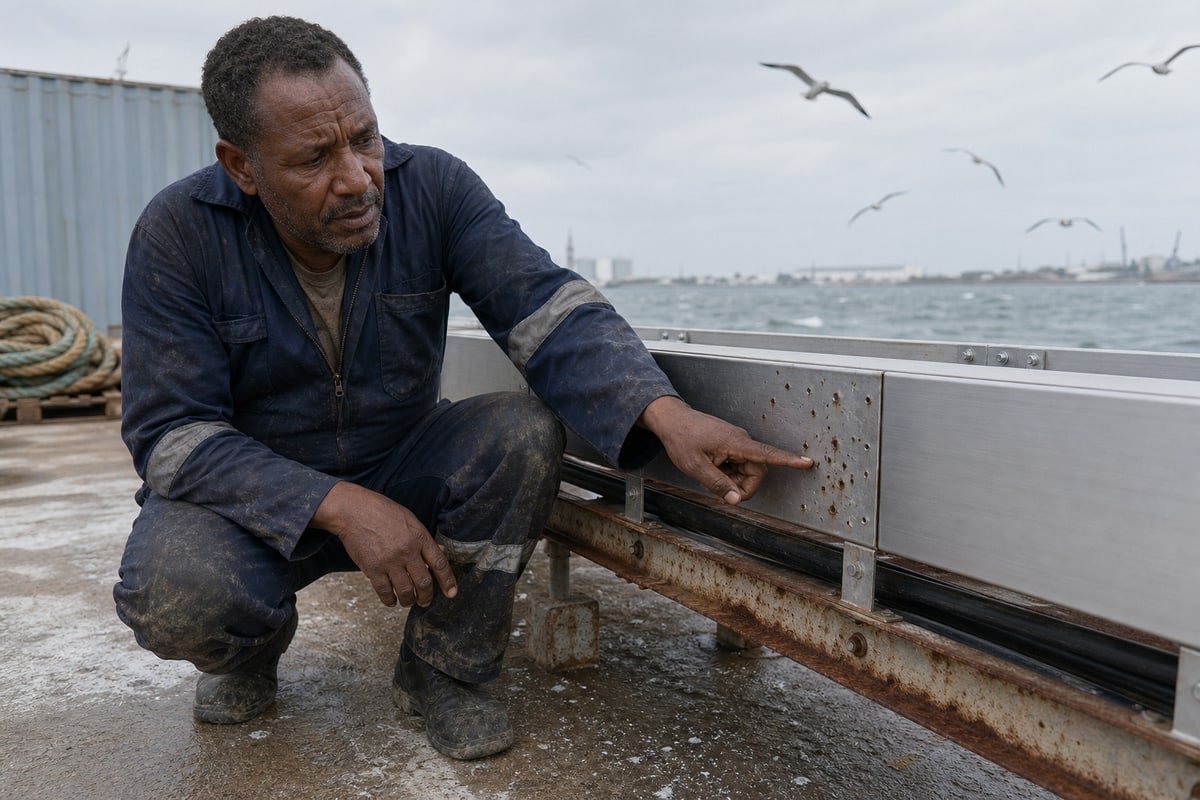
The pattern behind every good 316 application is simple. Look for the combination of extreme corrosion plus high-value signal cabling. When both appear together, 316 trunking is almost always the right call. When either is missing, cheaper options usually win.
The Three Core Application Zones
| Environment | Corrosion Threat | Typical Cables Protected |
|---|---|---|
| Marine engineering: offshore platforms, FPSO units, ships | Constant salt spray and seawater contact | Instrument and control room wiring |
| High-chloride industry: coastal chemical processing plants, electroplating shops, bleaching works | Chloride-bearing process chemicals | Core instrument signal lines |
| Clean and chlorinated: pharma and food plants using chlorine disinfectants | Frequent chemical washdown | Sensor and precision circuit wiring |
Why Enclosure Matters as Much as Alloy
In these offshore and coastal environments, the enclosed format does half the work. The sealed body keeps out dust, water, and small animals, and it shields signals from electromagnetic interference. You get the corrosion resistance of 316 and the physical protection of a closed box in one system. That combination is hard to replicate with open-mesh or plastic alternatives.
Hygiene-Critical Sites
The dense, smooth surface of 316 also satisfies strict cleanliness rules. It tolerates aggressive disinfectants and frequent high-pressure rinsing, which is why specifiers treat it as food grade stainless steel 4 for dairy wash zones and hygienic production lines. For ultra-pure pharmaceutical areas, electropolishing goes one step further. It chemically enhances the passive oxide layer and removes microscopic burrs, so bacteria have nowhere to adhere. We quote electropolished finishes on request for biotech and injection-molding cleanroom projects, and the surface difference is visible even to the naked eye.
What Should I Ask My Supplier Before Ordering Custom 316 Stainless Steel Cable Trunking?
Years of OEM export work taught me one hard lesson: most disputes trace back to questions the buyer never asked before signing the purchase order.
Ask for the material test certificate proving AISI 316 composition, the wall thickness tolerance, weld and surface finish method, IP rating of covers and joints, thermal expansion support plan, lead time with penalties, packing specification, and whether the supplier tests salt spray resistance before shipping.
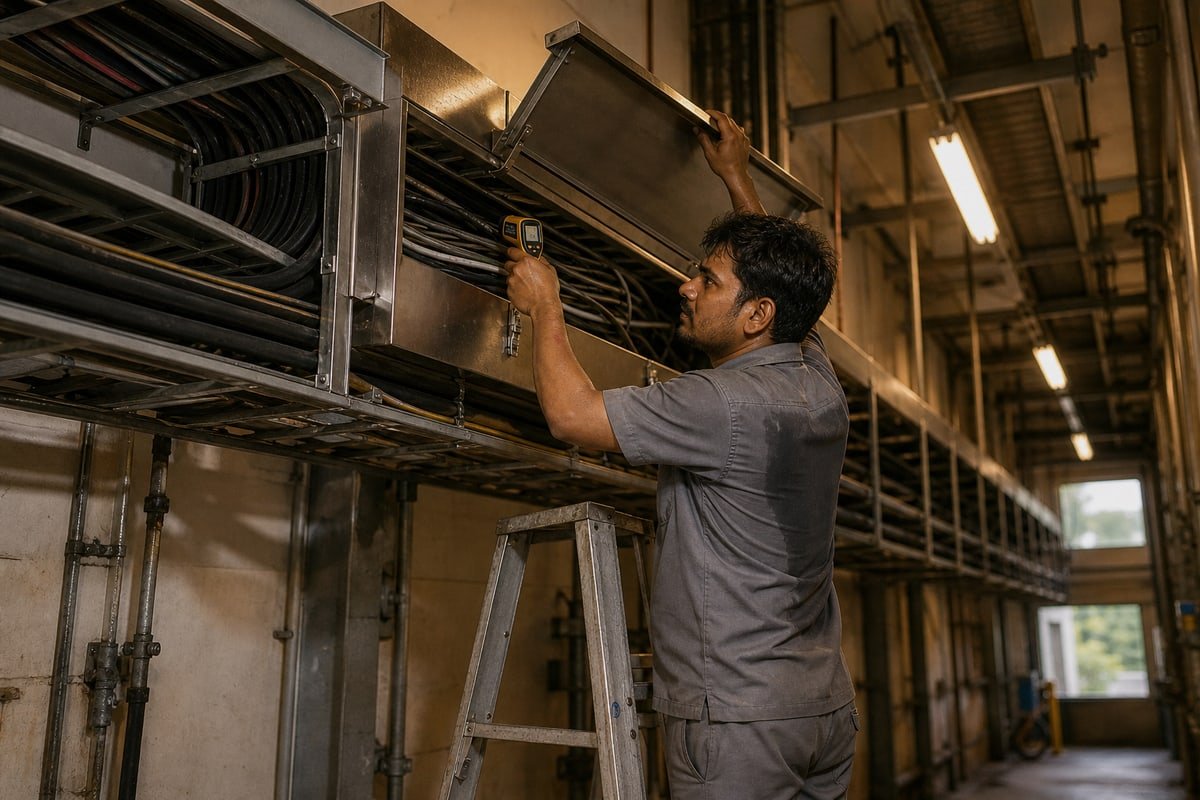
Our team works with EPC project managers and wholesalers every week, and the buyers who avoid delays and returns are always the ones who ask precise questions early. Here is the checklist I would use if I were sitting on your side of the table.
- Material proof. Request a mill test certificate referencing BS EN 10088 or equivalent AISI 316 specifications. Verify actual molybdenum content, not just a grade name on an invoice. Our own near-miss with mislabeled coil proves paperwork alone is not enough; ask if the factory does spectrometer spot checks.
- 316 or 316L. If your project involves on-site welding, ask about 316L. The low-carbon version reduces sensitization risk at weld zones. Many suppliers stock 304, 316, and 316L, so confirm which one your drawings actually call for.
- Sealing performance. Ask which IP rating standards the cover and joint design meets. A trunking body is only as sealed as its weakest coupler.
- Thermal expansion plan. Stainless steel has a high thermal expansion coefficient. Long outdoor runs in hot climates need sliding supports and expansion joints, or the trunking can buckle during temperature cycles. A serious supplier raises this before you do.
- Lead time and packing. Delivery delays are the number one pain point we hear from project directors. Pin down the production schedule in writing. Also check packing: we band stacked profiles with tensioned strapping and layered separation so long lengths arrive without edge damage after ocean freight.
- Lifecycle value. Ask the supplier to justify cost against service life. In aggressive chloride zones, 316 costs more upfront but delivers lower total cost of ownership by preventing premature structural failure. Its high recycled content and full end-of-life recyclability can also earn LEED and green building credits, which matters on modern EPC tenders.
Conclusion
Corrosion never sleeps, and failed containment stops plants. Stainless steel 316 cable trunking removes that risk for signal cables in chloride-heavy sites. Choose material by environment, structure by cable type.
Footnotes
- Technical overview of localized corrosion mechanisms that compromise the integrity of stainless steel alloys. ↩︎
- Official standards body for the BS EN 10088 series governing stainless steel specifications. ↩︎
- Environmental agency providing data on chloride levels and their impact on infrastructure and materials. ↩︎
- Regulatory authority defining standards for materials used in food production and pharmaceutical environments. ↩︎