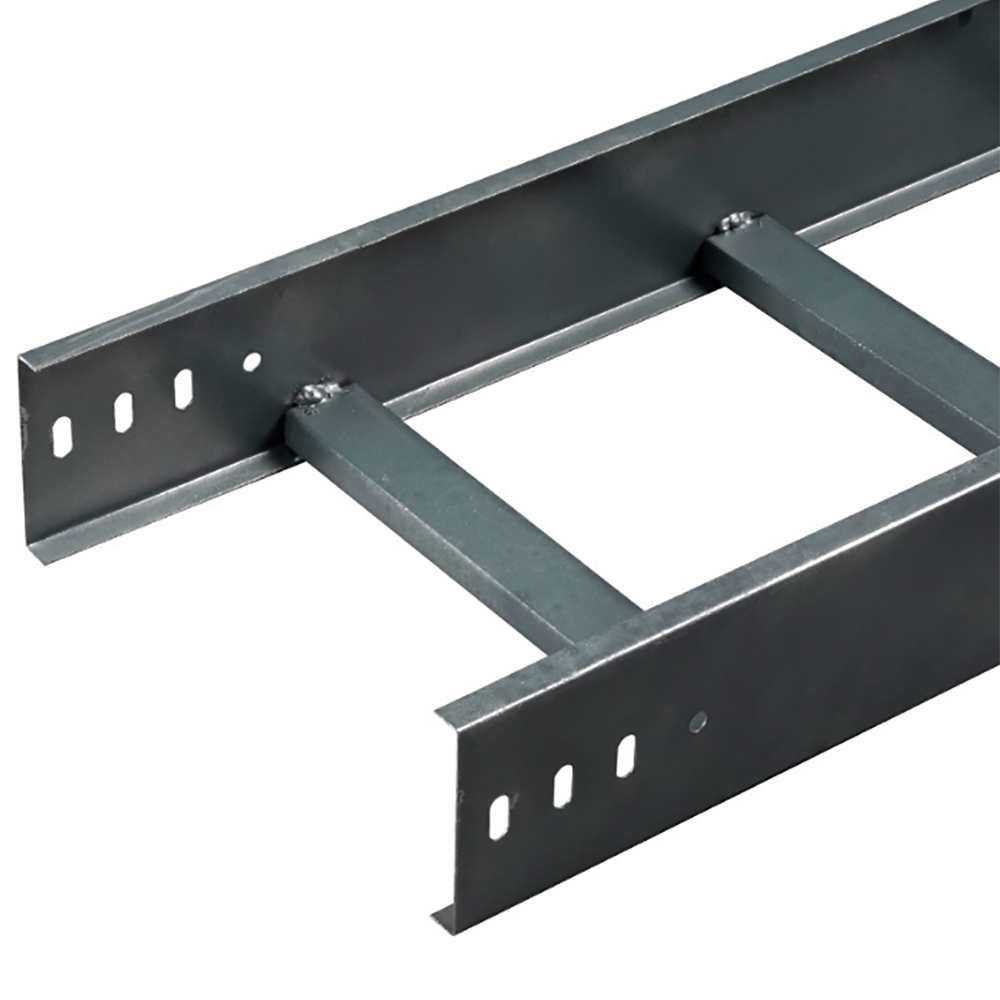
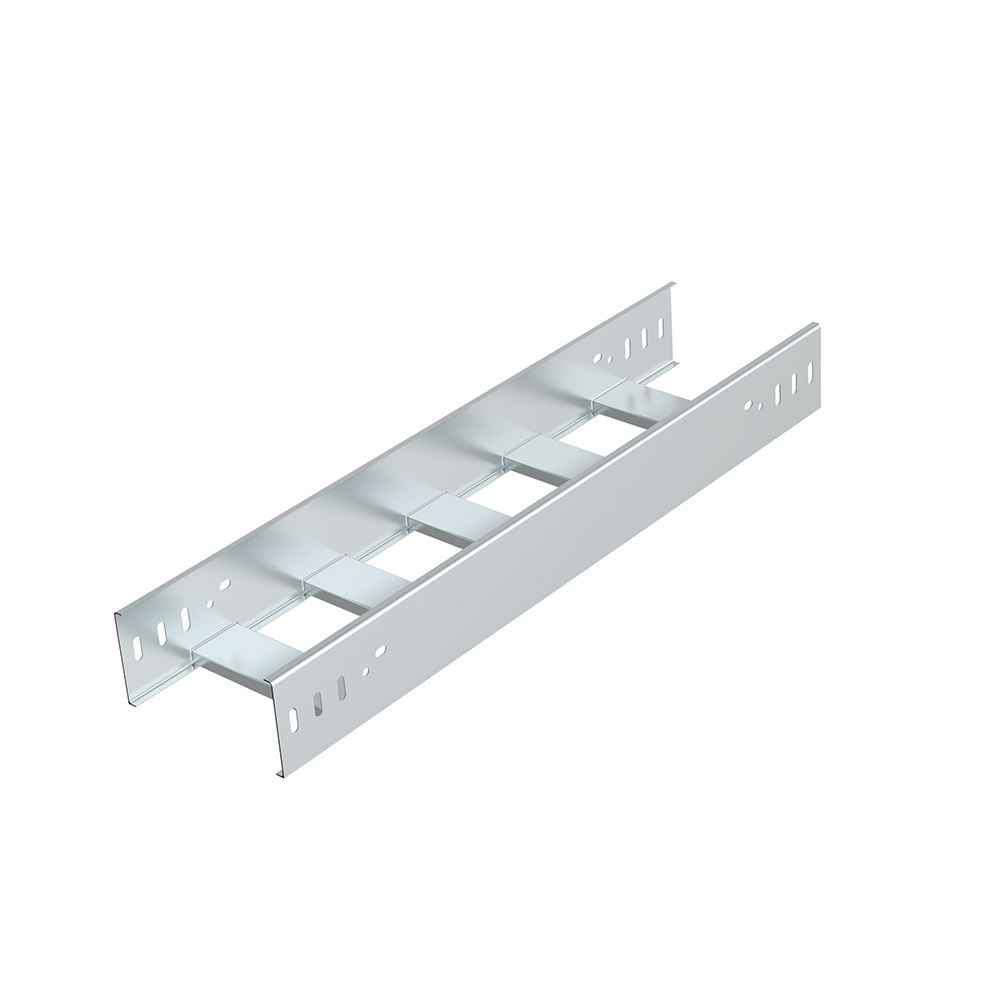
A Cable Ladder Tray is a type of cable management system used to support and route electrical and communication cables. It is called “ladder” because its structure typically includes two side rails with multiple cross members (rungs) that form a tray-like support surface. Instead of fully enclosing cables, Cable Ladder Tray systems are usually open and ventilated, which helps with cooling and makes cables easier to inspect.
In many buildings and industrial facilities—such as data centers, control rooms, factories, warehouses, and commercial campuses—engineers choose Cable Ladder Tray to create a safe, organized pathway for cables while also allowing future growth and easy maintenance.
1.What Is the Purpose of a Cable Ladder Tray?
The main job of a Cable Ladder Tray is to:
- Support cablesalong a planned route
- Organize cable runsto reduce clutter and accidental damage
- Improve airflowaround cables for better thermal performance
- Allow easy accessfor inspection, troubleshooting, and repairs
Because Cable Ladder Tray is modular, it can be installed as straight sections and expanded using bends, tees, crosses, and other fittings.
2.What Are Different Types of Cable Ladder Tray?
There are several common ways to classify Cable Ladder Tray. The best type for a project depends on environment, load requirements, corrosion resistance needs, and installation preferences.
2.1 Types by Material
2.1.1 Steel Cable Ladder Tray
Steel Cable Ladder Tray is widely used because it offers strong mechanical performance and good cost efficiency. For many indoor and industrial applications, steel trays provide reliable support for heavy cable loads.
2.1.2 Aluminum Alloy Cable Ladder Tray
Aluminum Cable Ladder Tray is lighter than steel and can be a good fit when weight reduction is important or when the project requires corrosion-resistant performance in certain environments.
2.1.3 Stainless Steel Cable Ladder Tray
Stainless steel Cable Ladder Tray is chosen for harsh and corrosive environments, such as coastal areas, chemical plants, or locations with high humidity and aggressive corrosion risk.
2.2 Types by Surface Treatment / Coating
2.2.1 Hot-Dip Galvanized Cable Ladder Tray
Hot-dip galvanized Cable Ladder Tray is a popular option for corrosion protection. It forms a robust protective layer and is often used in outdoor or semi-outdoor installations.
2.2.2 Powder-Coated Cable Ladder Tray
Powder-coated Cable Ladder Tray improves appearance and adds protective performance. It is frequently used when a cleaner visual finish is needed along with corrosion resistance.
2.2.3 Uncoated / Plain Steel Cable Ladder Tray
Uncoated steel Cable Ladder Tray may be used in controlled indoor environments where corrosion risk is lower. In many projects, coating is still preferred for long-term durability.
2.3 Types by Structural Design
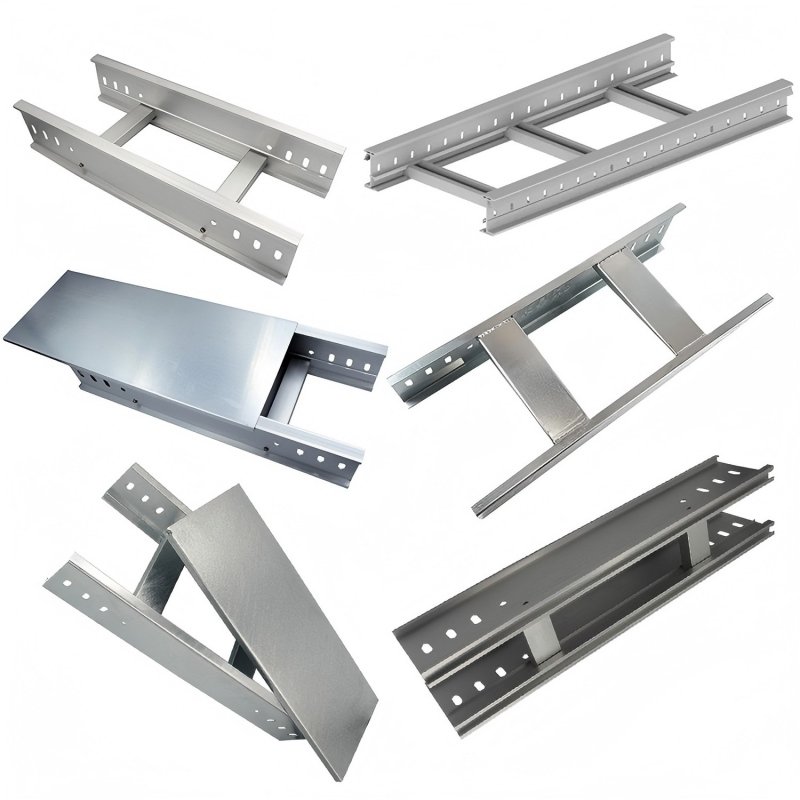
2.3.1 Straight Section Cable Ladder Tray
Straight sections are the backbone of most Cable Ladder Tray installations and are used for long, direct cable routes.
2.3.2 Elbow / Bend Cable Ladder Tray
Bends allow the Cable Ladder Tray system to change direction smoothly, typically at angles such as 90° or 45°.
2.3.3 T-Branch Cable Ladder Tray
A tee fitting is used to split or combine cable routes, making it easier to organize different branches from a main trunk line.
2.3.4 Four Cross Cable Ladder Tray
Cross fittings are used when two cable paths intersect in a structured and organized way.
2.4 Types by Size and Load Capacity
2.4.1 Different Width Cable Ladder Tray
Cable Ladder Tray comes in multiple widths. A wider tray can support more cables and provide easier cable routing and spacing.
2.4.2 Different Thickness and Load Ratings
Load ratings depend on material thickness, cross member spacing, and overall design. Choosing the right Cable Ladder Tray load class helps prevent sagging and ensures long-term reliability.

3.How Does Cable Ladder Tray Work?
To understand Cable Ladder Tray, it helps to see the system as a simple pathway that supports cables in a controlled layout.
3.1 How Cable Ladder Tray Is Installed
Step 1: Route Planning
First, engineers plan the cable route based on equipment locations, cable types, and pathway constraints. They decide where straight runs, bends, and branches are needed.
Step 2: Install Supports and Brackets
Next, supports (such as hangers, brackets, or wall-mounted fixtures) are installed at required spacing intervals. Proper support spacing is crucial for stable Cable Ladder Tray performance.
Step 3: Assemble Tray Sections
Then, tray segments are connected to form a continuous Cable Ladder Tray channel. Connections must be tightened and aligned correctly to avoid uneven support.
Step 4: Lay and Secure Cables
Cables are placed onto the tray rungs/cross members. In many systems, installers secure cables using ties, clamps, or other approved cable management methods to prevent movement and to maintain orderly spacing.
Step 5: Grounding and Inspection
Finally, installers complete grounding/bonding requirements and perform inspection to confirm that the Cable Ladder Tray system is safe, stable, and properly installed.
3.2 What Happens Inside the System?
Because Cable Ladder Tray is open, cables have space around them. This helps heat escape more easily compared to closed pathways. Also, if maintenance is needed, technicians can quickly locate cables because the system is visible and accessible.
4.What Are Benefits of Cable Ladder Tray?
Choosing Cable Ladder Tray provides many practical benefits for both new installations and long-term cable management.
4.1 Better Cable Support and Reduced Sagging
A properly designed and correctly supported Cable Ladder Tray can handle cable weight and reduce risks such as sagging or uneven stress on cables. Strong tray design also supports heavier cable bundles better than some lighter pathway systems.
4.2 Excellent Ventilation and Cooling
One of the most recognized strengths of Cable Ladder Tray is airflow. The open structure allows heat to dissipate, which can help cable performance and longevity—especially in environments with many cables running together.
4.3 Easy Installation and Maintenance
Because Cable Ladder Tray uses modular components, installation is typically faster and more predictable. Maintenance is also easier because cables remain visible and accessible. Technicians can trace, inspect, and repair cables without removing an entire enclosure.
4.4 Flexible for Future Expansion
Most projects evolve: more equipment gets added, and cable counts increase. Cable Ladder Tray systems are designed to be extended by adding tray sections, fittings, and accessories. This makes upgrades less disruptive compared with systems that require major rebuilds.
4.5 Organized and Neat Cable Routing
Cable Ladder Tray helps create structured cable layouts. Organized routing improves safety, reduces accidental damage, and makes troubleshooting more efficient. For many facilities, this also improves overall cleanliness and professional appearance.
4.6 Cost-Effective in Many Projects
While pricing depends on material and coating, Cable Ladder Tray is often a cost-effective solution because it balances performance, scalability, and maintenance effort. Selecting the right type—steel, aluminum, or stainless—can also match budget and environment requirements.
4.7 Improved System Safety and Compliance
In many installations, using a standard Cable Ladder Tray layout supports compliance with engineering practices and installation standards. It improves physical protection, cable separation, and grounding/bonding practices when installed correctly.
5.Practical Selection Tips for Cable Ladder Tray
To choose the best Cable Ladder Tray, consider these factors early:
5.1 Check the Environment
- For indoor dry areas: steel or coated systems may be sufficient.
- For outdoor or corrosive areas: galvanized, powder-coated, aluminum, or stainless steel may be better.
5.2 Calculate Cable Load and Route Requirements
Estimate cable quantity, cable weight, and route length. Pick an appropriately sized and rated Cable Ladder Tray to avoid under-sizing.
5.3 Plan Spacing for Supports
Support spacing affects sagging and stability. Follow engineering guidance for your Cable Ladder Tray type and installation design.
5.4 Think About Future Cable Growth
Leave room for expansion so the Cable Ladder Tray system remains useful long-term.
6.Conclusion
A Cable Ladder Tray is a practical and widely used cable management system that supports and routes cables in an organized, ventilated pathway. There are multiple types based on material, surface treatment, structure design, and size/load capacity. When installed correctly, Cable Ladder Tray systems provide strong support, better airflow, easier maintenance, and flexible expansion—making them a smart choice for many industrial and commercial projects.
If you share your project environment (indoor/outdoor, humidity, corrosion risk) and estimated cable count, I can help you narrow down the best Cable Ladder Tray type and selection criteria.