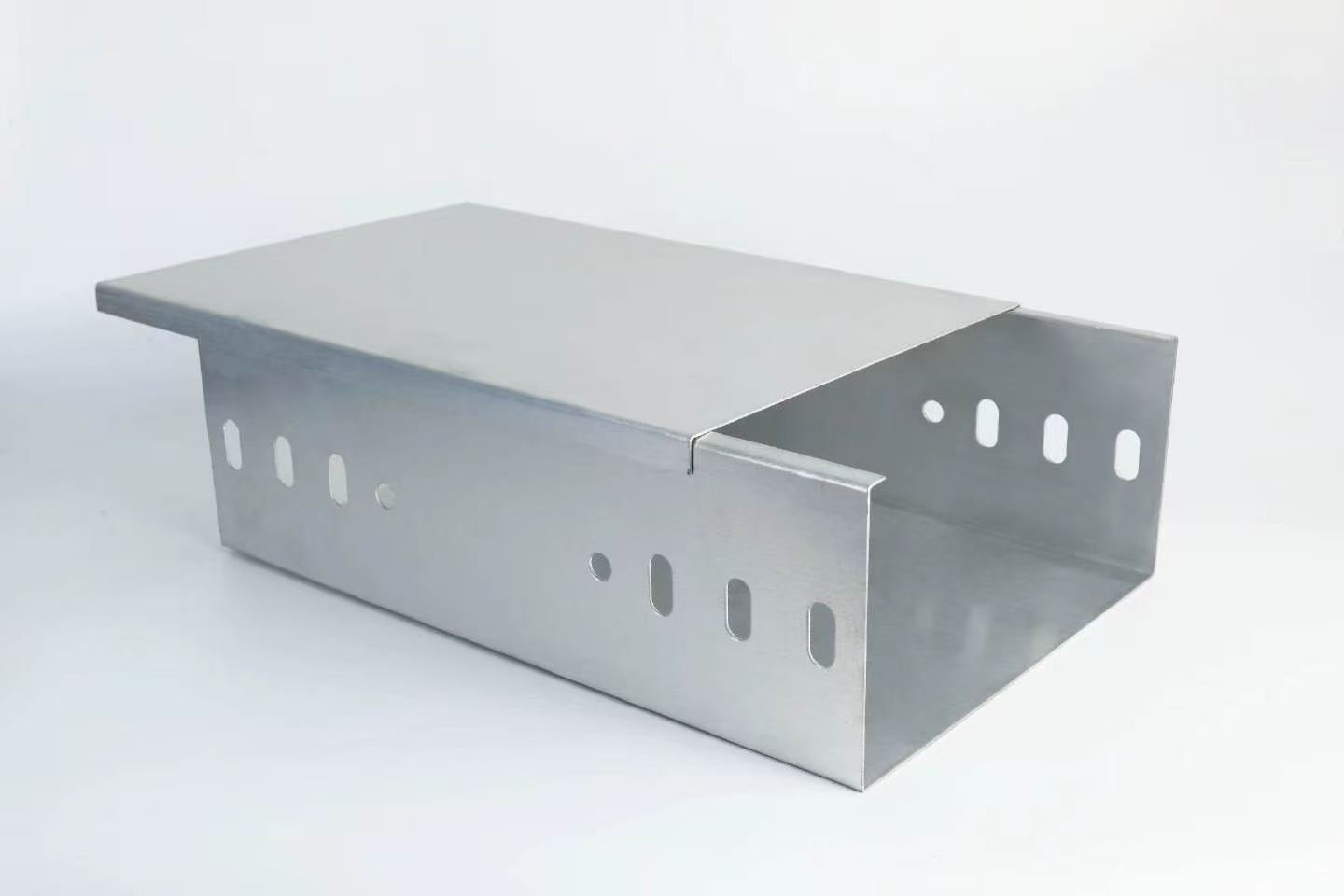
Messy exposed cables ruin a finished ceiling and invite failures. On our production line in Tai’an, aluminium alloy cable trunking is the fix we ship most for tidy commercial wiring.
Aluminium alloy cable trunking is an enclosed, surface mounted raceway with a removable cover that routes, protects, and organizes power and data cables. Made from lightweight, corrosion-resistant alloys such as 6063-T5, it shields wiring from impact while allowing easy access for maintenance and future changes.
That definition covers the basics. But the real questions come next. Why pick aluminium over steel or PVC? How do you size it? What should you check before a bulk order? Let me walk you through each one, based on what I see every week in our workshop and in customer projects.
What Makes Aluminium Alloy Cable Trunking Different From Steel or PVC Options?
Every quote we prepare starts with one trade-off: weight and corrosion performance versus raw material cost. That single decision separates aluminium alloy from steel and PVC trunking.
Aluminium alloy trunking weighs far less than galvanized steel, resists corrosion naturally, and provides electromagnetic shielding for data cables. Unlike PVC, it is non-combustible and releases no toxic halogen gases in a fire, making it a practical middle ground between plastic and steel systems.
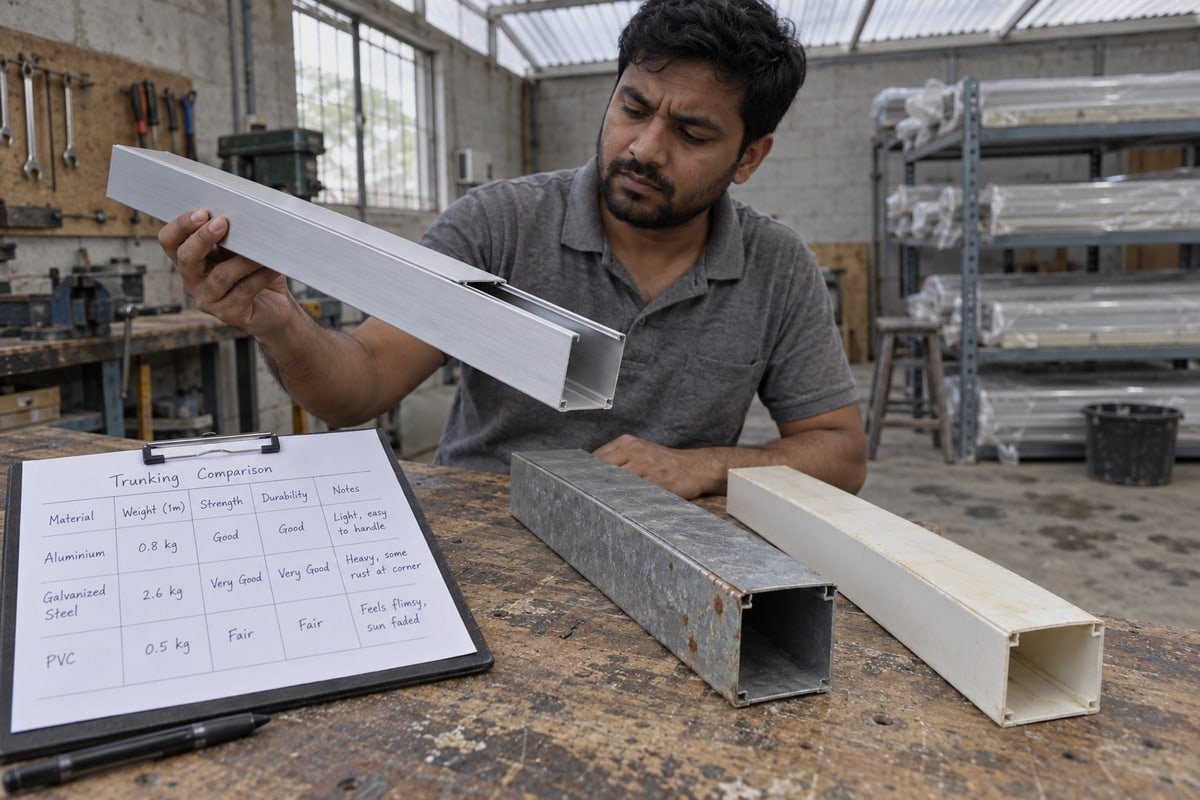
I like to frame this choice as a middle ground. PVC trunking is cheap and easy to cut. Steel trunking is strong and familiar to installers. Aluminium alloy sits between them and, for many indoor projects, it beats both.
Material Comparison at a Glance
| Property | Aluminium Alloy | Galvanized Steel | PVC |
|---|---|---|---|
| Weight | Low, easy one-person handling | Heavy, higher labor cost | Very low |
| Corrosion resistance | Natural oxide layer, good in humid or coastal air | Rusts once zinc coating is damaged | Immune to rust but degrades in UV |
| Fire behavior | Non-combustible, no halogen gases | Non-combustible | Can burn and release toxic smoke |
| EMI protection | Good electromagnetic shielding | Good, but magnetic | None |
| Thermal conductivity 1 | High, acts as a passive heat sink | Moderate | Poor, traps heat |
| Typical cost | Mid-range | Mid to high | Low |
Why Thermal Conductivity and EMI Matter
Two points here get overlooked. First, aluminium’s high thermal conductivity lets the trunking dissipate heat from loaded cables better than plastic or steel enclosures. Cooler cables last longer. Second, the alloy body gives inherent electromagnetic shielding. That protects data and signal cables from external noise and cross-talk, which matters in offices, labs, and telecom rooms. Aluminium is also non-magnetic, which some sensitive installations require.
Where a Cable Tray Beats Trunking
I always tell buyers the honest limit. Trunking gives enclosed protection, light weight, and a controlled appearance. It suits indoor surface-mounted or semi-exposed wiring where neatness and safety matter. For long spans and heavy power cables in industrial plants, an aluminium alloy cable tray 2 or ladder is the more reasonable choice. Trays carry bigger bundles and ventilate them in open air. Conduit, by contrast, is a sealed tube you pull cables through, so rework is harder than lifting a trunking cover.
How Do I Choose the Right Aluminium Alloy Cable Trunking for My Project’s Specifications?
A project director in Singapore once sent me a floor plan with nothing but cable counts. We built his full trunking specification together over WhatsApp in two days.
Choose aluminium alloy cable trunking by defining alloy grade, cross-sectional size against cable fill, mounting position, cover type, and environmental needs. Confirm the alloy, usually 6063-T5, then size the channel with spare fill capacity for future cables, and match finish and IP rating to the environment.
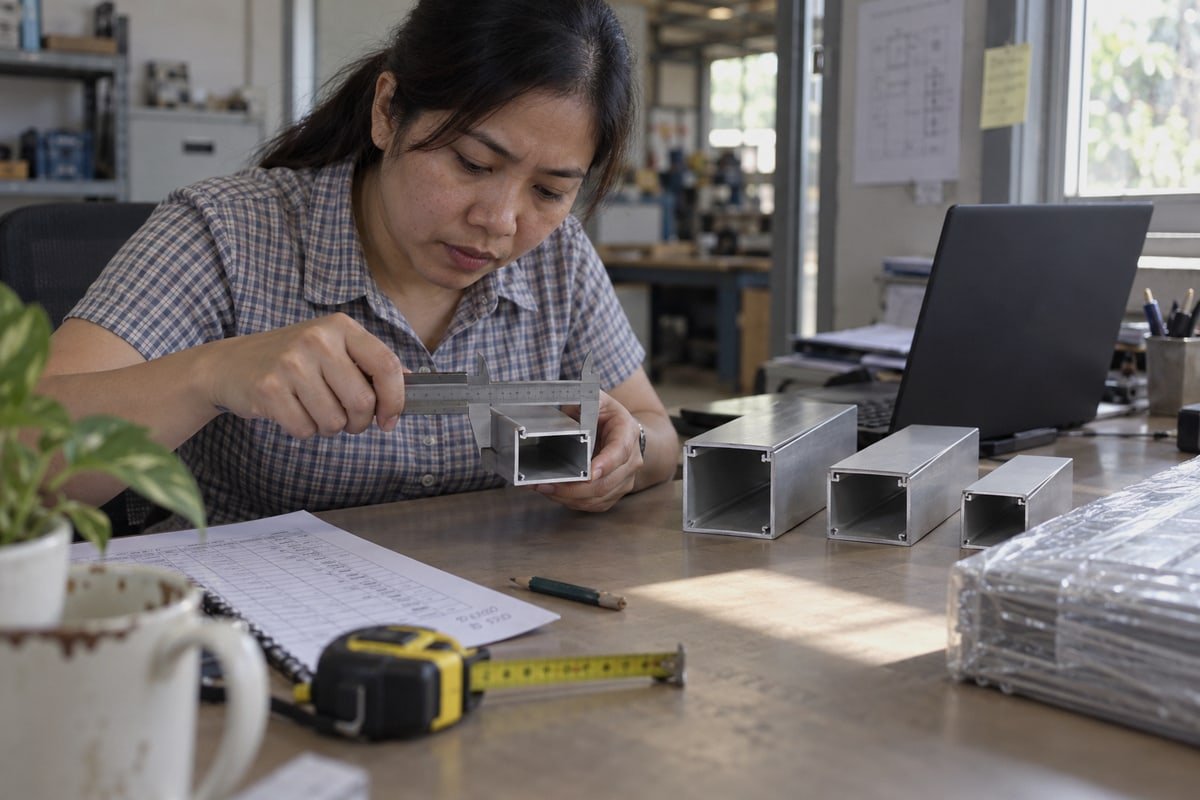
Specification is where most mistakes happen, so I break it into a simple sequence. Follow these steps in order, and your drawings will survive the site.
- Confirm the alloy grade. Most trunking uses 6000-series aluminium 3, and 6063-T5 is the common standard because it extrudes cleanly and takes a smooth surface finish. Some catalogs also list 1000 and 5000 series, but for structural stiffness, I recommend the 6000 family.
- Size the cross-section. List every cable with its outside diameter. Then pick a channel with clear spare capacity. Packed-full trunking overheats cables and makes future additions impossible.
- Decide the mounting position. Floor, wall, baseboard, ceiling, or equipment rack. Floor trunking in high-traffic walkways needs a stronger, flatter lid than wall-mounted runs.
- Choose the cover style. A removable lid gives full access along the run. A hinged lid speeds up frequent maintenance. This choice directly affects long-term labor cost.
- Check compartment needs. Multi-compartment trunking physically separates power from data and communication circuits. This separation reduces interference and keeps you compliant with common wiring standards.
- Match the environment. Humid, coastal, or chemical-heavy sites favor aluminium’s natural corrosion resistance. Ask about the IP rating of the assembled system if dust or dripping water is present, and confirm the fire resistance rating for escape routes and public buildings.
One Honest Boundary
My own rule of thumb: aluminium trunking equals enclosed protection, light weight, corrosion resistance, and a controllable appearance. If your project involves large spans and heavy cable masses, specify an aluminium cable tray instead. We supply both, so I have no reason to push the wrong one.
What Quality Control Standards Should I Verify Before Placing a Bulk Order?
Last year our inspector rejected a batch of covers because the anodized layer measured thin at the edges. Catching that before loading saved a customer a costly return.
Verify material certificates for the alloy grade, wall thickness tolerances, coating or anodizing thickness, cover fit, weld and bend quality, and grounding continuity. Ask for RoHS documentation, fire performance data, and a pre-shipment inspection report with photos before releasing any bulk order.
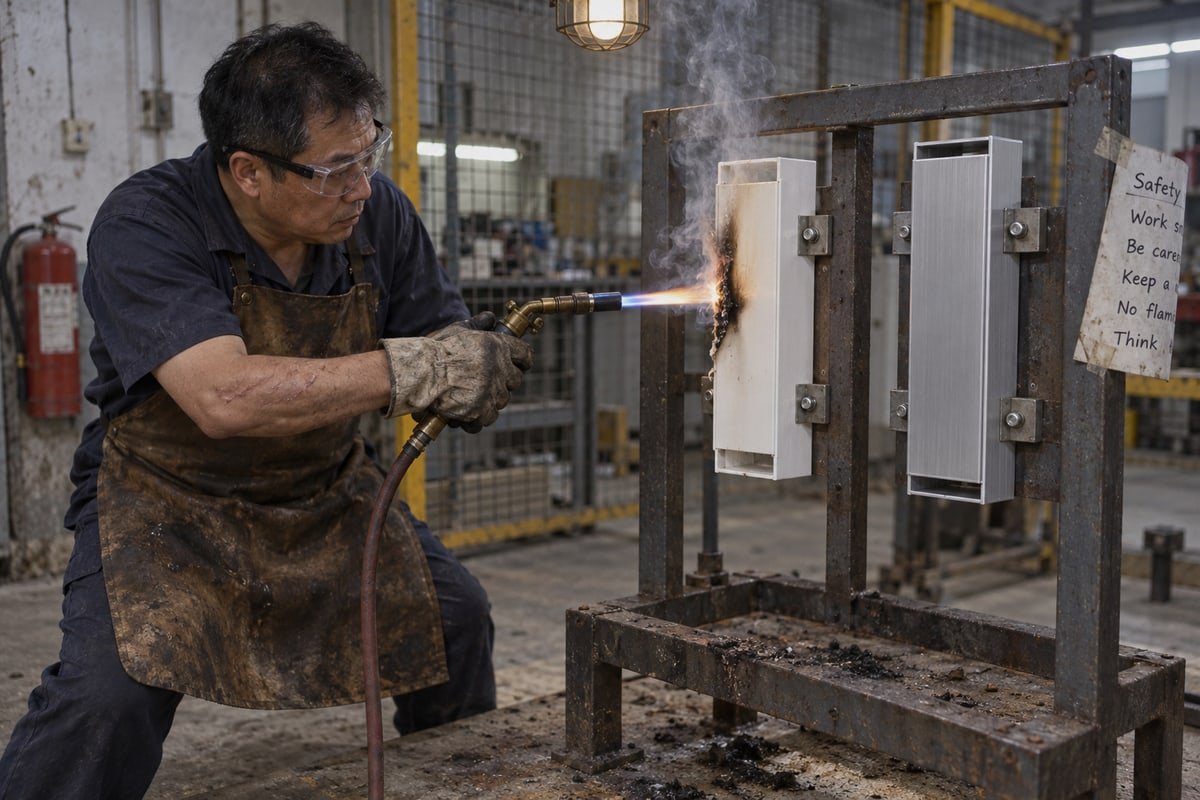
Quality problems on trunking rarely show up in a sample. They show up in batch consistency. So I split QC into paperwork, physical checks, and electrical checks. Our team in Tai’an runs all three before any container leaves for Singapore, the Philippines, Thailand, or South America.
The Three-Layer QC Checklist
| QC Layer | What to Verify | Why It Matters |
|---|---|---|
| Documents | Mill certificate for 6063-T5 or agreed alloy, RoHS declaration, fire performance data | Proves the raw material and compliance claims are real |
| Dimensions | Wall thickness tolerance, length, width, height, straightness | Thin walls flex; out-of-tolerance parts will not join on site |
| Surface | Anodized finish or powder coat thickness, color consistency, no scratches | The finish is your corrosion barrier and your visible quality |
| Fit and assembly | Cover slides and locks smoothly, joints align, accessories match | Poor lid fit means covers pop off in service |
| Electrical | Grounding and earthing continuity across joints | Metal electrical containment systems must bond safely to earth |
| Packing | Film wrap, edge protection, labeled bundles, loading photos | Prevents transit damage claims and returns |
Why Grounding Continuity Deserves Its Own Test
Metal trunking becomes part of the earthing path in many designs. Every joint, coupler, and cover must maintain electrical continuity, or a fault current has no safe route. We test continuity across assembled joints on random samples from each batch. I suggest you demand the same, in writing, from any supplier.
Insist on Pre-Shipment Evidence
A pre-shipment inspection report with measurements and photos costs the supplier a few hours. It saves you weeks of dispute later. Buyers tell me delivery delays and returns are their biggest pain, and honest documentation before loading prevents most of both.
Can Aluminium Alloy Cable Trunking Be Customized to Meet My Project’s Unique Requirements?
Early in our export business, I quoted only standard sizes and lost a hospital project. That taught me customization is the real product in electrical containment systems.
Yes. Aluminium alloy cable trunking can be customized in dimensions, wall thickness, compartment layout, cover style, cut-outs, colors, and finishes, including anodized or powder-coated surfaces. OEM/ODM suppliers can also add antimicrobial coatings, fire-rated components, and mounting tracks for sensors or PoE lighting.
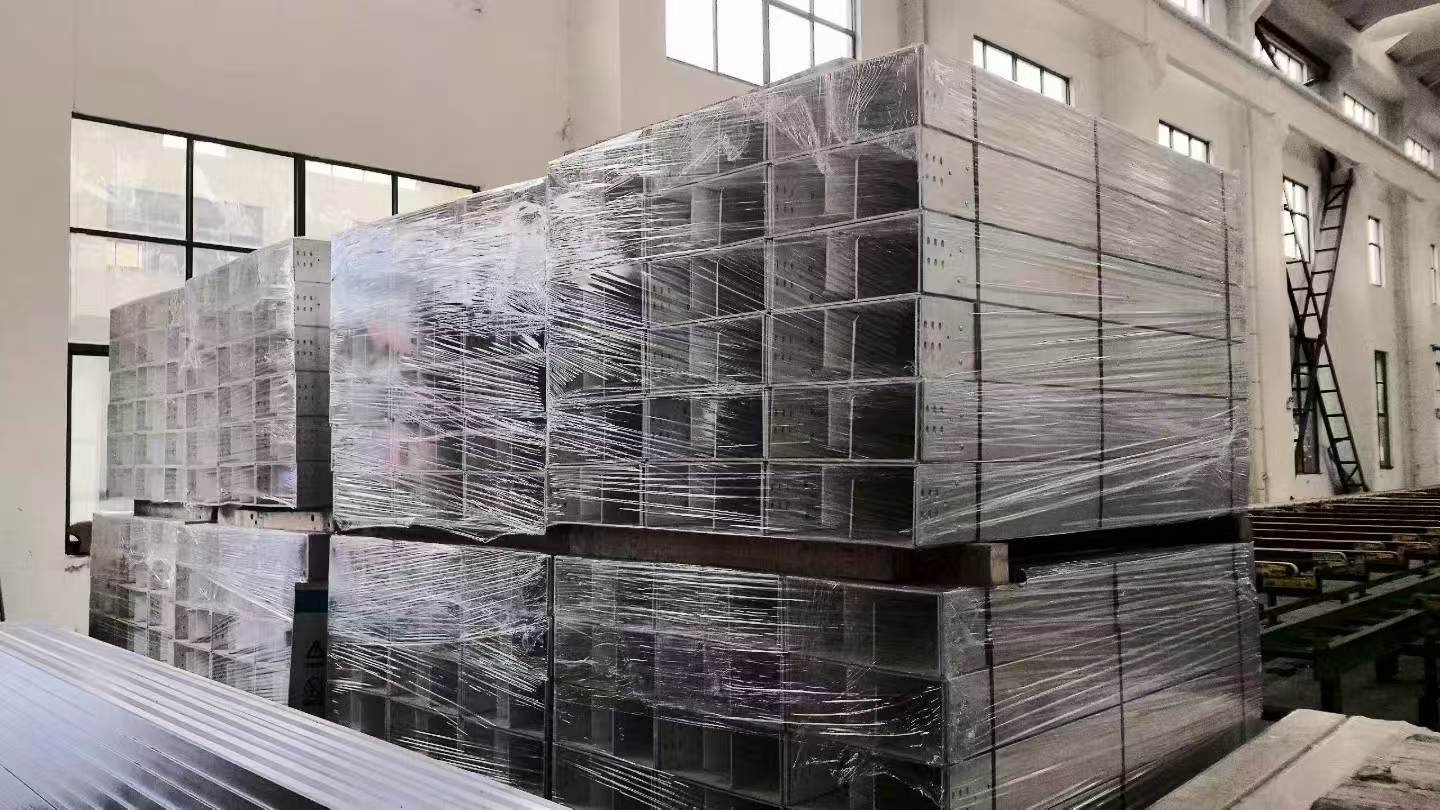
Customization is where our OEM/ODM work with EPC contractors and wholesalers actually happens. Standard catalogs cover maybe half of real project needs. The other half comes from drawings we develop together with the buyer’s engineer.
Common Customization Options
| Customization Area | Typical Options | Best For |
|---|---|---|
| Dimensions | Non-standard widths, heights, cut lengths | Retrofit routes and tight ceiling voids |
| Compartments | Two or three internal dividers | Separating power, data, and signal circuits |
| Cover | Removable, hinged, screw-fixed, flush floor lid | Maintenance frequency and foot traffic |
| Finish | Anodized finish, powder coat in RAL colors, mill finish | Corrosion protection and architectural matching |
| Special coatings | Antimicrobial powder coating | Pharmaceutical labs, operating theaters, clean rooms |
| Cut-outs and accessories | Pre-punched knockouts, bends, tees, end caps | Faster installation, fewer site modifications |
| Smart features | Integrated mounting tracks for IoT sensors and PoE lighting | Building automation and modern office fit-outs |
Sustainability as a Specification Point
One angle worth adding to your tender documents: aluminium is fully recyclable at the end of its lifecycle. That circularity contributes to LEED and BREEAM 4 green building credits. Several of our Southeast Asian buyers now list recyclability as a formal requirement, and aluminium trunking answers it without extra cost.
How We Handle a Custom Request
Our process is straightforward. You send a drawing or even a sketch. Our engineers return a production drawing with tolerances within a few days. We confirm a sample, lock the specification, and only then start the batch. That sequence protects you from the mismatch problems that cause returns.
Conclusion
Aluminium alloy cable trunking gives enclosed protection, light weight, and clean looks for indoor wiring. Specify it carefully, verify QC, and contact our team when your next project needs it.
Footnotes
- Authoritative definition and technical explanation of the physical property of thermal conductivity. ↩︎
- Industry standard for metal cable tray systems from the National Electrical Manufacturers Association. ↩︎
- Authoritative guide to aluminum alloy series and their specific industrial applications. ↩︎
- Official site for LEED, the most widely used green building rating system globally. ↩︎