Rusted supports and overheated cables quietly drain project budgets. On our Tai’an production line, the aluminium alloy cable ladder is the product we build to end exactly that pain.
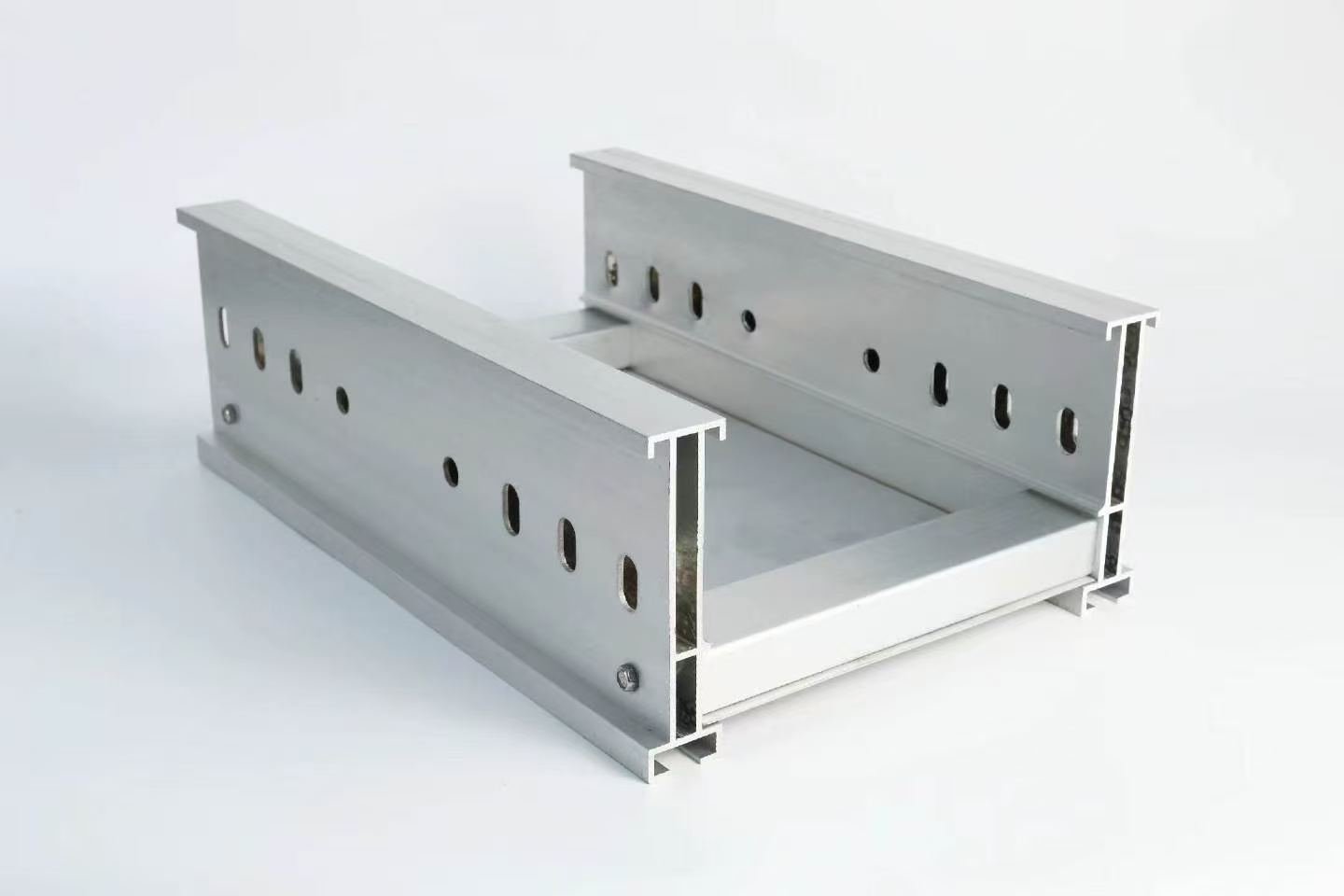
An aluminium alloy cable ladder is an open, ladder-shaped cable support system made from extruded aluminum alloy, with two load-bearing side rails joined by rungs. It routes heavy power, control, and data cables while providing ventilation, corrosion resistance, and light weight.
That definition is the starting point, not the whole story. The real questions are when to use one, how it compares to other cable management systems 1, and what to check before you order. Let me walk through each of those, drawing on what we see across export projects every month.
How do I know if an aluminium alloy cable ladder fits my project’s requirements?
A Singapore project director once asked me on WhatsApp whether a ladder was just a cheaper tray. That single question shapes how our team scopes every enquiry today.
An aluminium alloy cable ladder fits your project when you run heavy cables over long, straight routes with wide support spans, face corrosive or humid conditions, and need ventilation. Verify cable weight per meter, required span distance, and environment against the ladder’s rated capacity.
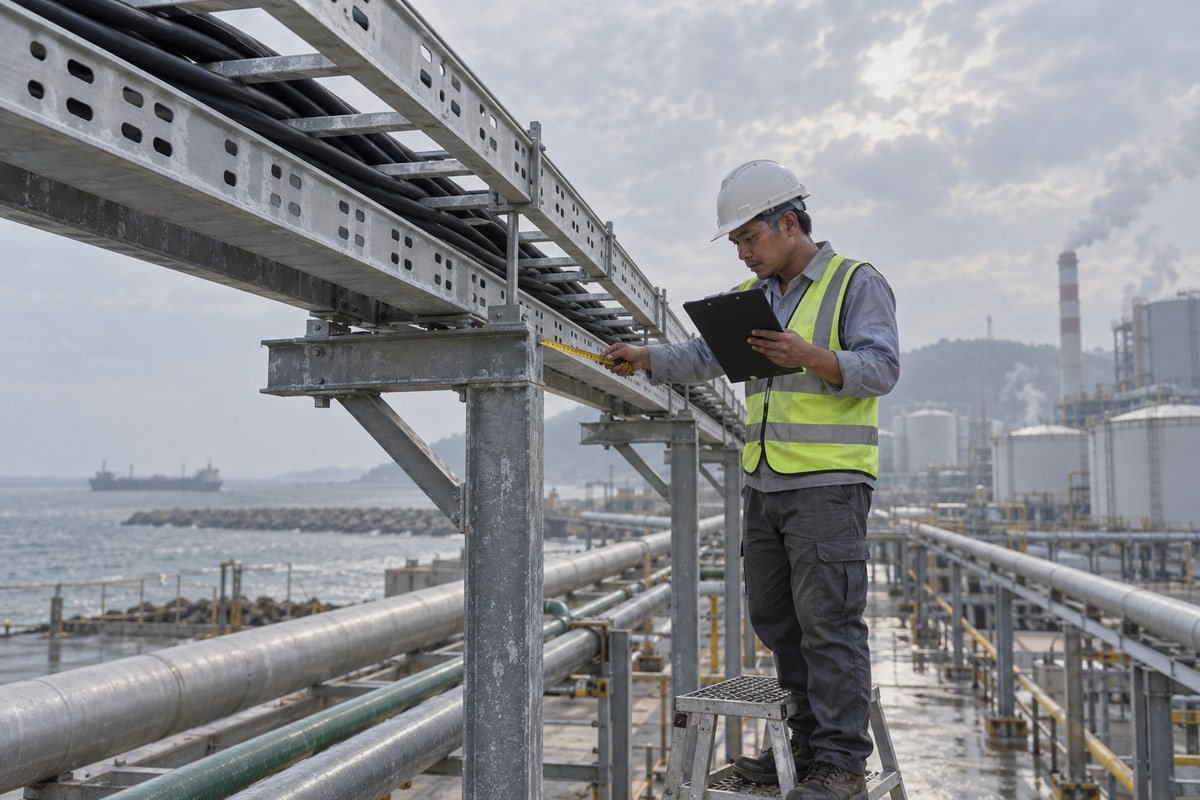
Here is the mistake I see most often in real selection work: buyers treat the ladder as a “cheaper, better-ventilated tray.” The engineering logic of the two products is actually different. A ladder’s structure makes it ideal for carrying thicker cables over long distances in one direction, with large gaps between supports. The section height of the side rails — 100 mm or 150 mm, for example — directly determines how far the ladder can span between brackets. That is the core of its load bearing capacity, and it is why span tables matter more than any brochure adjective.
Match the Route Geometry First
If your route changes direction often, or splits into many branch lines at junctions, ladder fittings such as bends and tees are more complex than the equivalent tray fittings. In that case, a tray or trunking system may serve you better. But do not conclude that the ladder is “less advanced” because it is open. In petrochemical plants, offshore platforms, and power stations, aluminium ladders are a mainstream choice precisely because they handle heavy loads and wide spans while shedding heat through the open structure.
A Quick Fit Checklist
| Project Condition | Does a Ladder Fit? |
|---|---|
| Long, straight backbone runs with thick power cables | Yes — this is its core strength |
| Support span distance of 2–3 meters or more | Yes — choose taller side rails |
| Salt spray, humidity, or chemical exposure | Yes — corrosion resistance is built in |
| Frequent direction changes and many small branches | Weaker fit — tray fittings are simpler |
| Small-diameter data cables needing continuous support | Weaker fit — consider mesh tray instead |
What makes aluminium alloy cable ladders different from steel or fiberglass options?
Every week our Tai’an office quotes the same run in aluminium, steel, and fiberglass. Weighing those three quotes side by side has taught us where each material truly wins.
Aluminium alloy cable ladders weigh about one-third as much as steel, resist corrosion through a natural oxide film without galvanizing, and can serve as an equipment grounding conductor. Fiberglass is non-conductive and chemical-proof but costs more and offers lower stiffness over long spans.
For a comparison like this, a table says more than paragraphs. Here is how the three materials line up for industrial electrical containment.
| Feature | Aluminium Alloy | Hot-Dip Galvanized Steel | Fiberglass (FRP) |
|---|---|---|---|
| Weight | About 1/3 of steel | Heaviest option | Light, but bulkier sections |
| Corrosion resistance | Natural oxide film, no coating needed | Depends on zinc layer; cut edges rust | Excellent in chemical exposure |
| Field modification | Easy to cut and drill; edges stay protected | Cut edges need cold-galvanizing spray | Cutting releases glass dust |
| Grounding and bonding | High conductivity; can act as an EGC | Conductive, but needs bonding checks | Non-conductive; separate ground wire required |
| Seismic behavior | Low mass reduces inertial force on anchors | Heavy mass stresses supports | Low mass, lower stiffness |
| Typical cost position | Higher upfront than steel | Lowest upfront | Usually highest |
Two points deserve extra attention. First, the grounding advantage is real: because of aluminium’s high electrical conductivity, the ladder itself can often function as an Equipment Grounding Conductor 2 in industrial configurations, removing the need for a dedicated copper ground wire. Second, thermal expansion is the honest trade-off. Aluminium expands more than steel as temperature swings, so long outdoor runs need expansion joints at planned intervals. When we prepare drawings for buyers in hot climates, we mark those joint positions before production, because fixing it on site is far more expensive. Steel still makes sense where upfront cost dominates and the environment is dry. Fiberglass wins in extreme chemical zones. Aluminium takes the broad middle ground where weight, corrosion, and lifespan all matter.
Why should I choose an aluminium alloy cable ladder for solar or water treatment projects?
Last year we packed containers of aluminium ladders for a Philippine solar EPC. Watching that order come together showed me why these two industries keep choosing this material.
Choose an aluminium alloy cable ladder for solar and water treatment projects because it resists UV, humidity, and chemical corrosion without maintenance, dissipates heat from power cables through open rungs, cuts structural load by roughly two-thirds versus steel, and retains scrap value at end of life.
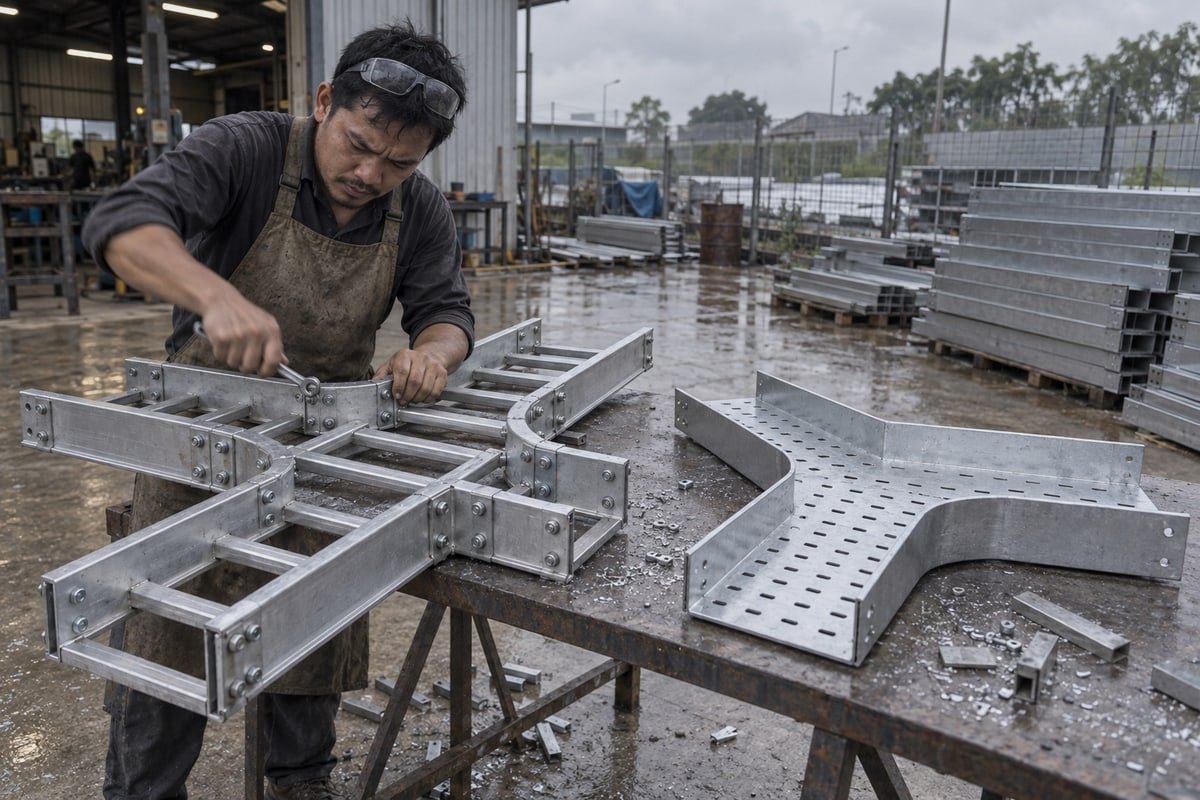
Solar farms and water treatment plants punish cable containment in different ways, and aluminium answers both.
On solar sites, the enemies are heat, UV, and distance. DC cable runs are long and mostly straight — exactly the geometry where a ladder excels. The open structure and perforated rungs let air move around loaded power cables, and aluminium’s high thermal conductivity helps pull heat away, which protects cable ampacity in tropical sun. Field crews also love that aluminium cuts and drills easily on site, and unlike galvanized steel, the exposed cut edges keep their corrosion resistance without any cold-galvanizing spray. On lightweight mounting structures, saving two-thirds of the dead load versus steel is not a small detail; it changes bracket sizing and installation speed. Crews need fewer people and no heavy lifting equipment.
In water treatment plants, the threat is chemical. Chlorine dosing rooms, humid basins, and coastal intake stations corrode zinc coatings steadily. Aluminium’s naturally occurring oxide film reforms whenever it is scratched, so the protection never wears out the way a galvanized layer does. Our buyers in Southeast Asia tell us the same thing again and again: the maintenance line in the budget is what convinces their clients.
There is also a lifecycle argument. The higher upfront price is offset by zero coating maintenance and a high residual scrap value — recoverable value can reach around 30% of the original material cost at end of life. And for developers chasing embodied carbon targets or LEED credits, ladders produced from hydropower-based “green aluminium” are becoming a specification item in their own right. When a project director like my Singapore contact resells to end clients, these lifecycle numbers become his selling points too.
What specifications should I check before ordering aluminium alloy cable ladders from a supplier?
One early shipment taught me a hard lesson: a buyer assumed one rung spacing, and we assumed another. Since then, our order sheet locks every specification before production starts.
Before ordering, check the alloy grade and temper, NEMA VE 1 load class and span rating, side rail height, rung spacing, width, length, fastener material, grounding provisions, thermal expansion joints, and the full accessory list, including bends, tees, reducers, and cable cleats.
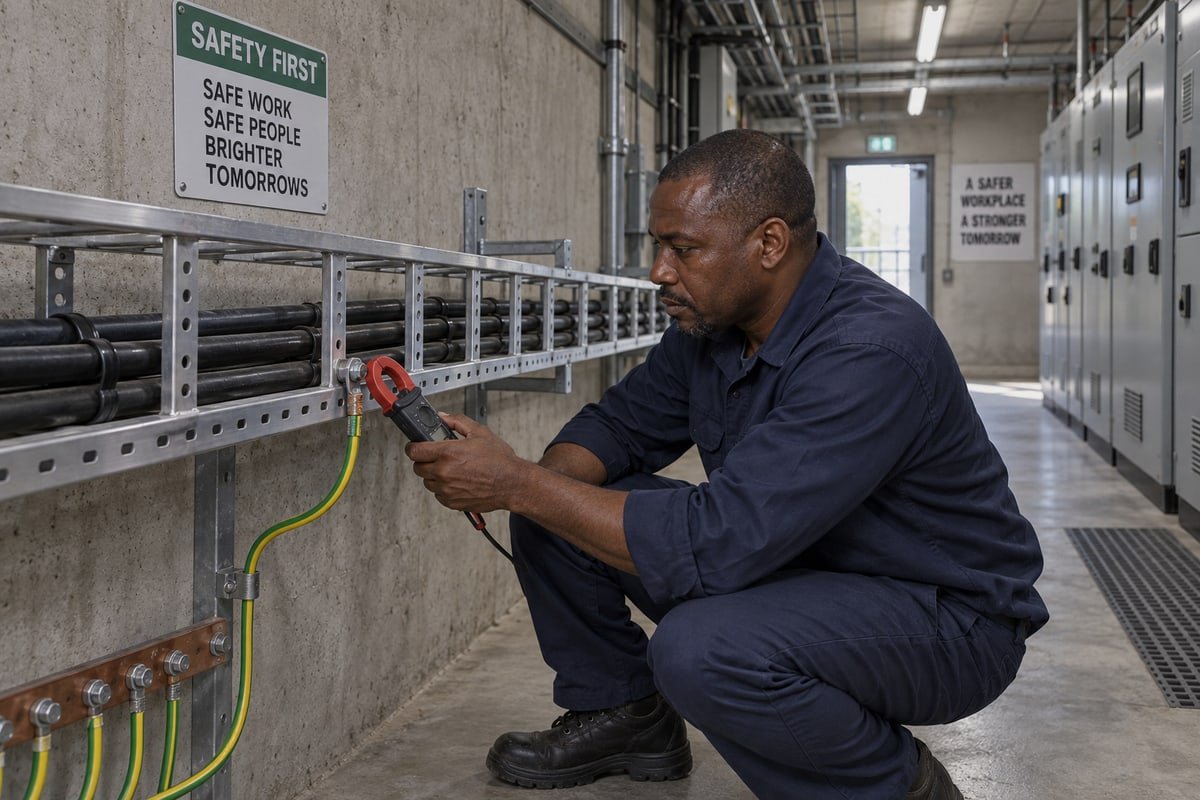
A clean specification sheet prevents almost every dispute I have seen in this trade. Work through it in this order.
- Alloy and temper. Extruded rails and rungs typically use marine grade 6063-T6 3, or 6005-T5 and 6061-T6 where higher strength is needed; some fabricated fittings use 5052 sheet. Ask which alloy applies to which component.
- Load rating and span. Load bearing capacity only means something when paired with a support span distance. Ask for span tables tested to NEMA VE 1 standards 4 or CSA C22.2. One catalog figure of 300 kg per meter, or a rung rated for a 200 lb concentrated load with a 1.5 safety factor, is product-specific — never assume it transfers between suppliers.
- Geometry. Confirm side rail height (100 mm, 150 mm), rung spacing (commonly 300 mm, or 6, 9, and 12 inches by series), width, and straight-section length.
- System completeness. List every bend, tee, reducer, coupler, cleat, and cover. Missing fittings cause more site delays than missing straight lengths.
- Details that bite later. Stainless-steel fasteners, grounding and bonding jumpers, and thermal expansion joints for long outdoor runs.
Specification Quick-Reference
| Item | Common Options | Why It Matters |
|---|---|---|
| Alloy / temper | 6063-T6, 6005-T5, 6061-T6, 6106-T6 | Strength and corrosion behavior |
| Side rail height | 100 mm / 150 mm | Sets maximum span between supports |
| Rung spacing | 300 mm; 6″ / 9″ / 12″ | Cable support and point-load rating |
| Load class | Per NEMA VE 1 span tables | Safety margin under full cable load |
| Fasteners | Stainless steel | Prevents galvanic corrosion at joints |
| Expansion joints | Per route length and climate | Manages thermal expansion outdoors |
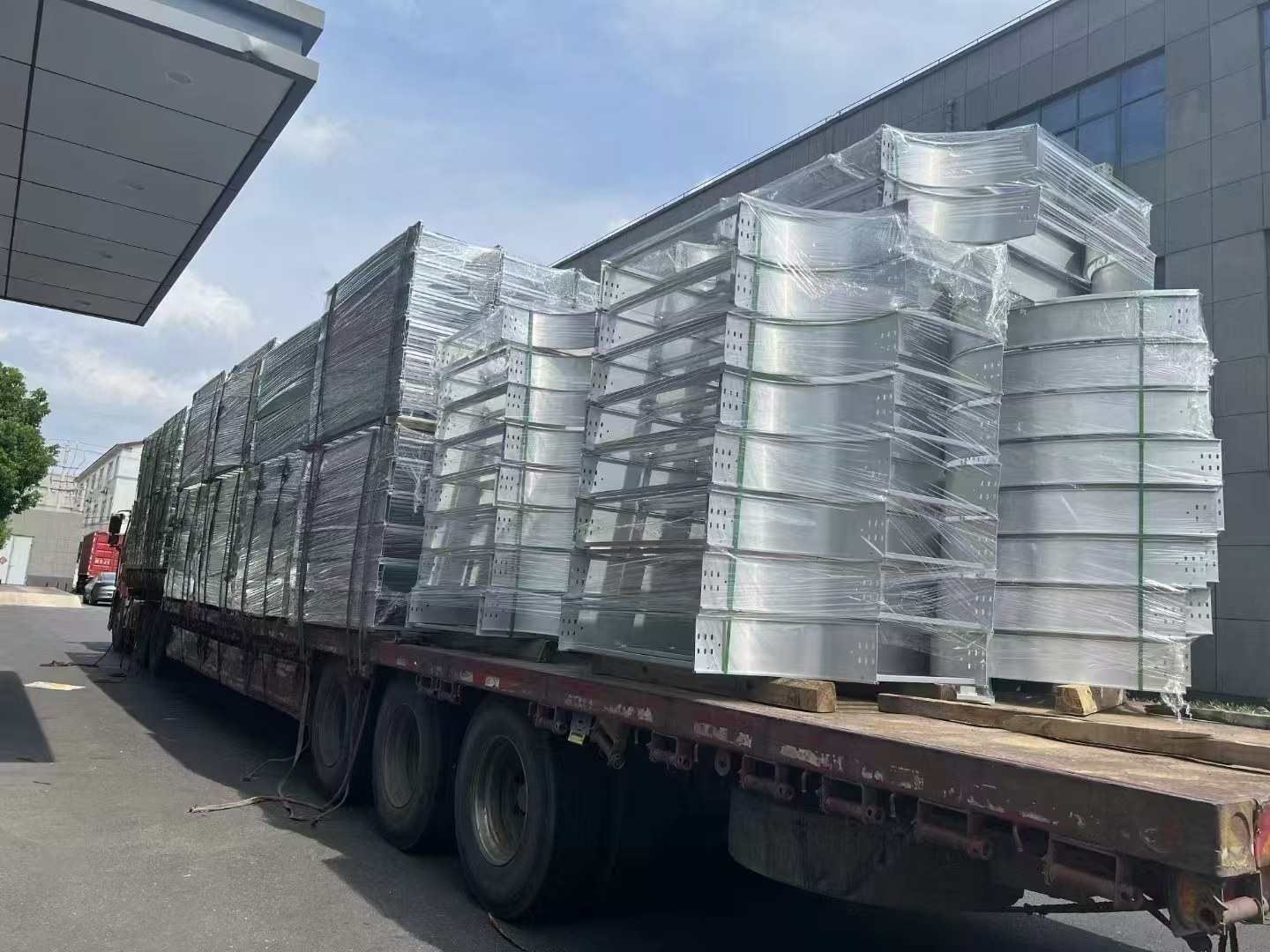
Finally, ask about QC and logistics. We photograph loaded bundles, wrap sections in protective film, and confirm dimensions against the signed drawing before containers leave Tai’an, because delivery delays and quality disputes are the two pains our EPC buyers fear most.
Conclusion
Wrong containment choices cost rework, rust, and delays. An aluminium alloy cable ladder solves those risks on heavy, long-span, corrosive-environment runs — just specify alloy, span, and load class carefully.
Footnotes
- Wikipedia entry for cable trays provides technical context on various cable management systems and their industrial applications. ↩︎
- Wikipedia article explaining the principles of electrical grounding and the role of an equipment grounding conductor. ↩︎
- Official standards page from The Aluminum Association covering alloy designations and technical specifications for 6000-series aluminum. ↩︎
- The official NEMA page for the VE 1 standard, which governs the manufacturing and testing of metal cable trays. ↩︎