There are 10 main material types used for manufacturing cable trays:
- Hot dipped galvanizing Cable Tray Outside/ Inside
- Electro-galvanized Cable Tray Inside
- Powder coated pre-galvanized Cable Tray Inside
- Aluminium alloy Cable Tray Outside/ Inside
- Fiberglass Reinforced Plastic (FRP) Cable Tray Outside
- Stainless steel 304 Cable Tray Outside
- Stainless steel 316 Cable Tray Outside
- SuperDyma(ZAM) Cable Tray Outside
- PVC Cable Tray Inside
- ABS Cable Tray Inside
1.Hot dipped galvanizing Cable Tray
1.1 Made from Q235 black steel and make Hot dipped galvanizing surface treatment
1.2 Provide high strength and load-bearing capacity
1.3 Suitable for heavy-duty industrial and commercial applications
1.4 Commonly used in manufacturing facilities, power plants, data centers, more
2.Electro-galvanized Cable Tray
2.1 Electro-galvanization process deposits a thin, uniform layer of zinc coating on the steel surface.
2.2 Electro-galvanized cable trays have a shiny, silver-gray appearance.
2.3 Electro-galvanized are suitable for indoor environments, mild outdoor conditions, and areas with moderate exposure to moisture, chemicals, or other corrosive elements.
2.4 The thinner zinc coating makes electro-galvanized cable trays a more cost-effective option
3.Powder coated pre-galvanized Cable Tray
3.1 After the pre-galvanized, an additional powder coating is applied electrostatically and then cured at high temperatures.
3.2 Powder coated pre-galvanized cable trays are available in a wide range of color options to suit different design preferences.
3.3 The powder coating is highly resistant to chipping, peeling, and fading, providing long-lasting protection.
3.4 Powder coated pre-galvanized cable trays can be customized with various accessories, fittings, and finishes to meet specific project requirements. Color also can be chosen.
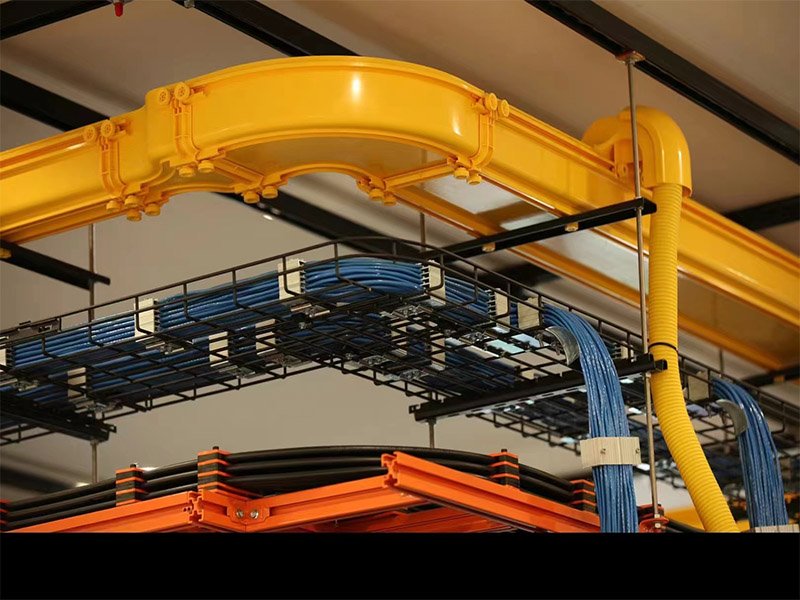
4.Aluminium alloy Cable Tray
4.1 Aluminum alloy is much lighter than steel, making aluminum alloy cable trays significantly more lightweight.
4.2 Aluminum alloy cable trays can withstand exposure to moisture, chemicals, and other corrosive elements better than uncoated steel.
4.3 Aluminum alloy is a good electrical conductor, which can be advantageous in applications where electrical grounding or bonding is required.
4.4 Aluminum alloy cable trays are non-magnetic, making them suitable for use in sensitive electronic or magnetic environments.
5.Fiberglass Reinforced Plastic (FRP) Cable Tray
5.1 FRP materials are highly resistant to corrosion, making them suitable for use in harsh, corrosive environments.
5.2 FRP cable trays are significantly lighter than their metal counterparts, which can be advantageous in installations with weight constraints.
5.3 FRP cable trays are significantly lighter than their metal counterparts, which can be advantageous in installations with weight constraints.
5.4 Some FRP cable trays are designed with fire-retardant additives to enhance safety in the event of a fire.
6.Stainless steel 304 Cable Tray
6.1 Stainless steel 304 has excellent resistance to corrosion, making it suitable for use in a wide range of environments, including those with high humidity, chemical exposure, or coastal/marine conditions.
6.2 Stainless steel 304 cable trays are highly durable and resistant to mechanical damage, abrasion, and impact.
6.3 Stainless steel 304 is highly recyclable, contributing to the sustainability of stainless steel cable tray systems.
6.4 Stainless steel 304 can withstand a wide range of temperatures, making it suitable for use in both hot and cold environments.
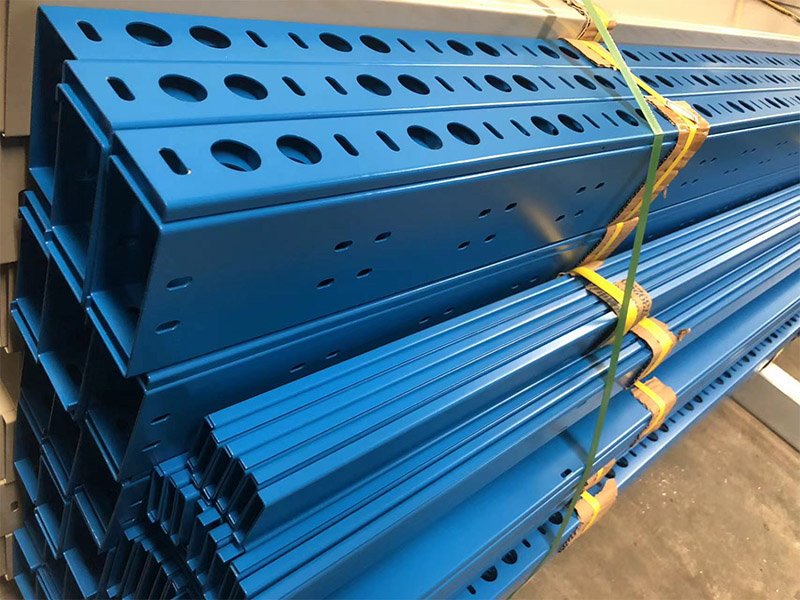
7.Stainless steel 316 Cable Tray
7.1 Stainless steel 316 has enhanced corrosion resistance compared to 304 due to the addition of molybdenum in the alloy.
7.2 The improved corrosion resistance of 316 stainless steel makes it more resistant to a wider range of chemicals, acids, and alkaline solutions.
7.3 Like stainless steel 304, 316 stainless steel is highly recyclable, contributing to the sustainability of the cable tray system.
7.4 The smooth, non-porous surface of stainless steel 316 makes it easy to clean and maintain, making it suitable for use in hygienic environments.
8.SuperDyma(ZAM) Cable Tray
8.1 SuperDyma coating provides exceptional corrosion resistance, significantly outperforming traditional galvanized steel in terms of protective capabilities.
8.2 SuperDyma coating is highly durable and offers long-term protection against corrosion, ensuring the cable trays maintain their integrity and appearance over an extended period.
8.3 SuperDyma cable trays retain the electrical conductivity properties of steel, allowing for proper grounding and bonding of the cable management system.
8.4 SuperDyma cable trays are more used to Solar system in the past two years.
9.PVC Cable tray
9.1 PVC tray is made from rigid PVC, which is a durable, lightweight, and corrosion-resistant plastic material.
9.2 PVC cable trays typically have a rectangular or channel-like shape with perforated sides or a solid base. This design allows cables to be neatly routed and supported.
9.3 PVC cable trays come in different sizes, widths, and depths to accommodate different cable loads and routing requirements. They can be used in a variety of applications, such as industrial, commercial, and residential settings.
9.4 PVC cable trays are cost-effective, easy to maintain, and provide a neat and organized way to route cables. The PVC material is non-conductive and resistant to corrosion, making it a suitable choice for environments with moisture or chemicals.
10. ABS Cable Tray
10.1 ABS is a thermoplastic polymer known for its strength, impact resistance, and durability. It is slightly more rigid and robust compared to PVC.
10.2 ABS cable trays are available in a range of sizes, widths, and depths to suit various cable management needs. They can be used in a variety of commercial, industrial, and residential applications.
10.3 ABS cable trays offer several benefits, including:
- Increased strength and impact resistance compared to PVC
- Good thermal and chemical resistance
- Excellent insulating properties, making them suitable for electrical applications
- Relatively easy to cut and modify on-site during installation
10.4 ABS cable trays can be installed using similar mounting methods as PVC trays, such as wall brackets, ceiling supports, or floor-mounted systems.
11.Summary
The choice of cable tray material depends on the specific environmental conditions, corrosion requirements, weight constraints, and aesthetic considerations of the application.Welcome to consult me .I am 7/24.
Please tell me your situation in your project and give me your feedback in comments.Then I will send you solutions that my customer already completed project case for your reference.