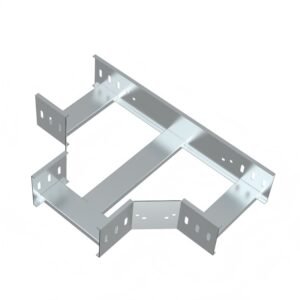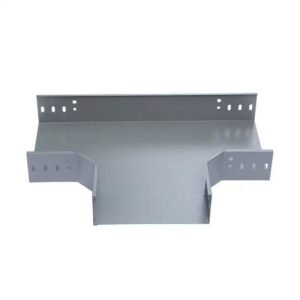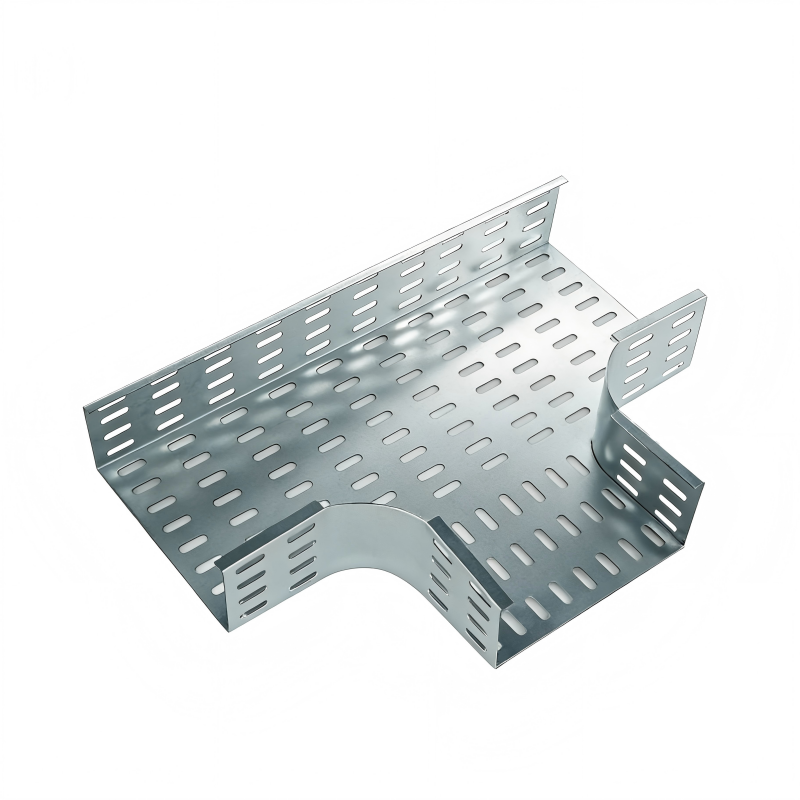
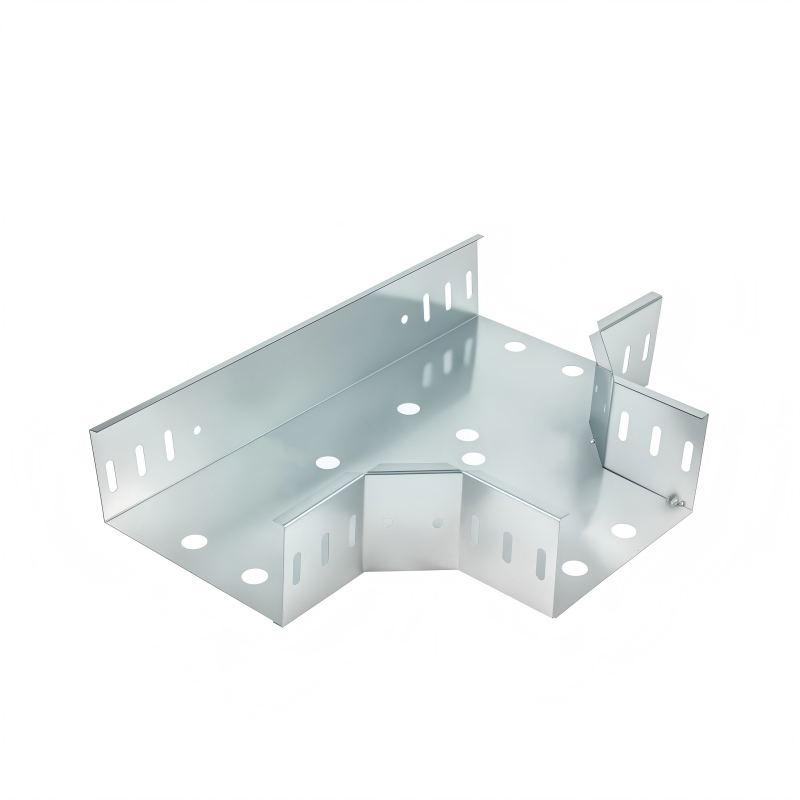
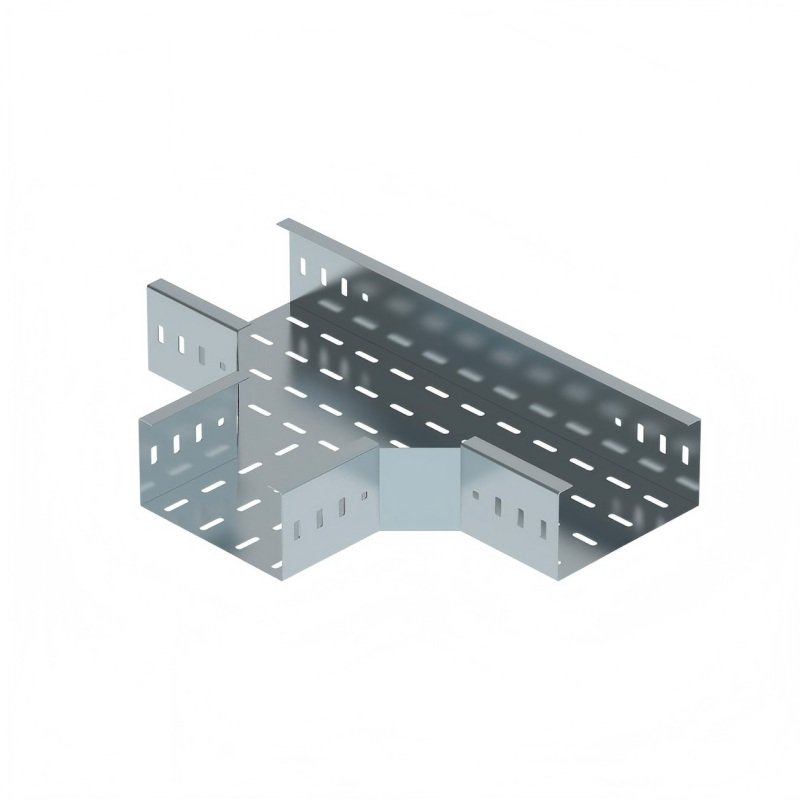
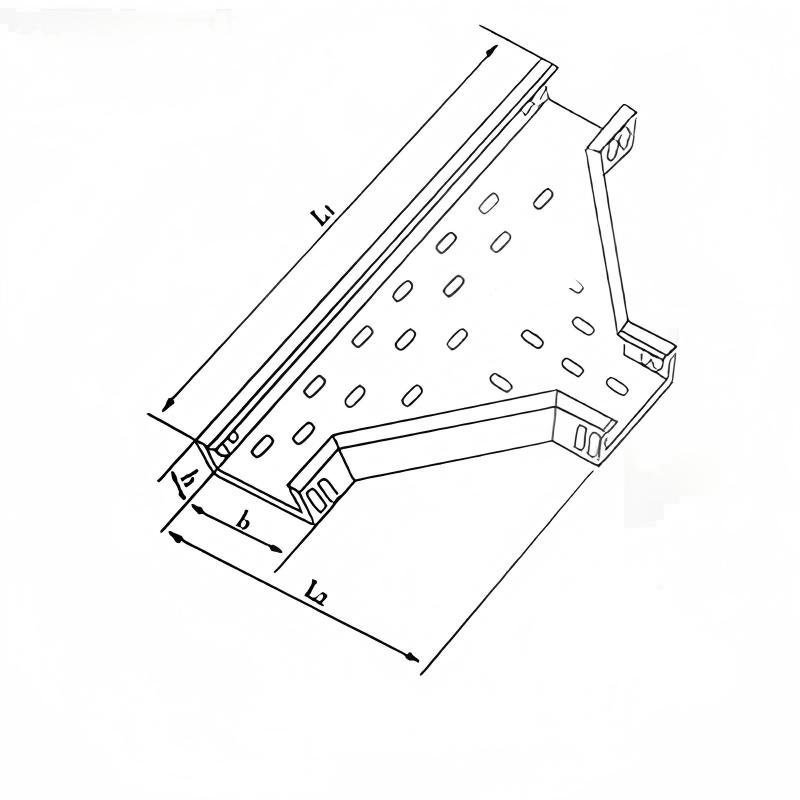
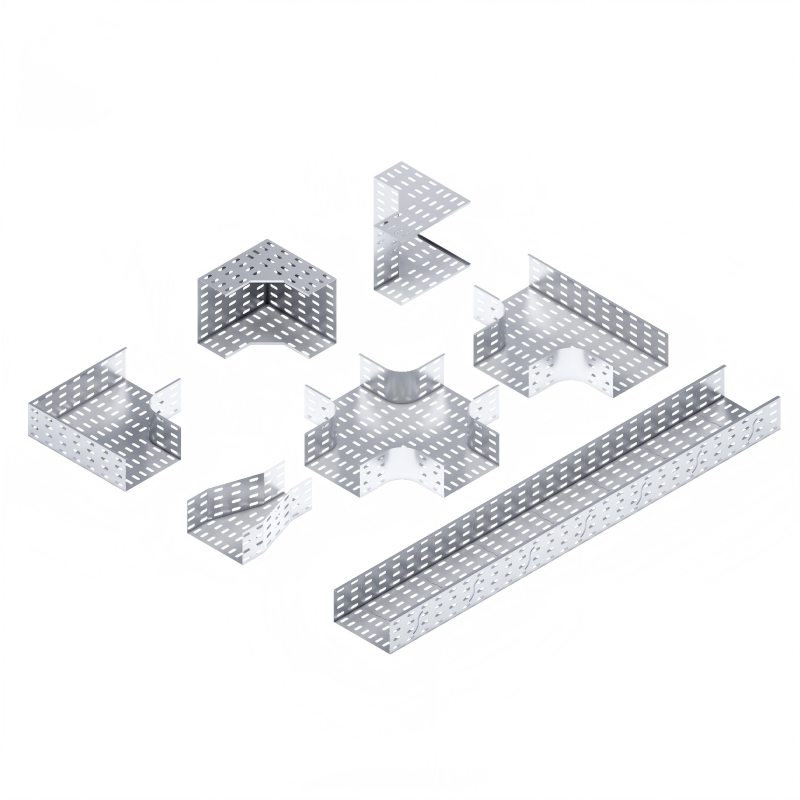
Perforated cable tray tee, also known as ventilated cable tray tee junction or punched cable tray tee fitting, is specially designed and engineered for creating three-way intersections in perforated cable tray runs whilst maintaining excellent ventilation and cable support. As the reliable perforated cable tray tee manufacturer, Lanye brand custom perforated cable tray tee is available in various configurations, materials, sizes and forms to suit the location and requirements of the installation. Our perforated cable tray tees can be used in almost any places including homes, commercial and industrial construction, supermarkets, hotels, hospitals, power plants, underground construction and high rise buildings, etc.
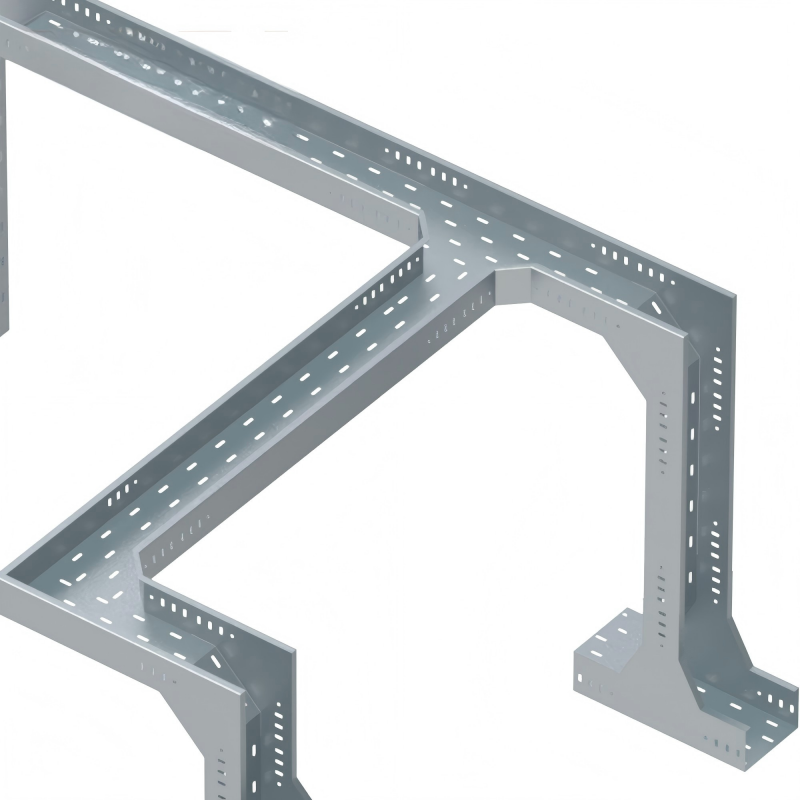
A perforated cable tray tee is a pre-fabricated fitting used to create a three-way junction in a perforated cable tray system, allowing cables to branch off in a perpendicular direction from the main run. The tee maintains the same perforated bottom pattern as straight sections, ensuring consistent airflow and cable support through the junction point. Perforated cable tray tees are essential components when cable paths need to split or combine in complex cable management systems.
Perforated cable tray tees are commonly fabricated using carbon steel grades Q195 or Q235. In the automated pre-galvanizing process, the carbon steel plates are immersed in a “galvanizing bath” containing molten zinc for a brief period. After being withdrawn from the bath, excess zinc is stripped away, leaving a relatively thin yet effective zinc coating on the steel surface. The perforated cable tray tee is then manufactured using pre-galvanized steel through standard procedures such as punching, bending, and forming, carried out by a flexible automatic production line.
Galvanized perforated cable tray tee exhibits excellent qualities including high strength, a robust design, durability, and resistance to rust. These characteristics make it an ideal choice for cable management, providing support and protection for internal cables against damage while allowing heat to escape through the perforations. Perforated cable tray tee is the reliable cable tray solution to ensure the longevity and proper functioning of cables, especially in applications with complex cable routing requirements.
| No | Type | Main Width (mm) | Branch Width (mm) | Height (mm) | Material | Weight (kg/pc) |
|---|---|---|---|---|---|---|
| 1 | Lanye-PT-1 | 100 | 100 | 50 | Pre-galvanized Steel | 5.2 |
| 2 | Lanye-PT-2 | 150 | 150 | 75 | Pre-galvanized Steel | 8.6 |
| 3 | Lanye-PT-3 | 200 | 200 | 100 | Pre-galvanized Steel | 12.5 |
| 4 | Lanye-PT-4 | 300 | 300 | 100 | Hot-dip Galvanized Steel | 21.3 |
| 5 | Lanye-PT-5 | 400 | 400 | 150 | Hot-dip Galvanized Steel | 32.8 |
| 6 | Lanye-PT-6 | 300 | 200 | 100 | Stainless Steel 304 | 18.9 |
| 7 | Lanye-PT-7 | 400 | 300 | 150 | Stainless Steel 316 | 28.4 |
| 8 | Lanye-PT-8 | 500 | 500 | 200 | Aluminum 6063-T6 | 24.6 |
Lanye custom perforated cable tray tee has the following advantages which make it an excellent choice for efficient cable management solutions.
The protective zinc coating on pre-galvanized steel perforated cable tray tees ensures high quality, strength, and robustness. They can endure mechanical stresses, impacts, and abrasion while maintaining structural integrity, leading to long-lasting performance with minimal maintenance requirements.
The perforated bottom design allows hot air to rise away from cables at the junction point, preventing heat buildup that can degrade insulation and reduce cable lifespan. This makes perforated cable tray tees ideal for power cables and other applications where heat generation is a concern, especially where multiple cable paths converge.
The perforated cable tray tee comes in various sizes, branch configurations (equal or reducing), and materials, allowing customization to suit specific installation needs. The availability of matching accessories enhances flexibility in designing cable management systems for different applications.
All edges are deburred and rounded to prevent cable jacket abrasion during pulling through the tee junction. The perforated bottom also reduces friction compared to solid bottom tees, making cable installation easier and faster.
The zinc coating (or stainless steel/aluminum material) provides excellent corrosion resistance, safeguarding the tee from rust and corrosion due to moisture, chemicals, and environmental factors. This feature makes perforated cable tray tees suitable for indoor and outdoor use, even in high-humidity or chemically-exposed environments.
A wide selection of matching fittings and accessories allows for versatile and efficient cable management solutions tailored to specific requirements, including compatible straight sections, bends, crosses, and supports.
Each end of the tee includes pre-punched splice holes that align perfectly with straight perforated tray sections. Splice plates, bolts, and grounding jumpers are included with every tee order.
The tee is designed with gradual transitions and radiused corners to allow cables to flow smoothly from the main run into the branch without sharp edges that could damage insulation.
Custom perforated cable tray tees offer OEM/ODM options for tailored solutions to meet specific project requirements, including custom perforation patterns, reducing tee configurations, and special materials.
These custom perforated cable tray tee solutions come at a competitive factory price, offering cost-effective cable management solutions without compromising on quality or performance.
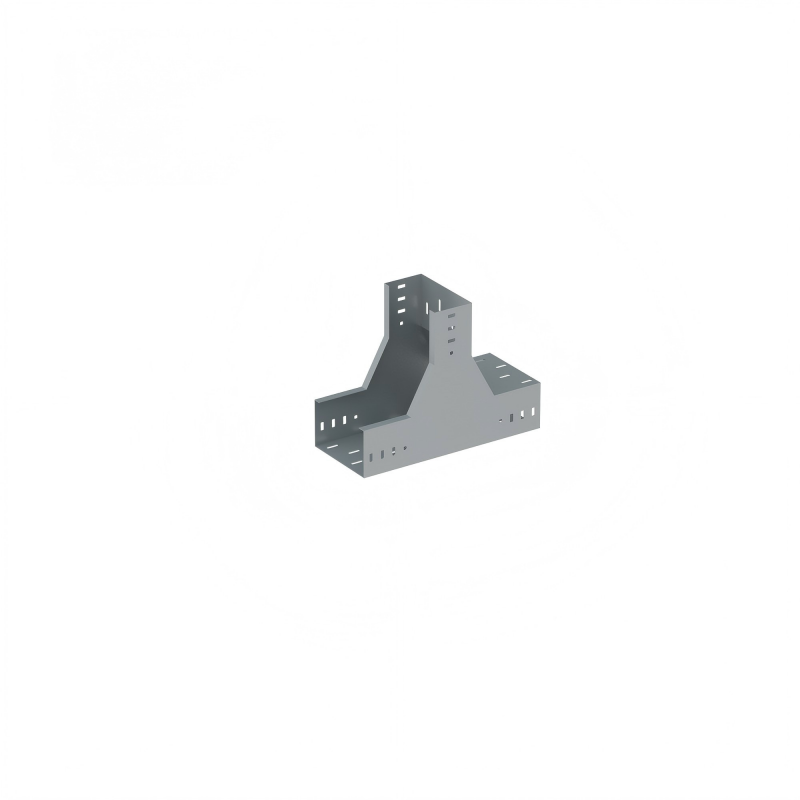
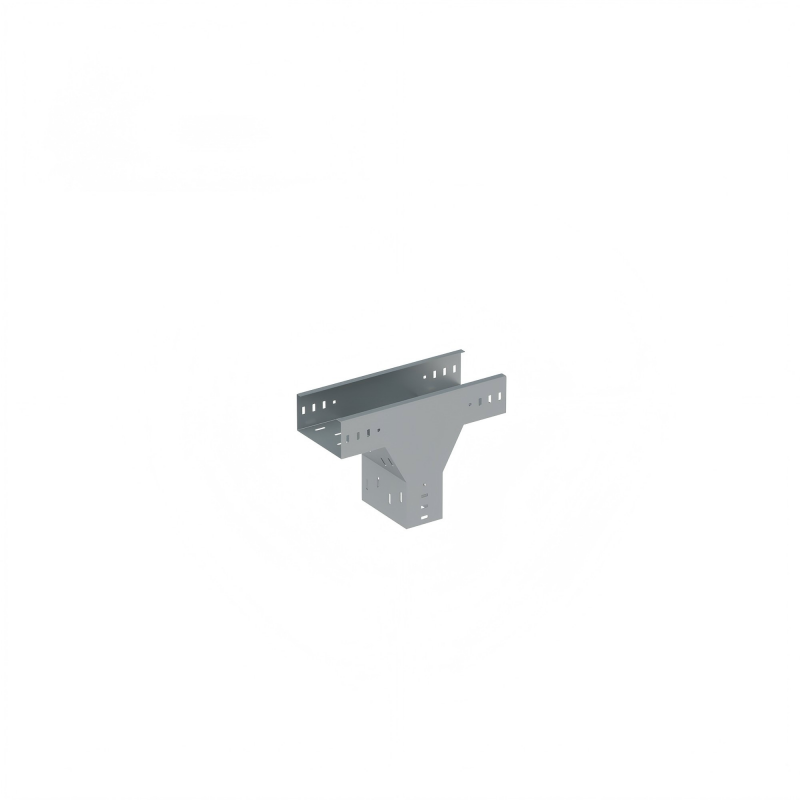
Perforated cable tray tee is widely used across many industries including construction engineering, industrial manufacturing, data centers, energy, transportation, and communication networks. These tees provide essential branch routing for diverse perforated cable tray systems.
Perforated cable tray tees are extensively used in data centers to route Cat6A and fiber optic cables from main distribution aisles into equipment rows. The open area prevents hot spots and allows cooling systems to function effectively at these critical junction points.
In commercial construction, perforated cable tray tees provide vital cable routing branches for power, lighting, and communication systems. The ventilated design is particularly valued in plenum spaces where heat buildup must be avoided at junction points.
Industrial manufacturing heavily depends on perforated cable tray tees to branch control and instrument cables from main tray runs to individual machines, workstations, and assembly lines.
In power plants, perforated cable tray tees route control and auxiliary power cables from main cable trenches to individual equipment and control panels.
Perforated cable tray tees manage communication cables and network equipment in telephone exchange rooms and broadband networks, providing branch routing for different building zones or equipment racks.
Perforated cable tray tees are extensively used in transportation facilities such as subways, railways, bridges, and tunnels to branch signal and lighting systems from main cable runs to platforms, tunnels, and concourses.
Q1: What is the difference between an equal tee and a reducing tee?
A: An equal tee has the same width on all three legs (main run and branch). A reducing tee has a branch width that is different from (usually smaller than) the main run width. Lanye offers both types to accommodate cable volume changes at branch points.
Q2: What is the standard open area of your perforated cable tray tees?
A: Lanye standard perforated cable tray tees have approximately 33% open area with 5mm or 6mm diameter round holes, matching our straight sections. Custom perforation patterns and open areas are available upon request.
Q3: Can I use a perforated cable tray tee for power and data cables together?
A: Yes, but Lanye recommends using a divider or separator within the tee if you need to separate power and data cables for EMI reduction. We offer divider-compatible perforated tees with pre-slotted side rails that maintain separation through the junction.
Q4: What branch angles are available for perforated cable tray tees?
A: Lanye standard tees have a 90° branch (perpendicular to the main run). Custom branch angles (30°, 45°, 60°) are available for special project requirements where cable paths need to branch at non-perpendicular angles.
Q5: What is the lead time for custom perforated cable tray tees?
A: Standard sizes and configurations from Lanye typically ship in 5-7 business days. Custom perforation patterns, reducing tees, stainless steel, or aluminum tees require 10-15 business days.
Q6: Are your perforated cable tray tees compliant with industry standards?
A: Yes. Lanye perforated cable tray tees meet NEMA VE 1, IEC 61537, and CSA C22.2 No. 126.1 standards. CE and ISO 9001 certified.
Q7: Can I order perforated cable tray tees with a powder coat finish?
A: Yes. In addition to pre-galvanized, HDG, stainless steel, and aluminum, Lanye offers custom powder coating in any RAL color for indoor applications requiring specific aesthetics or color coding of different cable paths.
Q8: How do I support a perforated cable tray tee?
A: Lanye recommends placing supports within 12 inches on each side of the tee. For large tees (width over 24 inches or heavy cable loads), additional support under the tee junction is recommended. Standard perforated tray hangers and brackets work with our tees.
Q9: Do you offer tees with factory-installed dividers?
A: Yes. Lanye offers perforated cable tray tees with pre-installed or pre-slotted dividers for power/data separation. The divider path is continuous through all three legs of the tee. Please specify divider requirements when ordering.
Q10: Can I get a sample before placing a large order?
A: Yes. Lanye offers sample tees for customer evaluation. Please contact our sales team to discuss sample requirements, lead time, and any applicable sample fees.