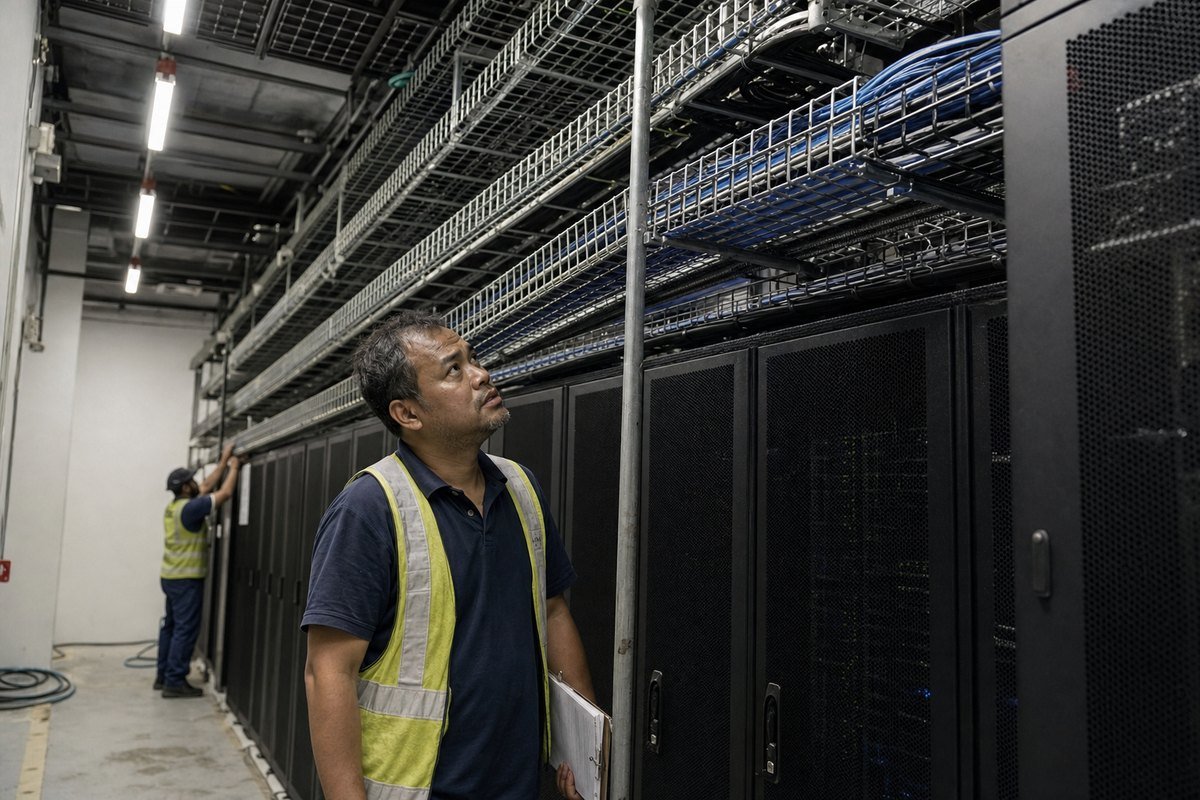
Choosing wire mesh cable trays 1 for data centers in Singapore is harder than it looks IEC 61537 testing 2. I learned this at our Tai’an factory after a Singapore contractor rejected a whole shipment over coating specs.
To choose wire mesh cable trays for Singapore data centers, verify IEC 61537 load ratings, select hot-dip galvanized or stainless steel 316L finishes for humidity resistance, confirm SS 538 earthing compliance, demand documented factory quality control, and request customized widths, depths, and accessories that match your rack layout.
That rejected shipment taught me what really matters. In this guide, I will walk you through the four questions every buyer should answer before signing a purchase order.
What Load Capacity Do I Need for My Data Center Wire Mesh Cable Trays?
A project director in Singapore once messaged me on WhatsApp at midnight. His trays were sagging after only six months. The cause was simple: nobody had calculated the real cable load.
Most data center wire mesh cable trays need a load-bearing capacity of 30–75 kg per meter at 1.5–2 meter support spans, verified through IEC 61537 testing. Calculate your actual cable bundle weight, then add at least 30% spare capacity for future fiber and copper expansion.
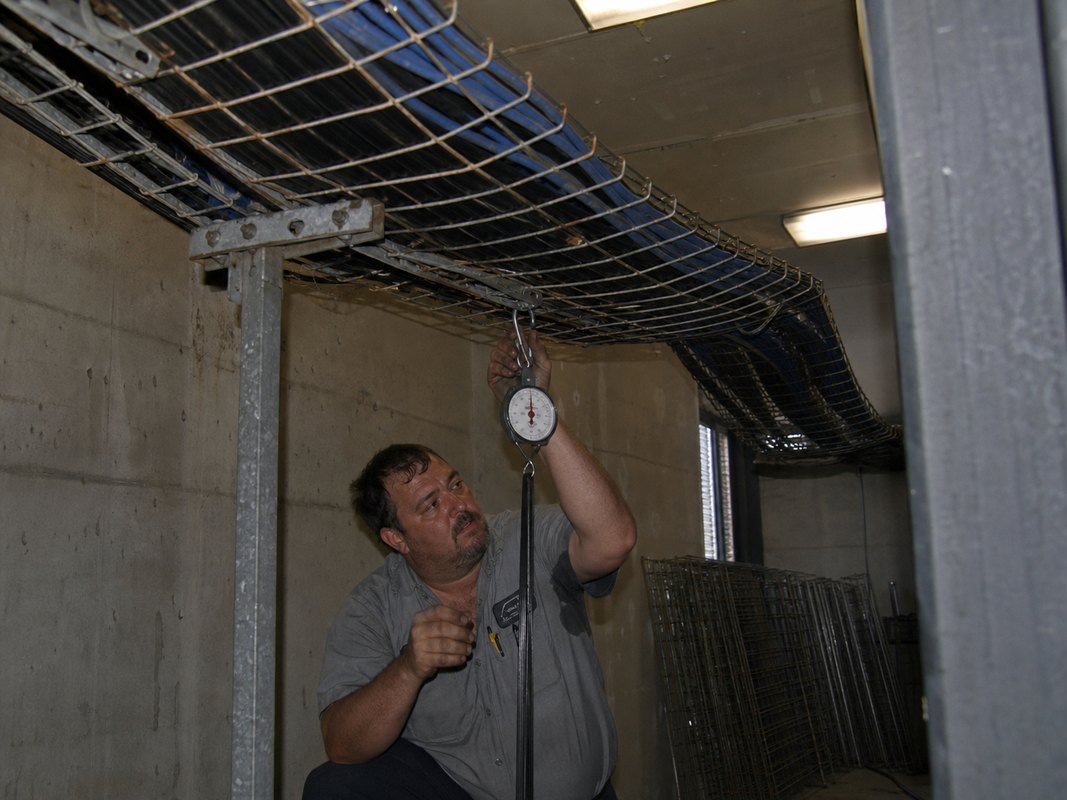
Load capacity is where I see the most costly mistakes. Buyers often assume all mesh trays perform the same. They do not. Wire diameter, mesh spacing, and weld quality all change the safe working load. At our production line, we test every batch against IEC 61537 compliance requirements before it leaves the factory. That standard defines how a tray must behave under load at a given span, with a safety factor built in.
How to Calculate Your Real Load
Start with your cable schedule. Weigh the bundles you plan to install on day one. Then add growth. Modern data halls are adding high-speed interconnects for AI clusters, and those bundles are noticeably heavier than standard Ethernet runs. A tray that was fine for Cat6 may struggle with dense 800G fiber and power hybrid routes.
Here is a simple sizing reference we share with EPC buyers:
| Tray Duty Class | Typical Load (kg/m) | Support Span | Common Use |
|---|---|---|---|
| Light duty | 15–30 | 1.5 m | Fiber patch, underfloor cable management |
| Medium duty | 30–50 | 1.5–2 m | Mixed copper and fiber, overhead cable routing |
| Heavy duty | 50–75 | 2 m | Dense trunk routes, hybrid power-data paths |
Do Not Forget the Cable Fill Ratio
Load is not just weight. It is also volume. Keep your cable fill ratio at or below 50% on day one. This protects airflow, keeps bend radii healthy, and leaves room for moves, adds, and changes. When a client in Singapore tells me their route is already 70% full at handover, I know a support call is coming within a year. Also increase bracket frequency near heavy drop points and fiber optic waterfall outlet locations, because concentrated loads behave differently from distributed ones.
Which Material and Coating Should I Choose for Singapore’s Humid Climate?
Coating choice is the trade-off I debate most with buyers. A cheaper finish saves money today. But in Singapore’s year-round humidity, the wrong surface treatment costs far more over ten years.
For Singapore data centers, choose hot-dip galvanized coating for support areas and exposed zones, electro-zinc plating or powder coating for climate-controlled white space, and stainless steel 316L for rooftop or coastal exposure. Match the finish to each environment rather than specifying one coating everywhere.
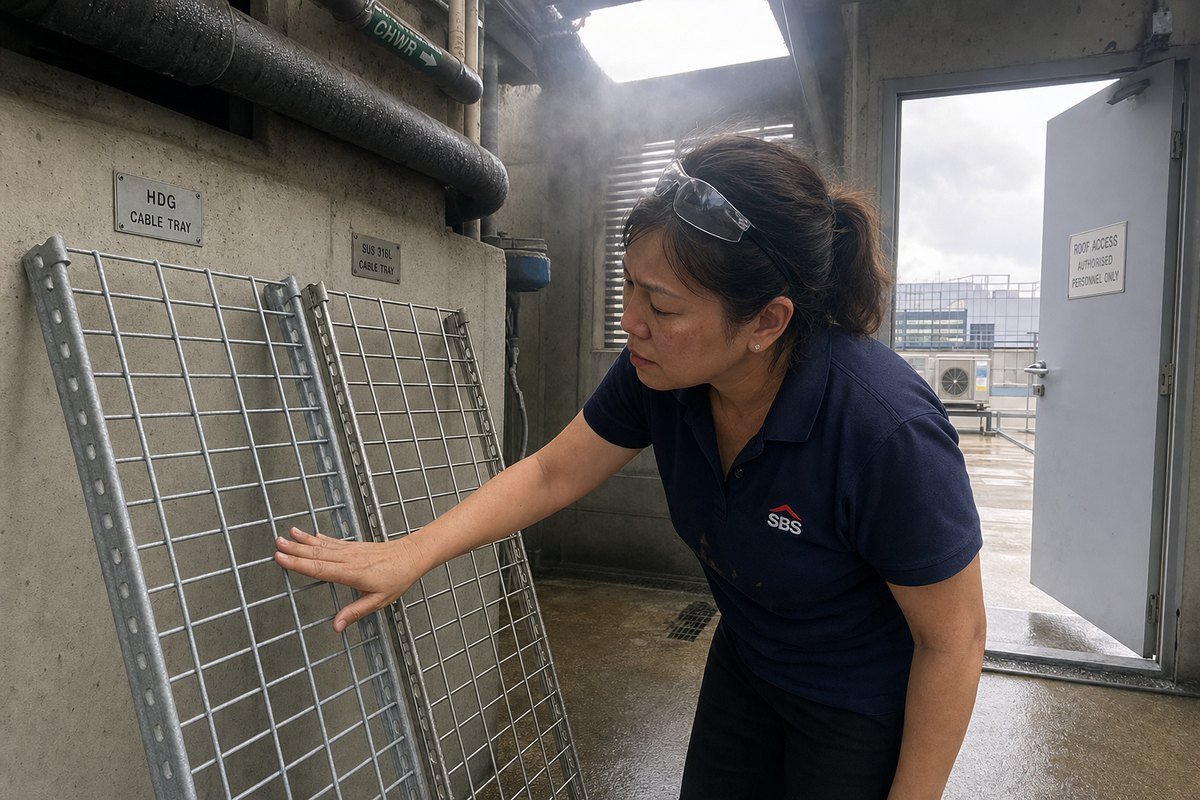
Singapore sits near the equator with humidity often above 80%. Even inside a facility, loading docks, riser shafts, and mechanical rooms see moisture that white space never does. So I always tell buyers: map your routes first, then assign finishes zone by zone. That approach usually cuts material cost by 15–20% compared with specifying stainless steel everywhere.
Comparing the Main Finish Options
| Finish | Corrosion Resistance | Relative Cost | Best Environment |
|---|---|---|---|
| Electro-zinc plating | Basic | Low | Dry, air-conditioned white space |
| Pre-galvanized | Moderate | Low-mid | Indoor controlled areas |
| Hot-dip galvanized 3 coating | High | Mid | Risers, plant rooms, semi-exposed zones |
| Powder-coated | Moderate-high | Mid | White space needing color coding |
| Stainless steel 316L 4 | Very high | High | Rooftop, coastal, chemical exposure |
The Zinc Whisker Question
Some data center operators worry about zinc whiskers 5 from electro-plated surfaces, especially in pressurized underfloor plenums where tiny metal filaments could reach sensitive equipment. The risk is debated in the industry. Our position is practical: for underfloor cable management in sensitive halls, offer the client hot-dip galvanized or powder-coated alternatives and let their risk policy decide. When we quote Singapore projects, we now include both options as standard. One more point: open mesh trays provide no EMI RFI shielding 6, so if a route needs shielding, plan separation distance or a solid enclosed section instead of relying on the basket itself.
How Do I Verify Quality Control Standards Before Placing a Bulk Order?
Years ago, a Singapore reseller told me his previous supplier’s welds snapped during installation. He lost his client and ate the return costs. That conversation reshaped how we run QC at our factory.
Verify quality control by requesting IEC 61537 test reports, third-party coating thickness certificates, weld strength data, and pre-shipment inspection with photos or video. Confirm the supplier checks SS 538 earthing continuity across couplers and ask for a golden sample before mass production begins.
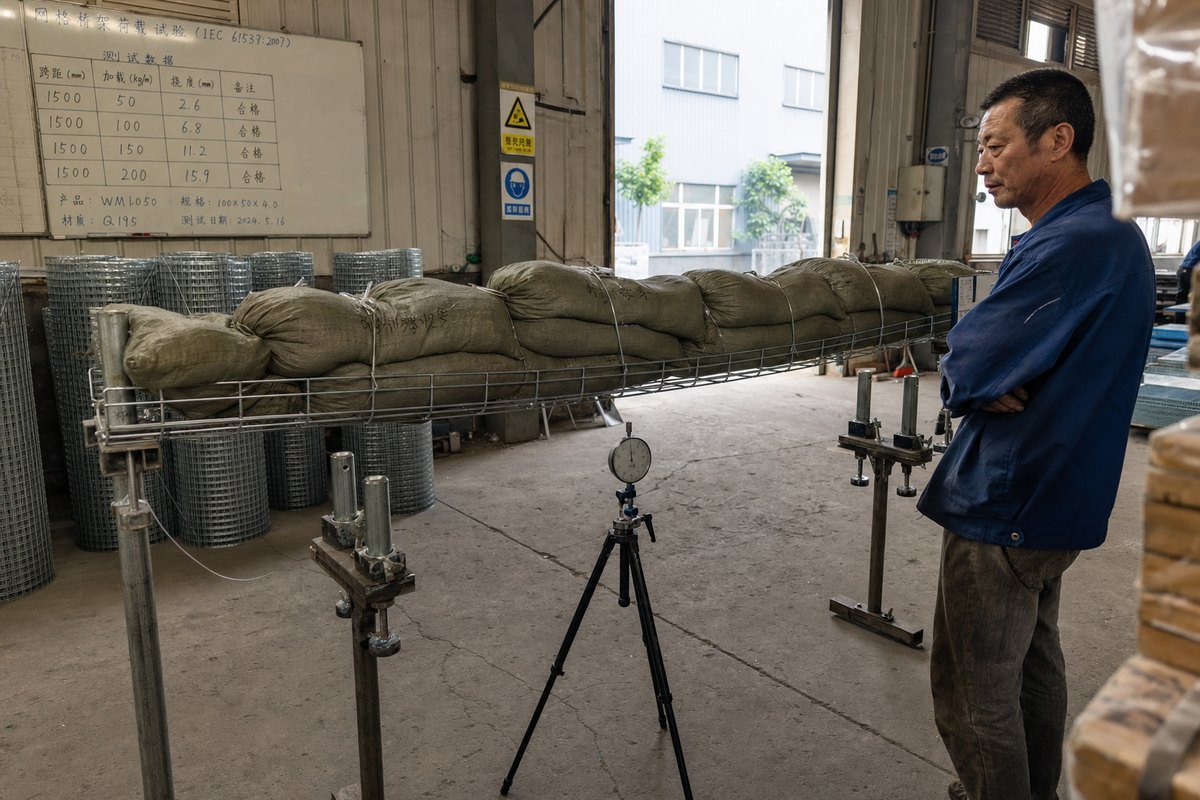
Quality control is where distance creates fear. You are in Singapore. The factory is in China. You cannot walk the line every day. So the answer is a documented process you can audit remotely. Here is the sequence we follow for every export order, and it is what you should demand from any supplier.
A Five-Step QC Verification Process
- Approve a golden sample. Before mass production, get a physical sample. Check wire diameter, mesh spacing, weld points, and finish. Keep it as the reference for the whole order.
- Request raw material certificates. Steel grade matters. Ask for mill certificates so you know the wire meets the spec, not just “looks like” it.
- Demand in-process checks. Weld shear strength and coating thickness should be measured during production, not only at the end. We test coating thickness with a digital gauge at set intervals and log the readings.
- Verify earthing continuity. Under the SS 538 Singapore Standard framework for electrical installations, tray systems must maintain bonding continuity. Ask the factory to test resistance across coupler joints and document it.
- Insist on pre-shipment inspection. Photos, video calls, or a third-party inspector. We send Singapore clients a video walkthrough of packed pallets before containers close. It costs us an hour. It saves everyone weeks of disputes.
Also confirm packaging standards. Sea freight to Singapore is short, but poorly packed trays arrive scratched, and scratched zinc means early rust. Check that edges are protected and pallets are shrink-wrapped with corner guards. Finally, ask how the supplier handles non-conformance. A factory that shows you its rework rate honestly is safer than one that claims zero defects.
What Customization Options Should I Request to Match My Data Center Layout?
Collaborative development is my favorite part of this business. When a Singapore project director sends us rack elevation drawings, we can engineer the tray system around them instead of forcing the layout to fit a catalog.
Request custom widths from 100–600mm, depths of 50–150mm, multi-tier configurations with 300mm power-data separation, boltless couplers for fast changes, rounded safe-edge wire ends, fiber optic waterfall outlets, color-coded powder coating, and cut-to-length sections matched to your hot and cold aisle spacing.
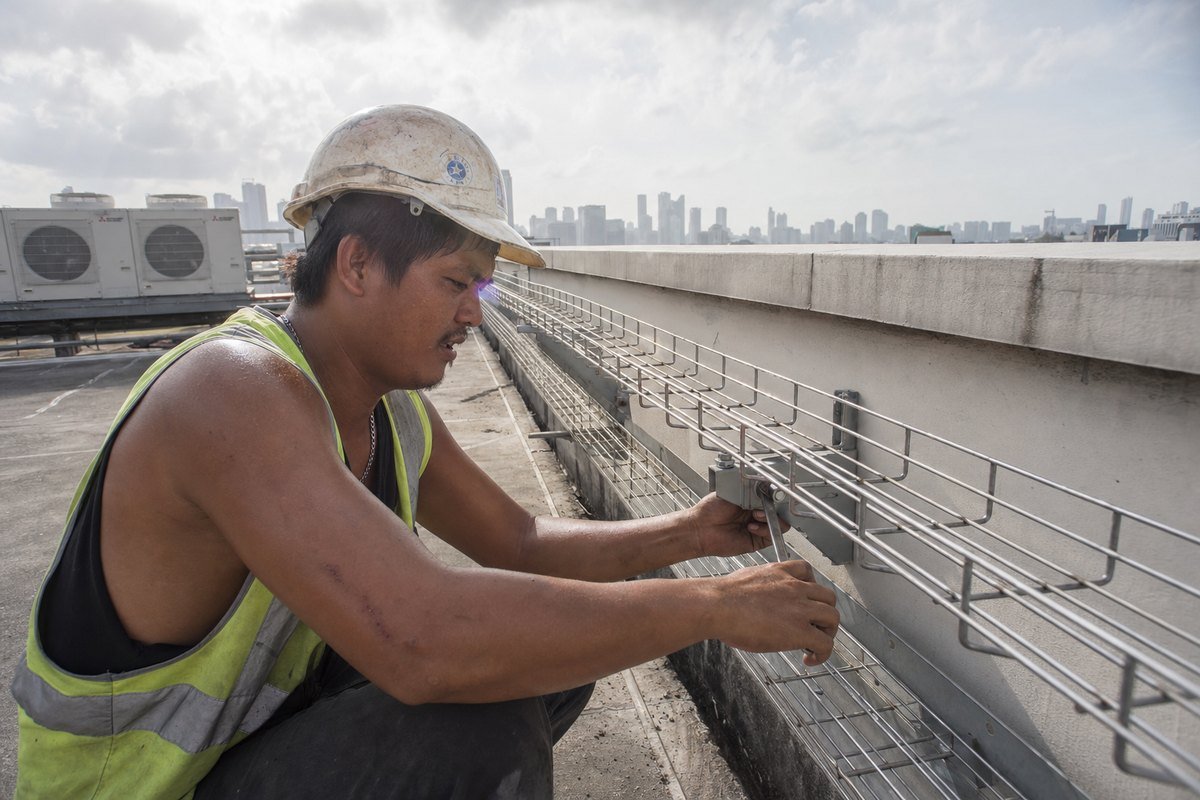
Standard catalog trays force compromises. Custom trays remove them. In our OEM projects for Southeast Asian data centers, the most valuable customizations are rarely exotic. They are practical details that save installation hours and protect cables for decades.
Customizations That Pay for Themselves
| Customization | Why It Matters |
|---|---|
| Boltless coupling systems | Enables fast moves, adds, and changes without power tools or hot work permits |
| Safe rounded wire edges | Prevents cable jacket abrasion during high-speed pulls |
| Fiber optic waterfall outlet kits | Protects bend radius where fiber drops from overhead cable routing into racks |
| Multi-tier bracket sets | Maintains 300mm separation between power and data paths |
| Color-coded powder coating | Speeds visual identification of fiber, copper, and power routes |
| Pre-cut lengths and factory bends | Reduces on-site cutting, waste, and sharp exposed edges |
Think About the Full Route, Not Just Straight Runs
A data hall is never one straight line. You need tees, crosses, risers, and reducers. Ask your supplier to review your layout drawings and produce a complete bill of materials, including fire rated support systems for routes that cross egress paths or serve life-safety circuits. We do this review free for EPC clients because it prevents the worst outcome: a container arriving with 500 meters of tray and no fittings to connect them. Also request spare couplers and extra earthing straps. They cost almost nothing in the container but save urgent air-freight orders later. If your facility targets green building credits 7, ask whether the supplier can provide material declarations to support sustainable construction documentation.
Conclusion
Sagging trays, corroded finishes, and failed inspections all trace back to rushed specifications. Verify load ratings, match coatings to Singapore’s climate, audit QC, and customize early. Your data center will run cleaner for decades.
Footnotes
- Background concept explaining what cable trays are and their industry use. ↩︎
- References the international standard governing cable tray load and safety testing. ↩︎
- Explains the galvanizing process referenced for corrosion resistance in humid climates. ↩︎
- Background on the specific steel alloy recommended for coastal exposure. ↩︎
- Zinc whisker contamination is a recognized data center facility risk topic. ↩︎
- Clarifies the shielding concept mentioned regarding open mesh tray limitations. ↩︎
- Rel