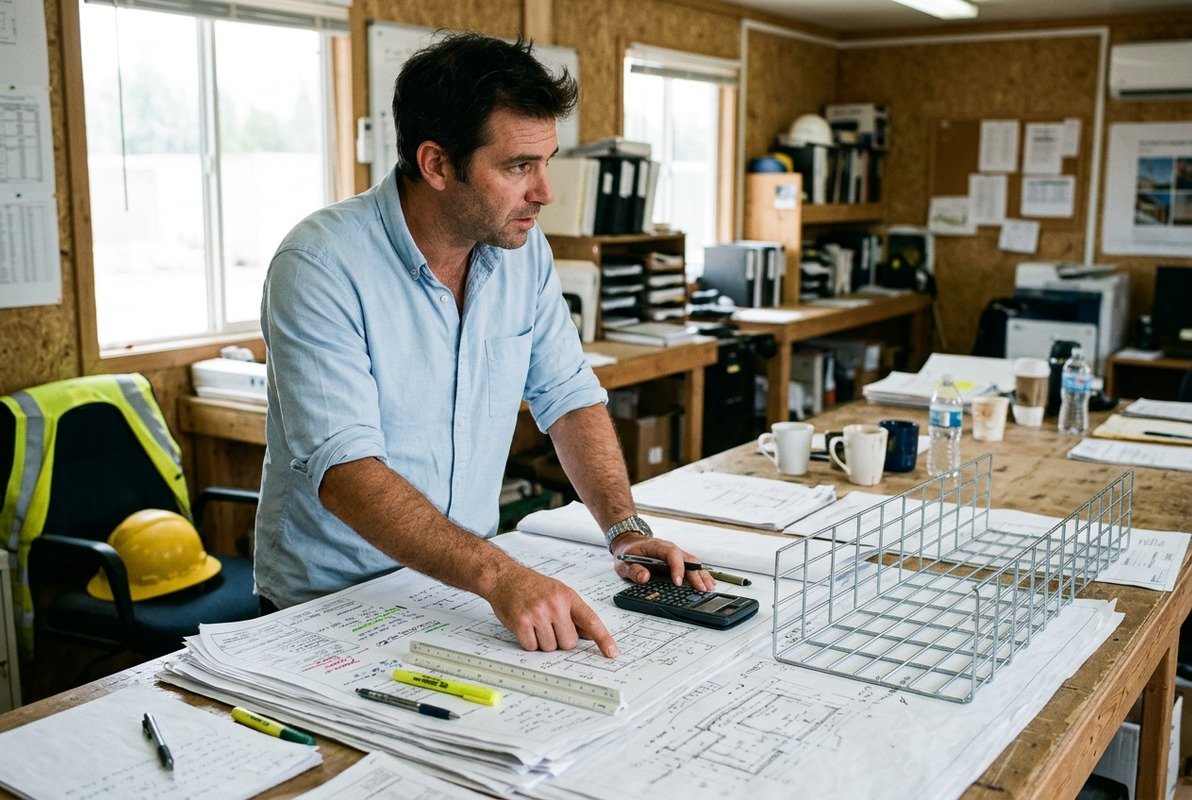
I once watched a contractor rip out an entire cable run because the wrong wire mesh cable tray 1 turned a data center into an overheating nightmare—an expensive lesson I help buyers avoid every day.
To choose the right wire mesh cable tray, match the material to your environment’s corrosion risks, calculate total cable weight plus future expansion for correct load capacity, verify dimensions against project routing needs, and confirm your supplier’s quality control process to prevent costly delays and rework on site.
Below, I break the decision into four practical questions electro-galvanized steel 2. Each one tackles a real pain point I see from project directors and EPC procurement teams across Southeast Asia, Africa, and South America. Let us walk through them together.
Which wire mesh cable tray material is most durable for my project’s environment?
A lesson I learned early in our export business: a batch of electro-galvanized trays shipped to a coastal water-treatment plant in Southeast Asia started showing rust within months, and we had to work with the buyer on a full replacement plan—that project taught our entire team why environmental factors must drive material selection before anything else hot-dip galvanized steel 3.
The most durable wire mesh cable tray material depends on your environment: electro-galvanized steel suits dry indoor spaces, hot-dip galvanized steel handles humid or outdoor conditions, and marine-grade stainless steel is essential for highly corrosive settings like coastal or chemical-processing facilities.
Understanding the Three Core Material Finishes
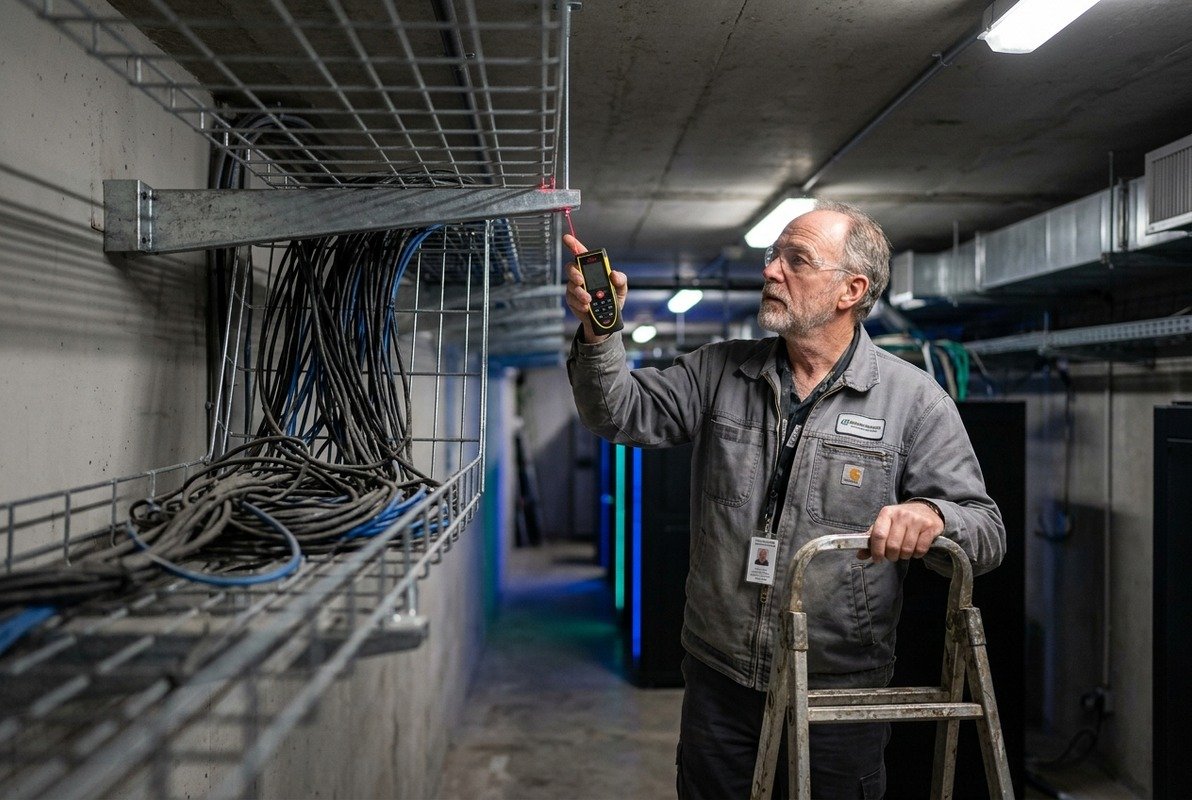
Not every project site is the same. A temperature-controlled data center in Singapore is worlds apart from an outdoor solar farm in coastal Africa marine-grade stainless steel 4. The material finishes you pick will determine how long your cable management solutions last before corrosion becomes a problem.
Here is a quick comparison I share with every new buyer:
| Material Finish | Best Environment | Corrosion Resistance | Relative Cost | Typical Lifespan |
|---|---|---|---|---|
| Electro-galvanized (EG) | Indoor, dry, climate-controlled | Low to moderate | Lowest | 5–10 years indoors |
| Hot-dip galvanized (HDG) | Outdoor, humid, mildly corrosive | High | Mid-range | 15–25 years |
| Stainless steel (SS 304/316) | Coastal, chemical plants, extreme corrosion | Very high | Highest | 25+ years |
How Environmental Factors Shape Your Decision
When I evaluate a buyer’s project, I ask three questions right away cable cross-sectional areas 5. First, is the installation indoor or outdoor? Second, is there constant humidity, salt spray, or chemical exposure? Third, what is the expected service life before the next renovation?
For projects in humid climates or near the coast, hot-dip galvanized wire mesh cable trays offer the best balance of corrosion resistance and cost. The zinc coating is thicker than electro-galvanized, so it withstands moisture and mild chemical contact far longer. Our production line runs both EG and HDG finishes, and I always steer outdoor or water-treatment projects toward HDG at a minimum.
If the project involves direct chemical exposure—say, a desalination plant or a facility near the sea—stainless steel is the only safe bet. Yes, it costs more. But a single cable tray failure in a corrosive environment can halt operations, trigger cable replacements, and push project timelines back by weeks.
A Note on Coatings and NEMA Standards
Many buyers ask about powder-coated or PVC-coated options. These can add another layer of protection, especially when the tray is exposed to UV or specific chemicals. However, the base metal still matters. A powder coat on thin electro-galvanized wire will not perform like a hot-dip galvanized tray in a wet tunnel.
Also, confirm that the material grade and coating meet applicable NEMA standards 6 for your region. Some EPC projects in Africa and South America reference NEMA or IEC classifications for cable support systems, and your supplier should provide test certificates that match.
How do I calculate the correct size and load capacity for my cable tray system?
One conversation changed how I guide buyers on sizing. A project director in South America ordered 12-inch-wide trays for a control room, only to discover mid-installation that the total cable volume—plus the fiber optic cables planned for phase two—exceeded the tray’s fill capacity. The fix required wider trays, new brackets, and a two-week delay.
Calculate wire mesh cable tray size by totaling all cable cross-sectional areas (keeping fill at or below 50%), adding the combined cable weight per linear foot, then selecting a tray width, depth, and support span that keeps the working load well within the manufacturer’s rated load capacity.
Step-by-Step Sizing Process
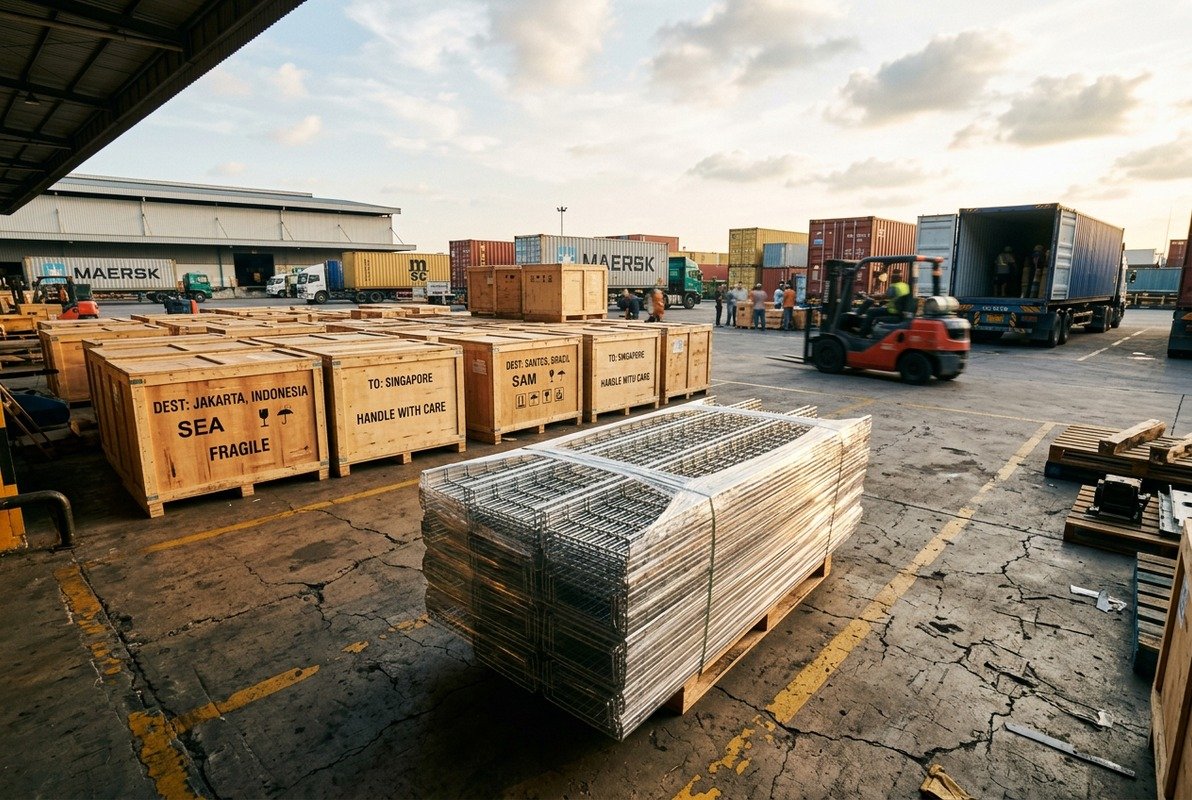
I walk every buyer through three stages: fill volume, weight per foot, and support span. Skip any one of them and you risk either an overfilled tray that traps heat or a sagging tray that damages cables.
Stage 1 — Fill Volume
The industry standard is 50% fill for cable trays carrying data, communication, and signal cables. This leaves enough open space for heat dissipation 7 and future additions. Here is a reference table based on common tray dimensions and small data cables (approximately 0.21 inches / 5.3 mm diameter):
| Tray Size (Depth × Width) | Usable Cross-Section Area | Approx. Cable Count at 50% Fill (0.21″ cables) | Approx. Cable Count at 50% Fill (0.30″ cables) |
|---|---|---|---|
| 2″ × 12″ | 24 sq in | ~335 | ~164 |
| 2″ × 18″ | 36 sq in | ~500 | ~246 |
| 4″ × 24″ | 96 sq in | ~1,340 | ~660 |
| 6″ × 36″ | 216 sq in | ~3,010 | ~1,490 |
Always check the exact cable diameter from the cable manufacturer’s data sheet. Do not estimate.
Stage 2 — Weight Per Linear Foot
Once you know how many cables the tray will hold, multiply the cable count by the weight per foot of each cable type. Add them all together. This total is your working load per linear foot.
For example, if you have 200 Cat6 cables at roughly 0.04 lb/ft each, the cable load is about 8 lb/ft. If you plan to add 100 more cables in the future, bump that to 12 lb/ft. Always factor in expansion—I usually recommend at least 25% extra capacity.
Stage 3 — Support Span
Wire mesh cable trays are lightweight, but they still need proper support. The allowable span between mounting brackets depends on the tray’s rated load capacity and the actual cable weight. A tray rated for 30 lb/ft at a 5-foot span may only handle 15 lb/ft at a 10-foot span. Always consult the manufacturer’s load-span table.
Why 50% Fill Matters for Heat Dissipation
NEC and most international electrical codes require adequate spacing inside cable trays so that heat can escape. Overfilling a tray traps warm air around the cables, raises conductor temperature, and degrades insulation over time. This is especially critical in data center cabling, where hundreds of active Ethernet and fiber optic cables generate cumulative heat. The open mesh grid—typically a 2″ × 4″ pattern—already promotes airflow better than solid-bottom trays. But that advantage disappears if you pack the tray to 80% or 90% fill.
Planning for Future Cable Routing Efficiency
I always tell buyers: the cheapest upgrade is a slightly wider tray ordered today. Going from a 12-inch to an 18-inch tray adds minimal cost per foot but gives you room to pull new cables without opening a parallel run. That installation flexibility saves far more money than the small upfront difference.
Can I get custom wire mesh cable tray dimensions to match my project’s specifications?
A project contractor from Africa once sent me a hand-drawn sketch on WhatsApp—a non-standard width, an unusual depth, and a request for pre-bent 45-degree elbows that did not exist in any catalogue. That kind of request is exactly why our production setup was built around OEM and ODM flexibility.
Yes, reputable wire mesh cable tray manufacturers offer custom dimensions including non-standard widths, depths, lengths, bend angles, and material finishes. Custom fabrication ensures precise fit for complex cable routing layouts, reduces on-site modification time, and supports unique project specifications that off-the-shelf sizes cannot meet.
What Can Be Customized?
Almost every parameter is adjustable. Here is what I typically discuss with buyers during the collaborative development phase:
| Customizable Parameter | Standard Range | Custom Capability |
|---|---|---|
| Width | 2″ to 36″ | Any width within structural limits |
| Depth | 2″, 4″, 6″ | Non-standard depths on request |
| Length | 118-1/8″ (3 m) | Cut-to-length or extended sections |
| Bend angles | 45°, 90° | Any angle: 30°, 60°, custom degrees |
| Material | EG, HDG, SS 304 | SS 316, powder-coated, PVC-coated |
| Mesh grid size | 2″ × 4″ | Tighter or wider grid on request |
| Fittings | Standard tees, elbows, reducers | Project-specific connectors and brackets |
On-Site Modification vs. Factory Pre-Fabrication
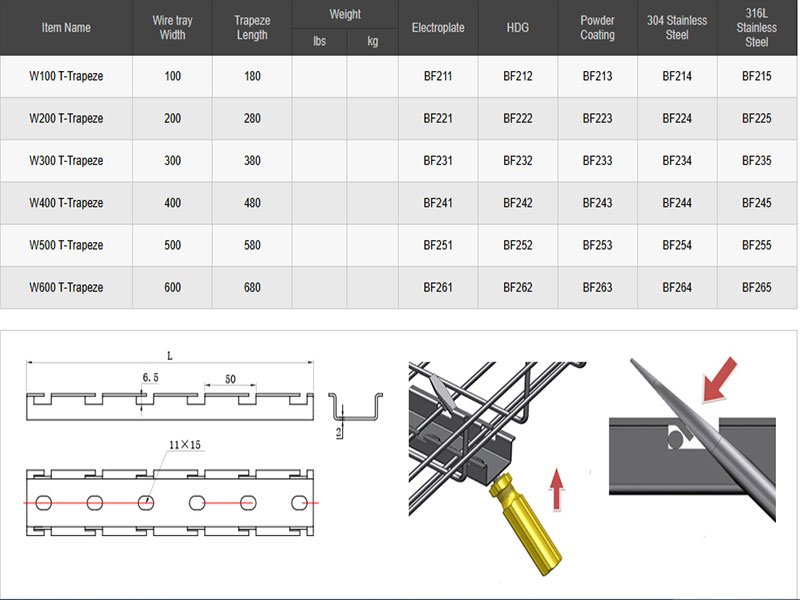
Wire mesh cable trays have one big advantage over rigid ladder or solid-bottom trays: they can be cut and bent on site. A technician with a band saw and a file can trim one side of the tray, fold it to the desired angle, and create a custom bend in minutes.
The general formula for a field-cut bend is: tan(desired angle) × tray width = trim amount. For a 45-degree bend on a 12-inch tray, you trim roughly 12 inches from one side rail, fold, and align. For a 30-degree bend, trim about half the width.
However, field bends have limits. Each cut introduces a potential weak point, and angular imperfections accumulate if you make too many bends in a short run. For complex projects with dozens of turns, I recommend factory pre-fabrication 8. We produce custom elbows, tees, and reducers on our line, which arrive ready to bolt together. This saves hours of labor on site, keeps cable routing efficiency high, and avoids the quality risks of improvised field work.
When Custom Dimensions Save Money
It sounds counterintuitive—custom parts usually cost more per unit. But consider the total project cost. If a standard 24-inch tray is too wide for a tight ceiling cavity and a standard 18-inch is too narrow, you either force an awkward fit or run a second parallel tray. A custom 20-inch tray eliminates that waste. The small premium on fabrication pays for itself in faster installation, fewer brackets, and a cleaner cable management system overall.
I have seen this play out on solar energy and water treatment projects where cable paths follow irregular structures. Standard catalogue sizes simply do not map to every real-world layout, and forcing them creates support systems that look—and perform—like afterthoughts.
How do I verify a supplier’s quality control process to prevent my project from being delayed?
The most painful email I ever received was from a project director in Singapore whose shipment arrived with trays that did not pass his on-site inspection—inconsistent weld points, uneven zinc coating, and dimensions that were off by several millimeters. He had to reject the batch. That delay cost weeks and strained the relationship with his end client.
Verify a supplier’s quality control by requesting documented QC procedures (incoming material inspection, in-process checks, final inspection reports with photos), asking for third-party test certificates, requiring pre-shipment inspections, and confirming the supplier’s track record through references, factory audits, or video walkthroughs of the production line.
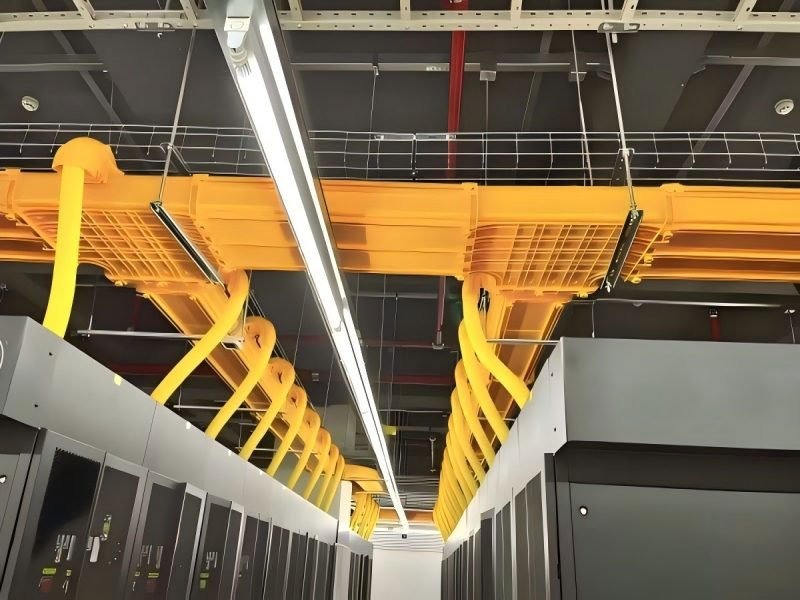
The Three Stages of QC You Should Audit
Quality control is not a single checkpoint. It is a process that runs from raw material intake through to container loading. Here is how I structure our QC flow, and what I recommend every buyer verify:
Stage 1 — Incoming Material Inspection
Before any wire hits the welding machine, the raw steel coil or rod must be checked for grade, diameter tolerance, and surface condition. If the base material is off-spec, no amount of downstream correction will fix it. Ask your supplier: do you test incoming steel? Can you share the mill certificate for the batch?
Stage 2 — In-Process Checks
During production, critical points include weld consistency, mesh spacing accuracy, tray straightness, and edge finishing. Wire mesh cable trays must have safety edges—rounded or folded—to prevent cable abrasion and worker injury. On our line, operators check mesh grid dimensions and weld strength at set intervals. Any tray that drifts outside tolerance is pulled and reworked before it reaches the coating stage.
Stage 3 — Final Inspection and Pre-Shipment
After coating (galvanizing or painting), every tray should be inspected for coating thickness, adhesion, appearance, and dimensional accuracy. I encourage buyers to request a pre-shipment inspection report with photos showing measurement tools on the actual trays. Some buyers hire third-party inspection agencies 9—SGS, TÜV, Bureau Veritas—to visit the factory before shipment. This adds a small cost but provides an independent verification layer that protects both sides.
Red Flags to Watch For
Over years of serving EPC project brand owners and wholesalers, I have noticed patterns that predict quality problems:
- The supplier cannot provide a written QC procedure document.
- They resist factory visits or video calls showing the production floor.
- Lead times are suspiciously short for large orders (could mean they are outsourcing to unknown sub-suppliers).
- They have no clear process for handling non-conforming products.
- Past shipments had no inspection photos or packing records.
How QC Prevents Delays and Returns
A rejected shipment does not just cost money for replacement goods. It triggers a chain reaction: re-production time, re-shipping, customs clearance again, and meanwhile the installation crew on site is idle or forced to reschedule. For a project contractor buying cable management solutions for a time-sensitive EPC build, that delay can mean contractual penalties.
The best defense is a proactive QC agreement before the first order. Define acceptance criteria, inspection methods, and what happens if a batch fails. When both sides know the rules, quality problems drop sharply—and if one does occur, the resolution path is already agreed upon.
Conclusion
Choosing the right wire mesh cable tray comes down to four decisions: match material to environment, calculate load and fill correctly, leverage custom dimensions when standard sizes fall short, and lock in a supplier whose quality control protects your timeline.
Footnotes
- Provides a comprehensive overview of wire mesh cable trays, their uses, and benefits. ↩︎
- Wikipedia provides an authoritative and comprehensive overview of electrogalvanization, including its process and purpose. ↩︎
- Details the corrosion protection mechanisms and benefits of hot-dip galvanized steel. ↩︎
- Provides a definition and key properties of marine-grade stainless steel, specifically 316. ↩︎
- This guide provides a detailed explanation of cable diameter versus cross-sectional area, including formulas and their importance in electrical engineering. ↩︎
- Explains various NEMA standards relevant to cable tray systems and their manufacturing. ↩︎
- This article directly addresses how cable trays aid in heat dissipation and prevent overheating, which is highly relevant to the original context. ↩︎
- Highlights the advantages of factory pre-fabrication for efficient cable tray installations. ↩︎
- Explains the role and benefits of third-party inspection agencies in ensuring product quality. ↩︎