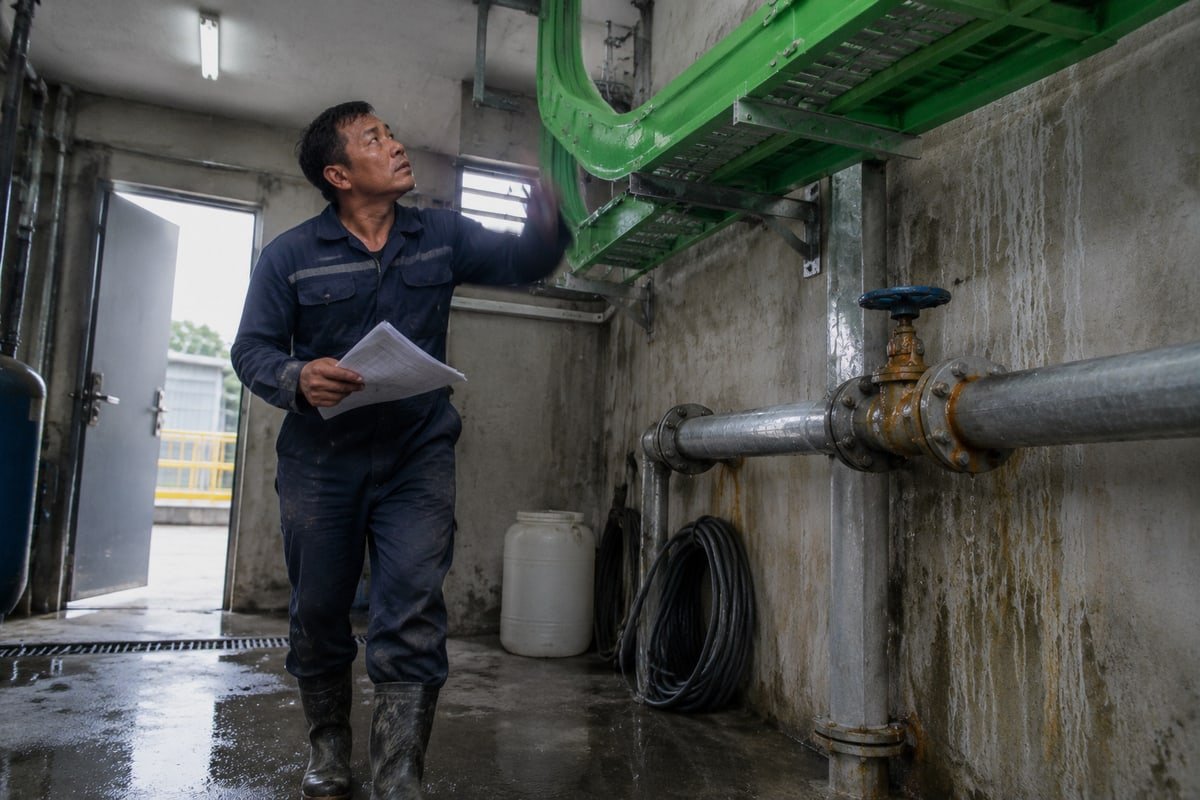
A GRP cable tray looks simple on a drawing. Then it fails in a chlorine room, and our factory gets the return call. I want to spare you that.
Choose a GRP cable tray by environment first. Confirm the corrosion threat, pick the resin (vinyl ester for harsh chemicals, isophthalic polyester for milder sites), then size width, depth, and support span from your cable schedule. Verify fire, UV, and load data with test reports before ordering.
That is the short version. The long version is what follows. I will walk through the supplier questions, the quality checks, the environmental specs, and the lead-time traps. Each section ends with something you can act on.
What Factors Should I Consider When Selecting a GRP Cable Tray Supplier?
A project director in Singapore once asked me for “the cheapest GRP tray you have.” I asked what the tray would sit next to. He said seawater. That changed the whole quote.
Judge a GRP cable tray supplier on five things: resin and process transparency, third-party test reports against IEC 61537 or NEMA FG1, a complete accessory system, documented QC at the pultrusion stage, and honest lead-time and packing commitments. Price matters only after these are proven.
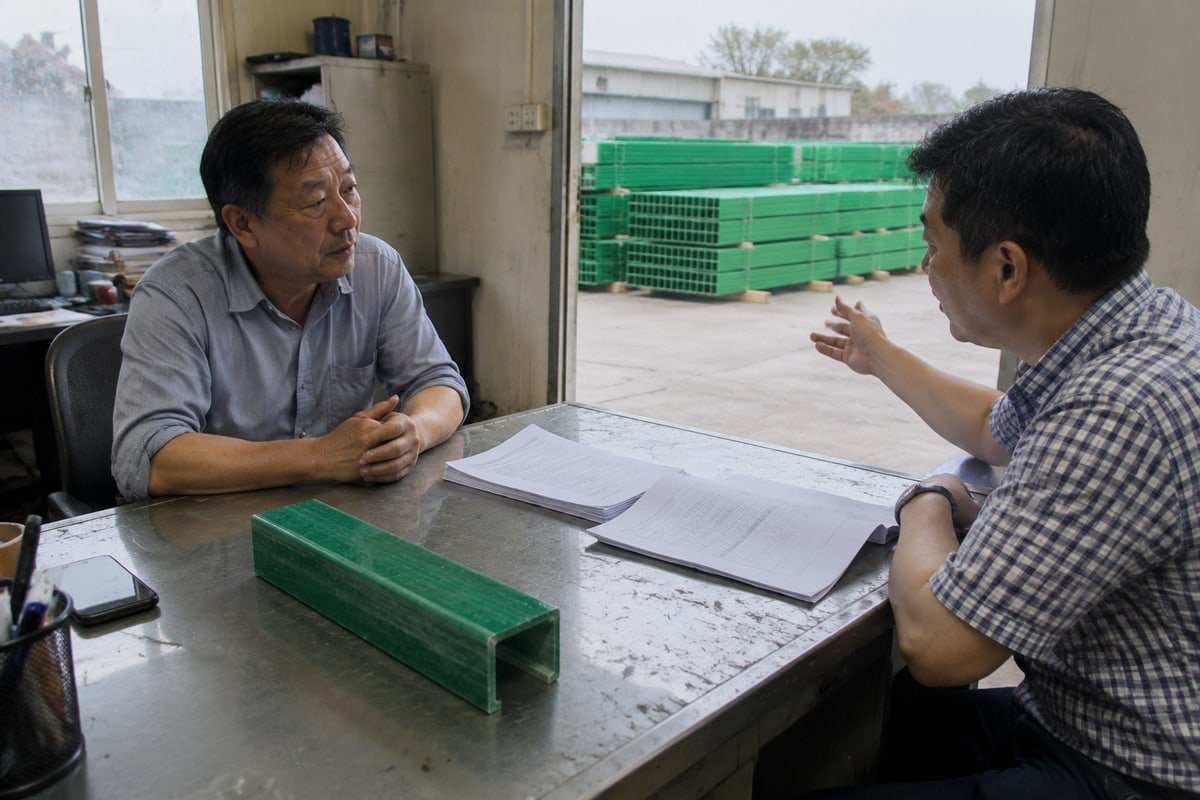
Before you compare suppliers, you need to answer a harder question. Do you need GRP at all? I say this openly even though we sell it. The selection logic for GRP is not the same as for steel. With hot-dip galvanized steel 1, the main variable is surface treatment. Do you pick hot-dip galvanizing or powder coating? That is it. With GRP, the core variables are the resin, the structure, and the pultrusion process 2. Those three decide whether the tray survives its design life in your environment.
Is GRP the right material for this project?
From my experience, GRP is only worth considering when all of the following are true:
| Condition | What it looks like in practice |
|---|---|
| Real corrosion threat to steel | Chemical plants, coastal sites, sewage and water treatment, electroplating lines, acid pickling shops |
| Lifecycle cost favors GRP | The maintenance-free years offset the higher purchase price over the design life |
| Special installation needs | Explosion hazard zones where hot work and welding are not allowed; GRP cuts and bolts cold |
If your project is an ordinary dry indoor factory, hot-dip galvanized steel tray is fully adequate. Choosing GRP there is performance you pay for and never use. I would rather send you steel C-channel and support from our yard than oversell FRP cable management you do not need.
Questions to put to any supplier
Once GRP is justified, here is what separates a serious supplier from a trading desk:
- Which resin system do you use, and can I see the resin supplier’s datasheet?
- What is the glass content, and is there a surfacing veil on the outer layer?
- Which load and span tests have you run, and against which standard, IEC 61537 or NEMA FG1?
- Do you supply bends, tees, reducers, risers, covers, and joints from the same profile family?
- What hardware comes with the system? In corrosive settings, I recommend 316 stainless steel bolts and clamps.
- How do you pack for sea freight, and what is the realistic lead time for my accessory list?
A supplier who can answer these quickly, with documents, is one you can build a project with. A supplier who only talks about price per meter is guessing on your behalf.
How Do I Verify the Quality and Durability of GRP Cable Trays Before Ordering?
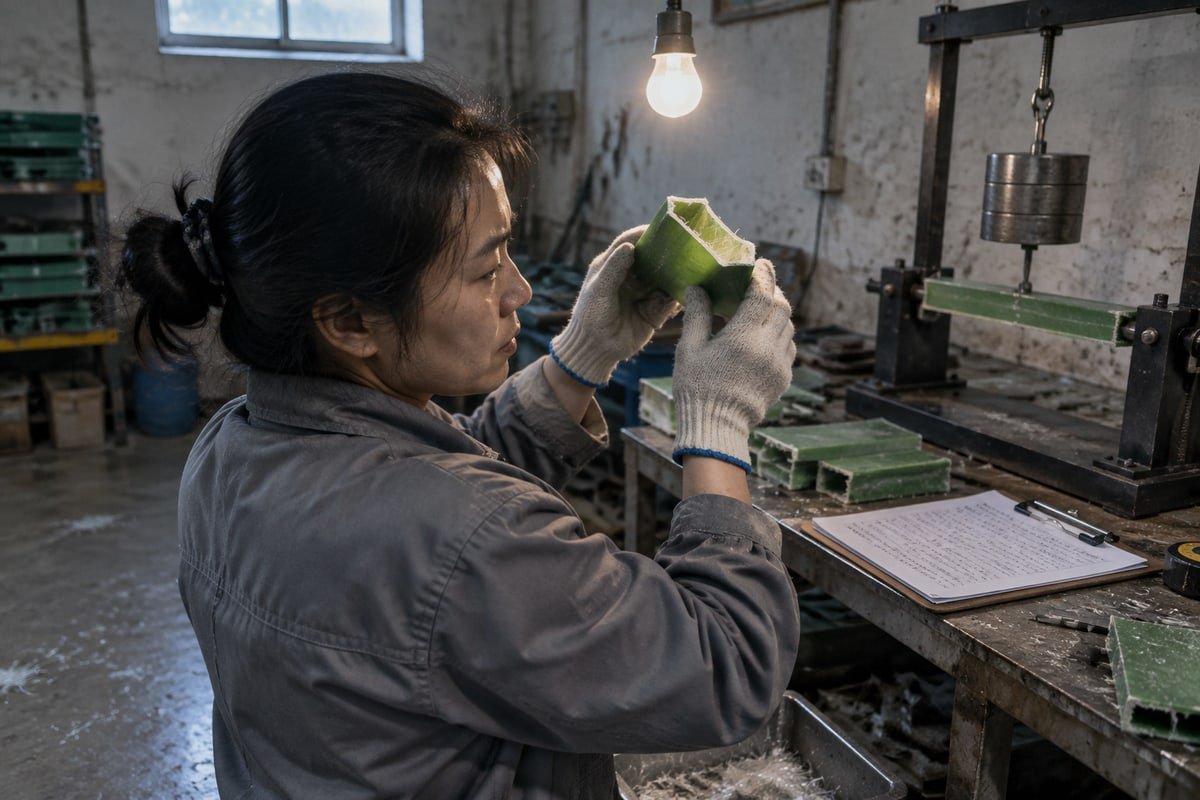
Last year our QC team rejected a batch of green ladder rails because the cut edge showed dry glass fiber. The surface looked fine. The cross-section told the truth.
Verify GRP cable tray quality by checking three things: a resin-rich outer surface with a synthetic veil, documented load tests at your intended support span, and third-party fire and UV reports. Inspect cut samples, not just glossy finished sides, and match every claim to a datasheet.
Marketing claims and engineering data are two different things. I have seen brochures promise “lifetime corrosion resistance” with no test behind it. So my advice is simple. Trust the sample, the cross-section, and the report. Ignore the adjectives.
A five-step verification process
Here is the process I follow before we release any GRP order, and the same one I suggest to buyers checking us:
- Request a cut sample. Look at the sawn edge. You want a clear resin-rich layer on the outside and evenly wetted glass inside. Dry white fibers or voids mean poor pultrusion control.
- Check for fiber bloom prevention. Ask whether a synthetic surfacing veil is used. Without it, years of abrasive weathering pull glass fibers to the surface. That is what fiber bloom looks like, and it destroys UV stability and finish.
- Confirm load bearing capacity at your span. The supplier should give a load table by support span distance and straight section length. If your supports sit at 3 meters, you need data at 3 meters, not at 1.5 meters.
- Ask for third-party reports. Bodies such as SGS, TÜV Rheinland, DEKRA, or Bureau Veritas issue test reports for load, flame spread, and UV aging. Ask which test regime applies and read the actual document.
- Test the hardware, not just the tray. A vinyl ester tray held together with plain zinc bolts will fail at the fastener first in a coastal plant.
What the inspection should cover
| Check item | What to look for | Why it matters |
|---|---|---|
| Surface layer | Smooth, resin-rich, veil present | Prevents fiber bloom and UV degradation |
| Cut cross-section | No dry fiber, no voids, uniform wall | Confirms pultrusion quality and strength |
| Load test data | Deflection and failure load at your span | Prevents sagging and overload in service |
| Fire report | Flame spread and smoke rating to ASTM E84 or UL94 | Meets project fire compliance |
| Fastener material | 316 stainless steel in corrosive zones | Avoids galvanic and chemical failure |
| Dimensional check | Width, depth, rung spacing against drawing | Ensures accessories fit without field cutting |
One more point on durability. GRP moves more than steel with temperature. The coefficient of thermal expansion 3 is higher, so the tray system needs expansion joints and guided supports. A supplier who does not mention thermal expansion in their installation guide has probably never seen a long outdoor run crack at a rigid joint. Ask them about it before you sign.
Which GRP Cable Tray Specifications Fit My Project’s Environmental Conditions?
The trade-off I weigh most often is resin cost against exposure. Vinyl ester costs more per meter. Isophthalic polyester costs less. Choosing wrong in either direction wastes money.
Match GRP cable tray specifications to exposure: vinyl ester resin for chemical, coastal, and electroplating sites; isophthalic polyester for mild wet areas; fire retardant resin rated to ASTM E84 or UL94 where required; UV inhibitors for outdoor runs; and duty class chosen from cable weight and support span.
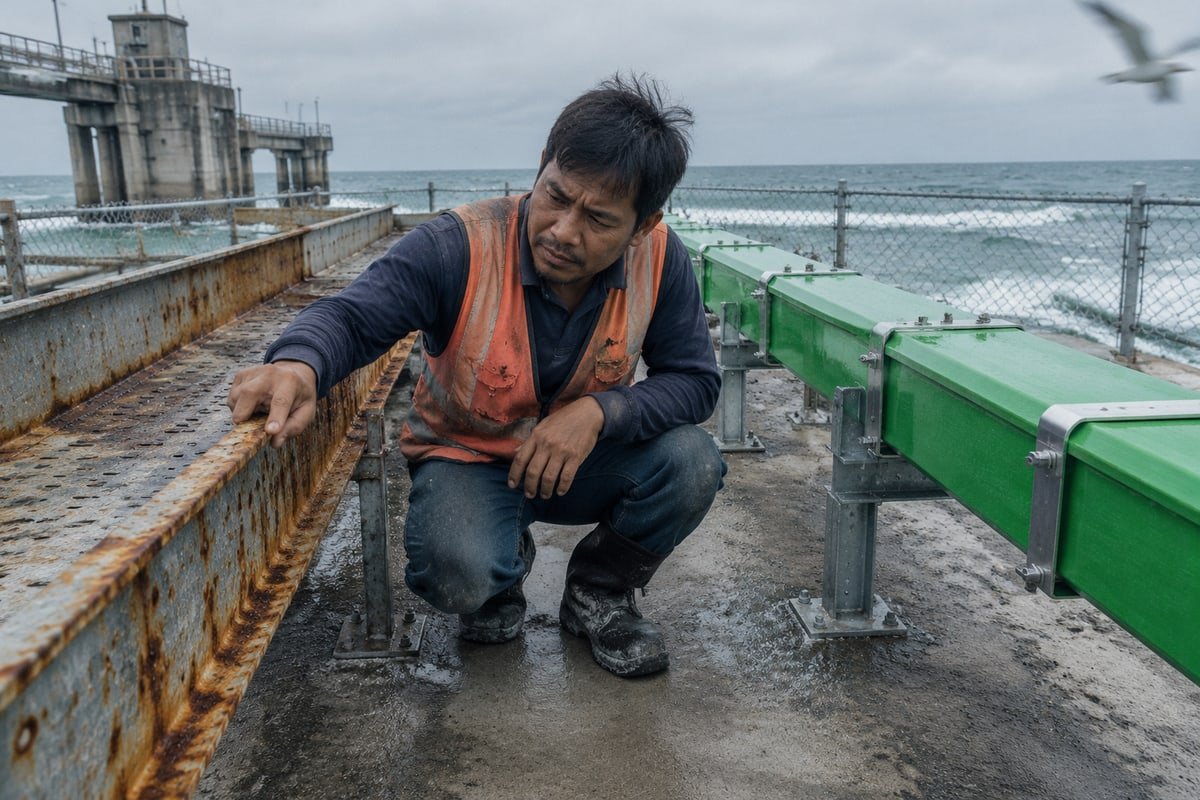
The rule I use is environment first, then prove the design with load and standards data. Here is how that plays out across the exposures we ship to in Southeast Asia and South America.
Environment-to-specification guide
| Environment | Resin | Tray style | Extra requirements |
|---|---|---|---|
| Chemical plant, acid pickling, electroplating | Vinyl ester | Ladder type tray or solid bottom with cover | 316 stainless hardware, chemical compatibility chart |
| Coastal, offshore, salt spray | Vinyl ester | Ladder or perforated | UV inhibitors 4, surfacing veil, expansion joints |
| Water treatment, sewage, persistent damp | Vinyl ester or isophthalic polyester | Perforated or ladder | Drainage, covers where debris falls |
| Solar farm, outdoor dry | Isophthalic polyester with UV package | Ladder or perforated | UV stability, thermal expansion allowance |
| Explosion hazard zone | Per chemical exposure | Any, bolted assembly | Non-conductive material, no hot work at install |
| Indoor dry plant | Consider galvanized steel instead | Any | GRP usually unnecessary |
Load, span, and duty class
Start from the cable schedule. You need the cable count, outside diameter, mass per meter, bend radius, and segregation rules. From that you get the working load per meter. Add spare capacity for future growth. Multi-layer power cables on a ladder type tray build up weight faster than most people expect.
Then set the support span distance. The wider the span, the taller the side rail and the thicker the wall must be. Suppliers usually group products into light, medium, heavy, and extra heavy-duty series. Widths in some markets run from 6 to 36 inches. Check the load bearing capacity table at your exact span, and verify it against IEC 61537 or NEMA standards, whichever your project follows.
Fire, UV, temperature, and electrical properties
- Fire. Ask for a fire retardant resin with a flame spread rating 5 to ASTM E84 or UL94. Some GRP products are also sold as self-extinguishing, halogen-free, and low smoke. Confirm which test report backs each claim.
- UV. Any outdoor run needs UV inhibitors in the resin and a surfacing veil. Write “UV resistant” into the specification. Do not assume it.
- Temperature. Manufacturer ranges vary by product. One product listing I have seen quotes -80°C to +130°C. That is an example of a range, not a universal figure, so check your supplier’s datasheet.
- Electrical. GRP is a non-conductive material and non-magnetic. That removes grounding bonding work and avoids electromagnetic interference on sensitive data or instrumentation routes.
Finally, remember thermal expansion. GRP grows more than steel when the sun hits it. Specify expansion guides and gaps at set intervals, especially on long outdoor straight runs.
How Can I Ensure Reliable Lead Times and Customization When Sourcing GRP Cable Trays?
A lesson I learned the hard way: a customer approved the straight lengths, but forgot the reducers. The reducers took longer than everything else. The whole container waited.
Secure reliable GRP cable tray lead times by freezing the full accessory list before production, confirming resin and color at order stage, agreeing on packing and container loading in writing, and asking for weekly progress photos. Customization is fast when it is defined early and slow when it is added late.
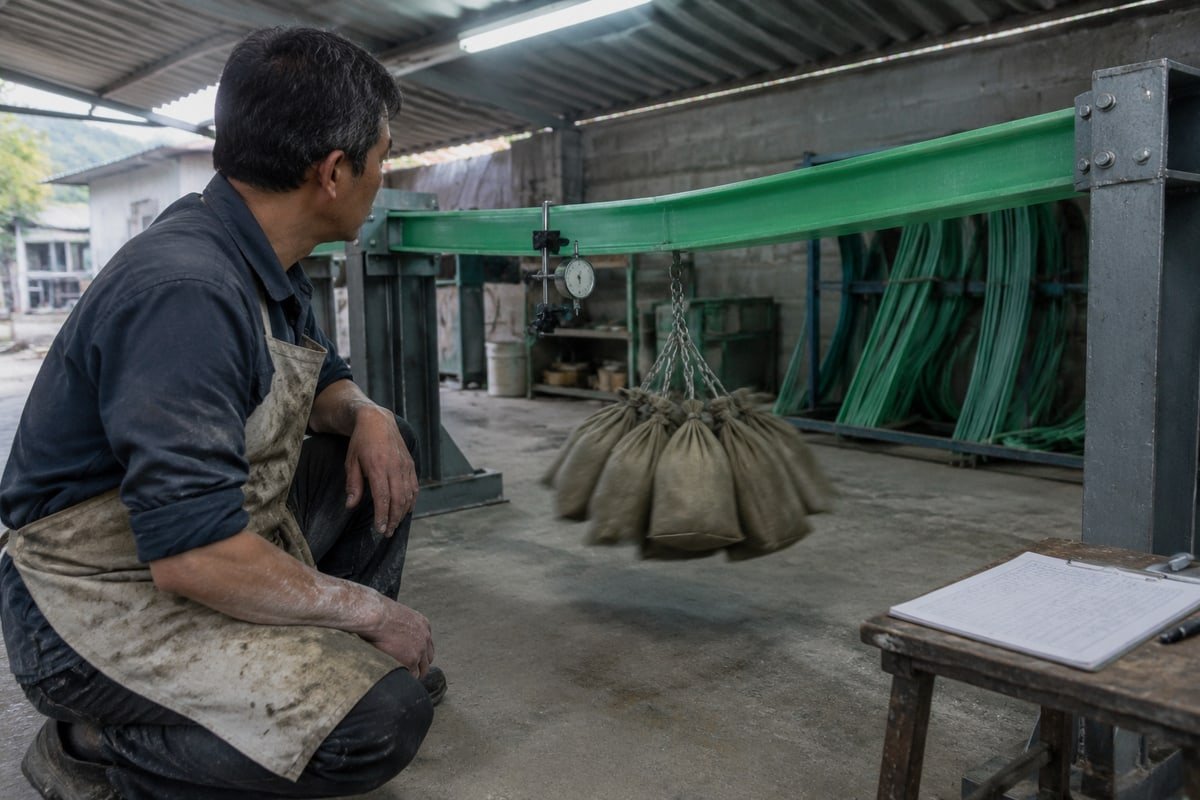
The three pain points I hear from project directors are the same every time. Delivery delays. Quality problems. Returns. In GRP, all three usually trace back to one thing. The order was not fully defined when production started. Here is how we handle that on our side, and what you should demand from any supplier.
Lock the scope before the first pull
Pultrusion is a continuous process. Straight tray comes off the line at a steady pace. The delays come from the accessories. Bends, tees, risers, and reducers are fabricated from the same profile, so they need drawings, jigs, and sometimes molds. If those details arrive after the straight lengths are done, your schedule slips. So I ask every customer for the complete routing with fittings before we quote a delivery date.
What customization costs you in time
| Customization | Lead-time impact | My advice |
|---|---|---|
| Integral color during pultrusion | Low, if agreed at order | Specify color coding by circuit up front; no secondary painting needed |
| Non-standard width or depth | Medium | Confirm die availability before promising a date |
| Resin change (polyester to vinyl ester) | Low to medium | Decide at quote stage; resin stock lead time matters |
| Custom bends, reducers, risers | Medium to high | Send the full fitting schedule with the drawings |
| Special hardware (316 stainless) | Low to medium | Order with the tray, not separately |
| Fire-rated resin with report | Medium | Ask which test report ships with the batch |
Packing, loading, and the site handoff
GRP is light, which cuts labor on site, but it can crack at the edges if it is stacked carelessly. In our yard, we strap bundles on wooden support blocks and keep widths separated, so nothing bears on a thin flange during transport. Ask your supplier for loading photos before the truck leaves. It is a small step that prevents a large argument later.
On site, insist that supports are aligned, level, and at the agreed support span distance. Uneven supports cause racking. And avoid field improvisation on bends, couplers, and reducers. Cutting a bend by hand is where compliance and schedule both fall apart. In explosion hazard zones, the cold bolted assembly of GRP is a real advantage, but only if the factory-made fittings arrive with the straight lengths.
Conclusion
Pick GRP only when the environment demands it. Then define resin, structure, and process with data. That is how you avoid failed trays, late containers, and returns.
Footnotes
- Official site of the American Galvanizers Association providing technical data on galvanized steel protection. ↩︎
- European Pultrusion Technology Association website explaining the composite manufacturing process used for GRP profiles. ↩︎
- Scientific overview of thermal expansion coefficients and their impact on material dimensions. ↩︎
- Technical explanation of UV stabilizers and inhibitors used to protect polymers from degradation. ↩︎
- National Institute of Standards and Technology homepage for fire safety and material performance research. ↩︎