Every week, buyers email our Tai’an factory asking why cable baskets and cable trays carry such different prices. Choosing wrong wastes budget—or worse, drops your cables mid-project.
Cable baskets are open wire mesh systems built for light data and signal cables, offering superior airflow and fast installation. Cable trays use solid or perforated sheet steel with side rails, delivering higher load-bearing capacity, longer support spans, and better mechanical protection for heavy power cables.
That is the short version. The full picture involves structure, cost, standards, and some confusing terminology. Let me walk you through each part, the way I explain it to our EPC clients.
What Are the Key Structural Differences Between Cable Baskets and Cable Trays?
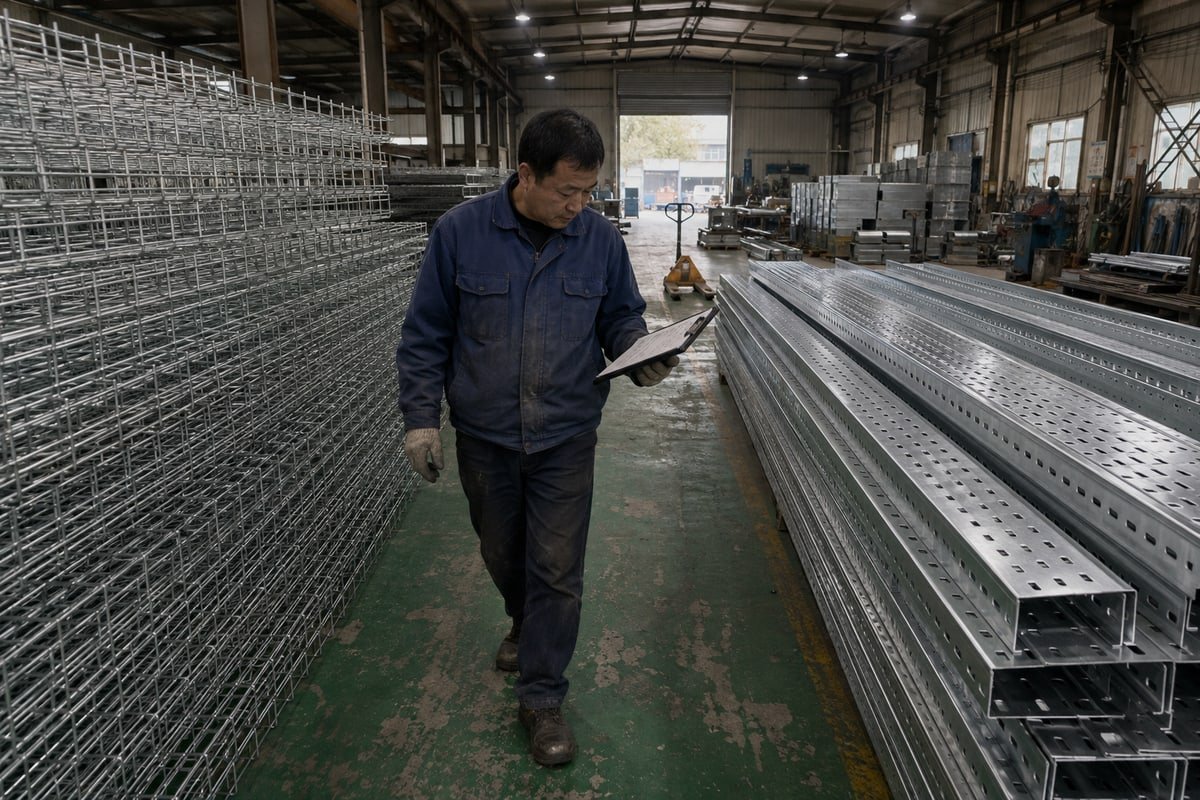
Last month, our welding line in Tai’an ran wire mesh baskets in the morning and perforated trays after lunch. Watching both take shape shows exactly how different they are.
Cable baskets are formed from welded steel wires creating an open grid with no solid base. Cable trays are fabricated from bent sheet metal with a flat or perforated bottom and raised side rails, giving them a rigid, enclosed structure that baskets deliberately avoid.
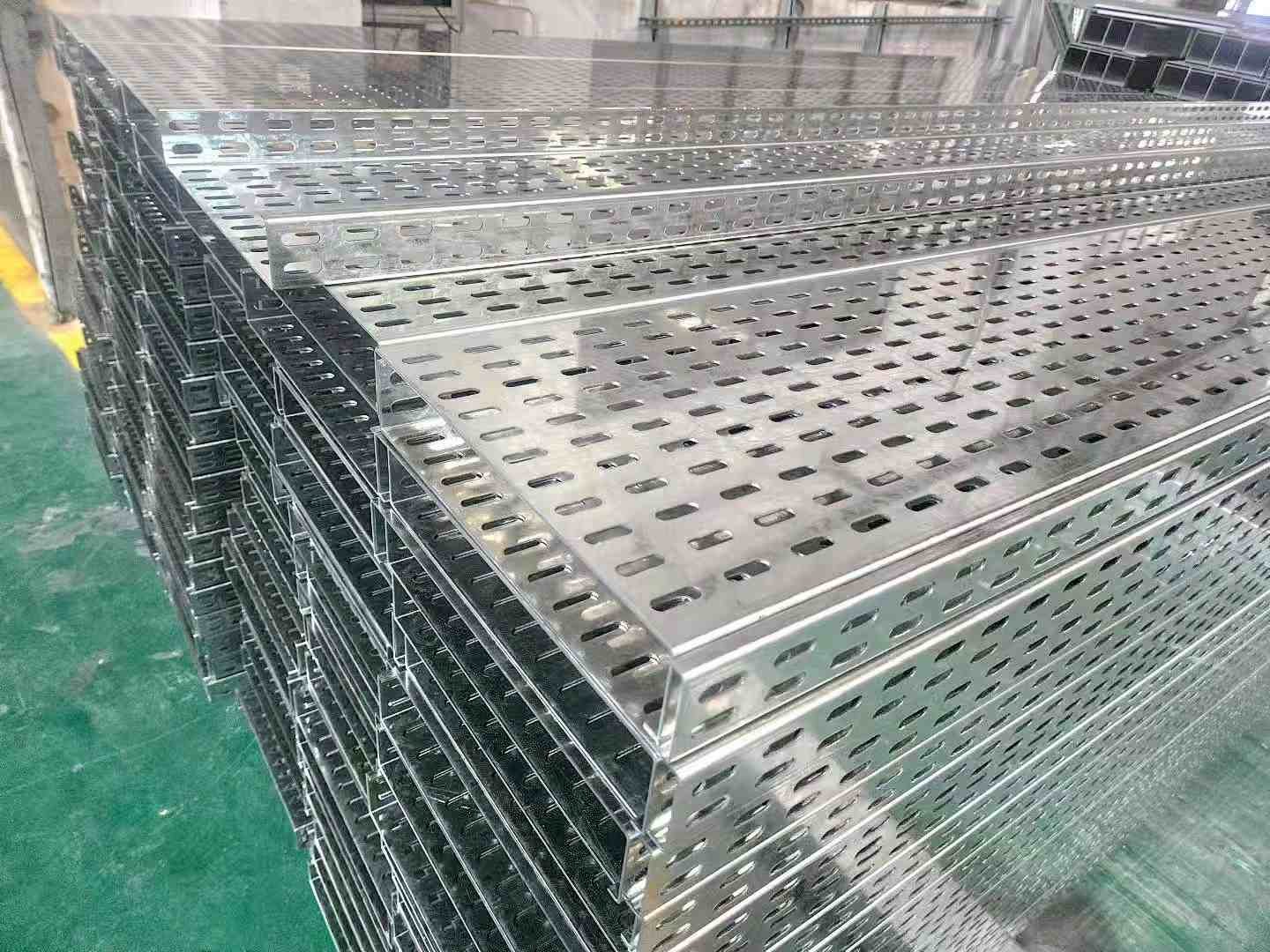
The manufacturing process tells the whole story. A cable basket starts as straight steel wires. We weld them at every intersection to form a crosshatch grid. The result is one of the lightest wire mesh systems you can hang from a ceiling. A cable tray starts as a flat steel sheet. We punch perforations, bend the edges into side rails, and sometimes add covers. The tray ends up heavier, stiffer, and stronger.
How Structure Changes Life On Site
This difference matters most during installation. A basket can be cut and shaped on site with bolt cutters. Your crew makes field-fabricated fittings—bends, tees, drops—in minutes. A tray cannot do that. It needs pre-engineered elbows, risers, and reducers ordered in advance. That gives baskets far greater installation flexibility, but trays reward careful planning with a cleaner, stronger run.
| Feature | Cable Basket | Cable Tray |
|---|---|---|
| Base material | Welded steel wire | Bent sheet steel |
| Bottom | Open mesh grid | Solid or perforated |
| Airflow | 360-degree ventilation | Restricted, depends on perforation |
| Field modification | Cut and shape on site | Requires factory fittings |
| Weight per meter | Low | Medium to high |
| Rigidity | Moderate | High |
A Terminology Warning
Here is a trap I see constantly. In some countries, “cable tray” is an umbrella term that includes baskets. In others, it means only sheet-metal trays. My advice from years of export work: always write the specific name—Wire Mesh Cable Tray or Perforated Cable Tray—on your purchase order. Labels vary; specifications do not.
Which Option Should I Choose for My EPC Project: Cable Basket or Cable Tray?
A Singapore project director once WhatsApped me at midnight: Lily, basket or tray for my data hall? My answer took one sentence, because the selection logic is genuinely simple.
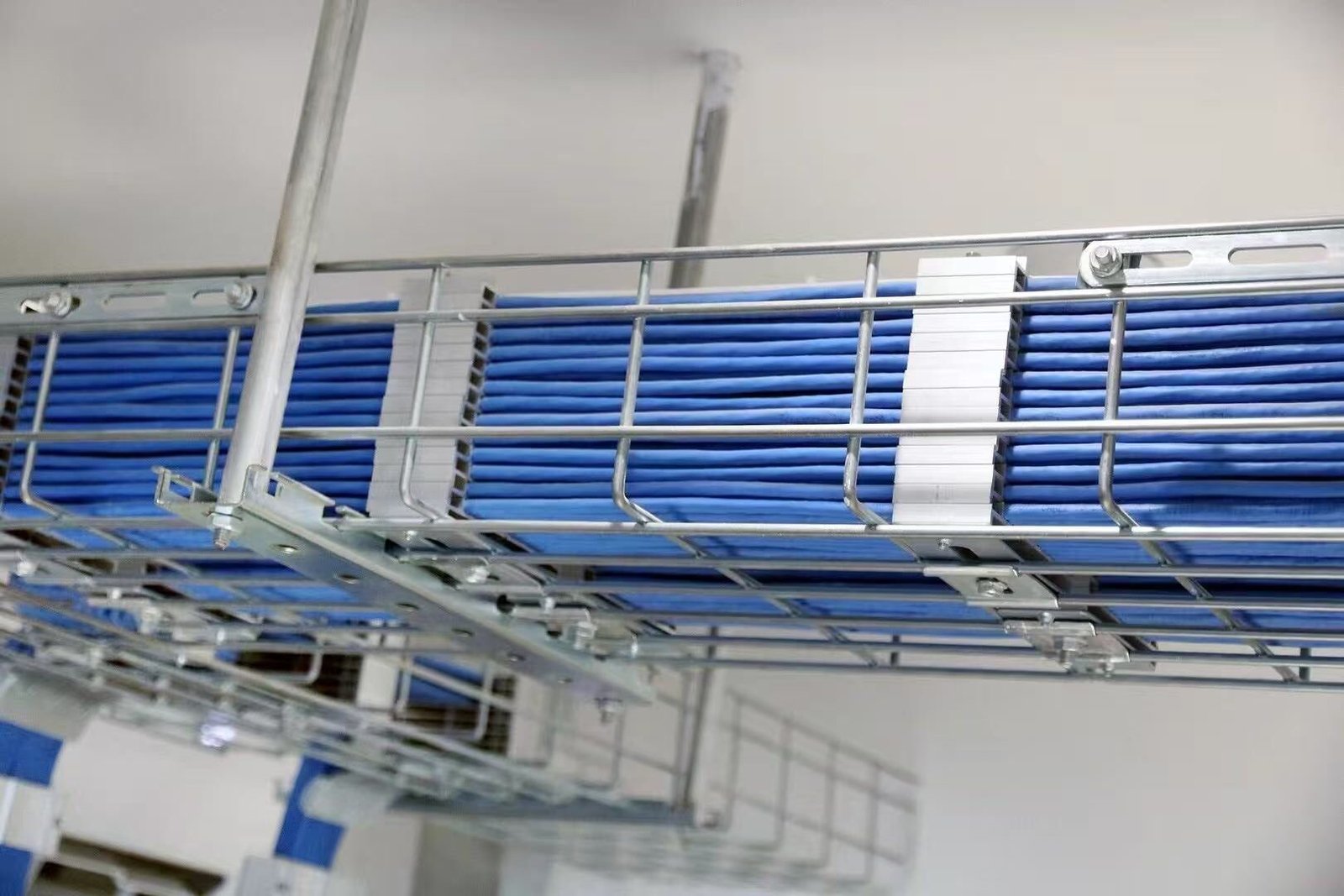
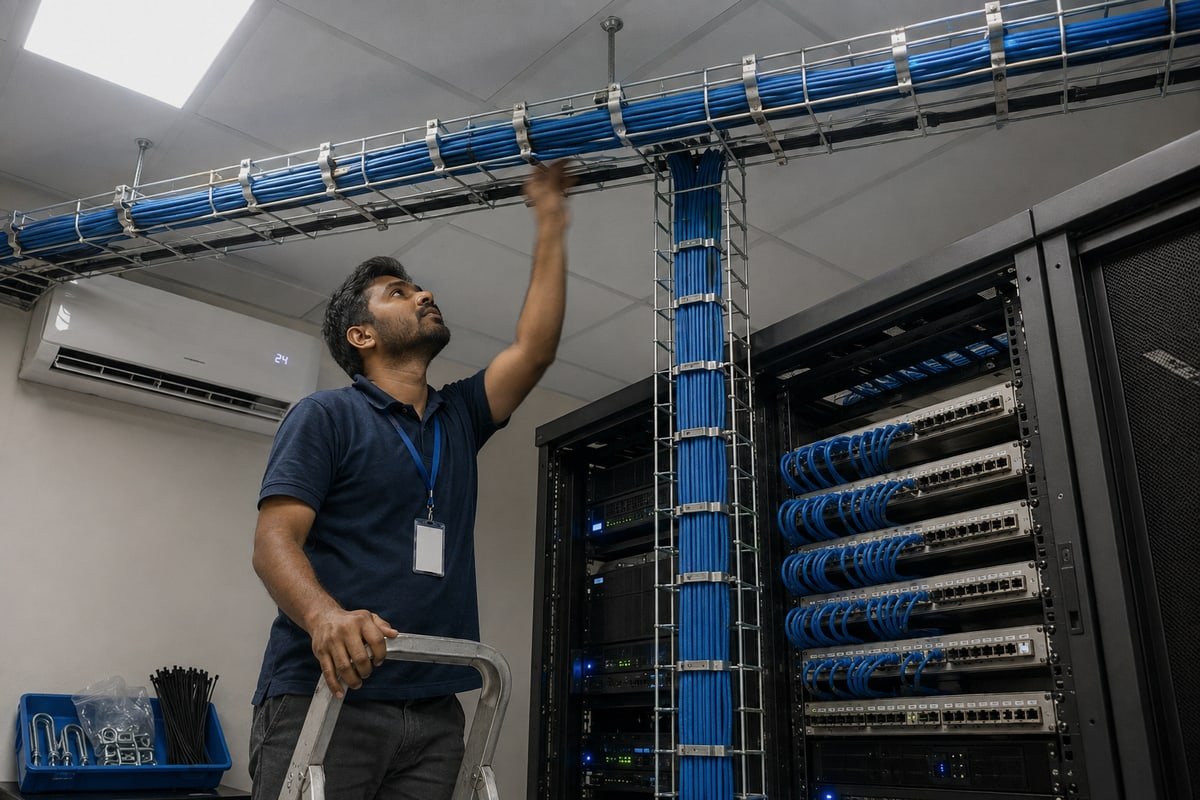
Choose cable baskets for light data, signal, and fiber cables in data centers, offices, and telecom rooms. Choose cable trays—ladder or perforated—for heavy power cables, long spans, and harsh industrial environments. Use trunking when signal cables need full enclosure and protection.
That midnight answer follows the rule I apply on every project we supply:
- Heavy power cables → Cable Tray (ladder or perforated type)
- Light signal and data cables → Cable Basket (wire mesh)
- Signal cables needing full protection → Cable Trunking (enclosed duct)
This framework resolves the debate you may have read online. Some vendors claim baskets are strong enough for almost anything. Others insist trays are always the safer bet. Both pitches miss the point. The choice is not “which is better.” It is “which is better for this cable, in this environment.”
Why Data Halls Love Baskets
Modern data center infrastructure has pushed baskets to the front for three technical reasons. First, heat dissipation. As Power over Ethernet 1 climbs toward PoE++ wattages, dense cable bundles run hot, and the open mesh prevents insulation degradation that solid trays can worsen. Second, crosstalk. For 10Gbps+ copper networks like Cat6A 2, the basket’s open geometry allows randomized cable laying, which reduces alien crosstalk compared to tight parallel bundles forced by narrow tray channels. Third, zinc whiskers. Mission-critical facilities often specify powder-coated or stainless steel baskets to eliminate the microscopic conductive filaments that can grow from electro-galvanized surfaces and short-circuit electronics.
Where Trays Still Win
Industrial plants, outdoor solar farms, and water treatment sites are tray territory. Trays give stronger mechanical protection against impact and dust. Solid-bottom trays also provide meaningful EMI shielding 3 for sensitive circuits running near power feeders—something an open basket simply cannot offer. One bonus point I share with architects: in open-ceiling offices, baskets actually help acoustics, because their minimal surface area reduces sound reflection and flutter echo.
| Environment | Recommended System | Key Reason |
|---|---|---|
| Data center / server room | Wire mesh cable basket | Airflow efficiency, easy rework |
| Office plenum, raised floor | Cable basket | Light loads, fast changes |
| Industrial plant, warehouse | Perforated or ladder tray | Heavy loads, protection |
| Outdoor solar / utility run | Hot-dip galvanized tray | Weather and impact resistance |
| Sensitive signal near power | Solid tray or trunking | EMI shielding, enclosure |
How Do Load Capacity and Cost Compare Between Cable Baskets and Cable Trays?
Every quotation we prepare balances the same two numbers: how much weight the run must hold, and how much steel the buyer’s budget can absorb.
Cable trays carry heavier loads over longer support span distances, but cost more in material, freight, and labor. Cable baskets hold lighter loads yet cut total installed cost through reduced steel weight, faster mounting, and fewer factory-made fittings. Match capacity to your actual cable weight.
Load-bearing capacity is where the two systems truly separate. A tray’s continuous sheet base and folded side rails resist sagging under bundles of heavy power cable. A basket’s welded wires flex sooner, so baskets need shorter intervals between supports. On long industrial runs, that extra support hardware can erode the basket’s price advantage—one reason I never quote by product label alone.
Reading the Numbers, Not the Labels
Here is the honest advice I give procurement managers. Do not trust marketing claims from either camp. Compare actual load ratings, material thickness, and span tables. In our export documentation, we reference BS EN 61537 4, the international standard for cable management systems, and buyers serving the Americas often ask about NEMA standards classifications as well. If a supplier cannot show tested load data against a recognized standard, walk away.
| Cost Factor | Cable Basket | Cable Tray |
|---|---|---|
| Steel per meter | Less material, lower cost | More material, higher cost |
| Ocean freight | Baskets nest and stack tightly | Trays take more container space |
| Installation labor | Fast, fewer fixings | Slower, more accessories |
| Fittings budget | Mostly made on site | Factory bends and tees required |
| Support hardware | More frequent supports | Fewer supports on long spans |
| Total installed cost (light cabling) | Usually lower | Usually higher |
The Real Trade-Off
For light-to-medium data cabling, the basket almost always wins on total cost of ownership. For heavy power distribution, forcing cables into an undersized basket is false economy—you will pay again in extra supports, deflection problems, or failure. Weight decides. Budget follows.
Can I Get Custom OEM Solutions for Both Cable Baskets and Cable Trays?
Years ago, an unlabeled cable tray order taught me a hard lesson—the client expected baskets, we shipped perforated trays. Since then, every OEM drawing gets signed before production.
Yes. OEM suppliers customize both cable baskets and cable trays—widths, depths, wire diameters, steel thickness, hot-dip galvanizing, powder coating, and stainless finishes. Buyers can order project-specific lengths, private labeling, and matched accessories, with drawings confirmed before production.
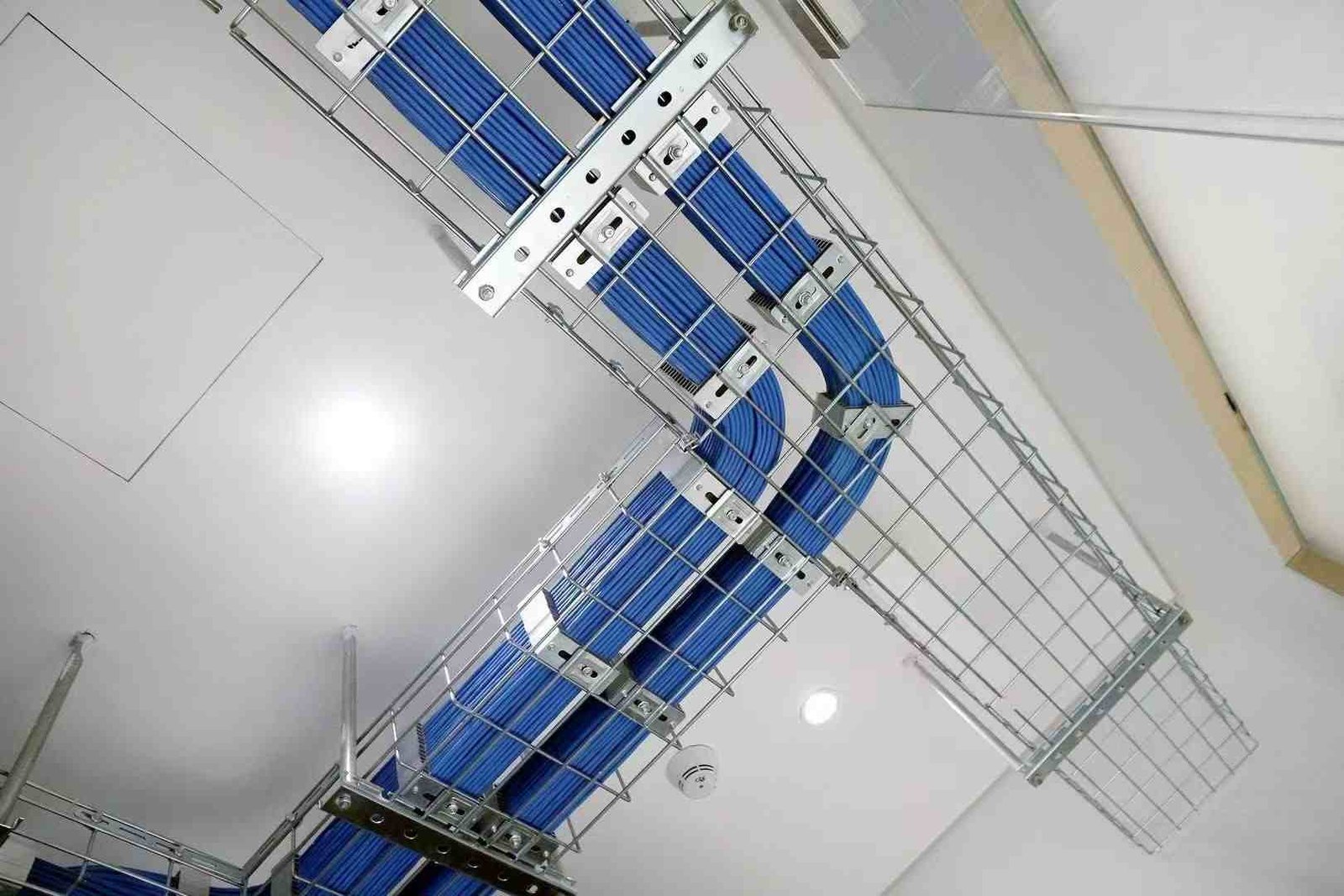
That painful early mistake shaped how LANYE CABLETRAY runs OEM projects today. We serve EPC brand owners and wholesalers across Singapore, the Philippines, Thailand, and South America, and almost none of them buy standard catalog items. Solar contractors want deeper trays for DC feeder bundles. Data hall integrators want baskets in non-standard widths to fit raised-floor voids. Water treatment projects want stainless or heavy hot-dip galvanized coatings for corrosive air. Customization is not a premium add-on for us; it is the normal order.
Our OEM Process, Step by Step
- Specification lock. You send cable schedules or drawings. We confirm exact product type in writing—Wire Mesh Cable Tray or Perforated Cable Tray—never just “cable tray,” to kill ambiguity before it costs money.
- Drawing approval. Our engineers issue dimensioned drawings covering widths, heights, wire diameter or sheet thickness, and finish. Nothing enters production unsigned.
- Sample or first-article check. For new developments, we produce a sample section. You verify fit, coating, and weld quality before the full run.
- In-line QC with photo reports. Weld strength, coating thickness, and dimensions are checked during production, and photos go to your WhatsApp so you see what ships.
- Logistics planning. Baskets nest for freight savings; trays get stacked and strapped to prevent transit damage. We plan container loading around your site schedule.
This process exists because I know the three pains that keep project directors awake: delivery delays, quality surprises, and returns. Locking specifications early prevents all three. If your project mixes systems—baskets in the data rooms, trays on the power runs—we develop and ship both under one order, one QC standard, one delivery date.
Conclusion
Cable baskets serve light, flexible cabling; cable trays carry heavy, protected power runs. Name the exact system you need, confirm load ratings, and message me for a customized quotation.
Footnotes
- Official IEEE standard for 4-pair Power over Ethernet (PoE++), relevant to cable heat dissipation. ↩︎
- Technical specifications for Cat6A cabling, which requires specific management to minimize alien crosstalk. ↩︎
- Explanation of electromagnetic shielding, a key benefit of solid-bottom cable trays in industrial environments. ↩︎
- Official international standard specifying requirements and tests for cable tray and cable ladder systems. ↩︎