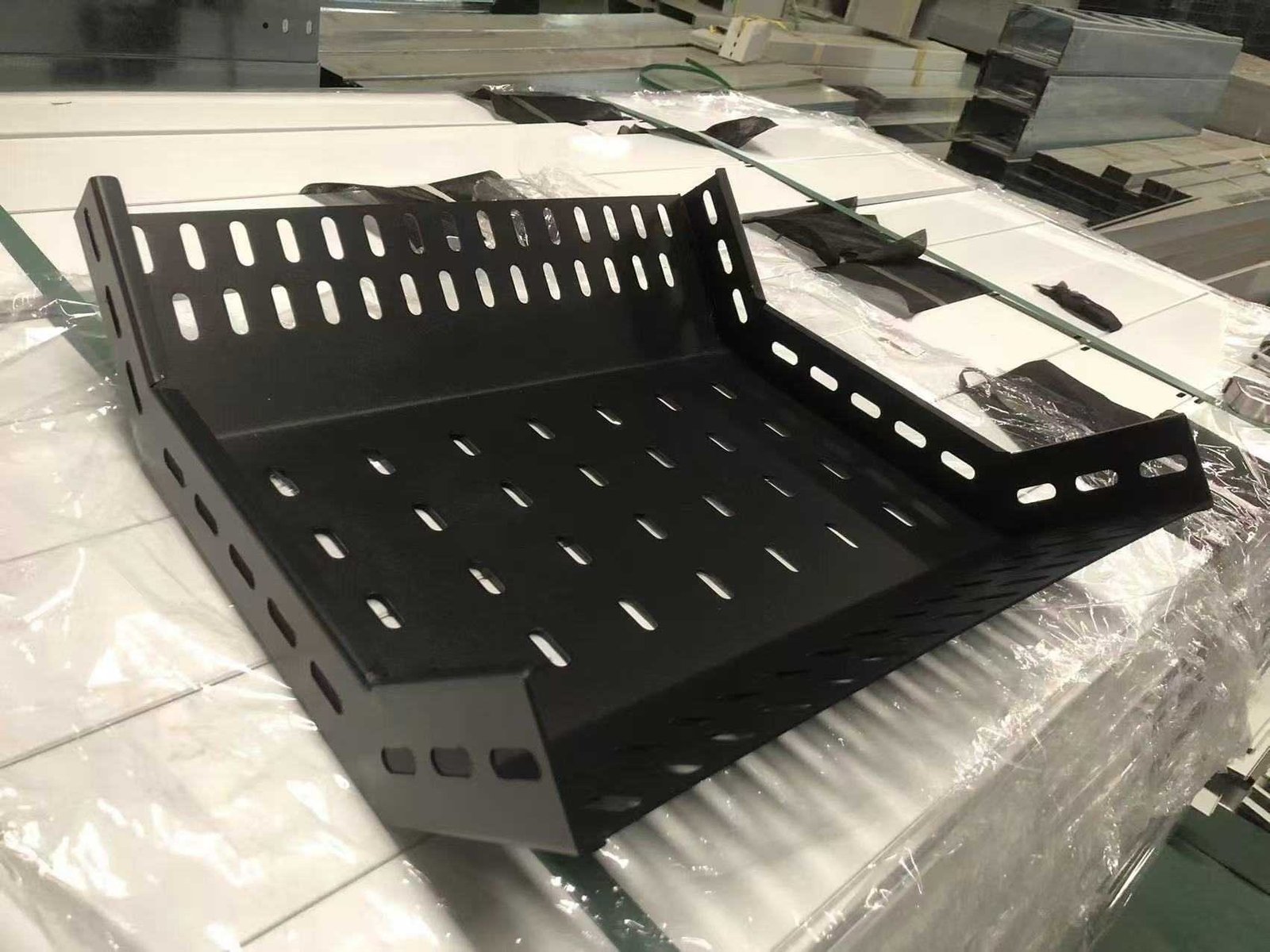
A cable fire can shut a project down overnight. On our production line in Tai’an, we build fire-retardant powder-coated perforated cable tray systems to stop that exact nightmare.
A fire-retardant powder-coated perforated cable tray is a punched steel cable support finished with a specialized fire-resistant coating. The coating swells and chars under high heat, slowing flame spread and heat transfer to cables, while the perforations provide ventilation, heat dissipation, and easy cable fixing.
That definition sounds simple. But the details matter a lot. Many buyers confuse ordinary powder coating with true fire protection. This article breaks the product down piece by piece. I will explain how the coating works, why perforation matters, which standards to check, and how to customize the tray for your project.
How does fire-retardant powder coating actually protect my cable tray installation?
During a coating thickness check last spring, our QC team rejected a whole batch that measured too thin. That inspection taught me why coating depth decides real fire protection.
Fire-retardant powder coating protects your installation through an intumescent reaction. When flames hit the tray, the coating expands into a thick insulating char layer. This delays heat transfer to the steel and cables, preserving load-bearing capacity and buying time for evacuation and firefighting.
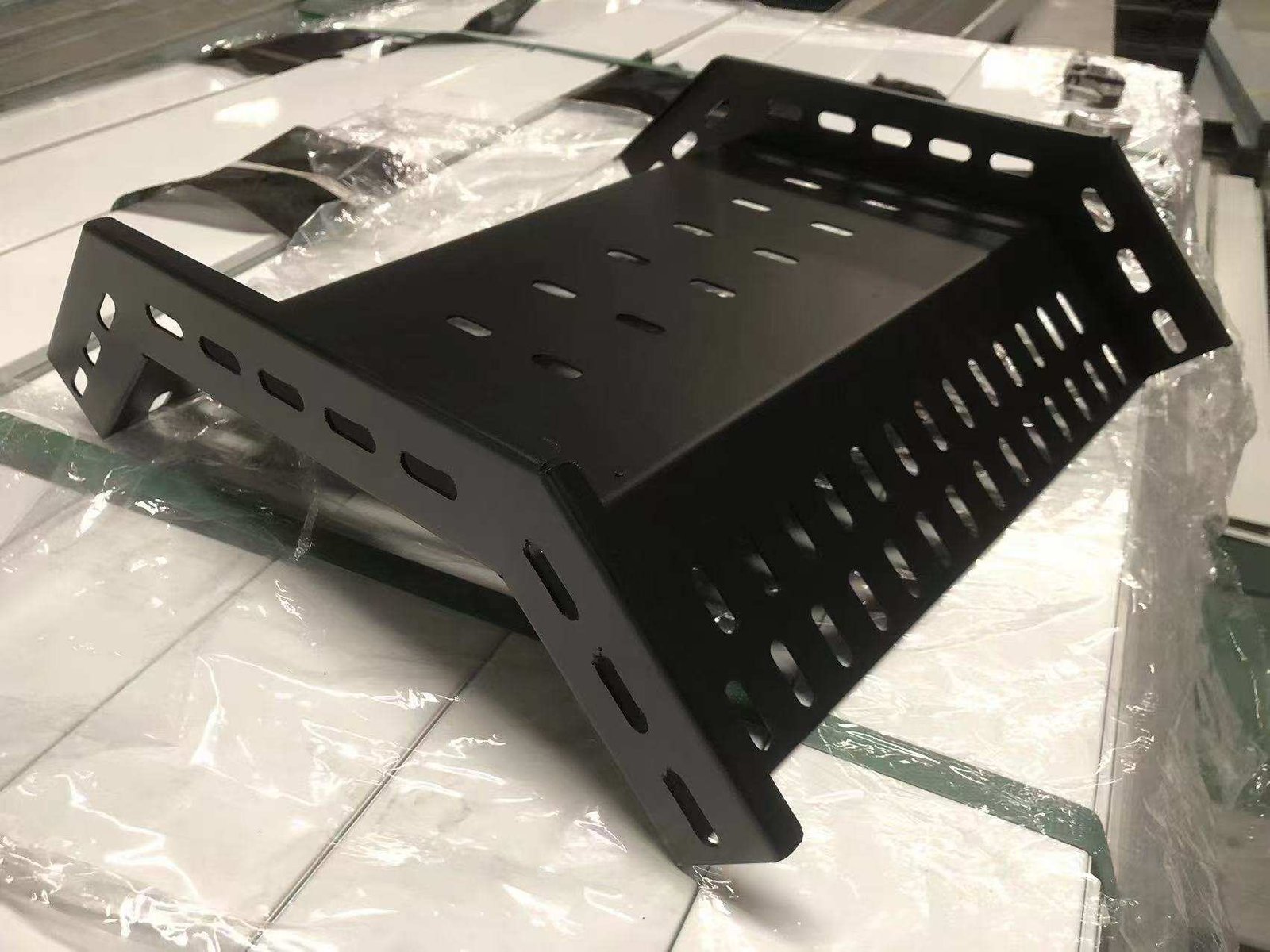
Let me unpack that answer, because the science is easier than it sounds.
The intumescent reaction, step by step
Under normal conditions, the coating just sits there. It looks like a clean matte finish. It resists scratches, humidity, and chemical corrosion. In a fire, everything changes. The flame retardant additives inside the coating react to heat. The layer swells, carbonizes, and forms a dense insulating char. That char blocks direct flame contact. It also slows the temperature rise inside the tray. Emergency circuits get extra minutes to keep working. Firefighters get extra minutes to respond.
There is a second benefit that many buyers miss. Steel loses strength fast at high temperatures. A collapsing tray can block an evacuation route. The insulating char keeps the underlying steel below its critical softening point for longer. So the tray holds its shape and its load.
Standard powder coating is not the same thing
Here is the most important distinction in this whole article. Ordinary epoxy polyester powder is decorative and protective. It gives corrosion resistance 1 and a nice color. It is not automatically fire-rated. A true fire-resistant coating system is a different formulation, and it is much thicker. One clear benchmark from the industry: fire-resistant systems can exceed 500 μm in thickness, while decorative coats are far thinner.
| Feature | Standard Powder Coating | Fire-Retardant Coating System |
|---|---|---|
| Main purpose | Appearance, corrosion resistance | Slowing flame spread and heat transfer |
| Typical chemistry | Epoxy polyester powder | Intumescent formula with flame retardant additives |
| Typical thickness | Thin decorative film | Often greater than 500 μm |
| Behavior in fire | Melts or burns off | Expands and chars into an insulating layer |
| Fire documentation | Usually none | Test reports against fire rating standards |
On a galvanized steel substrate 2, both coatings look similar to the naked eye. That is exactly why our factory measures film thickness on every batch before shipment. Your eyes cannot verify fire protection. A thickness gauge and a test report can.
Why should I choose perforated design over solid cable tray for my project?
A project director in Singapore once asked me over WhatsApp why we push perforated designs for his data center runs. My answer came down to heat.
Choose perforated design when your cables generate heat. The slotted openings enable natural convection, reduce cable derating, cut tray weight, and simplify cable fixing. Solid trays suit dusty or EMI-heavy zones, but for most indoor power and control runs, perforation wins on ventilation and cost.
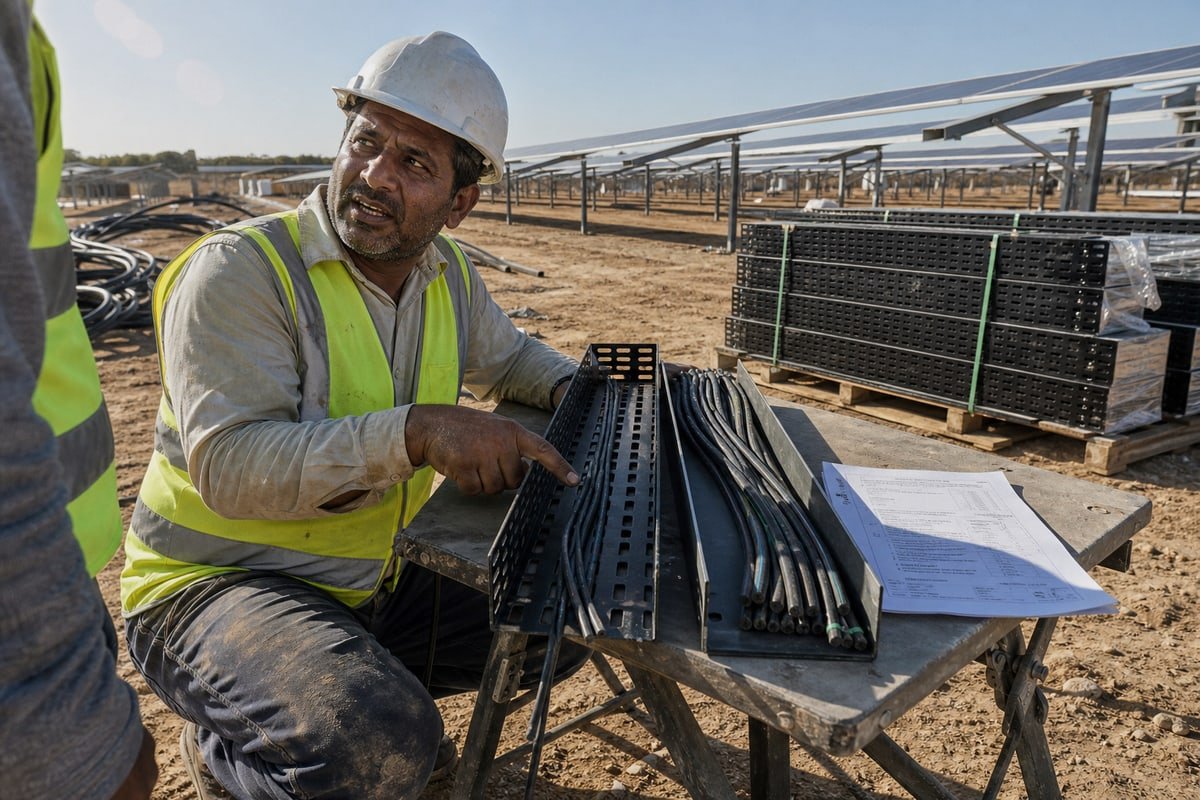
Here is a quick side-by-side view before we go deeper.
| Factor | Perforated Tray | Solid-Bottom Tray |
|---|---|---|
| Ventilation and heat dissipation | Excellent, natural convection through slots | Poor, heat accumulates under cables |
| Cable derating | Reduced or avoided | Often required for power cables |
| Weight and freight cost | Lower | Higher |
| Cable fixing | Easy, ties pass through slots | Needs extra clamps or drilled holes |
| Dust and drip protection | Limited without a cover | Better by default |
| Fire performance | Depends on the coating, not the holes | Depends on the coating, not the base |
Heat is the hidden enemy of cables
Power cables warm up during normal operation. If that heat cannot escape, cable insulation ages faster. Engineers then have to derate the circuits, which means bigger, more expensive cables. Perforation solves this quietly. Air flows through the slots, carries heat away, and keeps operating temperatures stable. This is thermal management working for free, every day, with no moving parts.
Where this combination fits best
From my own project experience, the fire-plus-ventilation pairing makes this tray ideal for indoor environments that have mandatory fire requirements and also carry real electrical load. Three scenarios come up again and again in our order book:
- High-rise buildings and commercial complexes — routing light and medium power cables and control lines through cable shafts and above suspended ceilings.
- Data centers and server rooms — feeding power from row-end distribution cabinets to racks, where you need fire assurance and heat dissipation at the same time.
- Industrial plants — running production-line control cables and auxiliary power cables inside workshops with fire-code obligations.
One more point for forward-looking buyers. Perforation patterns are now being optimized so ultrasonic sensors can detect electrical arcing through the openings. That turns the humble slot into a preventive maintenance channel for industrial electrical installations.
What quality standards should I verify before ordering fire-retardant cable trays?
Early in our export business, one vague test report nearly cost us a Philippine contract. Since then, I check every fire document before it ever reaches a client.
Verify the fire test standard and report scope, coating type and thickness above 500 μm for true fire-resistant systems, UL 94 V-0 or DIN 4102-12 circuit integrity ratings, GB 50016 or local code compliance, IEC 61537 load testing, and the galvanized steel substrate specification.
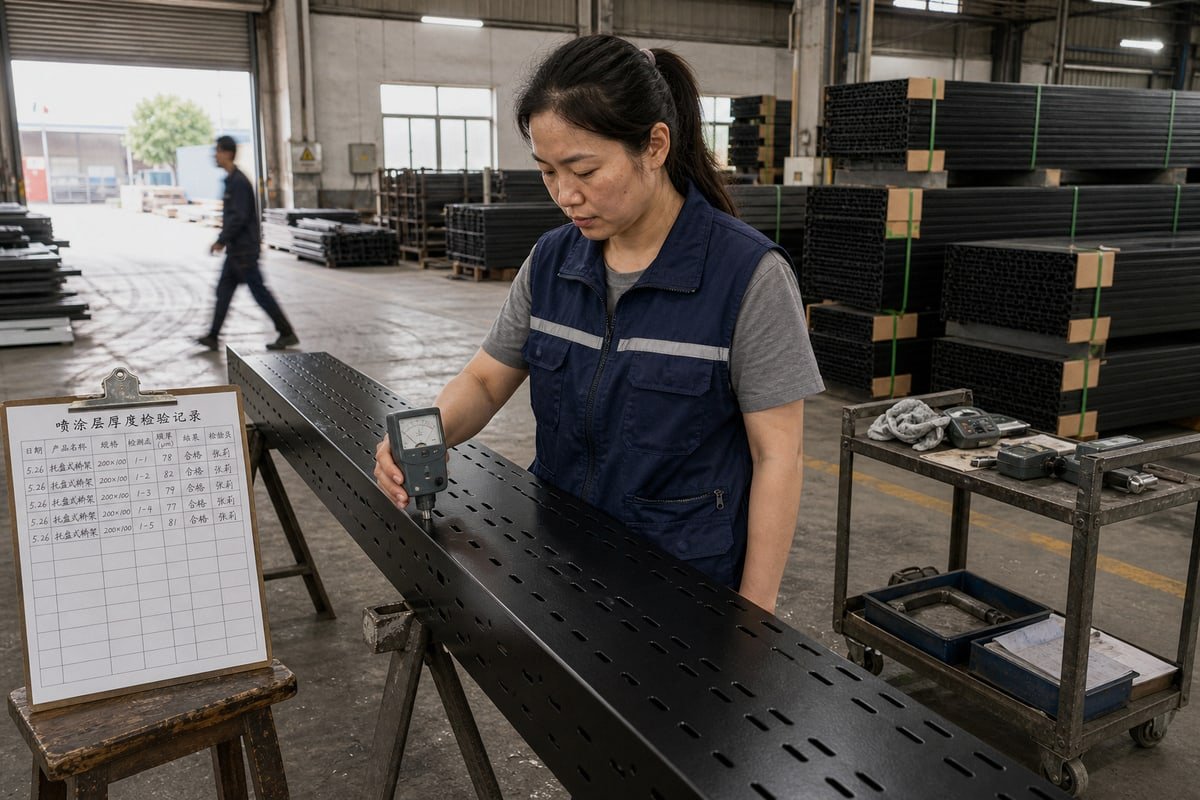
Supplier pages love the word “fireproof.” Documents are what separate marketing from engineering. Let me show you exactly what to request, and why each item matters.
The core standards to know
Different fire rating standards answer different questions. UL 94 classification 3, especially the V-0 grade, addresses how a material behaves when a flame is applied and removed. DIN 4102-12 goes further: it tests circuit integrity 4, meaning whether cables on the tray keep emergency power and data alive for 30 to 90 minutes during a real fire scenario. GB 50016 is China’s building fire protection code, and it ties the product to code-driven applications. IEC 61537 compliance covers the mechanical side, including load-bearing capacity and safe working load across support spans.
| Standard | What It Verifies | Why You Should Care |
|---|---|---|
| UL 94 V-0 | Flammability grade of the coating material | Confirms the coating self-extinguishes rather than spreading flame |
| DIN 4102-12 | Circuit integrity for 30–90 minutes in fire | Keeps fire alarms, emergency lighting, and smoke extraction running |
| GB 50016 | Building fire protection code compliance | Required for many code-driven projects in the Chinese market |
| IEC 61537 | Mechanical performance of cable management systems | Proves load-bearing capacity at your planned support spacing |
Documents I hand to every serious buyer
Treat supplier claims as claims until proven. Ask for third-party test reports with a clear scope of approval. Check that the report covers your exact tray type and coating thickness, not a different product from the same catalog. Ask for the declared coating thickness in writing. Ask about smoke emission levels too, because in tunnels, hospitals, and airports, toxic smoke kills faster than flame. Finally, confirm the substrate: pre-galvanized, hot-dip galvanized, or mild steel each carry different corrosion protection levels. When we prepare export files for Singapore or Thailand, this document pack goes out before the pro forma invoice. It saves everyone from expensive surprises at site inspection.
How do I customize powder-coated perforated cable trays for my specific project needs?
Every quotation we prepare in Tai’an balances the same trade-off: heavier steel gauge means stronger spans but higher freight cost. Customization is how we solve that puzzle together.
Customize by specifying tray width, height, and length; steel gauge for load-bearing capacity; perforation pattern; substrate type; coating color and thickness; and accessories like bends, tees, and covers. Share cable schedules and fire rating requirements early so the supplier can match the design to your project.
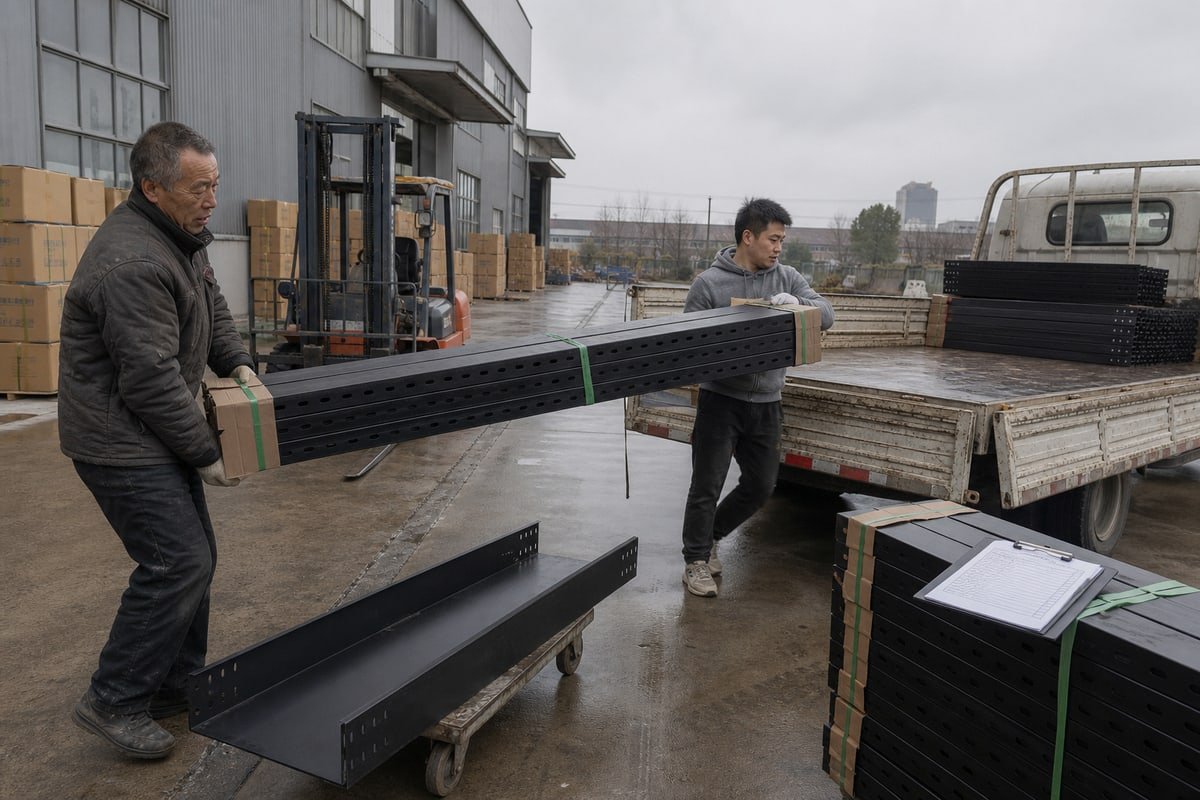
Customization is where a mid-range supplier earns its keep. Our OEM and ODM work with EPC contractors follows a simple, repeatable process. I will walk you through it, then flag some newer options worth asking about.
A five-step customization process
- Define the cable load. Send your cable schedule. We calculate the required tray width, fill ratio, and load-bearing capacity per span.
- Pick the substrate. Pre-galvanized steel works for dry indoor spaces. Hot-dip galvanized steel adds corrosion resistance for humid plants or coastal sites in Southeast Asia.
- Specify the coating system. Decide between decorative epoxy polyester powder and a genuine fire-resistant system. State the required standard, such as UL 94 V-0 or DIN 4102-12, and the target thickness.
- Choose dimensions and fittings. Standard lengths ship efficiently, but we cut, bend, and punch to drawing. Bends, tees, risers, reducers, and covers should come from the same coated batch for color and performance consistency.
- Lock the QC and logistics plan. Agree on inspection points, packing with corner guards and strapping, and a realistic lead time before deposit.
That last step matters more than buyers expect. Delivery delays and quality disputes are the two pain points I hear most from project directors. A written QC plan with photos at each stage prevents both.
Emerging options worth discussing
The coating world is moving fast. Thermochromic pigments can now change color permanently at set temperature thresholds, so post-fire audits spot heat-stressed sections at a glance. Sustainable formulations allow localized spot-repairs of the fire-retardant layer on site, so a scratched section no longer forces full tray replacement. And for data-heavy projects, advanced powders with conductive micro-fillers are being developed to add EMI shielding for sensitive cables without hurting the intumescent reaction. Not every project needs these. But asking about them tells you quickly how current your supplier’s engineering really is.
Conclusion
An unverified tray can turn one fire into a total project loss. A genuine fire-retardant powder-coated perforated cable tray, backed by real test reports, protects cables, schedules, and reputations.
Footnotes
- Explains the property of materials to resist deterioration by chemical reactions with the environment. ↩︎
- Provides technical information on the use of galvanized steel as a durable base material for industrial coatings. ↩︎
- UL Solutions provides testing and certification for flammability standards and material safety. ↩︎
- Defines the ability of electrical cables or systems to continue operating during a fire. ↩︎