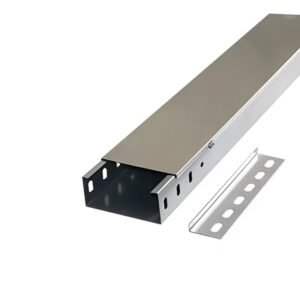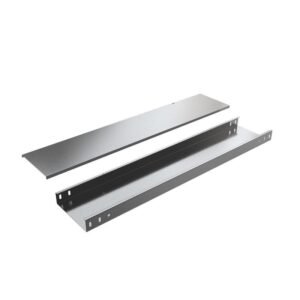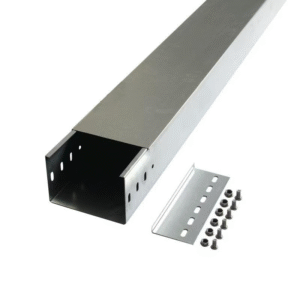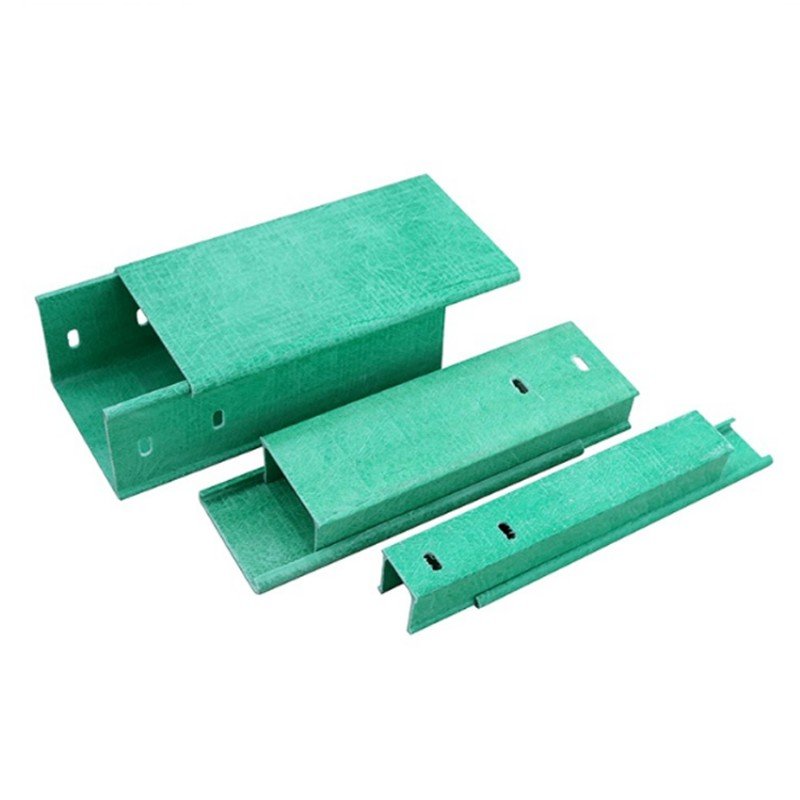
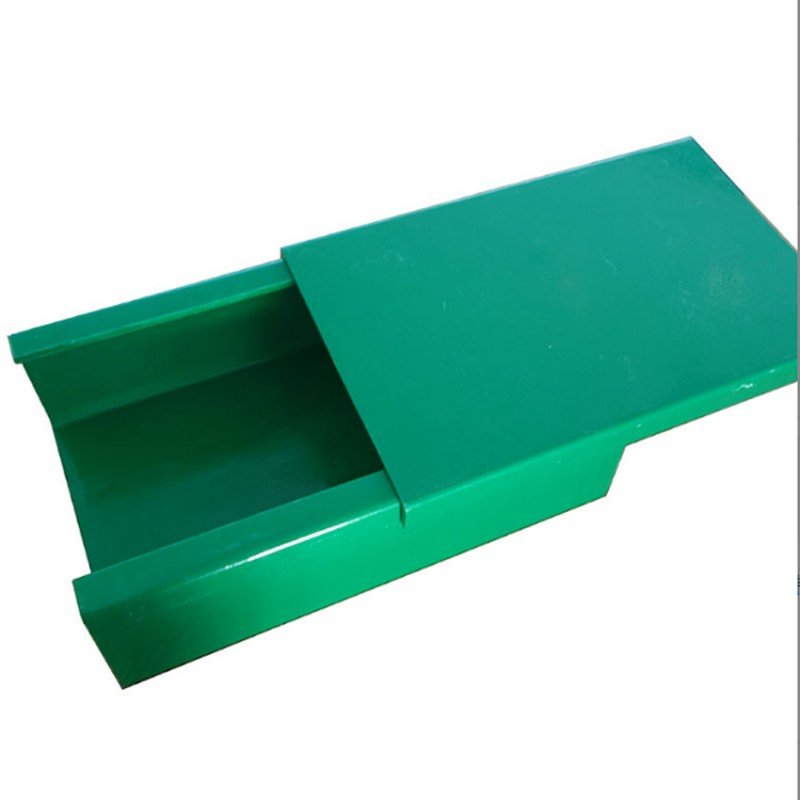

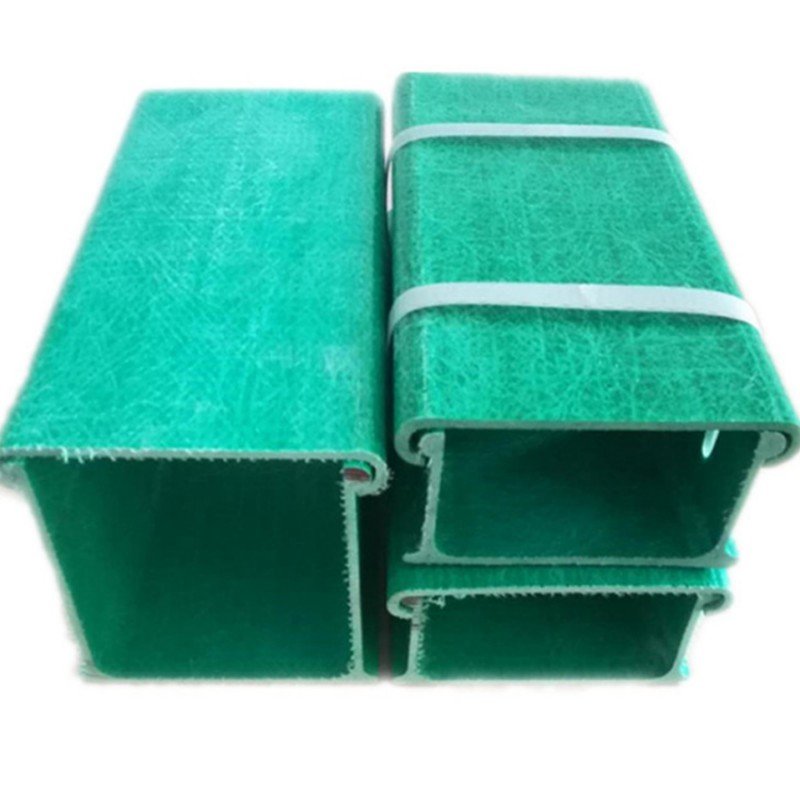
FRP cable trunking, also known as Fiber Reinforced Plastic cable trunking or fiberglass cable trunking, is specially designed and engineered for supporting and managing cables in highly corrosive environments where traditional metal trunking would fail prematurely. As the reliable FRP cable trunking manufacturer, Lanye brand custom FRP cable trunking is available in various configurations, materials, sizes and forms to suit the location and requirements of the installation. Our FRP cable trunking can be used in almost any places including chemical plants, wastewater treatment facilities, marine environments, offshore platforms, mining operations, food processing plants, and high corrosion risk areas, etc.
FRP cable trunking is a cable management system fabricated from Fiber Reinforced Plastic (FRP), a composite material consisting of thermosetting resin reinforced with glass fibers. This advanced material offers exceptional corrosion resistance, high strength-to-weight ratio, and complete electrical non-conductivity. Unlike galvanized steel or stainless steel trunking, FRP cable trunking will never rust or corrode, making it the ideal choice for aggressive environments where metal alternatives have limited service life.
FRP cable trunking is manufactured through a pultrusion or compression molding process. The glass fibers are impregnated with resin (typically polyester, vinylester, or epoxy) and then pulled through a heated die to form the trunking profile. This process creates a material with high strength, uniform cross-section, and excellent dimensional stability. The trunking is then fabricated into straight lengths, bends, tees, and other fittings.
FRP cable trunking exhibits excellent qualities including high strength-to-weight ratio, outstanding corrosion resistance, electrical non-conductivity, and low thermal conductivity. These characteristics make it an ideal choice for cable management in chemical plants, wastewater treatment, marine environments, and other corrosive areas. FRP cable trunking is the reliable cable management solution to ensure the longevity and proper functioning of cables in environments where metal trunking would corrode and fail.
| Function | Description |
|---|---|
| Cable Protection | Fully enclosed design protects cables from dust, water, and damage |
| Corrosion Resistance | Complete resistance to rust, chemicals, and environmental attack |
| Electrical Insulation | Non-conductive material provides electrical safety |
| Cable Organization | Maintains clean and accessible cable routing |
| Lightweight | Easy to handle and install |
| Long Service Life | Does not corrode, rot, or degrade in harsh environments |
| Feature | FRP Cable Trunking | Steel Trunking | Stainless Steel 304 Trunking |
|---|---|---|---|
| Corrosion Resistance | Excellent (total) | Poor (needs coating) | Good |
| Chemical Resistance | Excellent | Limited | Good |
| Electrical Conductivity | Non-conductive | Conductive | Conductive |
| Weight | Very Light | Heavy | Heavy |
| Service Life in Harsh Environment | Very Long (20+ years) | Short (2-5 years) | Medium (10+ years) |
| Maintenance Requirement | Very Low | High | Medium |
| Initial Cost | Moderate | Low | High |

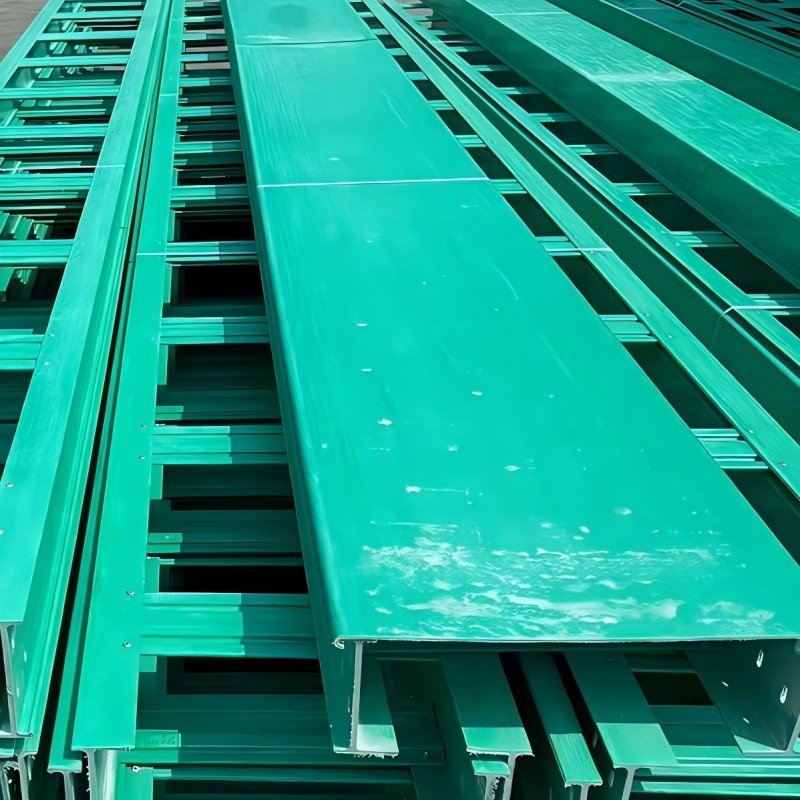
| No | Type | W (mm) | H (mm) | Thickness (mm) | Resin Type | L (mm) |
|---|---|---|---|---|---|---|
| 1 | Lanye-FRPCT-1 | 50 | 50 | 3.0 | Polyester | 2000 |
| 2 | Lanye-FRPCT-2 | 75 | 75 | 3.0 | Polyester | 2000 |
| 3 | Lanye-FRPCT-3 | 100 | 50 | 3.5 | Polyester | 2000 |
| 4 | Lanye-FRPCT-4 | 100 | 100 | 3.5 | Polyester | 2000 |
| 5 | Lanye-FRPCT-5 | 150 | 100 | 4.0 | Vinylester | 2000 |
| 6 | Lanye-FRPCT-6 | 150 | 150 | 4.0 | Vinylester | 2000 |
| 7 | Lanye-FRPCT-7 | 200 | 100 | 4.5 | Vinylester | 2000 |
| 8 | Lanye-FRPCT-8 | 200 | 150 | 4.5 | Vinylester | 3000 |
| 9 | Lanye-FRPCT-9 | 200 | 200 | 5.0 | Vinylester | 3000 |
| 10 | Lanye-FRPCT-10 | 300 | 200 | 5.0 | Vinylester | 3000 |
| Parameter | Specification |
|---|---|
| Density | 1.6 – 1.9 g/cm³ |
| Tensile Strength | 150 – 250 MPa |
| Flexural Strength | 200 – 300 MPa |
| Oxygen Index (LOI) | ≥28 (fire retardant grade) |
| Water Absorption | <0.5% (24 hours) |
| Dielectric Strength | >10 kV/mm |
| Surface Resistivity | >10¹² Ω (standard) |
| Color | RAL 7032 (grey), others available |
| Accessory | Availability |
|---|---|
| Horizontal Bend | Yes |
| Vertical Bend | Yes |
| Tee Fitting | Yes |
| Cross Fitting | Yes |
| Reducer | Yes |
| End Cap | Yes |
| Support Bracket (FRP or SS316) | Yes |
| Couplers and Connectors (FRP) | Yes |
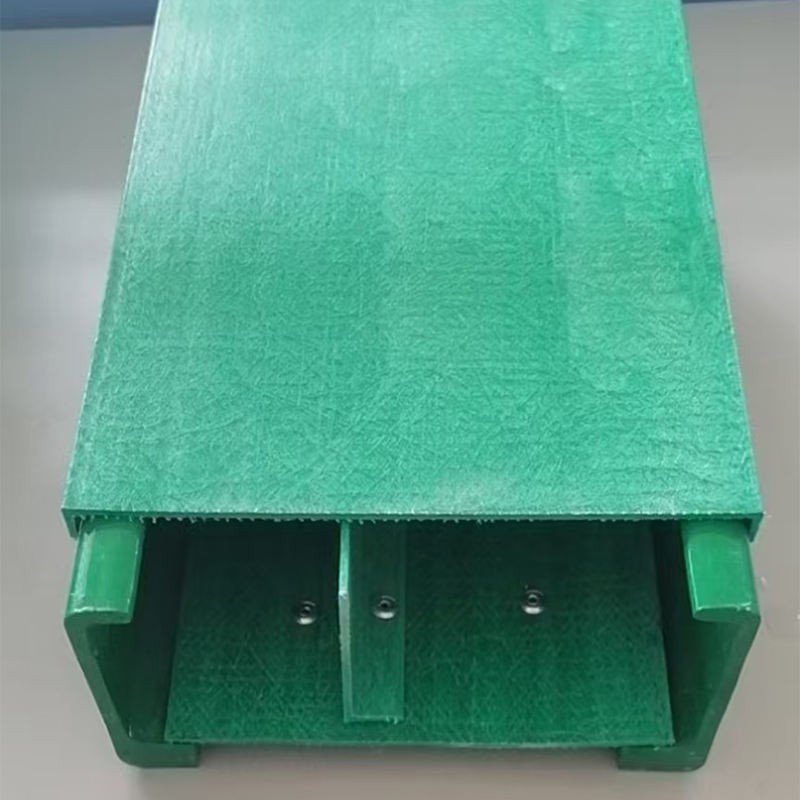
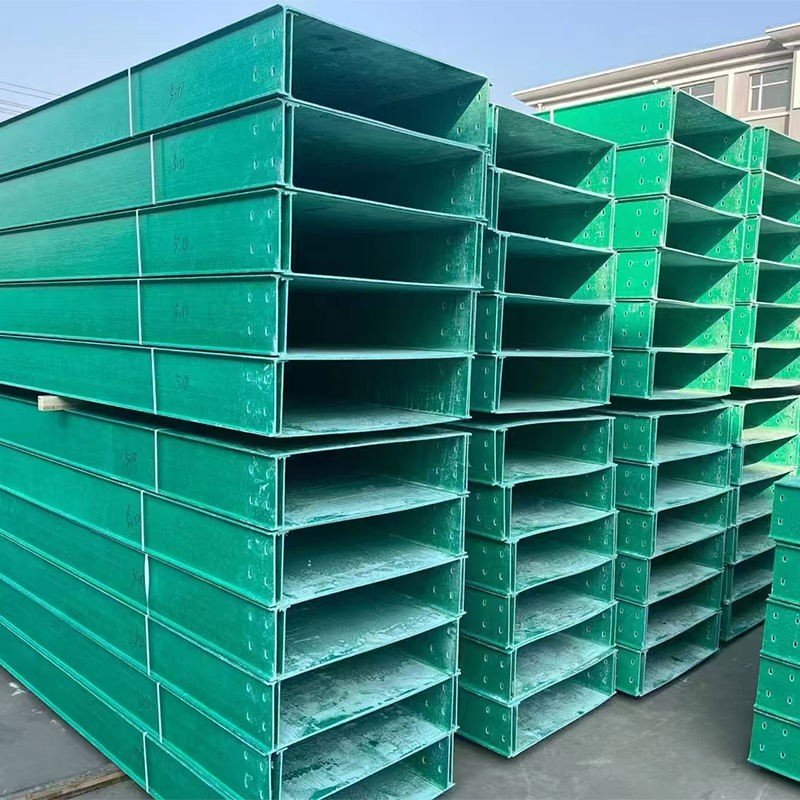
Lanye custom FRP cable trunking has the following advantages which make it an excellent choice for efficient cable management solutions in corrosive environments.
Unlike metal trunking which relies on surface coatings for protection, FRP cable trunking is inherently corrosion-resistant throughout the entire material thickness. It will not rust, rot, or degrade when exposed to moisture, salt spray, acids, alkalis, or industrial chemicals. FRP cable trunking is the preferred choice for chemical plants, wastewater treatment facilities, marine environments, and offshore platforms.
FRP cable trunking weighs approximately 70% less than steel trunking while offering comparable or superior strength. This lightweight characteristic makes FRP trunking easier to handle, transport, and install, reducing labor costs and installation time.
FRP cable trunking is completely non-conductive and non-magnetic. This electrical insulation property provides enhanced safety for personnel working near live cables and eliminates the need for complex grounding systems required for metal trunking. FRP cable trunking is ideal for electrical rooms, substations, and areas where stray currents are a concern.
FRP cable trunking requires virtually no maintenance over its service life. Unlike painted or galvanized steel trunking which needs regular repainting or touch-up, FRP trunking maintains its integrity without any protective coatings. This makes FRP cable trunking a cost-effective solution over the lifecycle of the installation.
FRP cable trunking, particularly with vinylester resin systems, offers excellent resistance to a wide range of chemicals including acids, alkalis, solvents, oils, and salts. This makes FRP trunking the ideal choice for chemical processing plants, refineries, and laboratories.
The UV-resistant gel coat applied to Lanye FRP cable trunking prevents surface degradation from sunlight exposure, making it suitable for outdoor installations in any climate.
For applications requiring fire safety, Lanye offers fire-retardant FRP cable trunking grades that meet UL 94 V-0 and other international fire standards. These grades self-extinguish when the flame source is removed.
FRP cable trunking features a fully enclosed design with removable cover, providing excellent protection for internal cables against dust, water ingress, physical damage, and environmental contaminants.
We provide customized dimensions, resin systems, colors, and accessories according to project requirements. Available custom options include trunking width, height, wall thickness, gel coat color, and fire retardant rating.
FRP cable trunking provides service life of 20 years or more in harsh environments where steel trunking might fail in 2-5 years. This extended service life makes FRP cable trunking the most economical choice for demanding applications when lifecycle costs are considered.
FRP cable trunking is widely used across many industries where corrosion resistance, electrical insulation, or lightweight properties are essential requirements.
FRP cable trunking is extensively used in chemical plants, refineries, and petrochemical facilities where exposure to corrosive vapors, acids, and chemicals would quickly destroy metal trunking. The excellent chemical resistance of FRP makes it the standard choice for these environments.
Wastewater treatment plants expose cable trunking to moisture, hydrogen sulfide gas, chlorine, and other corrosive agents. FRP cable trunking provides long-term performance in these demanding conditions without corroding or deteriorating.
Offshore platforms, ships, docks, and coastal facilities face constant exposure to salt spray and humidity. FRP cable trunking is completely resistant to saltwater corrosion, making it ideal for marine applications where stainless steel may still show signs of corrosion over time.
Mines and mineral processing facilities expose cable trunking to moisture, chemicals, and abrasive dust. FRP cable trunking provides corrosion resistance and lightweight properties that are valuable in mining environments.
Food processing plants require cable management that is corrosion-resistant, easy to clean, and non-contaminating. FRP cable trunking meets these requirements and is resistant to cleaning chemicals and washdown procedures.
Pharmaceutical manufacturing requires clean, corrosion-resistant cable management. FRP cable trunking provides a smooth, non-porous surface that does not harbor contaminants and resists cleaning agents.
Power plants, particularly those using coal or located in coastal areas, expose cable trunking to corrosive conditions. FRP cable trunking provides reliable, long-term cable protection in these environments.
Tunnels and underground infrastructure expose cable trunking to moisture, vehicle exhaust, and de-icing salts. FRP cable trunking resists these corrosive agents and provides electrical insulation for added safety.
Determine trunking runs and branch locations. Consider FRP’s thermal expansion (higher than steel) when planning long runs.
Use FRP or stainless steel 316 support brackets to avoid galvanic corrosion. Mount brackets at recommended spacing (typically 1.5m for FRP trunking).
Use FRP couplers to connect trunking sections. Pre-drill holes are provided. Use stainless steel or FRP hardware for connections.
FRP has higher thermal expansion than steel. For runs over 30 meters, install expansion joints as recommended by Lanye engineering.
Remove covers. Lay cables into trunking, respecting minimum bend radii. Use FRP dividers if power and data cables need separation.
Replace FRP covers and secure with stainless steel clips or screws. Ensure covers are properly seated for complete protection.
Unlike metal trunking, FRP cable trunking is non-conductive and does not require grounding. This simplifies installation and reduces material costs.
Lanye uses only high-quality resin and glass fiber reinforcement from certified suppliers, ensuring consistent material properties and corrosion resistance.
As a professional FRP cable trunking manufacturer, Lanye can provide custom solutions based on project drawings, chemical exposure requirements, and installation conditions.
Lanye supports OEM and ODM supply for distributors, contractors, and industrial buyers. Private labeling, custom colors, and special resin formulations are available.
All Lanye FRP cable trunking undergoes strict quality control including raw material verification, dimensional inspection, surface finish verification, and mechanical testing.
A: FRP cable trunking is a cable management system made from Fiber Reinforced Plastic, a composite of resin and glass fibers. It offers exceptional corrosion resistance, lightweight properties, and electrical non-conductivity, making it ideal for harsh environments where metal trunking would corrode.
A: Yes. Lanye FRP cable trunking is manufactured with UV-resistant gel coat, making it highly suitable for outdoor installations in any climate, including coastal and high-UV areas.
A: Polyester resin offers good chemical resistance for general industrial applications. Vinylester resin provides excellent chemical resistance for harsh environments including strong acids, alkalis, and solvents. Lanye offers both options depending on your chemical exposure requirements.
A: No. FRP cable trunking is completely non-conductive and does not require grounding. This simplifies installation and reduces material costs compared to metal trunking systems.
A: Lanye FRP cable trunking provides service life of 20 years or more in harsh environments where steel trunking might fail in 2-5 years. The corrosion-resistant material does not degrade over time.
A: Yes. Lanye offers fire-retardant FRP cable trunking grades that meet UL 94 V-0 and other international fire standards. These grades self-extinguish when the flame source is removed.
A: FRP cable trunking can be cut using carbide-tipped saw blades or abrasive cut-off wheels. Deburr cut edges after cutting to prevent cable damage. Lanye can also provide custom-cut lengths to minimize site cutting.
A: Lanye provides a complete range of FRP accessories including bends, tees, reducers, end caps, couplers, support brackets, and cover clips, all manufactured from the same corrosion-resistant FRP material.
A: Standard sizes from Lanye typically ship in 10-15 business days. Custom sizes, special resin systems, or large quantities may require 15-25 business days depending on complexity.
A: Yes. Lanye FRP cable trunking can be supplied with FRP dividers to separate power and data cables within the same trunking. The non-conductive material provides additional safety for data cables.
A: FRP offers superior corrosion resistance to stainless steel in many chemical and marine environments. While SS304 is resistant to rust, it can still suffer pitting corrosion in high-chloride environments. FRP cable trunking is completely immune to corrosion in these conditions.
A: Lanye FRP cable trunking is available in standard grey (RAL 7032), as well as green, yellow, blue, red, and custom RAL colors per customer request. The color is integral to the gel coat and will not fade or peel.