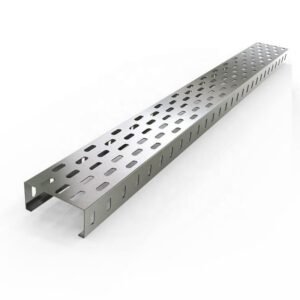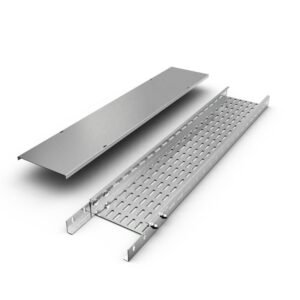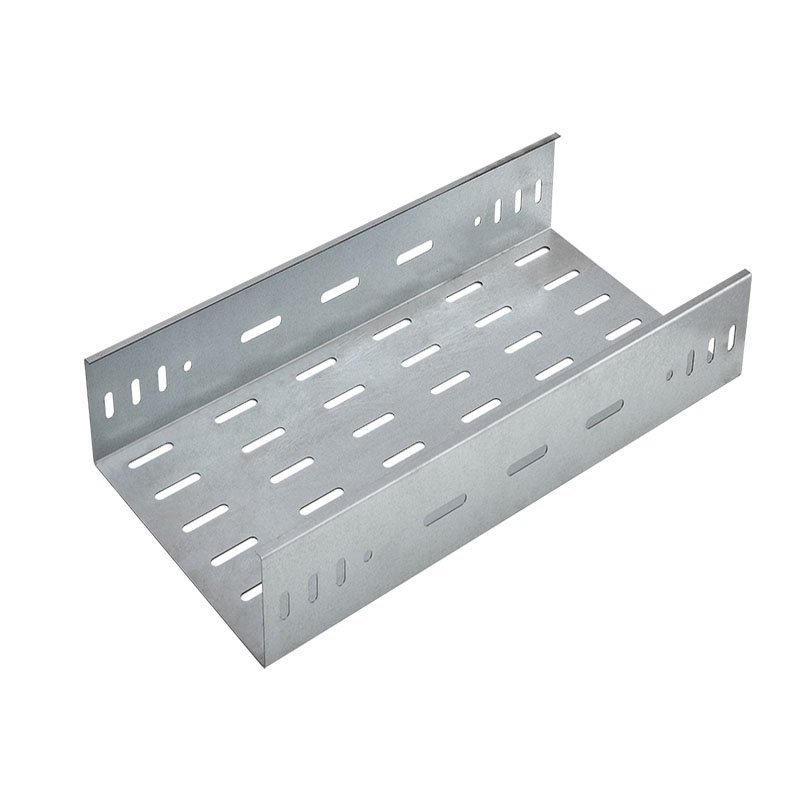
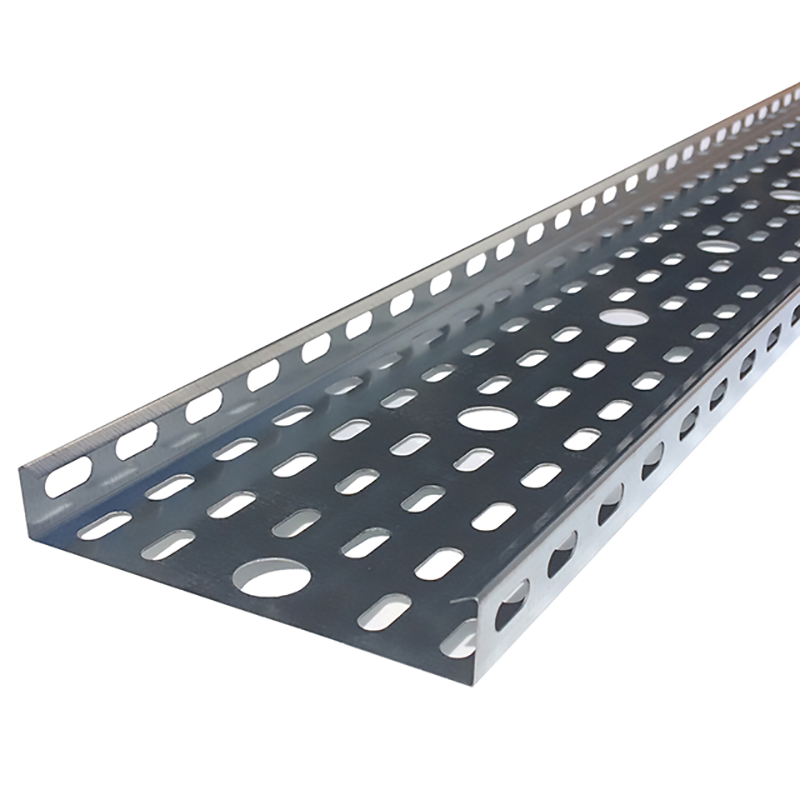

Massive zinc protection prevents rust in extreme climates.
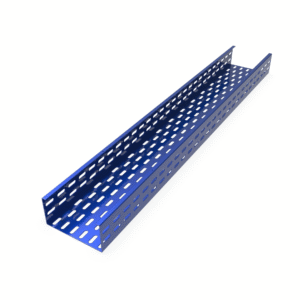
Perforated holes facilitate efficient heat dissipation and drainage.
Strong steel frame maintains stability under heavy loads.
Integrated grounding ensures safe electrical continuity across systems.
Lanyecabletray – Professional Exporter to Singapore, Philippines, Thailand, Cambodia, Korea, Africa
HDG Perforated Cable Tray (Hot Dipped Galvanized Perforated Cable Tray) is a strong, corrosion-resistant, and well-ventilated cable support system widely used in industrial plants, infrastructure projects, and large commercial facilities. With its perforated design and HDG finish, it combines structural strength, cable heat dissipation, and long-term weather resistance—making it ideal for demanding project environments.
In the modern world, effective cable management is essential for safety, performance, and efficiency in electrical installations. HDG (Hot Dipped Galvanized) Perforated Cable Trays serve as a reliable solution for organizing, supporting, and protecting electrical cables in various environments.
Lanyecabletray manufactures and exports HDG Perforated Cable Trays to Southeast Asia and Africa, supplying contractors, distributors, EPC companies, and electrical engineering projects worldwide.
A Perforated Cable Tray is a cable support system made of steel with evenly distributed holes on the side rails and bottom surface. The perforations provide ventilation and allow heat from power cables to escape while reducing overall weight. When the tray is finished with Hot Dipped Galvanizing (HDG) after fabrication, it gains superior corrosion resistance suitable for outdoor, industrial, or chemical-exposed environments.
Perforated Cable Tray is also called GI Cable Tray ,a structural system designed for supporting and managing cables in various settings. Constructed from galvanized steel or aluminum, perforated cable trays feature a series of holes or perforations along their length. These perforations facilitate cable ventilation, reducing the risk of overheating, and allow for easy attachment of cable ties and clamps.
| Parameter | Specification |
|---|---|
| Product Name | Hot Dipped Galvanized Perforated Cable Tray |
| Material | Mild Steel / Carbon Steel/Q235 |
| Surface Finish | Hot Dipped Galvanized (HDG) |
| Galvanizing Standard | ASTM A123 / ISO 1461 |
| Zinc Coating Thickness | 65–120 μm (up to 200 μm optional) |
| Thickness | 1.0 mm – 3.0 mm |
| Width | 50 mm – 1000 mm |
| Side Rail Height | 25 mm – 300 mm |
| Length | 2000 mm /2440mm/ 2500 mm / 3000 mm Size can be customized. |
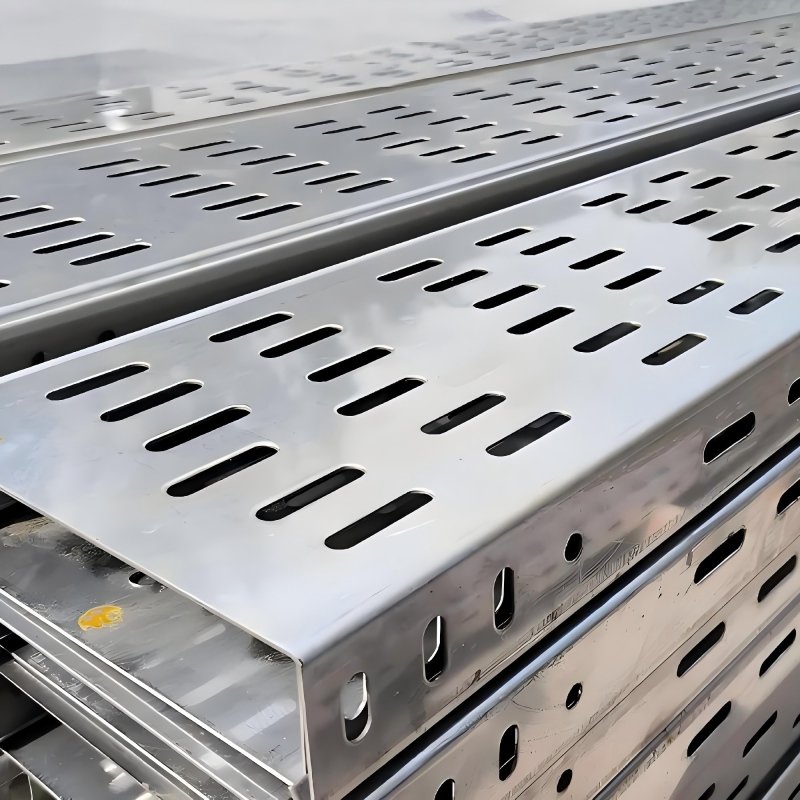
| Perforation Type | Round / Slot / Mixed Pattern |
| Load Capacity | Medium to Heavy Duty |
| Ventilation | Excellent Airflow & Heat Dissipation |
| Installation Type | Wall / Ceiling / Floor Mounted |
| Accessories | Covers, bends, tees, reducers, connectors |
| Application | Industrial Plants, Commercial Buildings, Power Distribution Systems |
| Standard | IEC 61537 / NEMA VE-1 |

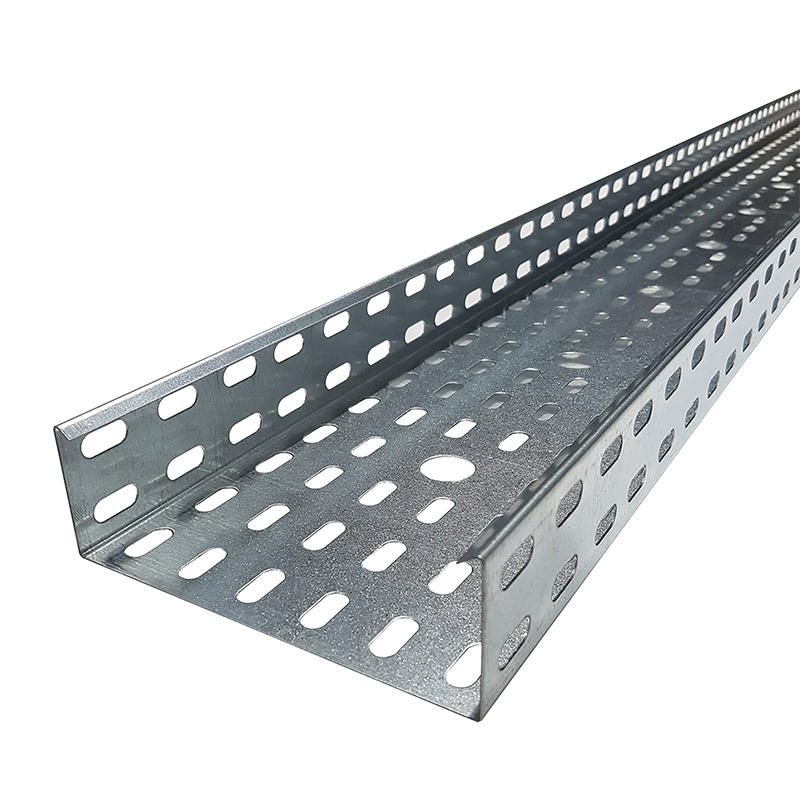
HDG Perforated Cable Tray is widely chosen for industrial and infrastructure installations because it offers an excellent balance of strength, ventilation, corrosion resistance, and cost efficiency.
3.1 Excellent Airflow & Heat Dissipation
3.2 Superior Corrosion Resistance from HDG Coating
Hot Dipped Galvanizing after fabrication ensures:
This outperforms pre-galvanized (GI) or powder-coated trays, especially in:
3.3 Strong Load Capacity & Structural Stability
Perforated cable trays support heavy cable bundles across long spans. The steel structure resists:
They are suitable for LV/MV/HV distribution cabling in industrial plants and infrastructure projects.
3.4 Lightweight Compared to Ladder Type
Because of perforations, the tray weight is reduced without compromising strength. This brings several benefits:
This makes it ideal for suspended installations, long corridors, or large-scale electrical networks.
3.5 Easy to Modify, Cut, and Adjust on Site
Installers can quickly adjust tray length or drill holes thanks to:
This significantly saves installation time and labor cost.
3.6 Cable Protection & Clean Routing
The tray design provides continuous support, which protects cables against:
At the same time, cables remain accessible for inspection and maintenance.
3.7 Long Service Life & Low Maintenance
HDG Perforated Cable Trays offer decades of resistance to corrosion and degradation. No major repainting or surface treatment is required. This ensures:
3.8 Fully Compatible with Standard Cable Supports
3.9 Suitable for Harsh Outdoor Conditions
This is why it’s widely used in Southeast Asia and coastal regions.
3.10 Cost-Effective for Long Cable Routes
Compared with enclosed trunking, perforated trays consume less steel and are easier to install—offering a lower cost while still providing strong performance.
HDG Perforated Cable Trays are suitable for nearly all industries requiring structured cable support, especially where ventilation and corrosion resistance are essential.
4.1 Key Application Sectors
4.2 Cable Types Supported
4.3 Suitable Environments

1. What is the difference between GI and HDG perforated cable trays?
GI is pre-galvanized steel. HDG is coated after fabrication.
HDG offers much stronger corrosion resistance.
2. What is the standard length of your perforated cable trays?
2.44 m or 3 m per piece, customizable up to 6 m.
3. Can you customize the hole pattern?
Yes – round, slotted, mixed, or according to your drawings.
4. What is the zinc coating thickness?
55–85 μm or per ISO/ASTM standard.
5. Do you provide fittings and covers?
Yes – elbows, tees, reducers, cross pieces, and HDG covers.
6. Do you export to Southeast Asia?
Yes – Singapore, Philippines, Thailand, Cambodia, Vietnam, and Korea.
7. What thickness should I choose?
1.0–1.2 mm for light loads;
1.5–2.5 mm for industrial power cables.
8. How long does delivery take?
7–20 days depending on order volume.
9. Can you produce according to project BOQ?
Yes – we support OEM, ODM, and project submittal documentation.
10. What accessories are included?
Splice plates, couplers, bolts/nuts, and optional covers.